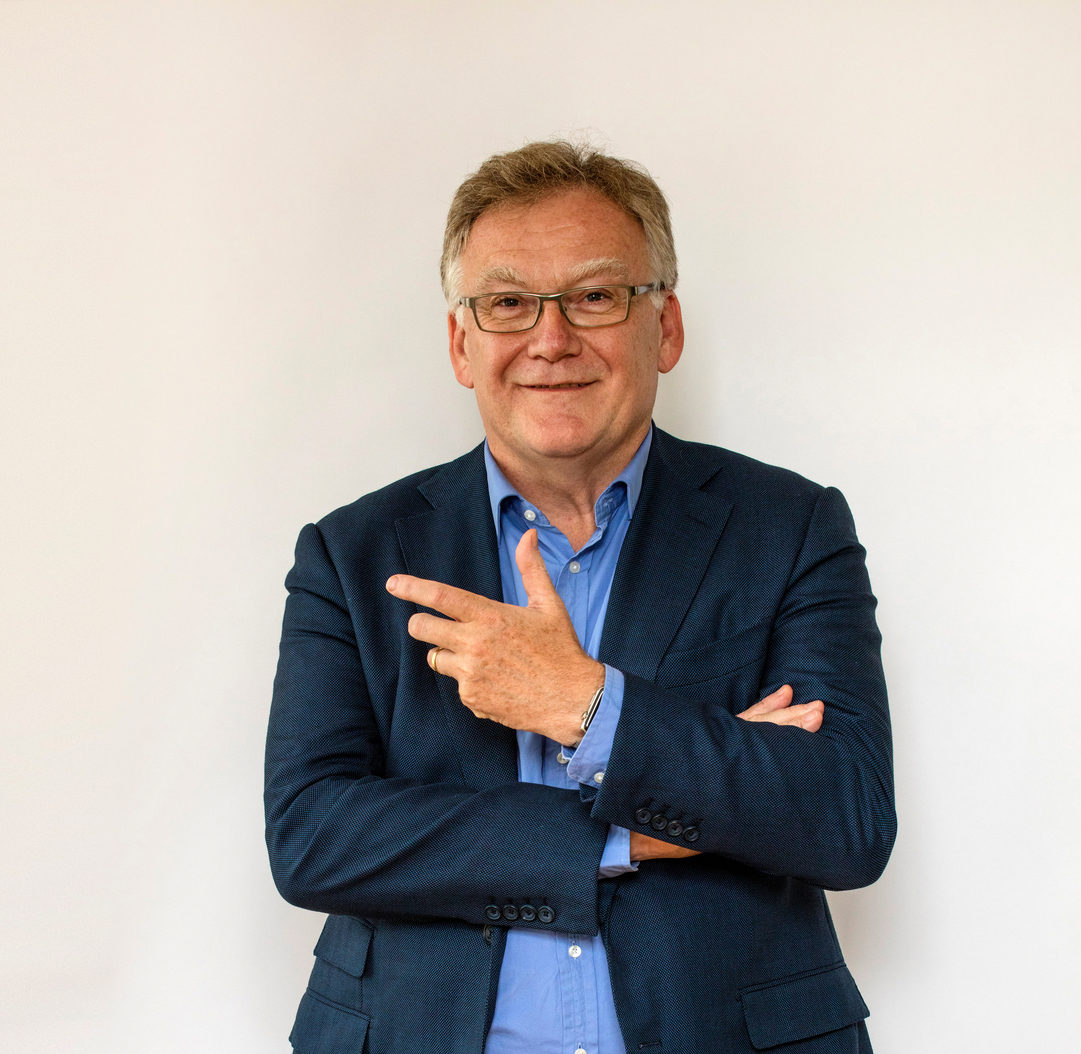
Few names are as synonymous with innovation and sustainability as Patrick Bellew, Chief Sustainability Officer of Surbana Jurong and the founder and Executive Chair of Atelier Ten, with studios in eleven cities worldwide. His journey from a mechanical engineer at Buro Happold to a leader in responsible green building design offers a blueprint for integrating environmental consciousness with architectural brilliance.
With more than forty years of experience in the design of high-performance buildings and systems, Patrick received an Honorary Fellowship from the Royal Institute of British Architects (RIBA) in 2001 and was named one of the UK’s Royal Designers for Industry (2010) in recognition of his impact on architecture. Outside practice, Patrick was one of the group that founded the UK Green Building Council in 2006, and he served on the Executive Board from 2006 – 2016. Patrick has taught in the MArch program at the Yale University School of Architecture since 2000 and is a Visiting Professor. He is the recipient of the 2023 Fazlur R. Khan Lifetime Achievement Award by the Council for Tall Buildings and Urban Habitat (CTBUH).

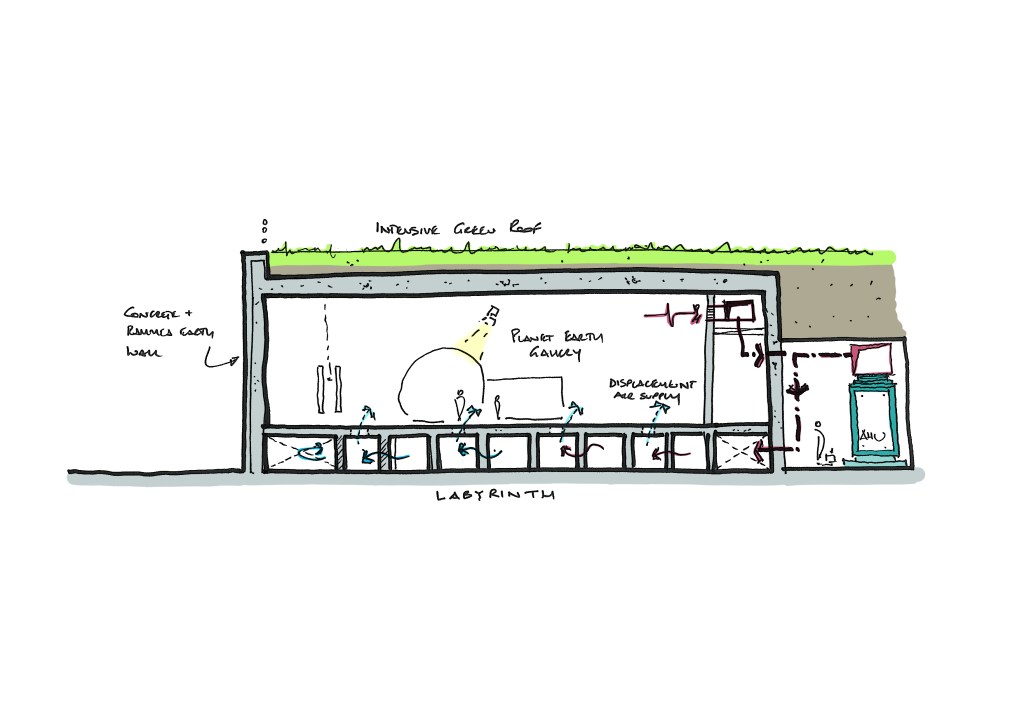
Earth Centre with a green roof and basement labyrinth for cooling. Image credit: Atelier Ten
The Genesis of Atelier Ten
Patrick’s career began at Buro Happold, surrounded by structural engineers like Ian Liddell and Ted Happold, who were pioneers in structural optimisation. Their work, notably on projects like the Millennium Dome, in London, produced structures lighter than the air they enclosed - a Buckminster Fuller-esque achievement. However, Patrick noticed a significant gap in the dialogue between architecture and environmental engineering. “As a mechanical engineer, I often received finalised designs from architects and was tasked with making them work under worst-case scenarios without too much discussion, which hardly felt like an intelligent or sustainable approach.”
The real turning point came when Patrick collaborated with Neil Thomas, founder of Atelier One. They met in the early days at Buro Happold. Neil was also adept at challenging the norm and creating minimalist, lightweight structures. Together, we envisioned a collaborative platform where architecture and engineering could engage more effectively. This led to the founding of Atelier Ten, a name chosen for its simplicity and sequence after Atelier One in binary terms.
One of the biggest challenges initially, was finding architects open to this new level of collaboration, Patrick recalls. It took time, but eventually, we connected with visionaries like Rick Mather and practices like Fielden Clegg Bradley. Our partnership with Jonathan Smales - managing director at Greenpeace, at the time - led to the Earth Centre project, where a radically new approach to constructing labyrinths captured the imagination of the industry. This, along with other ambitious projects like the Gardens by the Bay in Singapore with Andrew Grant, marked Atelier Ten’s first forays into integrating eco-landscapes with architectural projects.
“You make your own luck”
Patrick describes the serendipitous opportunity to lecture at the Architecture Association, which led to a long-term position teaching sustainability at Yale and a professorship. “This not only expanded our reach into the American market but also brought us into significant projects like the Comcast Tower in Philadelphia and the Malone Center and Kroon Hall at Yale.”
“Teaching has allowed me to explore sustainability concepts with the next generation of architects, continually evolving our practice.”

Comcast Centre. Image credit: Atelier Ten
Communicating Value Over Cost
Patrick acknowledges that innovation can start as a silent challenge thrown on the table. Environmental concepts are often sidelined in discussions both through lack of understanding and fear of the potential cost implications. Patrick understood from the get-go the importance of a visual narrative to make these new ideas more compelling and accessible. “We've incorporated graphic designers early in our practice to help articulate complex ideas through simple, effective visuals. Using metaphors and historical references, like termite mounds or ancient buildings, we demonstrate that our modern approaches are just innovative applications of basic physics.”
“Often people believe they know the cost of everything, but they know the value of not very much.”
Despite the ground-breaking work done by Atelier Ten to date, Patrick laments that many ideas have been discarded because they couldn't effectively communicate their value.
“This has started to change dramatically in the last five years, especially in developed regions like the UK, Europe, America, and parts of Asia. There's a growing recognition that greener buildings are not just environmentally beneficial but also economically advantageous. Globally we are now seeing that “green” buildings now achieve higher lease values in the commercial market.”

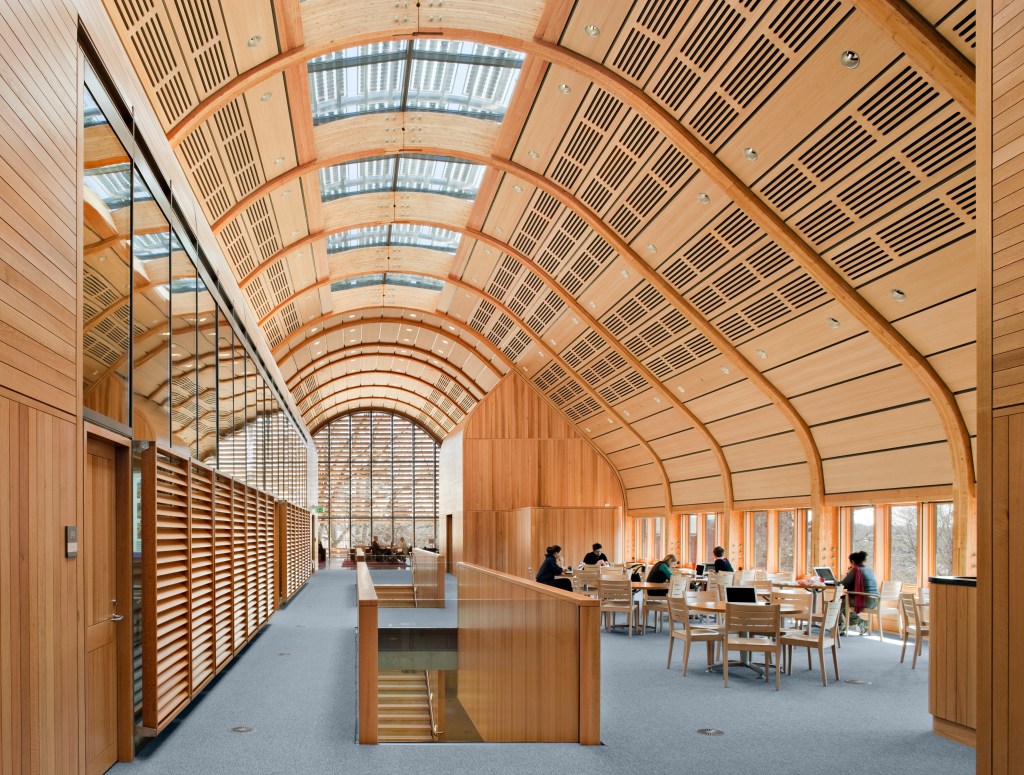
Kroon Hall. Image credit: Atelier Ten
Evolving Market Perception
The commercial world is waking up to the economic implications of climate change. Most large companies now have Environmental, Social, and Governance (ESG) commitments, and for many businesses, their office spaces are a significant part of their avoidable emissions. This realisation is helping align sustainability with a clear value proposition. While not all clients see the full picture yet, the trend is moving towards a broader acceptance that investing in green buildings and infrastructure is not just an environmental choice but a strategic economic decision.
Patrick passionately advocates that it's crucial to convey that our projects are not just about immediate outcomes but must be viewed as long-term investments. “The real value of sustainable projects often unfolds over time, far beyond the initial cost considerations. This long-term perspective is essential for truly understanding the benefits of sustainable development.”
Immediate Challenge of Carbon Reduction
Historically, the industry has concentrated on reducing operational carbon, but now, with the reality of a rapidly decarbonising power grid, the emphasis has changed. The embodied carbon of buildings - something Atelier Ten began to seriously consider around 2010 - is emerging as a critical factor. The realisation that a building's initial carbon footprint can outweigh the operational savings over time has been a game-changer, says Patrick with a real sense of conviction. “For instance, adding aluminium shades to reduce solar gain might not justify the environmental cost when considering the carbon footprint of their production and the marginal energy savings they offer in a low-carbon grid context.”
Atelier Ten’s approach involves a dual focus: planning for a building's long-term lifecycle, while also seeking immediate, low-carbon solutions. Patrick reminds us that this shift is crucial because the choices that are made today have a profound impact on our ability to address the climate crisis in the short term. For example, the practice of constructing large basements for amenities like bicycle storage, while beneficial for cyclists, carries a significant carbon (and financial) cost. Alternative above-ground solutions, that align with both sustainability goals and planning constraints need to be explored instead.
“I want you to be innovative . . . but I want you to show me where it's been done before . . . [said one of Patrick’s clients]. People don't mind being on the leading edge, but the bleeding edge is not so comfortable for people when they are responsible for the investment.”
Rethinking Traditional Practices
This carbon reset that is occurring, driven by the greening of the power grid has resulted in reevaluating practices once considered sustainable, such as combined heat and power (CHP) units, in light of the changing shape of their carbon impact. The move towards greener construction materials, like steel produced in electric furnaces, reflects a broader industry shift towards sustainability.”
It’s reassuring, for example, to see the closure of coal-based steel plants in favour of cleaner production methods. This transition, while costly and time-consuming, is essential for meeting the industry's sustainability goals.
The goal must be to minimise embodied carbon.
Many of us feel overwhelmed by the scale of the challenge, Patrick agrees, but says, “Change begins with individual action.”
“We've recently launched a campaign within Surbana Jurong - where Patrick has taken a global sustainability leadership role - encouraging personal pledges to reduce carbon footprints. These small, personal commitments can collectively drive significant change. For professionals in our field, pivoting towards nature-based solutions, regenerative design, and sustainability-focused decisions is increasingly accessible. Choices such as selecting sustainable materials can make a huge difference.” For the broader public, it can come down to lifestyle changes, and although seemingly minor, these can collectively contribute to larger market shifts.
Despite the controversy surrounding carbon offsets, Patrick maintains a cautious optimism about their role in sustainability. While not without their flaws, he suggests that offsets can facilitate projects that might not otherwise be feasible, providing tangible environmental benefits. However, it's crucial to approach offsets with a critical eye, focusing on the quality and integrity of the projects they support. Offsets should not be seen as a carte blanche to continue unsustainable practices but as part of a broader strategy that includes direct actions to reduce carbon emissions.
Temasek, Surbana Jurong’s parent company, invests in high-quality offsets, currently priced around $50 per tonne, with plans to increase this to $100 per tonne by 2030. This investment strategy focuses on emerging technologies in carbon abatement, reflecting a commitment to not just any offsets, but those that can genuinely contribute to carbon reduction.
As Chief Sustainability Officer at Surbana Jurong Group - which employs over 16,500 engineers and building professionals globally - Patrick’s primary task is to develop a sustainability transformation plan for the entire group. “This role allows me to leverage our collective expertise to implement sustainable practices across a vast array of infrastructure projects worldwide, from Africa and Australia to Asia and the Americas.”
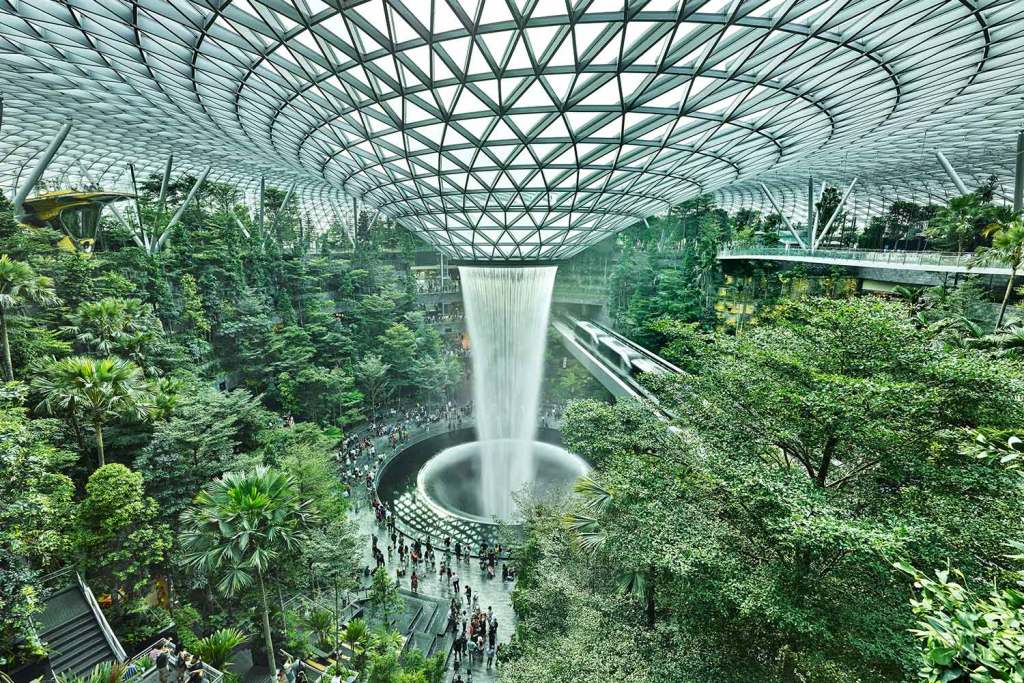
Jewel Changi Airport. Image credit: Tim Hursley
Strategic Planning for Sustainability
The transformation begins with a comprehensive plan developed with synergetic external expertise, notably from Derek Wilson, former head of sustainability for Transport for London. Patrick says with pride, “Our sustainability plan is structured around several key pillars: governance, education, innovation, and advocacy. We aim to standardise sustainability practices across our diverse family of brands, ensuring consistent reporting and alignment with science-based targets. Our immediate goals are set for 2030 and 2035, focusing on raising awareness and integrating sustainability into all aspects of our operations.”
A significant part of the strategy is to educate our teams globally, enhancing their understanding and implementation of sustainable practices. This involves not only training in new technologies and methods but also fostering a culture of innovation where sustainability is at the forefront of all decision-making processes.
“By doing so, we prepare our workforce to not only meet our internal standards but to set examples for the industry.”
Once we solidify our practices and demonstrate substantial progress, Patrick says with delight, “We plan to engage in advocacy and outreach. This will allow us to share our successes and strategies more broadly, influencing the industry and potentially setting new standards for sustainability practices globally.”
Challenges and Opportunities in Global Operations
Surbana Jurong and Atelier Ten’s global reach is impressive. With a vast array of projects ranging from providing essential water infrastructure in South Sudan to constructing high-profile buildings like the tallest structure in Kuala Lumpur. Each project presents unique challenges and requires tailored approaches, particularly in regions with different economic and environmental conditions. For instance, in parts of Africa and Indonesia, the focus might be on basic infrastructure and renewable energy solutions that are independent of the traditional power grid. Leveraging impactful results similar to introducing mobile phones into these regions.
“The discrepancy in cost and value across different markets necessitates a carefully calibrated response. While it might not be feasible to implement advanced energy recovery systems in some regions, we prioritise essential services and infrastructure that can significantly enhance the quality of life and sustainability. Our goal is to adapt our strategies to meet local needs while maintaining a commitment to our overarching sustainability goals.”

Gardens by the Bay. Image credit: John Seaton Callahan/Getty Images
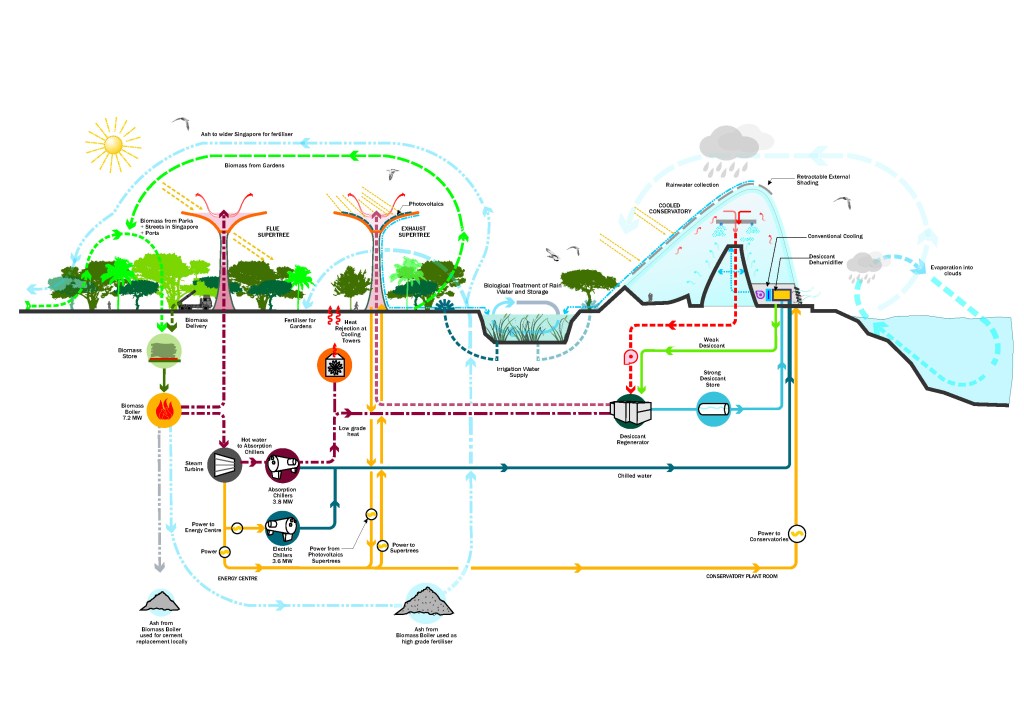
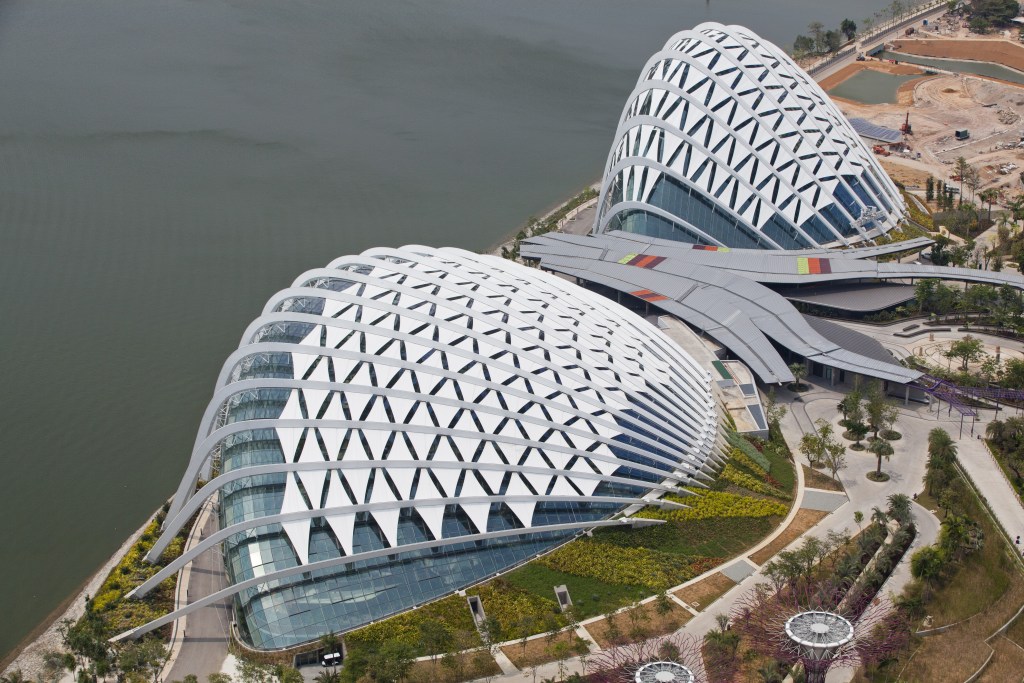
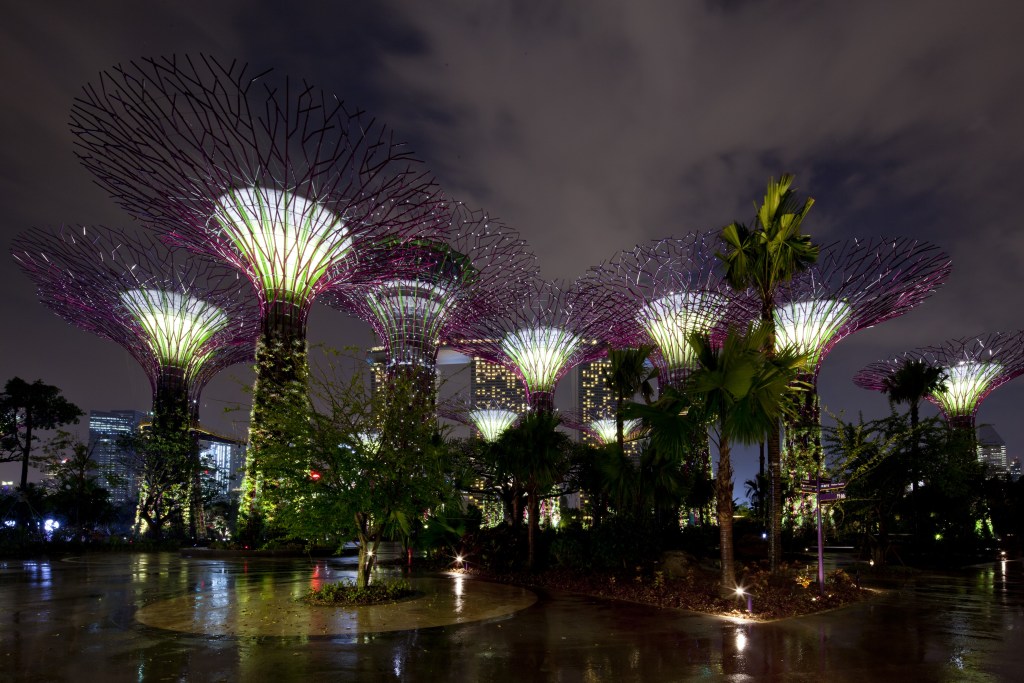

Gardens By the Bay with ecosystem diagrams. Image credit: Atelier Ten
Gardens by the Bay: A Pinnacle of Sustainable Design
One of Patrick’s most loved projects is The Gardens by the Bay in Singapore. It is not just a personal favourite but also a landmark in sustainable architecture globally. “The complexity and scale of the gardens are something I revisit often, both physically and in discussions. The project involved pioneering environmental systems like floor-based cooling, displacement air supply, and desiccant dehumidification, all powered by waste wood from Singapore’s existing tree management process. The integration of innovative technologies with natural systems was truly groundbreaking.”
The success of The Gardens by the Bay is due to an extraordinary level of trust and collaboration with the client, the National Parks Board of Singapore, and a stellar team that included Grant Associates, Wilkinson Eyre and Atelier One says Patrick full of admiration.
“This project was a testament to what can be achieved when multidisciplinary teams align under a shared vision of sustainability.”
One of the most rewarding aspects is the public recognition it has received globally. The domes, which house rich plant life and innovative climate control technologies, attract thousands daily, proving the project's success not just in architectural terms, but also in public engagement and commercial terms.
The project really exemplifies the benefits of working with nature and being mindful and considerate of the opportunities presented by nature-based solutions even in the most complex of buildings. The design is truly ‘regenerative’ in that it took an unloved area of parkland with a few rain trees and turned it into a festival of nature, adding extraordinary value along the way. Imagine if every building project could deliver this much value!
Role of Governance in Sustainability
Governance is not just about regulatory frameworks or corporate policies; it's fundamentally about the connections and support systems that enable a project from inception through to completion. Effective governance involves clear, consistent backing from decision-makers throughout the project lifecycle. This consistency is crucial for maintaining project integrity and achieving sustainability goals.
Patrick is beginning to see a significant shift in the industry where there is a direct link between executive compensation to sustainability outcomes. This has been most notably demonstrated by companies such as British Land, a UK property development and investment company. By setting embodied carbon targets and tying these to C-suite compensation, there is a clear top-down incentive to prioritise sustainability. This approach not only motivates higher levels of corporate governance but also signals to the entire supply chain - from steel and aluminium producers to concrete manufacturers - the importance of improving these sustainability standards.
"Imagine if more developers adopted similar incentive schemes, fostering a competitive environment where being one of the greenest leaders becomes a coveted distinction."
Additionally, when project funding sources demand sustainability, the impact trickles down rapidly through the team hierarchy. This top-down influence is becoming more prevalent, contrasting with the traditional bottom-up approach where sustainability was often championed by smaller, more specialised groups within a project team - with frustratingly slow results.
Market Dynamics and Sustainability Initiatives
Market demand is a critical driver for change. When there's a strong market demand for sustainable buildings, it naturally attracts investment, which in turn shapes the project's sustainability profile. This dynamic is crucial because it underscores the importance of aligning market needs with sustainable practices.
Sustainability is transitioning from a niche advantage to a mainstream expectation.
Achieving sustainability is not about finding a single silver bullet solution; it involves meticulous attention to numerous small details throughout the project lifecycle, Patrick advises. This comprehensive approach can be less appealing because it lacks the immediate allure of big, bold initiatives often celebrated in the industry and media!
“Yet, it's these cumulative small efforts that truly define a project's sustainable impact.”
AI can significantly enhance the design process, helping to create more efficient and sustainable buildings by simulating various environmental and usage scenarios. However, the effectiveness of AI largely depends on the quality of the inputs it receives. If we blindly incorporate regenerative design principles into the AI models, the results might appear inherently sustainable but may not be entirely practical or desirable.
“We must ensure that sustainability is a core component of the AI models we use, to avoid creating designs that are disconnected from our environmental responsibilities.” Patrick urges architects to "switch on the sustainable toggle as early as possible in the process" to ensure that the generated designs prioritise sustainability.
“Too often, projects are initially sold on visually appealing concepts without a solid sustainable basis on which to deliver it. We are then brought in to add sustainability at advanced project stages, which is far from ideal. Effective sustainability must be integrated from the outset, not patched in as an afterthought.”
Benchmarking Systems in Driving Change
Patrick acknowledges the significant role that benchmarking systems like LEED and BREEAM have played in advancing sustainability in the construction industry. However, he notes that these systems need to evolve to better balance the focus between embodied and operational carbon. By updating these frameworks to reflect modern sustainability challenges, benchmarking systems can continue to be a powerful tool for driving industry-wide change.
Interestingly, there is a growing competitive landscape in places like London, where developers vie for the title of the greenest building. This competition is not just about prestige but also about demonstrating tangible sustainability achievements. This is a welcome trend. Patrick notes that competition drives innovation, investment, and ultimately, better sustainability outcomes. He calls for developers to continue challenging architects and engineers to push the boundaries of what is possible in sustainable design.

Bee’ah Headquarters. Image credit: Atelier Ten
Fundamental Shift Required
Patrick reflects that the most critical change needed is a shift in individual responsibility.
“There's a prevalent attitude that environmental issues are someone else's problem to fix. This mindset is perhaps the biggest hurdle. People often feel detached from the consequences of their actions, adopting a stance that if they can't solve the entire problem, they shouldn't bother trying at all. This is what needs to change fundamentally. Everyone needs to recognise that their individual actions contribute to a larger impact.”
Patrick has borrowed the metaphor of the 'trim tab' from Bucky Fuller to illustrate how small, individual actions can lead to significant changes. The trim tab is a small rudder used to move the large rudder on a ship by a subtle application of force, it symbolises how small adjustments can set larger transformations in motion. This concept is crucial for understanding how individual responsibility can lead to collective environmental progress.
It is a term that Buckminster Fuller used extensively - so much so that it is engraved on his tombstone.
Patrick reflects on his approach to inducing change, seeing himself as a gentle disruptor rather than a radical activist. His efforts in promoting sustainability for more than thirty-five years have been incredibly impactful. His career exemplifies how steady, thoughtful interventions can influence larger systems over time.
He embodies the Tim Tab - where small, strategic moves lead to significant shifts in larger systems over time.
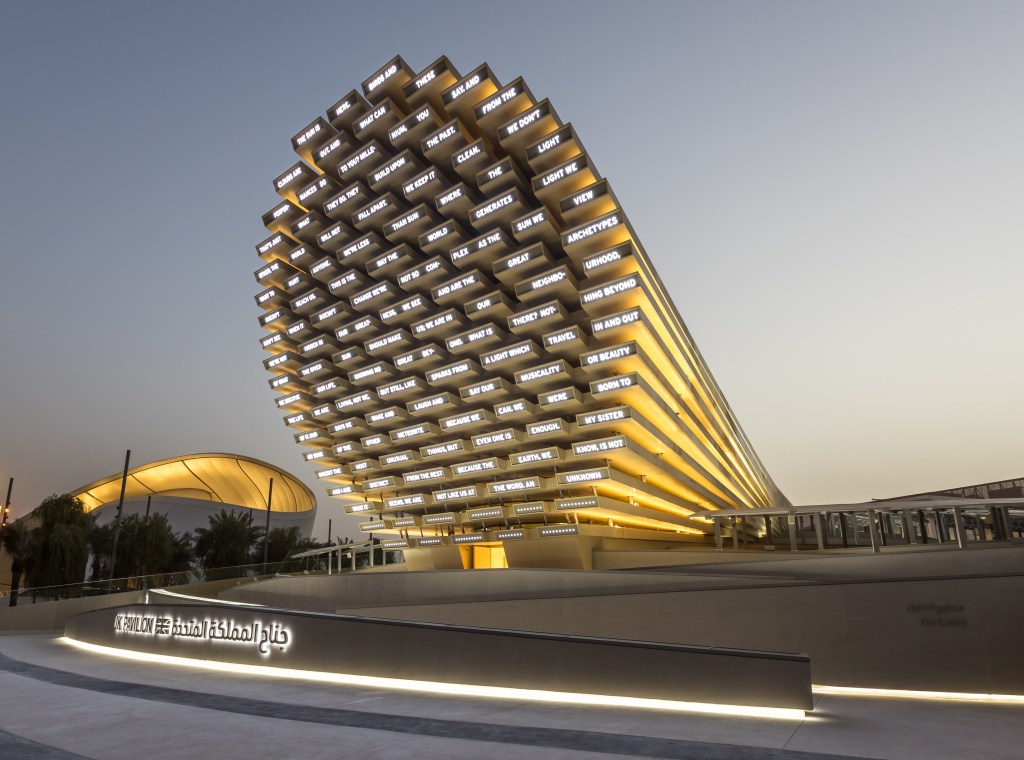
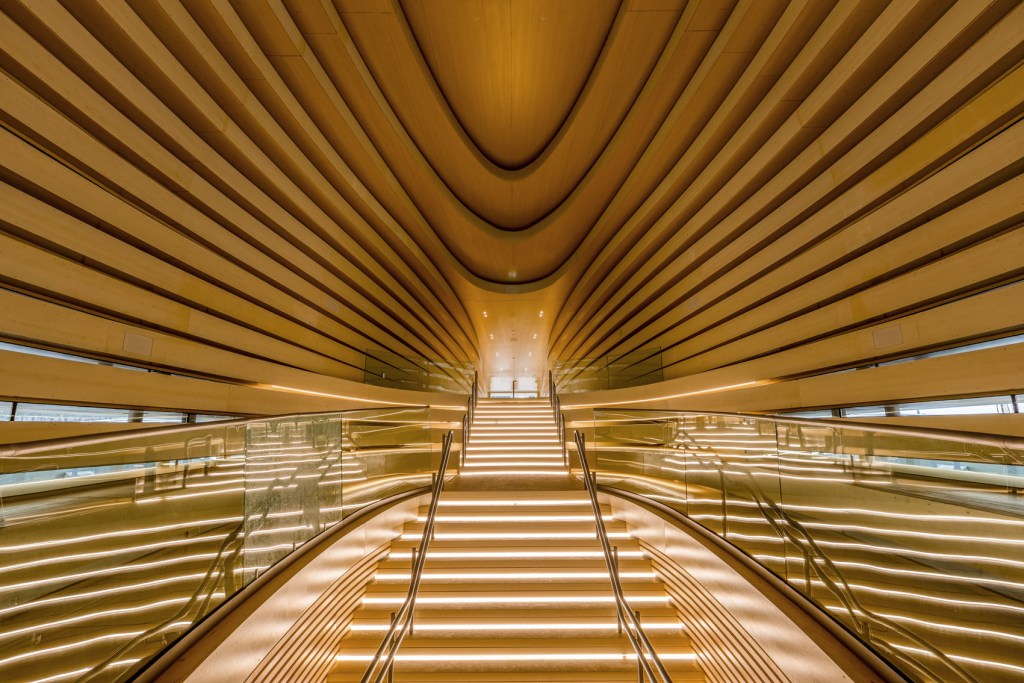

UK Pavilion Dubai Expo 2020. Image credit: Alin Constantin Photography
Key Takeaways
Patrick Bellew's journey underscores the importance of integrating collaborative dialogue with a nuanced approach to innovation in transforming the built environment, making Atelier Ten a beacon of strategic sustainable design.
Patrick has been at the forefront of changing how our industry perceives the value of green buildings. By focusing on creating compelling visual narratives and demonstrating the economic benefits of sustainability - Atelier Ten offers a path for others to follow.
The need to balance immediate carbon reduction efforts with long-term sustainability planning and reconciling the significant impact of embodied carbon is clear. Regenerative design and nature-based solutions must be at the fore. The goal is to integrate sustainability expertise as early as possible in every project and to target: Absolute Zero Carbon (see Atelier Ten’s Roadmap to Absolute Zero Carbon here: https://www.atelierten.com/roadmap-to-absolute-zero-carbon/).
We need to arm our leaders with tools to integrate education, governance, and innovation into the core of their business practices. Leaders must share their journey through advocacy, setting a precedent for how small and large-scale operations can effectively contribute to global sustainability efforts.
Atelier Ten’s work continues to inspire us to push the boundaries of what is possible in the realm of sustainable innovation in architecture. Patrick’s emerging work with Surbana Jurong Group provides a roadmap for how businesses can address their sustainability responsibilities whilst pursuing strategic growth plans.
Patrick offers a poignant reminder that we must acknowledge our individual role in environmental stewardship. By embracing the trim tab effect, where small personal commitments lead to substantial changes, and leveraging media platforms to educate and unite, we can collectively accelerate our progress towards a sustainable future.
Change doesn’t always require radical actions but can be achieved through small, consistent, thoughtful efforts that encourage others to participate in the movement towards sustainability.
It’s time to act now. Become a trim tab in your organisation, sector and industry!