Tara Gbolade, an accomplished Architect and Passivhaus Designer is at the forefront of creating sustainable living spaces and vibrant urban environments. With over 15 years of experience, Tara's work revolves around mitigating and adapting to the climate crisis through innovative architectural solutions.
As the Co-Director of Gbolade Design Studio, an award-winning architectural practice, Tara embodies a commitment to excellence and sustainability. With a focus on social, environmental, and economic sustainability, her studio strives to transform everyday places into extraordinary experiences.
Tara's expertise extends beyond architectural practice. She serves as a Mayor's Design Advocate, appointed by the Mayor of London, Sadiq Khan, to promote quality and inclusivity in the built environment. Additionally, she is a Member of the Board of Trustees at the UK Green Building Council (UKGBC), where she contributes to shaping national sustainability initiatives.
Tara's contributions to industry-leading guides and initiatives, such as the LETI Retrofit Guide and the GLA's Net-Zero initiatives, reflects her commitment to advancing sustainable design practices. Beyond her professional endeavours, Tara is a founding member of the Paradigm Network, advocating for Black and Asian representation in the built environment sector.
Tara Gbolade's journey into architecture began with a rich tapestry of experiences rooted in her upbringing in Nigeria. Tara found herself captivated by the diverse architectural styles she encountered, ranging from tropical modernism for institutional buildings in the urban city she grew up in in the north, to traditional compound housing in the villages of the southern regions.
In Nigeria, Tara was immersed in architecture that responded sensitively to the climate, characterised by features such as verandas, deep overhanging roofs for shading, and courtyard housing that integrated shared private/public realms as part of the housing arrangement. But beyond mere aesthetics, she observed a profound interdependence among families, where homes were not confined to nuclear units but rather served as hubs for extended familial networks. This natural interaction intrigued Tara, sparking her curiosity about the symbiotic relationship between people and the spaces they inhabit.
Upon relocating to the UK, Tara encountered a different societal dynamic where architectural styles reflected distinct cultural norms - such as the more formalised nuclear family structure being more prevalent than an interconnected extended family one. Despite the allure of European-centred architectural teachings, Tara felt a void in the discourse surrounding the architectural heritage of her homeland. Determined to bridge this gap, she delved deeper into her roots, seeking to integrate the lessons learned from both West African and Western architectural traditions.
For Tara, the contrast between these two environments served as a catalyst for her architectural journey. Drawing inspiration from the rich social and building fabric of Nigeria and the academic rigours of her British education, she embarked on a quest to establish her architectural practice. Today, Tara's firm, co-founded by Lanre Gbolade, is a testament to her commitment to honouring diverse cultural narratives within the built environment, a journey shaped by her origin story and fueled by a passion for understanding the intrinsic connection between people and architecture.

Crafting Human-Centric Architecture
In Tara Gbolade's journey, education and collaboration have played pivotal roles, shaping her approach to architecture and practice. Beginning her career, she felt a compelling need to focus on sustainable architecture, a sentiment fueled by her experiences in the UK and working in a range of firm sizes. Undertaking a course in Passivhaus Design further solidified her commitment, viewing it as an ethical imperative to design to the highest standards for sustainable living.
Her perspective extends beyond mere environmental considerations; it encompasses the social and economic impacts of architecture on individuals and communities. Gbolade recognises the potential of well-designed homes not only to reduce environmental footprints but also to enhance people's quality of life, from lowering energy bills to improving overall health and wellbeing. This holistic approach, informed by her upbringing in Nigeria and her observations of the interplay between people and their built environment, forms the foundation of her practice.
Central to Gbolade's ethos is the concept of climatic responsiveness, a principle deeply ingrained in her childhood experiences in Nigeria. She emphasises the importance of designing spaces that not only adapt to environmental conditions but also foster a sense of connection between people and place. In her practice, Gbolade prioritises understanding the human experience, delving into how individuals interact with their surroundings, from the way children navigate through spaces to the dynamics of boundaries between sites; opportunities for formal meetings as important as incidental meetings.
Drawing from her background in planning, Gbolade challenges the conventional notion of site boundaries, advocating for a more holistic approach that considers the broader context beyond physical demarcations. By foregrounding the experiential aspect of architecture and transcending traditional design constraints, Gbolade endeavours to create spaces that not only function effectively but also enrich the lives of those who inhabit them.
In Tara Gbolade's approach to urban design, a profound consideration for the streets and their impact on air quality prevails. What sets her practice apart is its unique ability to infuse strategic thinking into projects of any scale, from large-scale developments to smaller endeavours like townhouse designs. From the outset, Gbolade's team contemplates how residents might interact within their individual homes and beyond, fostering vibrant and connected neighbourhoods.


Design Ethos
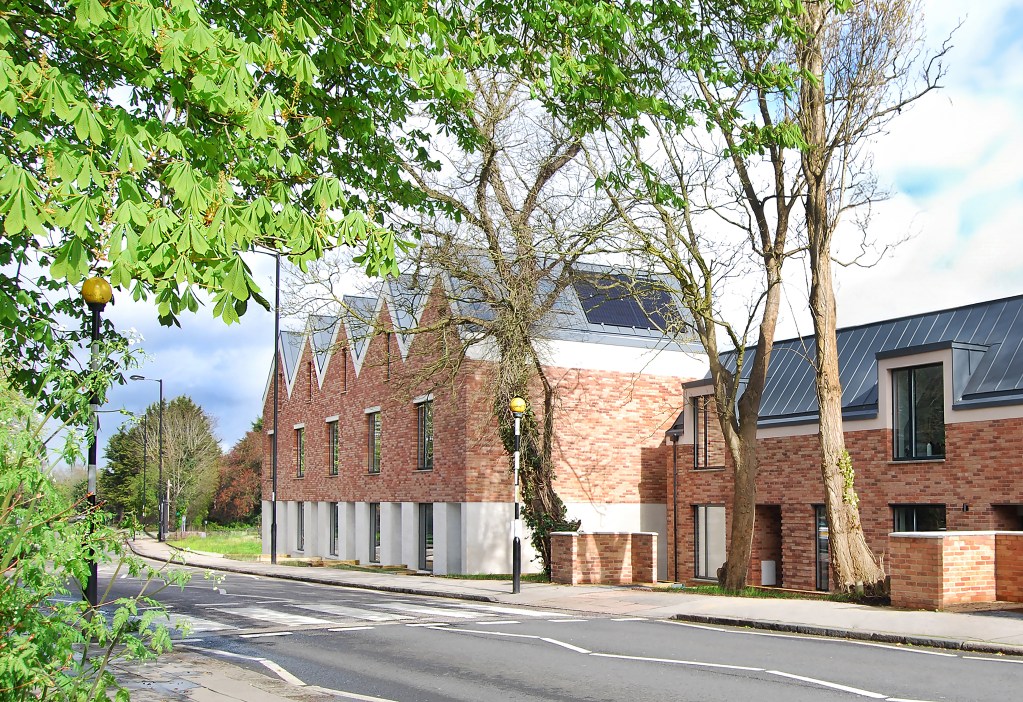
Context is paramount in their work, where environmental, social, and economic factors are carefully weighed in every project. For instance, in a recent undertaking in Crystal Palace, London, comprising eight townhouses, sustainability took centre stage. Gbolade's team meticulously crafted the design to align with the ambitious goals of the RIBA 2030 Climate Challenge. Embracing innovative solutions, such as using woodfibre insulation to minimise embodied carbon and opting for glulam timber beams over steel, the project exemplifies a commitment to regenerative practices. Even at the planning stage, considerations like reducing concrete usage and incorporating recycled materials into foundations were paramount, resulting in the creation of net-zero homes.
This holistic approach underscores Gbolade's ethos, where sustainability is not an afterthought but an integral part of the design process from conception to completion. By integrating strategic principles with a deep understanding of environmental detail, her practice seeks to redefine urban spaces as sustainable, vibrant, and inclusive hubs for communities to thrive.
Tara Gbolade's practice is deeply committed to embracing a holistic approach across all projects, viewing it not just as a methodology but as an overarching ethos. This commitment extends beyond the design phase to the composition of project teams. For instance, in a recent deep retrofit project in Essex, deliberate efforts were made to assemble a diverse team, including female-led and ethnically varied businesses. By fostering a multitude of perspectives, Gbolade's team ensures a rich tapestry of ideas informs their work.
The practice's passion lies in cultivating a broad spectrum of influences, recognising that true innovation flourishes when the status quo is challenged and diverse voices are amplified. This ethos permeates not only how the practice operates but also how projects are executed. By pushing the boundaries of conventional practices and embracing diversity in all aspects, Gbolade's team strives to create designs that are not only innovative but also inclusive and impactful.


Sustainable Futures: Design and Master Planning
In discussing the core elements of their design philosophy, Tara Gbolade highlights the paramount importance of sustainability. As a trailblazer in sustainable architecture, she elucidates how innovative sustainability practices are seamlessly integrated into projects spanning from small-scale endeavours to expansive master plans.
Beginning with master plans, Gbolade elucidates on the strategic approach her team employs, drawing insights from various projects. Whether conceptualising housing developments or cultural hubs, their focus remains steadfast on achieving NetZero targets or setting ambitious goals that resonate with clients. Beyond mere sustainability, their ethos embraces regenerative design, aiming not just to reduce harm but to actively contribute positively to the environment.
Central to their master plans is a meticulous consideration of air quality, inspired by tragic events like Ella's law, which highlighted the devastating impact of air pollution on communities. This awareness drives them to explore innovative solutions to mitigate car usage, prioritise pedestrian-friendly spaces, and promote cycling infrastructure.
At the heart of their sustainability strategy lies a comprehensive approach that encompasses renewable energy sources, fossil fuel-free design, and efficient water and waste management systems. Whether integrating ground or air source heat pumps or harnessing energy from renewable sources like photovoltaic panels, every decision is guided by a commitment to minimising environmental impact.
However, Gbolade emphasises the importance of anchoring these sustainability principles within the unique context of each project, ensuring a harmonious blend of ecological responsibility and contextual relevance. By weaving sustainability seamlessly into the fabric of their designs, Gbolade's team strives to create spaces that not only stand as testaments to innovation but also serve as beacons of environmental stewardship and community well-being.


Understanding Place and an Integrated Design Approach
Tara Gbolade sheds light on her approach to understanding the intricacies of a place before delving into design. This methodical process begins with thorough research, encompassing demographics such as gender, age, and ethnic diversity to inform tailored responses. She elucidates with an example from master planning, where a keen observation of user behaviour unearthed a significant drop in cycling rates among adolescents due to changes in school locations. This insight led to strategic interventions like reinstating cycle lanes and pedestrian paths to address mobility challenges.
Moving from macro to micro scales, Gbolade discusses her firm's focus on sustainability, particularly in retrofit projects. Working with Housing Associations, they tackle heritage or hard-to-treat properties, aiming for deep retrofits to preserve embodied carbon. With the looming statistic that 80% of future housing needed by 2050 already being in existence, their efforts are crucial. Gbolade emphasises the importance of client involvement in decision-making, advocating for solutions like refurbishing rather than replacing windows to prioritise resident well-being.
Throughout her discourse, Gbolade underscores sustainability as a guiding principle woven into the fabric of their projects. From large-scale master planning to intricate retrofit initiatives, it serves as the common thread driving their quest for innovative solutions that harmonise environmental responsibility with social welfare.


Tara Gbolade's Role as Mayor's Design Advocate
Tara Gbolade reflects on her role as a Mayor's Design Advocate (MDA), considering it a unique and fulfilling opportunity. As part of a team comprising about 42 independent experts collaborating with the Mayor's office, their mission is to uphold the quality of buildings and public spaces across London. Gbolade's focus within this role centres on design, with a specific emphasis on Net Zero and sustainability expertise.
In her capacity as an MDA, Gbolade is actively engaged in various initiatives. One significant aspect involves participating in design reviews, where projects with a notable presence in London, often funded by the Greater London Authority, undergo scrutiny by expert panels to ensure high-quality, sustainable design standards. Additionally, she contributes to the Future Neighborhoods 2030 program, collaborating with borough leaders to identify post-pandemic recovery opportunities, such as implementing cycle lanes and urban green spaces.
Another vital facet of Gbolade's work is providing input into the development of Net Zero guidance for London. As part of the reviewing team, she ensures the clarity and relevance of guidelines for design and developer teams, as well as local authority offices, facilitating their effective implementation.


Lifelong Learning in Leadership
In reflecting on her approach to leadership and collaboration, Tara Gbolade emphasises the value of leveraging collective expertise. Her involvement with organisations like the UK Green Building Council (UKGBC) and the Mayor's Design Advocate (MDA) role has underscored the importance of teamwork and continuous learning. Recognising that no single individual possesses all knowledge, Gbolade prioritises collaborative efforts, drawing insights from varying perspectives within her team and professional network.
Within her own practice, Gbolade fosters an environment where every team member feels empowered to contribute their ideas and insights. By encouraging open discussion and embracing others’ viewpoints, they foster a culture of innovation. This inclusivity extends beyond traditional architectural roles, encompassing urban designers, artists, biologists, and other specialists whose unique perspectives enrich the design process.
Gbolade's commitment to research and development (R&D) is evident in her team's meticulous approach to technical aspects of design. They dedicate significant time to studying thermal assessments and building physics to ensure optimal comfort and functionality in their projects. This technical expertise, combined with a mindset of continual learning, enables them to address complex challenges and deliver high-quality design solutions.
Reflecting on her leadership journey, Gbolade acknowledges the importance of maintaining a humble and curious mindset. She emphasises the value of lifelong learning, noting that embracing a student mentality fosters growth and innovation. As she looks to the future, Gbolade remains committed to cultivating a culture of learning and collaboration, recognising that the pursuit of knowledge is a lifelong journey.
Community Connection
The Lloyd Leon Community Center project in Brixton stands out as a captivating project, showcasing the practices’ commitment to community-centric projects. Situated within a listed building, the centre plays host to two vital community groups: the Dominoes Club and the Brixton Soup Kitchen. Upon initial assessment, the building presented significant structural and efficiency challenges, prompting ongoing efforts to address these issues.
Despite being a work in progress, the project is imbued with significance due to the profound impact of the community groups it serves. The Dominoes Club, predominantly comprised of an older demographic seeking social connection and camaraderie, fosters a vibrant atmosphere of inclusivity in its gatherings. Opening up their sizable rear gardens to the broader Brixton community, they offer a welcoming space for social interaction and community building, often hosting barbecues and garden parties.
Similarly, the Brixton Soup Kitchen extends a helping hand to those in need, using food as a means to bridge divides and foster dialogue. Through observation, and days spent volunteering with the kitchen team, Gbolade's team gained valuable insights into their operational dynamics. Remarkably, the decision to serve food in the front courtyard, rather than the larger garden, revealed a strategic approach to facilitating conversations and providing support to passersby who might otherwise not feel comfortable asking for help. This observation underscored the kitchen's commitment to breaking down barriers and offering holistic assistance, ranging from job interview preparation to legal guidance.
In Tara Gbolade's vision, maximising the potential of the community space emerged as a powerful endeavour. Collaborating closely with the community, they embarked on a project to extend the existing building of the Lloyd Leon Community Center. The ultimate goal is to elevate the facility to Passivhaus standards, ensuring optimal safety and health for its users. This entails upgrading the current listed building to retrofit EnerPHit standards while adhering to the new build Passivhaus standards for the new extension.
Innovative materials play a pivotal role in this project. Gbolade's team is exploring the use of cork lining for its insulation properties and sound-absorbing qualities, particularly beneficial for maintaining an enhancing environment during activities like domino games. Additionally, they are considering incorporating Moss walls externally to mitigate air pollution, a pressing concern given the centre's location near a busy junction prone to vehicular exhaust emissions. These natural elements not only contribute to the aesthetic appeal but also serve a functional purpose by enhancing air quality in the vicinity.


Placemaking and Community Engagement
In response to the question, Tara Gbolade reflects on the intersection of sustainability and livability within their work. They highlight the significance of placeshaping as a central approach and the importance of understanding the communities that inhabit a space from the outset of any project. Gbolade provides an example of a project involving existing trees threatened by proposed road construction. By applying feminist city principles and recognising that a majority of users were women and children with diverse travel patterns, they advocated for preserving the pedestrianised path instead. This approach prioritised safety and inclusivity in public realm design.
Looking ahead, Gbolade envisions a London where the voices of space users are part of the decision-making processes. Her practice emphasises the need for intentional stakeholder engagement, ensuring representation from a range of community demographics. This inclusivity extends to visual representations, with efforts made to accurately reflect the ethnic diversity of local populations in design renderings. Moreover, Gbolade stresses the importance of involving children and young people in the design process, fostering a sense of ownership and belonging within their communities.


Navigating Complexity and its Solutions
Reflecting on her personal journey, Tara Gbolade shares insights into her evolving outlook. As an architect at heart, she expresses a deep passion for her vocation while also finding fulfilment in the entrepreneurial aspect of running a business. Over the years, she has developed a strong commitment to creating a work environment that fosters joy and collaboration. Ethical practices within her business make it a positive force in the world.
Gbolade underscores the value of considering systemic perspectives in both professional and personal contexts. Rather than seeking isolated solutions to individual problems, she advocates for a holistic approach that acknowledges the interconnectedness of various factors. By embracing diverse voices and perspectives, she believes that blind spots can be addressed, leading to richer and more nuanced outcomes.
Drawing inspiration from Richard Sennett's notion that complexity enriches our lives, Gbolade encourages embracing the intricacies of life and work. While simplicity is often sought after, she acknowledges that complexity offers a deeper understanding and appreciation of the world around us. Ultimately, Gbolade suggests that embracing complexity allows for a more comprehensive and fulfilling experience.


Continuous Learning and Mentorship
Throughout the journey, Tara Gbolade acknowledged numerous setbacks and failures, emphasising that success doesn’t manifest instantly, nor after the second or third attempt. She stressed the necessity of embracing learning, iteration, and continual adaptation, characterising these processes as pivotal in navigating the complexities of business ownership. Gbolade highlighted the relentless nature of entrepreneurship, where unforeseen challenges frequently arise, necessitating swift responses without compromising long-term vision.
She viewed resilience as a cornerstone of personal growth, recognising that while business and life present formidable challenges, perseverance ultimately leads to triumph. Gbolade underscored the invaluable role of mentorship in their entrepreneurial voyage, crediting both formal and informal mentors for providing guidance and wisdom. By leveraging the experiences of others, she emphasised the ability to glean insights, refine strategies, and persistently apply newfound knowledge to their own work.
Tara Gbolade reflects on the diverse journey of her career. Nearly seven years ago, she embarked on exploring practices that were leading the way, both five and ten years ahead of her envisioned path. With curiosity as her guide, she sought out these forward-thinking professionals, inviting them for coffee and engaging in enlightening conversations. The objective was clear: to gain insights into the future of their field.
Conversely, Tara also sought wisdom from practices with a wealth of experience, those who were forty years ahead. By sharing coffee and conversations, she aimed to understand their reflections on past hurdles and present realities. This pursuit of mentorship and learning, she emphasises, is ongoing.
Reflecting on her initial quest for advice, Tara acknowledges that some insights resonated immediately, while others only became clear when faced with real-life situations. She likens this process to building a toolbox: collecting knowledge and skills over time, and deploying them as needed. For Tara and her team, mentorship remains a cornerstone of growth. They eagerly seek out practices of all ages, recognising that valuable lessons can be gleaned from both seasoned veterans and emerging talents. Ultimately, Tara emphasises the importance of understanding diverse perspectives, affirming that learning knows no bounds.
Speaking of gender disparities in seeking assistance, she pondered the implications of not harnessing available resources and advocated for proactive outreach. In response, Gbolade elucidated her approach, highlighting the ease with which she seeks guidance both within and outside her professional network, emphasising the value of continuous learning and collaboration.


Expanding Horizons: Vision for Global Growth
Business owners must be forward-thinking, which is important for shaping one's future trajectory. Rather than solely relying on past achievements showcased in portfolios, understand the value of articulating aspirations and the desired direction for growth when engaging with clients. The evolution of practices beyond traditional projects like house extensions can move towards more diverse and culturally rich ventures. While such projects may serve as initial stepping stones, pivoting and attracting a broader spectrum of engaging projects to foster professional development can bring an exciting challenge and opportunity.
With new leadership roles come new goals, and Tara Gbolade reflects on the recent challenges and opportunities she's encountered. Despite already working on dream projects that seemed distant a decade ago, she recognises a desire to scale further. While many small practices don't often get the chance to work on large-scale projects across Europe, she aspires to expand her reach beyond the continent. Looking ahead, the practices’ sights are set on venturing into the African continent and increasing their presence in the US market. The practice's ambition lies in broadening horizons and engaging in diverse projects with a global impact.