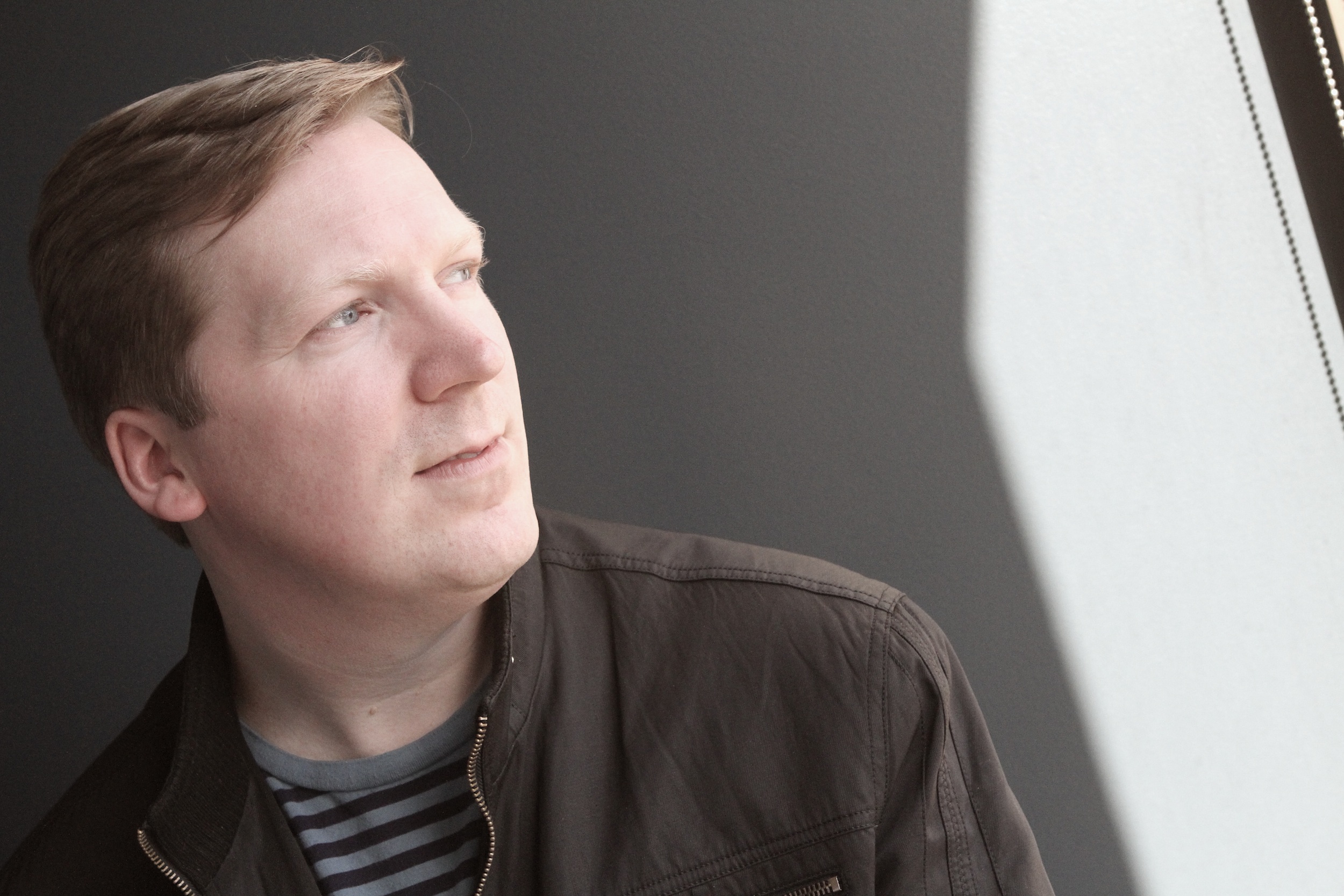
Cameron Sinclair is an entrepreneur, designer, and philanthropist whose work is a seamless amalgamation of sustainability and purpose-driven projects. His projects span 60 countries and include developing shelter, education, and health facilities for over 2.6M people. His work comprises disaster relief projects and rebuilding efforts in the wake of the Indian Ocean tsunami (2004), Hurricane Katrina (2005), and the Japanese tsunami (2011).
He is best known for founding the humanitarian organization Architecture for Humanity and is a 2006 recipient of the TED Prize and Wired Magazine's Rave Architecture Award. His new organization, the Worldchanging Institute, has Bult schools for 5000 refugee children on the Syrian border and has lent its support in the wake of the recent Turkey-Syria Earthquake (2023).
Dream Big and Dare to Fail.
Failures and successes make for entrepreneurial realism and the closing down of Architecture for Humanity was one such moment for Cameron Sinclair. His name as a founder has been connected to the organisation until its closing, however, the fact is that both Cameron and his co-founder Kate Stohr- left the organisation two years before it actually went under. When Architecture for Humanity collapsed it was a big blow to the architectural humanitarian industry. It achieved milestones that changed the way architecture could be implemented and was one of the most successful architectural charities that achieved incredible success by building globally.


The key to its failure? Architecture, says Cameron. The board believed it was much easier to provide design services over design and construction services for liability reasons. When in reality, good design is easy to make but difficult to implement. Removing the value proposition of construction was a stumbling block for the firm and a cautionary tale of relying on the idea that design is enough. The collapse was a lesson in understanding the values of not only an organisation but also the value placed on architecture.
High Impact Architecture
The constraints of being able to work from the grassroots level impact the architect and the design. Most communities that have been affected by any catastrophe - historical or economical - often view change as invasive or losing connection to their traditional ways and nature. Rural dwellers are convinced to substitute mud for cement blocks in construction as a display of economic advancement but oftentimes this is made impossible by the climatic conditions of such regions.


Sometimes residents in local areas are also bulldozed into buying concrete from American-registered companies. This way money coming from America is not used for a cause to boost the economy of the community but is rather recycled back into another US corporation. Hiring local builders, carpenters and labourers boosts a village economically and is also advantageous as they already know local building methods used by their ancestors. This local knowledge can be utilised to build better and more sustainable solutions. Many global organisations fail to build with purpose as they use standard models to build. They do not adopt local architecture or hire architects to conduct research and design structures that implement regional styles.
Architecture for Humanity was different as they put Design at the forefront of the Humanitarian Aid provided, with a claim “Good Design” and “Design like you give a Damn” all architects involved were committed to providing solutions spiced up with dignity and purpose.
“Design is about creating spaces for people to enjoy and, of course, creating moments where you elevate the spirit, but ‘design for good’ is figuring out a program that not only creates better spaces but creates jobs, creates a new industry, and really kind of raises the conversation about how we rebuild.”
CAMERON SINCLAIR
The Turkey earthquake was a wake-up call as the majority of the destruction didn't come from natural buildings, but from concrete buildings with poor contractors who put profits over people.
“Architects must ensure that we come up with appropriate design solutions that don’t objectify and glamorise indigenous architecture but also don’t subjugate it which is a delicate, difficult balance to achieve,” says Cameron.
The building is a huge part of being able to help people when providing humanitarian support. Upskilling and training people to build economically boosts the value of the project. Therefore, working with local resources impacts the community from the grassroots level.


Community rebuilding projects also mean working in geographies dominant with extremist groups. Cameron worked in Rwanda and Khmer Rouge with the children of both perpetrators and victims of genocide. His understanding of the psychological impact of such conditions informed his design decisions and opened new creative avenues in how architecture addressed these circumstances.
Cameron reflects that to this day there are great philanthropic design groups that work on the border between empowering local voices as well as providing sustainable long-lasting change. Unfortunately, none of the current organisations in operation is as big or global in scale as AfH was, so the industry and for many of us, there is a “hole to fill” as we await a raise of another architectural group to be able to shake up the mainstream as much as AfH was able to.
At its best Architecture for Humanity was raising over 17 million dollars annually for humanitarian help. Not many architects can attribute such success.
When asked about money Cameron says: architects interested in pursuing humanitarian work must ask themselves “Will money make you happy? A career in philanthropic work means knowing how you value wealth within your life story. Because if the only aim is to make money there is a minuscule chance that you end up not experiencing life as fully as you could.”


A human character is best seen through action performed away from the public eye.
So what happened to Cameron after AfH collapsed?
He continued to work on high-impact humanitarian projects. Many of which were not advertised and kept under wraps. Cameron worked for Airbnb for 4 years, where he was a part of projects that dealt with refugee issues, displacement issues, rural revitalization, and empowerment of women. The owners funded numerous projects but did not want to promote their humanitarian work. In a post-disaster situation, Cameron was commissioned to build houses and schools for refugees in Syria. With 8 million hosts, Airbnb was able to launch a network of open homes that housed tens of thousands with people playing hosts to refugees, those affected by disaster, and people in need pro bono within 45 minutes. This was achieved by tweaking code on the Airbnb website that allowed refugee organisations to book homes on behalf of displaced families without charging a fee. This way people adopted families for more than a year and former refugees took on more refugees. What he realised is that Airbnb’s philanthropic arm has the ability to impact more lives than Architecture for Humanity ever did. Though this does not comprise physical architecture, it defines architecture on a broader level.


Today, Cameron is in the process of building an institute, which will eventually house a Museum of Humanitarian Design and Architecture in Jerome, Arizona. The place was a mining town that had 15,000 people but currently has 300 as it was destroyed in the 1930s, because of its extraction. His idea is to repurpose the place into a Design and Research Centre with a Humanitarian Design Museum that will display themes of architecture in a post-climate collapse world that shows parallels with the history of the town.
Inaction and Opposition from the Industry
In my conversation with Cameron, I couldn't help but wonder about the reaction of the Architecture Industry first to his success and then to the collapse of the business. He openly spoke with me about how the architecture community can be undermining others' success and work.
Cameron observes that many organisations “doing good” today attribute success to factors that don’t play a role. Architecture for Humanity became a threat to many organisations. It got a lot of pushback from others in the NGO field. Cameron says he’s come out stronger and is now careful of whom he chooses to work and collaborate with.
Humanitarian washing, he says, is what came after bouts of greenwashing and diversity washing. Many organisations used those movements to raise but have left very little actionable contribution. He never shied away from expressing his disappointment about this and has always remained vocal about what he believed to be an ethical way to impact.


He recalls how such instances have caused him to lose friends because of his outspoken nature. This, as a result, has brought him fewer connections but deeper connections. As Cameron has been public with the admonishment of certain groups, people that are strong-willed, determined and vocal about their opinions are drawn to his work.
The people that contacted him after the Syria and Turkey Earthquakes were architects trying to truly make a difference. Though their efforts could not have been large-scale, these were local architects that could eventually work with their communities hand in hand. With his reputation, this time around he did not have to take up public fundraising as institutions and organisations came to him and with little effort, he was able to build an operational system.
Though he was not compensated for his work he says he found absolute pleasure in it.
What would you want to know if you had 5 minutes with Cameron?
Some people achieve success because they think differently, they identify a need, maybe have a more compelling story or simply aim high. Not all success can be attributed to efforts in marketing, communications and genuine good work. Most businesses and entrepreneurship are products of tenacity, a quality one does not learn from school or leadership classes. Architecture for Humanity under Cameron’s leadership achieved a greater impact than many other careers combined. Curious of the man himself, I asked if he ever considered sharing his expertise or mindset with other architects.
Cameron told me about having designed a curriculum for a course that answers questions such as - How to implement humanitarian projects around the world?
He says “By day 3 I realised I was teaching optimism not implementation. So I told my students that I'm scrapping the curriculum, opened my laptop and taught them about finances and getting money for projects.”
The students' response? “You got money from that?” and “What is the connection between these things?” He taught his students the pros and cons of working with high-profile donors, operations of a charity and finances.
Competitive remuneration motivates architects to do exponential work as proven by his organisation. His organisation compensated studio heads, architects and principals salaries that matched or outdid those of architects in private organisations.
He was one of the only architects to be represented by CAA, an agency that represents actors in Hollywood which was responsible for negotiating his book deals and speaking engagements with the caveat that 100% of the profits went to Architecture for Humanity. All this accounted for a personal donation of over $1M to Architecture for Humanity, within the first 4 years after winning the TED prize. After Architecture for Humanity closed, proceeds were donated to a number of humanitarian design organisations.

As a master in fundraising, Cameron worked in collaboration with architecture firms and raised awareness for causes people felt compelled to help.
Cameron says: “When it comes to funding, entertainment, philanthropy and architecture are interesting spaces for independent financing that is not bound by government restrictions.”
Over the years the entertainment industry has funded his work which led him to change tactics for fundraising. His projects have been funded by famed actors such as Angelina Jolie and Brad Pitt. Cameron and his team also built 12 schools on the Syrian border for which money was raised, thanks to Sharon Stone.
How does he do this? On a recent project, he was approached by a high net-worth individual who wanted to invest her time and finance in a cause. Cameron sat down with her and listened to her story. As a poor child who moved to America and grew up there her story resonated with him. By creating an understanding of her background and what drove her he outlined both the mission and history of the project. Taking on projects such as these is more than just quoting numbers.
He says “What was novel about Architecture for Humanity is we built a system that didn’t rely on our own industry to support it financially. If anything, we sold the idea that architecture could improve the lives of others to non-architects and I-want-to-be-an-architect-people.” The number of people that didn’t get to do it would at the very least help by funding projects. Allies of architects help amplify such work. For another Architecture for Humanity to work, we must find a group of people that are not a part of the industry but are allies and former architects.
In a space where the general public does not understand the importance of architects in building and where architecture is not spoken of enough Cameron Sinclair chose his niche and made a name for himself amongst other big names.
When asked about whom he looks up to he said:
Yasmine Lari, Hassan Fathy and Frank Loyd Wright, the first person to sell shares on himself went bankrupt, sold shares on his future career and raised capital to be able to start up again.
Paolo Soleri, who had a dream and vision, created utopian communes that still function today.
Buckminster Fuller, who understood how to stay true to his mission and beliefs was renowned in Aspen, Colorado. He showed the people there the true value of architecture, beyond a physical space just for the privileged.
Historically we have had architects grow out of the construction world and advocate for the role of architecture in humanitarian efforts and have been successful.
How do you create a system of response when there isn't one?
Could there be a way in which practices lean more towards servicing communities?
In Germany, there are communities that need help to accommodate a vast number of people that moved from Turkey and Syria. The country has been more than welcoming with the government's aid. Local hotels and business owners accept refugees and programmes have been integrated into the system to help them find employment. But, architecture is doing very little.
The crypto world has had immense growth with communities on Discord where people have a sense of belonging. Being a part of a community brings power and purpose not only to the community but also to its members. Airbnb was able to help refugees because of their communities of real estate and homeowners. People united with a purpose are a currency of businesses and the economy. Implementing those ideals in architecture by moderating communities and decentralising how we organise thoughts and action, can open doors for different business models and ideas and perhaps help philanthropy.

Cameron says the capital from large-scale projects that do not respect the local climate and are not sustainable in the long run can be used towards investing in startups and funds that will support entrepreneurs who aim to improve the livelihoods of billions of people. Grants that cost as little as $100,000 donated to dozens of organisations can spark a revolution. When he won a Ted prize of $100,000 his organisation went from having three people to 40 people within a year and the organisation went from being a $500,000 organisation to a $4 million evaluation.
Giving people toolkits and investing in incubators brings in investors who can finance large amounts for startups. The architecture industry lacks such opportunities which put a stop to innovation and slow down its evolution
Architecture used to be on top of the totem of construction projects but we've niched ourselves into looking for reputation and glory without any of the risks. Eventually, as developers backed architects they contributed the money which gave them all of the control. As a result, decision-making fell into the hands of developers.
You only fail when you stop trying.
He believes “you give not because it makes you feel good, but you give in order to enable projects to grow way beyond your own capacity.”
Understanding the quality of life over materialism and giving is rewarding. The merit of giving and living a simple life is really where happiness lies.
On being acknowledged for work, he says “A project is successful when the community feels like it's their project, it's their design, that they built and you were there to help shepherd the process. It’s an absolute failure when nobody shows up to the opening of the building, and the community is begrudging you for being there. A semi-success is when you're seen as a partner, everyone is together and they're excited. And unmitigated success is when they not only forget to introduce you or recognise you at the building opening, but politicians that had never shown up suddenly decide they're going to do a photo op at your building.”
Future of Charitable Organisations?
Some former staff and volunteers at Architecture for Humanity gave up their careers to do social impact work after reading Cameron’s book “Design like you give a damn”. Ideas such as these are inspirations that come from beyond doing entrepreneurial projects. Few other people doing meaningful work include Architecture and Development who also advocate for philanthropic work.
“There are organisations that I truly believe in and that are doing great work. A former Architecture for Humanity employeeSandhya Naidu Janardhan runs The Community Design Agency in Mumbai and they are doing fantastic work. She has been able to work with coordinating grassroots groups, placemaking groups, and institutional groups across India to work towards improving the standard of lifestyle and community.” says Cameron
Sandhya was Cameron’s choice to take over and lead Architecture for Humanity in 2012, but the board selected a sitting board member, Clark Manus.
Some charities also function as a united network of other smaller charities. Architecture education has been devoid of networking and business studies which is a massive drawback to starting organisations and running businesses.


Is there a possibility to involve the architecture community in recreating a humanitarian effort that is on a larger scale? Architecture for Humanity went down and left a gap in the humanitarian space in architecture and the value of such work must be communicated.
In answer to this Cameron says “It's good to have critical thinking in this space. But I think the reason there isn't another version of Architecture for Humanity is that I feel like nobody is as optimistic as they used to be anymore. People are driven by the idea that you can make a difference and live a life, you just have to figure out the way you want to live your life.”
Cameron has also made anonymous donations to other causes that work on similar lines as Architecture for Humanity. It's also Cameron’s own personal optimism, belief, ability to connect with people, and boldness in saying things as they are that are driving factors in projects like these.
In 2011, when Japan was hit by a tsunami, Cameron wanted to raise awareness. The same weekend, at his talk at South by Southwest, in Austin, Texas he took a shot because he was at an advantage with a large audience. Onstage, he said, “If we can raise $10,000 from this room right now, I will donate 10% of my annual salary.” People believed his salary to be huge when he only made $80,000 that year. He pitched the idea in a way that got everyone excited and convinced them to raise the necessary amount. He then donated 10% of his salary that year and that first $20,000 allowed him to raise the next 5 million.
He believes that optimism and pragmatism are important but what is more important is to follow through with the plan. The risk factors and changes in environments always mean changes in the processes and budgets. False promises to the community are worse than not showing up. “The damages that we've done as Westerners but even as people responders to need, no matter where you’re from and giving false hope because you really believe you can raise money to help make a difference make communities disillusioned. I didn’t care what people thought about me reputationally because my goal was to raise enough capital and we couldn’t break promises” he says.
Throughout his career, Cameron Sinclair faced opposition and challenges, but his unwavering commitment to making a difference propelled him forward. Sinclair's journey as an entrepreneur, designer, and philanthropist is a testament to the power of merging sustainability and purpose-driven projects. Through his work with Architecture for Humanity and other organizations, he has made a significant impact on the lives of millions of people around the world.
Looking ahead, Sinclair envisions the potential for architects to play a larger role in community service and social impact. By fostering networks, promoting critical thinking, and embracing optimism, he believes that architecture can be a catalyst for positive change. Ultimately, Cameron Sinclair's story serves as an inspiration for architects and individuals alike, reminding us to dream big, dare to fail and create spaces that elevate the spirit while addressing the needs of communities worldwide.