Bidisha Sinha is an accomplished architect with over 18 years of experience, known for delivering impactful projects that have transformed urban spaces across India, the UK, and Hong Kong. She began her journey in New Delhi, completing her schooling and undergraduate studies before pursuing a master's degree at the prestigious Architectural Association in London. For the last 15 years, she has been a key contributor at Zaha Hadid Architects, delivering projects that have left an indelible mark on the communities they serve.
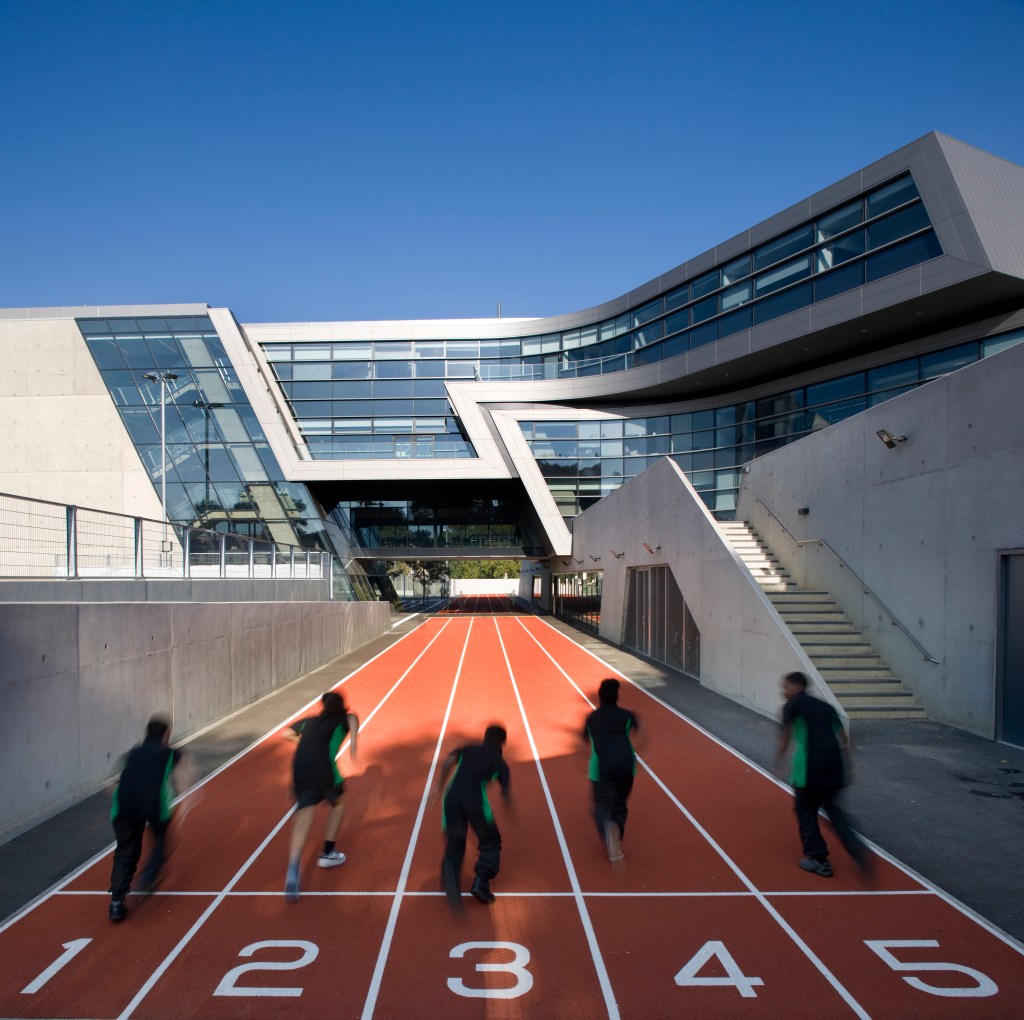
One of her most notable achievements includes the 2010 RIBA Stirling Prize-winning Evelyn Grace Academy in Brixton. Delivered as part of the Academies Program, this project provided Lambeth with its first secondary school in one of London's poorest wards. The innovative design helped bridge gaps in a fragmented community and became a symbol of revitalization, even featuring on the local 'Brixton 5-pound note.'
In 2017, she oversaw the delivery of the 'Mathematics – The Winton Gallery,' which won a RIBA London Award. As part of the Science Museum Group's ongoing master plan, the gallery has successfully redefined how STEM subjects can be displayed in ways that intertwine educational and artistic perspectives. Since its launch, the gallery attracted over a million visitors in its first year, while also greatly enhancing visitor engagement.
Currently, Bidisha is working on multiple projects in Asia, including a groundbreaking student accommodation in Hong Kong that reimagines the concept of shared living on campus. She is also leading the high-end interior design of mixed-use developments in China.
Born in Damascus and having lived in New Delhi, London, and Hong Kong, Bidisha brings an acute multicultural sensibility to her work, challenging established norms to find creative solutions that benefit all stakeholders. Her fascination with social cultures and identity informs her designs, enriching them with fresh perspectives.
She has been an academic juror and lecturer in architecture and design schools across the UK, USA, and India. As a member of the Advisory Board at the World University of Design in India, she offers strategic guidance to the next generation of architects. Additionally, she co-leads the 'Architecture of Conversation' design partnership with Ilga Lemanis in London, creating colorful and positive pattern collections. Bidisha’s career exemplifies the power of architecture to bridge cultural divides and create positive, sustainable change.


Bidisha Sinha, in her recent Disrupt MAG interview with Sara Kolata reflects on her career journey into architecture, revealing that her path wasn't predetermined from a young age. While some architects may have envisioned their future profession early on, her discovery of architecture was more of a serendipitous process. She'd always had a creative streak and enjoyed problem-solving, initially choosing science as her primary focus and art as an elective during her senior secondary education. When it came time to consider career paths, she was torn between architecture and law. Ultimately, she chose architecture because it balanced creativity with a pragmatic problem-solving approach.
She pursued her undergraduate studies at a school known for its grassroots, disruptive ethos. The institution was established in opposition to the prevailing norms, fostering an environment where practicing architects, rather than traditional academics, provided hands-on instruction. After graduating, she worked for a while before feeling the urge to embark on something different. She sought out further education and chose a parametric-driven program led by Patrick Schumacher, a prominent figure in the field and later director at Zaha Hadid Architects (ZHA). This decision significantly shaped her future career, as Schumacher and the late Zaha Hadid would both greatly influence her professional trajectory.
Sara Kolata, who had the privilege of meeting Zaha Hadid while studying at Central Saint Martins, recounts how she'd left her class upon hearing that the celebrated architect was about to give a lecture at the Architectural Association (AA). This spontaneous decision allowed her to witness Zaha's presentation on drawing techniques in an intimate setting with only a handful of attendees. Reflecting on Zaha's early passing, she feels grateful to have been able to meet her in person.
Bidisha elaborates on her journey from university to joining Zaha Hadid Architects, particularly highlighting her ascent to a leadership role. After completing her master's degree at the AA’s Design Research Laboratory (DRL), she took a break to recover from the program's intensity. However, Patrick Schumacher reached out to her, proposing collaboration on a competition they were keen to win. Bidisha joined the team and quickly became involved in the Evelyn Grace Academy project, a school in Brixton that Zaha Hadid Architects had recently secured.
This project was instrumental in solidifying her commitment to architecture. Her previous experience in constructing schools before her master's equipped her well for the Academy project, a serious endeavor requiring a focused team to meet the council's expectations. Although Zaha Hadid Architects is often associated with glamorous and iconic buildings, their design rigor applies equally to all projects, no matter the scale or prestige. Evelyn Grace Academy, despite being a secondary school, was treated with the same meticulous care that the firm would dedicate to a landmark tower in a major city. The result was six years of rewarding work that reinforced the firm's commitment to quality design.
Bidisha shares her experience of gaining firsthand knowledge, starting from concept development to finally handing over the keys to the client. She explains that working in the UK, a challenging construction market with rigorous processes like planning, tendering, and public sector project financing, provided her with a valuable learning curve that has served her well throughout her career.
When she joined Zaha Hadid Architects (ZHA), the firm had a relatively small team of 45 to 50 people. Today, with nearly 500 employees, ZHA has grown exponentially, and being part of this journey instilled a sense of ownership in her. “Each one of us has contributed to that growth, giving us a sense of ownership for the brand,” she says.
Her journey into ZHA began after studying at the Architectural Association, where Patrick Schumacher was her tutor. She joined the firm and worked on the Evelyn Grace Academy project, one of ZHA’s first completed projects in England. Other projects like the Aquatics Centre and the Riverside Museum were also in progress, but Evelyn Grace was completed first. “And then the next project came, and I just continued on, and I’m still here,” she reflects.


Mastering Architectural Communication and Leadership at Zaha Hadid Architects
Bidisha identifies the importance of communication as one of her biggest lessons. “You have to recalibrate the language with which you present ideas,” she says. Internally, architects can be poetic in their descriptions, but externally, clients need practical, concise information. For instance, clients care less about poetic descriptions and more about how much a particular design feature will cost.
She also underscores the importance of adapting communication styles to different audiences. “Sometimes, it can be very different,” she notes. It's crucial not to come off as condescending or dismissive toward other disciplines because that often breeds resistance and hinders collaboration. Delivering the Evelyn Grace Academy over six years was a steep learning curve in presenting strong ideas to a team accustomed to the challenges of public sector projects.
Bidisha emphasizes how her firsthand experience, from concept to handing over the keys to the client, has been invaluable. In the UK's tough construction market, projects require navigating intricate processes like planning, tendering, and public sector financing. Learning to handle these complexities was a steep learning curve that has stood her in good stead throughout her career.
She notes that the UK, with its complex regulatory landscape, often poses significant challenges to project delivery, and effective collaboration among all parties involved is crucial. “In the Science Museum, we delivered a relatively small gallery of around a thousand square meters, but the lessons I learned there proved invaluable elsewhere. Once you learn those lessons, they become universal and can be applied at any scale,” she reflects.
Bidisha believes that architecture is fundamentally about teamwork. Architects must collaborate with clients, engineers, and builders to ensure projects come to life. Their role often centers on leadership, keeping everyone aligned and on track.
“You have to think about the project's value for the firm and what innovation it brings. Sometimes it's a straightforward project, but even then, we should aim to push the boundaries of what’s possible,” she explains.
Her leadership philosophy revolves around giving team members the space to be innovative and solve problems creatively. Micromanaging is something she avoids, preferring to trust her team's instincts while remaining approachable. “If someone in the team realizes I'm micromanaging, they probably know it won't end well,” she laughs.
When errors occur, Bidisha's approach is to analyze why the mistake happened and how to prevent it from reoccurring. However, she dislikes blame games:
“It's never an individual problem because no one works in isolation. The team should support each other and catch things before they go wrong,” she asserts.
Bidisha's leadership style is heavily influenced by her own mentors, who provided guidance rather than making her feel inadequate. She encourages her team to be enterprising and take initiative because if they feel ownership over a problem, they will be more passionate about finding a solution.
“What disengages people is if they're treated merely as a workforce and given tasks without any autonomy,” she adds.
This inclusive, problem-solving approach fosters a culture where creativity thrives, and innovation remains at the forefront, driving Bidisha and her team to push architectural boundaries.
Bidisha emphasizes that, while sometimes strict deadlines necessitate stepping in and giving direct instructions, overall, she strives to give everyone a sense of ownership over their work to keep them engaged.
“Design, like any kind of product development, is a long process. You have to keep yourself motivated, and that can be tough when conversations aren’t always easy,” she explains. Addressing client requirements, design directions, and feedback can be challenging, but maintaining team motivation remains crucial.
She recognizes that during the design process, challenging conversations are inevitable. “You have to be able to have all of those while keeping everyone else motivated,” she says.

Navigating the Intersection of Computational Design, Business Acumen, and Creativity in Architecture: Insights from Bidisha's Journey
Bidisha acknowledges that Zaha Hadid Architects (ZHA) has historically faced criticism for its heavy reliance on computational design. However, she believes computational tools can inform site-specific design in ways that enhance a project's responsiveness to the environment and specific conditions. “Computational tools just take the same constants and variables that we were manually calculating and accelerate the speed at which we can find and test solutions,” she notes.
With the ability to feed more variables into design tools, architects can explore an endless range of configurations. However, the human element remains vital: “The instinct for the right solution is still coming from you, from understanding the kind of environment where someone can be their best,” she emphasizes. Zaha Hadid herself was ahead of her time, using her paintings to represent spaces in new, perspective-shifting ways long before the tools of today were available.
Bidisha highlights that the firm's philosophy has remained consistent. The theoretical framework hasn't changed, but the evolution is apparent in the projects ZHA has delivered over the years, showing an impressive range.
Regarding the importance of business acumen in the architectural field, Bidisha recognizes that education often falls short in preparing architects for the realities of client management and commercial aspects.
“You come out of undergrad idealistic and naive. As you deliver projects, you understand where to put your effort and what challenges to prioritize and resolve strategically,” she says.
When new graduates encounter client feedback for the first time, Bidisha often sees fear and uncertainty in their eyes. “No one told them it would be like this,” she says, noting the gap in business education. With time and experience, she believes architects develop a holistic view, learning how to manage projects, position themselves, allocate resources, and achieve a final product that meets business and creative goals.
Bidisha recognizes the necessity of balancing creative and commercial demands in architecture. "You have to be paid for the service you're providing, but you also put more of yourself into the pursuit of excellence. You need to understand how much you're getting back, whether it's through credits or other forms of recognition," she notes. She believes this conversation should start early in education to prepare students for real-world expectations. Learning on the job, she has developed a robust ability to balance creativity and commerce, owing largely to her temperament. "I'm not overly emotional or melodramatic, so I can step back and take a more holistic view."
Bidisha attributes her ability to detach herself critically from the design to a strict undergraduate tutor who insisted that students present their work not as “my design” but as “the design.” If someone said "my design," they had to tear up their sheets and start again. Although it seemed harsh at the time, she eventually realized how important this practice was for developing the capacity to view projects from a broader, business-oriented perspective.
This mindset is essential, particularly during the value engineering phase. Projects often start with ambitious goals that must be reconciled with budget realities, leading to a difficult cost-cutting process. “You have to decide whether you’re chopping off a finger, a wrist, or an entire arm,” she says. Setting realistic expectations early on helps architects deliver quality products that meet budget constraints while preserving innovation. “You can still deliver something excellent and innovative within the client's parameters.”


Bridging Cultures, Sustainability, and Creativity: Bidisha's Approach to Global Architecture Leadership
Managing multicultural teams across different continents is another challenge that Bidisha tackles with a focus on interpersonal relationships. "Emails often lead to misinterpretation because of language differences," she explains. “Forming personal connections and building trust can diffuse stressful situations and ensure a smoother collaboration.” Clear communication is essential, but it's crucial to develop a sense of the person behind the screen.
Bidisha is passionate about incorporating sustainability into her projects, particularly demonstrated in her work on the Forest Green Rovers Eco Stadium. She recognizes that clients increasingly prioritize sustainable architecture to meet the 2030 goals. The Forest Green project exemplified how sustainable practices can be fully integrated into the design to create an innovative, eco-friendly structure. By emphasizing these practices early and often, Bidisha successfully navigates complex global projects while ensuring her designs are groundbreaking and environmentally responsible.
Bidisha emphasizes that while she can't delve into the specifics of projects under development, Zaha Hadid Architects (ZHA) has made a concerted effort to embed sustainability principles into its designs. “When people think of Zaha Hadid Architects, they think of iconic and beautiful designs, not necessarily sustainability. But when we analyze our portfolio, many of our projects meet high sustainability standards,” she says. The industry has increasingly begun to prioritize these standards, encouraging professionals to view projects through a more environmentally conscious lens. “This shift leads to more deliberate decisions because sustainability has become part of the vocabulary.”
On the Forest Green Rovers Eco Stadium project, she explains that the client fully endorsed a rigorous evaluation of each material's performance, origin, production, and life cycle. This level of scrutiny ensures that every aspect aligns with their sustainability goals. “One of the challenges of sustainability, outside of greenwashing, is that initial investment can often be higher, and that turns commercial projects away. But clients like those at Forest Green understand that the long-term value outweighs the cost.”
Despite the hurdles, Bidisha believes that increasing demand for sustainable solutions will ultimately make them more affordable. “Sustainability will become the standard because it’s the only right choice.”
Balancing artistic vision with commercial practicality is another challenge. “You have to keep a clear perspective because there’s never a single 'right' solution,” she notes. There may be multiple ways to approach a problem, but experience helps to narrow down the options to those most suitable for the project's needs. For ZHA, this balance is maintained by carefully managing resources, understanding client timelines, and calibrating the creative vision to fit within the practical constraints.
Bidisha further explains that communicating brand values is crucial for building trust with clients. ZHA’s reputation for quality and consistency is integral to this process. “When I'm presenting Zaha Hadid Architects to a client, I have that confidence because of our brand’s legacy. People understand the complexity of the projects we've delivered.”
Equally important, however, is forging interpersonal relationships with clients.
“Architecture, design, and construction are about realizing that both sides share the same values and are working toward a common goal,” she says.
Clients who approach ZHA often already have an understanding of what the firm does and how it can bring value to their projects. “They're probably 50% of the way there because they've done their research,” she remarks.