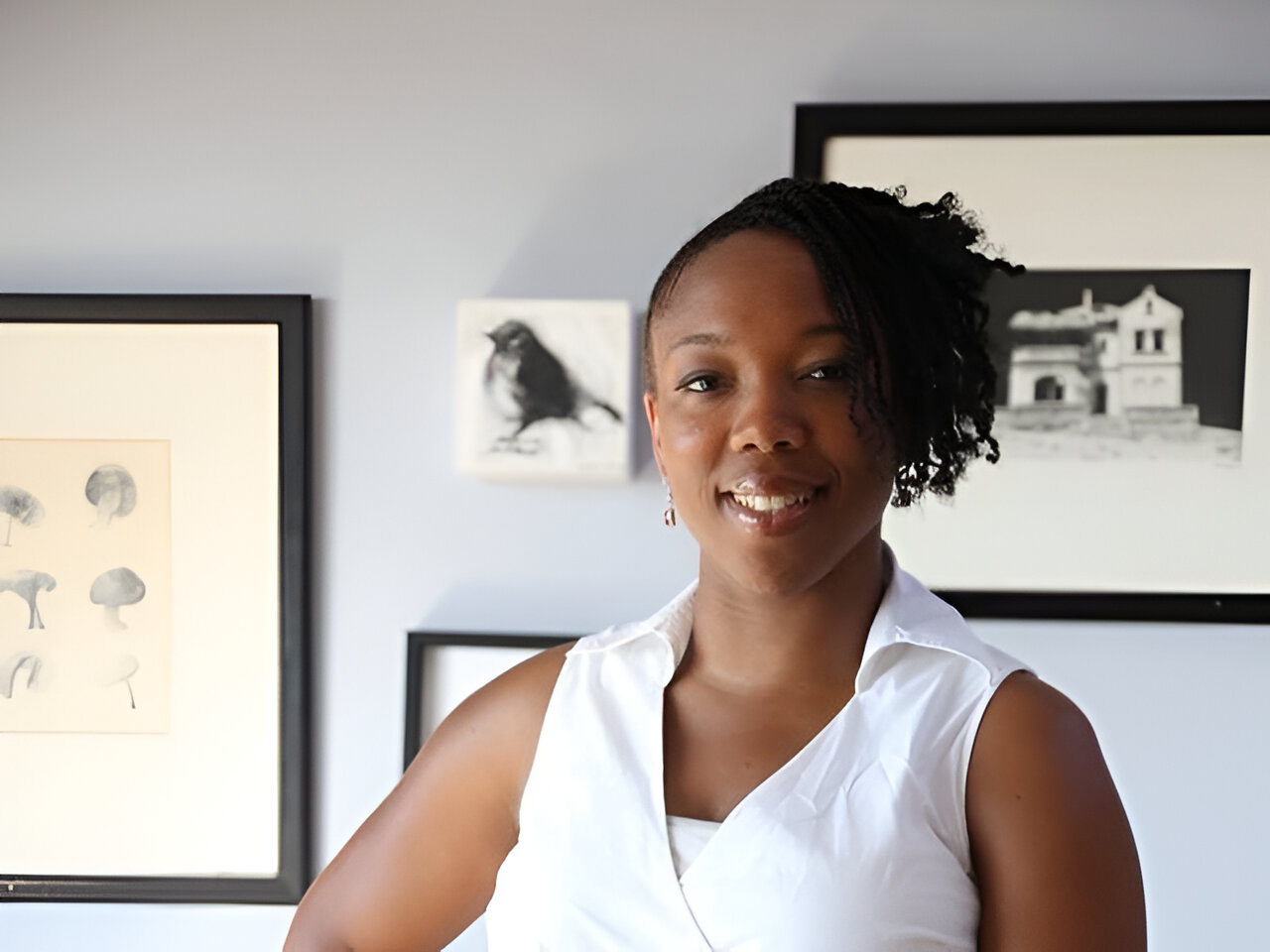
Ifeoma Ebo is a Nigerian-American visionary with a remarkable twenty-year journey dedicated to transforming urban spaces into platforms for equity and design excellence. As Principal of Creative Urban Alchemy, an acclaimed studio operating at the nexus of art, architecture, urban design, and planning, Ebo spearheads initiatives that prioritise cultural heritage in praxis, fostering inclusive and vibrant communities.
Beyond her studio work, Ebo serves as an Assistant Professor for Design & Sustainability at the Spitzer School of Architecture at the City College of New York. Here, she delves into transdisciplinary research and teaching, exploring the intersections of cultural, climate, and environmental justice. Her dynamic approach to education reflects her commitment to shaping future generations of designers equipped to tackle the complex challenges of our rapidly changing world.
Ebo's impact reverberates far beyond the classroom and studio walls. Her accolades and fellowships from esteemed institutions like the Black Artists & Designers Guild, the New York State Council on the Arts, and the Architectural League attest to her unwavering dedication and innovative vision. With exhibitions spanning prestigious galleries and museums, Ebo's artistic prowess and scholarly contributions continue to inspire and ignite conversations on the relationship between society and the built environment.
Rooted in a Bachelor of Architecture from Cornell University and a Master of City Design & Development from MIT, Ebo's journey epitomises the convergence of academia, practice, and advocacy. Her multidimensional approach to design, coupled with a profound commitment to social and environmental justice, positions her as a trailblazer in the field of urban design—a champion for equitable and sustainable cities of tomorrow.
In discussing her passion for architecture and urban design, Ifeoma Ebo shares her journey from a Brooklyn upbringing to her academic pursuits at Cornell University and MIT. Growing up in the bustling urban environment of New York City, Ebo's early fascination with art, particularly drawing, laid the foundation for her future endeavours. Excelling in math and science during her formative years, she found architecture to be the perfect amalgamation of her varied interests.
Reflecting on her roots, Ebo recounts how visits to her mother's village in Nigeria sparked her curiosity about the stark disparities in built environments between her two worlds. Drawing inspiration from the architecture of both locales, she embarked on a quest to reconcile these differences across continents and cultures.
Her undergraduate studies at Cornell delved deeper into the intersection of cultural heritage and architectural design, providing her with insights into her own identity through an architectural lens. Yet, Ebo's quest for understanding extended beyond aesthetics; she sought to unravel the intricate ties between urban economics and architectural form.
This pursuit led her to MIT, where she delved into urban design and planning, aiming to decipher the complex interplay between urban dynamics and the built environment. For Ebo, this academic journey represents not only a quest for knowledge but also a commitment to understanding how communities are shaped and influenced by the decisions made in urban development.
Ifeoma’s deep-seated passion for architecture and urban design is driven by a desire to bridge cultural divides and create spaces that resonate with the diverse fabric of society.

Creating Equitable Urban Spaces: The Intersection of Practice, Education, and Advocacy
Considering her multifaceted background as an architect, urban designer, and educator, Ifeoma Ebo sheds light on how these diverse roles inform her approach to fostering equitable urban spaces through her initiative, Creative Urban Alchemy.
Ebo's practice, based in Brooklyn, operates at the nexus of art, urban design, and planning, garnering recognition through various awards. She views education as an invaluable arena for experimentation and idea validation, likening it to a laboratory where concepts can be tested in ways that might not be feasible in conventional practice. The insights gleaned from this educational endeavour significantly impact her professional practice.
For Ebo, education serves as a conduit for passing on the torch of change. She believes that effecting meaningful change involves not only actively participating in it but also shaping the perspectives of the next generation of designers. Recognising the evolving landscape where diversity, equity, and inclusion are increasingly championed, she sees herself as part of a movement driving towards a more just built environment.
The symbiotic relationship between her practice and teaching is evident. Ebo's pedagogical approach is influenced by her practical experiences, while her teaching endeavours, in turn, inform her professional practice. Advocacy and education are integral components of her work, with public speaking engagements serving as platforms for training practitioners and promoting the development of more equitable urban projects.
Overcoming Fears and Embracing Creativity: Ifeoma Ebo's Journey to Entrepreneurship
Faced with apprehension towards business development, Ifeoma Ebo reflects on her journey. She acknowledges that as an architect and practitioner in the built environment, she lacked training in this domain. This realisation initially made her doubt its relevance to her future endeavours.
Before fully committing to her own business, Ifeoma dedicated nearly a decade to municipal work in New York City. While proud of the transformative projects undertaken within communities of colour, she couldn't shake off a sense of creative limitation. This fueled her desire to practice in a manner that allowed her to express her full potential and creativity, particularly in advocating for equity and justice within communities.
Thus, starting her own practice emerged as the logical step forward. Leveraging her extensive networks spanning private, public, and nonprofit sectors, she embarked on projects aimed at challenging conventional approaches. For Ifeoma, this was about championing a different way of working, one that embraced diversity, creativity, and the pursuit of divergent outcomes.
Urban Development for Communities: Collaborative Efforts with Grow House in Central Brooklyn
“It also depends on how you see significant transformation whether it's something that's tangible that you could physically see or whether it's something that really is power building and my mission for the projects I work on is definitely power building is a key part of that," shares Ifeoma Ebo.
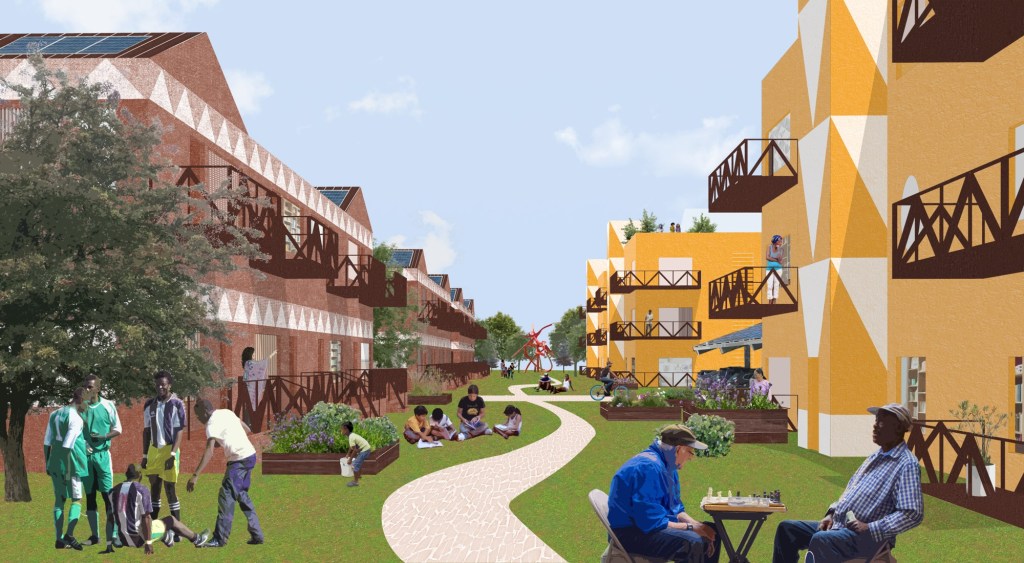
She elaborates on her current collaboration with Grow House Design and Development Group, a community-based organisation in central Brooklyn. The organisation's focus lies in shifting narratives around development in the area, which boasts a significant Black and Brown population. They aim to demystify urban planning and development within the community, especially given the rapid gentrification occurring in central Brooklyn. Ebo emphasises the importance of clarity regarding the factors driving these shifts.
One central aspect of Grow House's work centres around the Flatbush African Burial Ground, a newly landmarked site in the area. Ebo explains that the organisation played a pivotal role in the Flatbush African Burial Ground Coalition's efforts to preserve this sacred site and halt proposed housing development on it. Now, their focus is on raising awareness about the site and its historical significance to the Black community.
Collaborating with Grow House for close to a year, Ebo's team has been exploring creative ways to activate the public realm, fostering excitement and reverence for the Flatbush African Burial Ground. Their approach prioritises deep engagement over broad outreach, with current efforts geared towards involving young people in the project.
Empowering Youth and Celebrating Heritage: Community Art Project in Central Brooklyn
Ifeoma Ebo says that the organisation wants to bring young people into the process and shepherd them into creative leadership roles. To achieve this, they decided to launch a youth competition aimed at creating historic placards to be attached to light poles along the avenue connecting various Black historic sites in Brooklyn.
Ebo underscores the significance of this initiative, noting that it empowers young people to see themselves as leaders while deepening their connection to the neighbourhood's history. The project aims to elevate and amplify the voices of youth of colour in the community, countering stereotypes often associated with them.
Through a collaborative art project, which includes a youth mentorship program, young participants are mentored to create art that celebrates Black history and heritage. This endeavour not only empowers young people but also reflects a Black aesthetic, championing the neighbourhood's cultural identity.
Once installed, the artwork will serve as reflections of the community, with QR codes providing access to an online portal delving deeper into Black history in Central Brooklyn. This multifaceted approach aims to foster positive community perceptions of young people while celebrating and preserving Black heritage in the neighbourhood. Ultimately, Ebo's efforts seek to establish models where individuals can leave their mark on their communities, fostering a sense of ownership and pride in their collective history and identity.
When considering the involvement of young people it is crucial to recognise their role in long-term vision building. While some individuals may not witness the realisation of a vision they helped shape, it is the youth of today who will ultimately see it come to fruition. Ebo advocates for early engagement of young people in the planning process to instil in them a sense of leadership and ownership over the future they are crafting.
By involving youth in vision building from an early stage, she believes they will develop a sense of entitlement to shaping their own futures. She stresses the importance of education and inclusion in the planning process to ensure that young people are equipped to lead and sustain the vision over time, even as circumstances evolve. Ultimately, Ebo sees the involvement of youth as essential for safeguarding the continuity and integrity of long-term visions for communities.


Power Dynamics in the Built Environment
Ifeoma Ebo references the influential book "Blueprint for Black Power" by Amos Wilson. She highlights Wilson's definition of power as crucial for adaptation to change and emphasises its importance for sustainability. However, Ebo acknowledges that power has often been wielded as a weapon to restrict the freedoms and movements of certain groups, as evidenced by historical injustices such as segregation, urban renewal, and redlining.
Ebo sees the built environment as a tangible manifestation of power, with tall buildings representing financial value and land ownership. She believes that the built environment serves as a tool for power-building, and thus, there are opportunities to shift power dynamics by involving communities in shaping their environments.
In her view, empowering communities involves creating spaces for them to participate in defining the vision for their built environment. This ensures that future developments are inclusive and do not displace the very people they are meant to serve. She underscores the importance of learning from historical power shifts and advocating for movements that prioritise equitable futures for all.
The theoretical concepts outlined in the book "The Blueprint for Black Power" also discuss the dynamics of power. Ebo delves into how power has historically been wielded and weaponised against communities of colour. However, she also speaks of the practical manifestations of power, such as gentrification, displacement, and architectural measures like hostile designs that restrict public space access for marginalised groups.
Navigating Politics and Power in Public Space Transformation
In reflecting on the project in central Brooklyn it becomes evident that politics and power play integral roles. She notes that engaging with the community is crucial, particularly when the public realm lacks clear ownership despite being intended for everyone's use. Ebo acknowledges the complexities involved in executing art projects or initiatives within the public realm, as various stakeholders, including city agencies and elected officials, exert influence over these spaces.
One of the primary challenges, Ebo explains, lies in navigating spaces where the community lacks formal ownership but maintains a vested interest. She emphasises the importance of empowering communities to become stewards of these spaces through art and activation while simultaneously navigating the intricate politics at play. Building trust within these dynamics is essential, requiring a delicate balance between moving at the speed of trust and managing project outcomes and budgets.
Ebo recognises that these challenges are not unique to the project in central Brooklyn but are inherent in her broader work focusing on the crafting and transformation of public spaces. While fraught with competing intentions and power dynamics, public spaces offer opportunities for reshaping power structures. However, not everyone is willing to relinquish or share power in these spaces, adding complexity to the process.
Reflecting on the impact of community involvement, Ebo believes it enriches projects by embedding them in community identity. This, she suggests, ensures the emergence of future champions who will hold stakeholders accountable for the project's intentions. Ultimately, Ebo's work underscores the importance of navigating the politics of place to create meaningful and inclusive public spaces.


Community Engagement: Approach and Strategies
When conducting community engagement the focus is on establishing a network of individuals enthusiastic about seeing project outcomes come to fruition. One of the various methods she employs to engage communities is working directly with young people on short-term art projects or forming what she terms a co-creator council.
Ebo provides an example from a project in Wisconsin where she assembled a co-creator council comprising notable practitioners from diverse fields. This council played a vital role in representing different client groups and communities throughout the project's lifecycle.
Ifeoma Ebo brought together notable practitioners from diverse fields such as housing, transportation, sustainable development, and environmentalism. Their purpose was to represent various client groups and communities throughout the process of developing a master plan. Additionally, these practitioners were tasked with championing the master plan with local elected officials.
“These practitioners also serve as representatives of the different cultures and communities the project aims to support. Whether it's low-income communities, and/ or BIPOC communities they become champions for these particular communities throughout the project's duration” she notes.
In considering design frameworks, Ifeoma notes the necessity for strategies that encompass short, middle, and long-term goals. While long-term strategies often entail significant capital investments and infrastructure projects, she underscores the importance of community involvement throughout the process.
In her view, every framework should commence with a fundamental question: how can the community actively participate in both shaping and executing the vision? She advocates for ongoing engagement, emphasising that even as larger projects unfold over the years, there are opportunities for community activation, development, and entrepreneurship support. This, she believes, ensures that projects resonate with and benefit the local population over time.
Balancing Theory and Practice in Urban Design
Another way the organisation engages is through activating the public realm. This can involve hosting festivals with a unique ambience, creating community art, or conducting innovative design workshops. Their aim is to integrate public awareness building, education, and leadership development into every interaction with the community. Throughout the process of crafting future visions, design strategies, and visual representations, they strive to engage the community at every touchpoint.
Ifeoma Ebo underscores the significant role of education in their engagement approach, particularly in shaping perceptions of the public realm. They highlight the importance of utilising educational tools such as signage and storytelling to convey complex concepts like climate justice and environmental justice to communities.
In crafting workshops for communities, Ebo draws from their experience in academia to bridge the gap between theoretical concepts and lived experiences. They strive to raise awareness about how issues like flooding and building infrastructure quality are interconnected with environmental justice.
Ebo's approach highlights the value of public education in both academic settings and community workshops, emphasising the need to make environmental issues relatable and understandable to diverse audiences.
Continuously navigating between theoretical frameworks and real-world manifestations of injustice, particularly in academia and teaching, is a core aspect of Ebo's approach. She strives to illustrate the tangible effects of power dynamics in the built environment and how they can be shifted towards equity and justice.
In her teaching, Ebo prioritises practicality by sharing case studies from their own work, focusing less on theory and more on real-world applications. She acknowledges the inherent messiness of these projects, emphasising the need to adapt strategies to each unique context. Despite the challenges and lack of control, Ebo sees this adaptive approach as necessary for progress, leading towards collective understanding and focused action.


The Power of Art and Place-Making
In exploring new avenues, Ifeoma Ebo reflects on the notion that what we initially perceive may not always align with reality due to our ingrained habits and perspectives. Perhaps, she suggests, there exists another approach waiting to be discovered, one that could foster greater transparency, nurture relationships, and catalyse transformative changes within the built environment, all while supporting and empowering communities.
She delves into the realm of art, emphasising its universal accessibility. Drawing from a poignant quote by Mario Rosario Jackson, Chair of the National Endowment for the Arts, Ifeoma underscores the role of art in cultural self-determination, stressing that creativity knows no bounds of age or background.
“Cultural self-determination is a critical aspect of justice and equity. And I see art and art-making as a central part of cultural self-determination.”
Ifeoma Ebo
By facilitating artistic expression, particularly in linguistically diverse communities, she finds a powerful means for individuals to articulate their aspirations and visions for their surroundings.
Ifeoma champions creative placemaking as a cornerstone of this process. It transcends traditional artistic mediums, allowing communities to imbue their identity into the very fabric of their spaces. Through practices of both placekeeping and placemaking, communities reclaim agency over their narratives, resisting external forces that seek to impose change and displacement. In this collaborative act of creation and stewardship, they find empowerment and a renewed sense of ownership over their environments.
Ifeoma Ebo emphasises the significance of recognising and compensating communities for their longstanding, albeit often overlooked, contributions to creative placekeeping and placemaking efforts. By defining and articulating these concepts, she believes communities can gain acknowledgement for their invaluable work and garner the necessary support to advance their initiatives. Once acknowledged, creative placekeeping and placemaking become tangible and indispensable components, now increasingly integrated into urban design and planning endeavours as primary strategies for larger development projects. In her approach, Ifeoma always prioritises incorporating these concepts as foundational steps in any development project, whether focused on public spaces or buildings.
Ifeoma Ebo highlights the influence of art making on various projects, particularly in determining the type of signage present in a space. She emphasises that art making and storytelling, even by children and youth in the community, play crucial roles in shaping how people experience the built environment. For instance, the creation of historic placards by young people enables them to contribute to the public realm, thereby fostering equity building and power redistribution. By involving young people in different strategies for the public realm, Ifeoma sees an opportunity to challenge negative perceptions and stigma often associated with youth.
Moreover, she advocates for creative placemaking as a means of harnessing the diverse creative energies within a community, ranging from talent and dance to art making and storytelling. These creative arts serve as powerful tools for activating public spaces and creating environments where individuals can express themselves authentically. Ifeoma underscores that anyone, regardless of their background or expertise, can contribute to such initiatives by bringing their unique stories, talents, and skills to the table. Ultimately, this collective effort transforms public spaces, allowing people to experience them in renewed and meaningful ways while reflecting the community's values.
Fostering Community Identity through Public Space Transformation
The notion of community identity intertwined with the built environment allows people to perceive themselves reflected in their surroundings, fostering a sense of belonging and ownership. Ifeoma Ebo emphasises that when individuals see representations of themselves in public spaces, it cultivates a renewed ethic of care, as they feel compelled to nurture and steward these spaces. Moreover, this sense of identification encourages positive interactions among people within the community.
In her endeavors, Ifeoma Ebo has received grants from organisations such as the Black Artists and Designers Guild and the Architectural League, in collaboration with the New York State Council on the Arts. These grants supported her research and art exhibition project, titled "Reparations in Public Space." The project aimed to explore methods of engaging communities and facilitating discussions centred on healing in public spaces. Ebo initiated this endeavour in response to the recognition of the vital role public spaces played during the pandemic, serving as places of social connection, respite, and even workspace. She acknowledges the significance of these spaces as avenues for collective healing from the trauma experienced during the pandemic.
Furthermore, Ebo highlights the ongoing presence of spaces in New York City that hold historical trauma for Black communities, such as African burial grounds. Many of these burial sites are situated on open or publicly owned land, underscoring the importance of acknowledging and addressing historical injustices embedded within public spaces.
Transforming Trauma: Reimagining Spaces of Healing
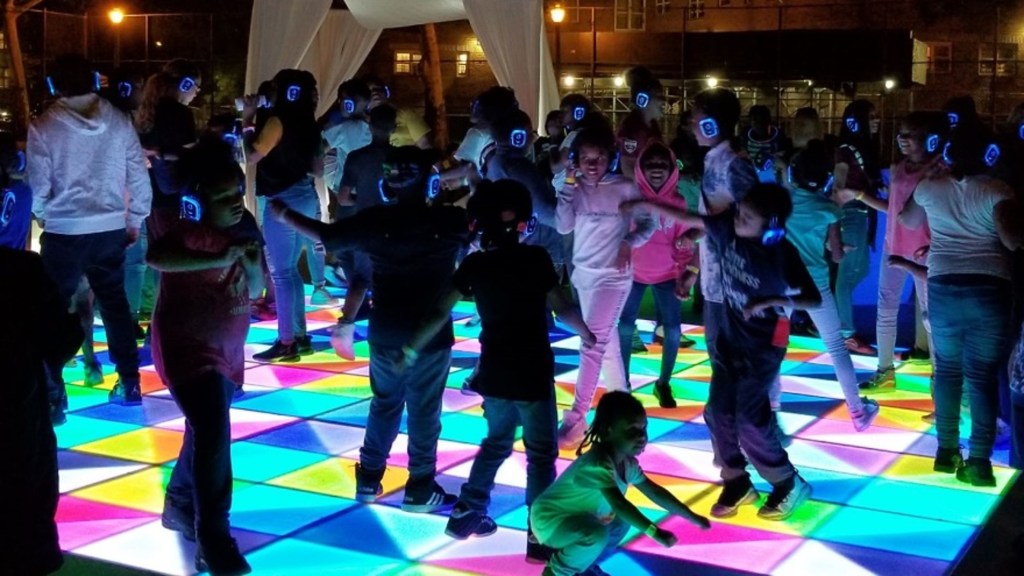
In the exploration of transforming spaces laden with trauma and pain, particularly the African burial grounds scattered across New York City, Ifeoma Ebo embarked on a research project aimed at reimagining these sites as spaces of healing and collective joy. These burial grounds, steeped in history, symbolise more than just physical locations—they represent a profound disconnect from cultural and personal identity, often associated with narratives of death and trauma.
The endeavour involved engaging African diasporic communities, to envision a transformation of these spaces. She partnered with Antoinette Cooper - a trauma-informed practitioner and Founder of Black Exhale, a non-profit organisation centring on Black healing. Through workshops co-facilitated by college students and utilising a tool called Mid Journey, which employs artificial intelligence to generate visual narratives based on verbal prompts, participants explored themes of healing and trauma-informed design.
However, the process was not without its challenges. Mid Journey, like any tool, carries inherent biases reflective of societal norms and representations found on the internet. Issues arose as certain visualisations tended to centre on white individuals or specific gender identities, highlighting the complexities of using such technology in sensitive projects.
Nonetheless, despite these hurdles, Mid Journey served as a catalyst for meaningful conversations and imaginative exploration, sparking a dialogue on the potential for reshaping narratives and reclaiming spaces of historical significance.
Unveiling Visions: An Exhibition Blending Ancestral and Artificial Intelligence
In considering the vision ahead, there's a need to delve deeper into its specifics, acknowledging embedded biases within the tools employed. Hence, an upcoming exhibition becomes crucial.
Scheduled for June 15th, the exhibition will grace the Flatbush Central Marketplace, a vibrant community hub nestled in central Brooklyn, proximate to the Flatbush African burial ground. It aims to showcase visual imagery stemming from recent workshops, alongside art crafted by Ifeoma Ebo. This art uniquely integrates ancestral wisdom with artificial intelligence, merging imagery from "mid Journey" with ancestral practices like crocheting, weaving, and beadwork, traditionally employed for storytelling.
Just as "Mid Journey" uses verbal prompts, ancestral art forms also utilise visual cues to narrate stories. This convergence promises a rich tapestry of expression. The exhibition runs from June 15th to August 15th, inviting visitors to engage with this fusion of past and present narratives at the heart of Brooklyn.
Beyond the narrative of personal growth and academic achievement lies a deeper message—a call to action for all who seek to create a more equitable and just world. Ebo's experiences underscore the transformative power of architecture and urban design in shaping not just physical spaces, but also social dynamics and cultural identities. Her commitment to bridging divides, amplifying marginalised voices, and empowering communities reflects a profound understanding of the inherent power within the built environment.
Through her work, she reminds us that true progress requires not only innovation in design and planning but also a fundamental shift in power dynamics and societal values. Looking ahead, Ebo's vision of inclusive, community-centred urban spaces serves as a guiding light for architects, planners, and activists alike. By embracing creativity, collaboration, and cultural sensitivity, we can transform our cities into vibrant hubs of diversity, resilience, and belonging.
In essence, Ifeoma Ebo's work embodies a holistic approach where advocacy, education, and design intersect to create meaningful change in urban environments, each facet complementing and enriching the other. In weaving together narratives of heritage, equity, and empowerment, Ifeoma Ebo embodies a transformative force within the realm of architecture and urban design. Her journey serves as an inspiration for future generations, urging us to reimagine the built environment as a catalyst for justice and inclusion.