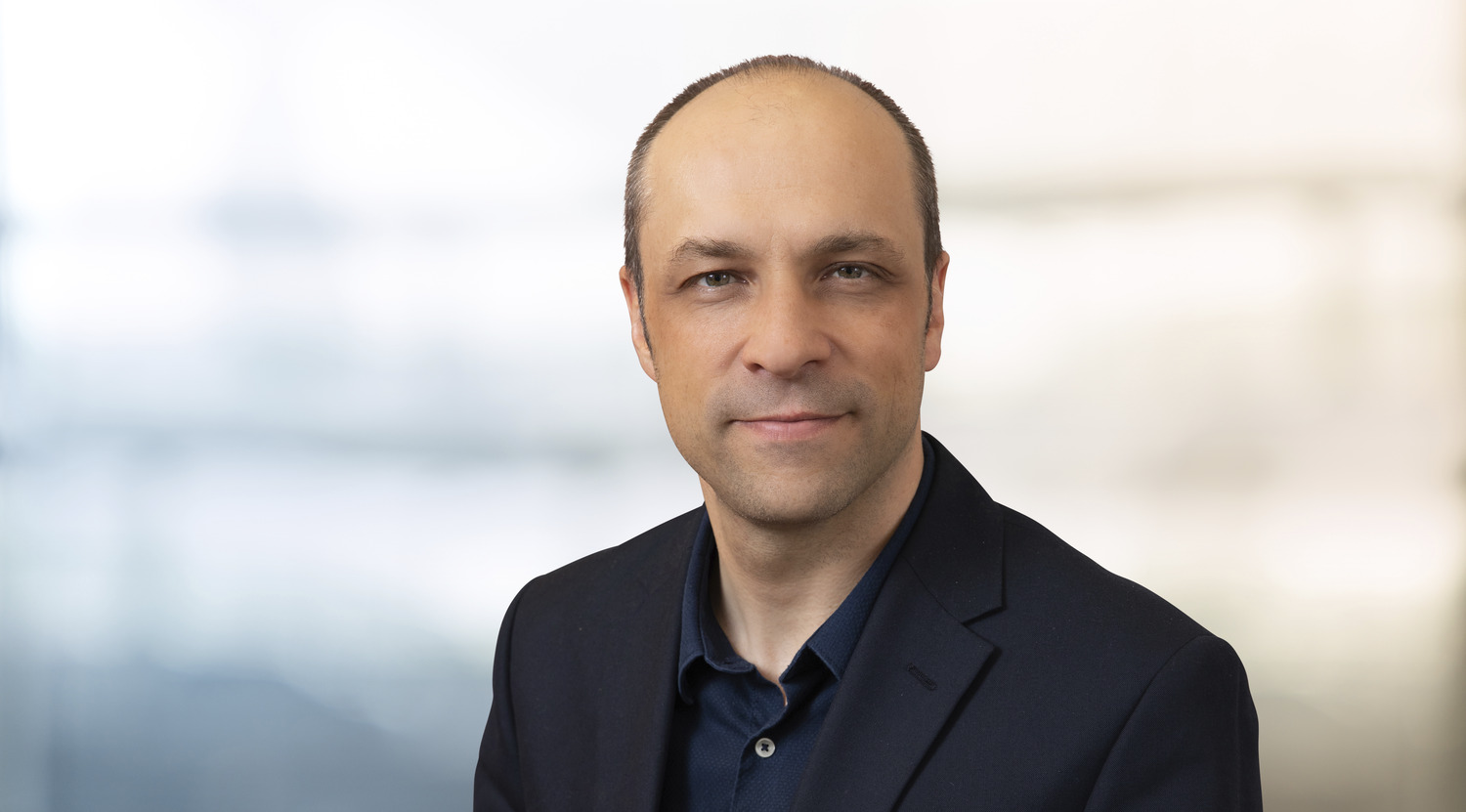
Daniel Bosia epitomises the intersection of creativity, technical expertise, and academic rigour. As the Design Director at Thornton Tomasetti, Bosia brings over two decades of experience and a diverse skill set that encompasses structural engineering, computational design, and architectural innovation.
With a remarkable career trajectory, Bosia has left an indelible mark on numerous high-profile projects, collaborating with internationally acclaimed architects such as Foster+Partners, Zaha Hadid Architects, and Bjarke Ingels Group. His journey in design excellence began with his role as a co-founder of the Advanced Geometry Unit at Arup (AGU) and as the former head of the Research and Development Team P.art at AKT.
His tenure as a Diploma Tutor at the Architectural Association and an Honorary Professor at Aalborg University underscores his commitment to nurturing the next generation of design visionaries. His leadership roles at AKT II, Expedition Engineering Ltd, and Arup have propelled him to the forefront of the industry, where he continues to lead groundbreaking projects that redefine the built environment.


Beauty and Function: Italy to Engineering Excellence
Daniel Bosia's foray into architecture is rooted in his childhood love for drawing. He consistently crafted designs where beauty was intrinsically linked to functionality. Born and educated in Italy, where the convergence of utility and aesthetics is a cultural norm, had a profound impact on him. Icons of Italian design, from Ferrari, Lamborghini, and Maserati cars to Bianchi bicycles, epitomised this philosophy. Bosia drew inspiration from legendary designers and engineers like Pierluigi Nervi, Sergio Musmeci and Carlo Mollino, who seamlessly blended form and function.
Daniel’s academic journey began at the Polytechnic University of Turin, renowned for its architecture and engineering programs. He chose architecture for its creative allure, seeking a comprehensive education that spanned both disciplines. Despite his architectural focus, he received mentorship from one of Turin's leading engineers. Pursuing further specialisation, Bosia earned a master’s degree in bridge and structural engineering from the University of Surrey, equipping him with dual degrees in architecture and engineering.
His thesis projects at Turin and Surrey delved into the parametric design of space structures. In an era before parametric design tools, Bosia pioneered his own software and applications to bring these visionary concepts to life, setting the stage for a career where innovation and creativity are paramount.


Computational Design and Engineering at Arup
Daniel began his career as a bridge engineer before being quickly hired by Arup. With a strong interest in building engineering and architecture, he joined the Building Engineering Group 2 at Arup. This group, at the time, had numerous high-profile international architects as clients and contacts, spanning across various European offices. Among these collaborators were notable architects such as Rem Koolhaas, Zaha Hadid, and Ben van Berkel, who were developing innovative architectural theories and approaches in both academia and practice.
Daniel worked closely with Cecil Balmond, who later became the deputy chairman at Arup. Together with Cecil and a small group of colleagues, he co-founded the Advanced Geometry Unit (AGU). This unit was one of the first computational design groups in the engineering field, paralleling similar movements in some architectural offices like Foster and Partners. The AGU aimed to foster deep collaboration with other computational groups in the architectural world.
The team at AGU included architects, engineers, computer scientists, and mathematicians, working closely with architects as a testbed for new ideas. This collaboration was focused on creating new methods of design, form-finding techniques, and aesthetics, all grounded in a rigorous engineering, mathematical, and scientific approach to architecture.
At his previous company AKT, he worked on the Vessel at Hudson Yards, a 50-meter tall piece of public art located at the center of Hudson Yards. In this project, Daniel served as the lead structural engineer for AKT and met Eli Gottlieb, director of the New York office for Thornton Tomasetti, and Scott Lomax, the project lead for Thornton Tomasetti. Thornton Tomasetti acted as the engineers of record, and through various meetings and exchanges, Daniel became acquainted with them.
Another significant project was the Google headquarters in Mountain View, where Daniel collaborated with Thomas Heatherwick Studio, and Bjarke Ingalls group at AKT as the lead structural engineer. Through these projects, Daniel gained a better understanding of Thornton Tomasetti’s work and appreciated their international presence. His previous experience at Arup, a very international firm, made him value this aspect even more. He was impressed by the depth of Thornton Tomasetti's work and believed he could help grow their London office.
Daniel saw a significant opportunity for Thornton Tomasetti to expand internationally through the London office, leveraging his contacts with European and international architects. Consequently, he joined Thornton Tomasetti about four years ago. Since then, the London office has been extremely busy, and grown in size considerably.

Global Growth and Multidisciplinary Approach
Daniel Bosia is currently a design director at Thornton Tomasetti's London office. His primary goal is to expand Thornton Tomasetti's footprint beyond the US. While the company is well-known in the US and has been extensively active there, recent years have seen significant international growth. Collaborations now span across the US and other international offices in locations such as Mumbai, China, the Middle East, and Europe, including a presence in Milan. This expansion aims to develop a robust international presence.
Daniel brings a multidisciplinary background, particularly from his time at Arup. Thornton Tomasetti, traditionally known for structural engineering, especially for tall and super-tall buildings, long-span structures, and sports facilities, has now expanded into new disciplines. These include building physics, wind dynamics, and crowd modelling, among others. This diversification allows Thornton Tomasetti to offer a more holistic approach to design and collaboration.
Embedding engineering efficiency into architectural form and aesthetics became a mission. This approach led to the creation of beautiful and satisfying projects. These shared projects also created new opportunities, evolving from initial prototypical projects into viable businesses. A notable example is the work on the Serpentine Gallery Pavilions, which started as prototypes of new forms of architecture and engineering and eventually led to much larger projects.
The Google headquarters project in Mountain View stemmed from existing relationships, notably with Bjarke Ingels and his team, dating back to their first international collaboration on the Danish Pavilion at the 2010 Expo in Shanghai. This long-standing partnership continued through various projects, including the Google Headquarters. Both Daniel and his collaborators were invited by Google to contribute to the architectural design of the Mountain View headquarters, leading to a swift development of a relationship with Google and its then-CEO, Larry Page.
Larry Page, an engineer by training, was keenly interested in the engineering behind the architecture and aesthetics, prompting frequent invitations to meetings. This direct relationship with Google eventually led to further projects, including the Google headquarters in London.


Meaningful Collaborations in Design and Engineering
Meaningful relationships with individuals or firms sharing the same interest in developing new methods of design are crucial. Such relationships are built on the alignment of values, leading to long-lasting trust. When trust is present and there is an equal conversation and dialogue between disciplines, collaborations become more meaningful. These relationships are characterised by mutual respect and a focus on building on each other’s strengths.
A depth of experience is crucial, particularly when working on complex international projects. Offering expertise that might not be available locally and being a leader in specific sectors is vital. Furthermore, building a relationship of trust with clients and collaborators transforms them into trusted partners.
Working on complex and ambitious projects often involves dealing with clients who have visionary perspectives but also expect value for money. It is important to bring the entire team together, explaining that every project is unique, and managing risks is an integral part of the engineering process. Engineers operate within a range of risks, striving to minimise them mathematically to find solutions.
Starting with ambitious goals that push boundaries, the design process involves narrowing down the range of risks as the project develops. It's essential to involve the client in every step, ensuring they understand the decisions made and balancing their ambitions with risk management.
Daniel leads by example, advocating for a hands-on approach to leadership, especially when leading complex projects. He believes in being closely involved in the details to impart knowledge and skills to the team. Simultaneously, he works with individuals who excel in areas that complement his areas of expertise, fostering a culture of continuous learning and improvement. Additionally, Daniel emphasises the importance of listening, recognising that team members can offer valuable insights and perspectives that may not have been considered otherwise.
Cultivating Curiosity: Commitment to Academic Engagement
Curiosity is key to success and Daniel believes that no one can know everything, but with curiosity and interest, one can continually learn and strive to excel. Encouraging young engineers to specialise in specific areas while maintaining a broad view is essential. This approach allows them to explore different fields and understand how their expertise intersects with others.
Institutions often focus narrowly on their areas of expertise, leading to limited dialogue between disciplines. Encouraging collaboration and dialogue between structural engineers, architects, and other institutions is crucial for fostering innovation and advancement in the field.
Providing students with a versatile academic background allows them the freedom to specialise in various disciplines while remaining academically prepared to explore different career paths in the future. Such interdisciplinary training is not as common in academic institutions but Daniel advocates for its promotion.
Daniel has been actively involved in academia throughout his career, holding teaching positions at various universities in the US and the UK. He emphasises the importance of encouraging colleagues and young professionals to engage in teaching and mentorship roles. Passing on knowledge and experience to future generations is a fulfilling aspect of his career, and he strives to involve colleagues from his office in educational initiatives. Collaborating with architects and leading tutorials at universities like UCL and the Bartlett allows for the continuation of this knowledge sharing across generations.
He has also been involved with a new program at UCL aimed at training students to become architects pursuing RIBA Chartership, structural engineers, or building physics engineers pursuing respective institutions. This initiative reflects his commitment to promoting interdisciplinary education and collaboration in the industry.
Evolution of Computational Design
Computational design has now become standard practice across the architecture and engineering industries. It has revolutionised collaboration and information exchange, with parametric definitions often replacing traditional model exchanges. This shift towards a process-oriented approach has significantly impacted how projects are conceived and executed.
Parametric design has facilitated greater flexibility in workflow, enabling the efficient development of multiple design options in real time. This has not only accelerated the design process but has also promoted collaboration and the creation of new tools. Engineers and architects alike have developed compatible tools that exchange information seamlessly, allowing engineering logic to be embedded within architectural form.
As a result, solutions have become more efficient, beautiful, cost-effective, and sustainable. This sustainability extends to energy usage and material consumption, marking a significant improvement in work processes. Overall, computational design has fostered closer collaboration, integration, and efficiency in the architectural and engineering fields.
Embracing AI in Design: Approach to Augmented Creativity
The use of parametric and algorithmic tools of design, have been deeply integrated into the work of Daniel and his team since the late 90s and early 2000s. These tools have not only changed but also improved their approach to design. AI has the ability to take parametric design to a different level providing tools to assist in designing better structures, providing access to exponentially more information in real time. This access empowers designers to make more informed decisions as they develop their designs.
AI is often compared to a “copilot”, meant to augment the design process rather than replace it. Just as computational and algorithmic tools were criticised for delegating design decisions, AI faces similar scrutiny. However, Daniel clarifies that AI provides designers with valuable information and data, enabling them to shape buildings that respond to more complex and interconnected parameters. The goal is to equip designers with the tools necessary to address contemporary challenges effectively.
AI is not just a tool the team at Thornton Tomasetti use but one they are actively shaping and developing. Drawing parallels to the evolution of computational and parametric tools, he stresses the importance of flexibility and adaptability in AI development. Engineers and designers are in the best position to shape these tools to enhance creativity and foster seamless interaction between humans and machines. Ultimately, the aim is to ensure that AI complements and enhances the design process, rather than hinder it.
In Daniel Bosia's journey, the fusion of beauty and functionality shaped his ethos, to his pivotal roles in groundbreaking projects like the Scottish Parliament Building, the Taichung Opera House, the Royal Ontario Museum and more recently the Vessel at Hudson Yards and the Google headquarters, where he has continually pushed the boundaries of design excellence. By fostering interdisciplinary collaboration and leveraging cutting-edge technologies like AI and computational design, Bosia and his team are spearheading a new era of architectural innovation.
As we stand at the intersection of tradition and transformation, Bosia's vision for the future of design is clear: to cultivate curiosity, embrace collaboration, and harness the power of emerging technologies to create sustainable, inspiring, and resilient structures that shape the world for generations to come. With his unwavering commitment to excellence and his pioneering spirit, Daniel Bosia redefines the boundaries of architectural possibility.