In 2013, OFFICEUNTITLED was invited to propose to design a creative office space for Digital Ventures in Manhattan Beach, a new subsidiary for one of the world’s largest consulting firms, Boston Consulting Group. The resulting innovation incubator led to the design of ten worldwide design centres, and a whole new approach for the firm.
Christian marks the project as one of the most important and pivotal projects in its early days, which changed the trajectory of the firm. Initially, Digital Ventures consisted of a group of just 40 people who wanted a unique approach towards the design of their office. The team included not only business consultants, and strategists, but also software engineers and UI/UX designers. OU was selected for the project from 3 different significantly larger competing firms specifically for their lack of experience in traditional consulting offices. The client wanted a fresh perspective and that novice mindset helped OU to both land the project, and to develop an entirely new workplace design strategy.
OU’s initial research highlighted that Digital Ventures was not just a consulting office, but a mixture of three disciplines: design, engineering and consulting, each with highly different work styles. This led them to take a different approach from the already established office designs and open plans. The office was envisioned as an incubator space, more like a centre for innovation than a traditional workplace. This approach allowed the OU team to explore new types of furniture, office standards and layouts which could respond more directly to Digital Venture’s core mission to foster innovation among their teams.


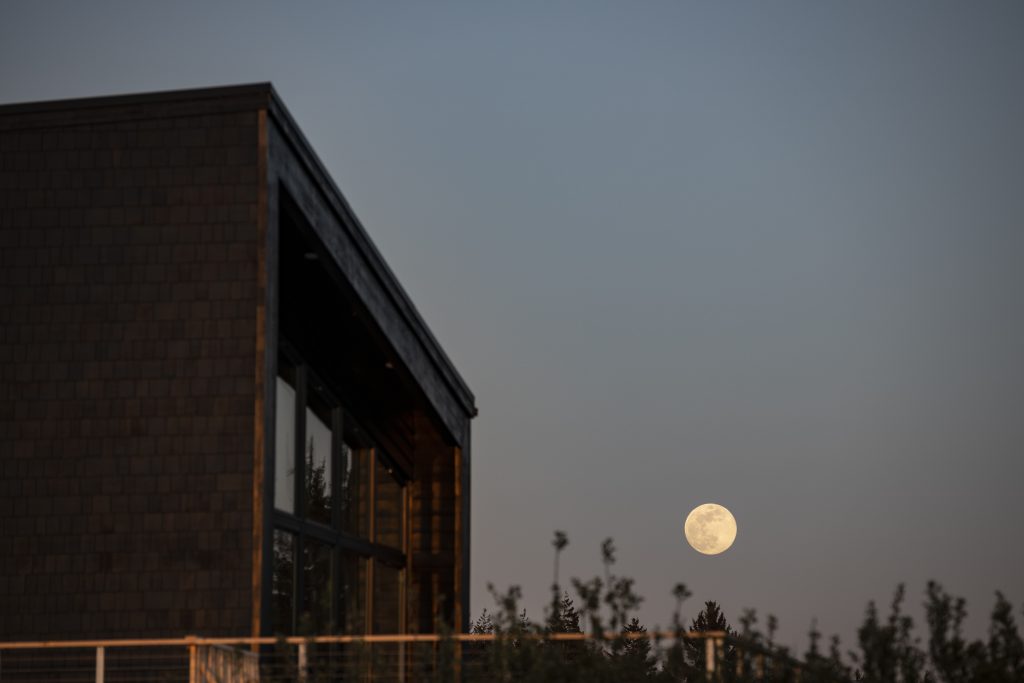
Bay Point Landing by OFFICEUNTITLED, Image Credits: Caleb Gaskins
The design for the office started with precedent research on educational furniture. This led to the use of a hexagon as a base shape used to create a new type of collaboration furniture, team and meeting room, dubbed “Venture rooms”. The use of hexagons as a central idea for the design even led to its use within a new company logo and informing an updated brand identity. This idea came out of research and discussions on how an office space can be reimagined to host all these different functions and still help the employees to boost innovative collaboration. OU’s process is based on questioning established ideas of design typologies; researching to define the friction points that the old ideas had in their DNA; to then understanding and responding to clients' individual needs. For Digital Ventures this was an office space which accommodates multiple team workstyles. OU’s team effectively designed a future-proof space by creating flexible working areas to accommodate the different styles, diversity, and insights of the company.
Discover the unseen, the unexpected, and the fantastic through relentless curiosity, research, and fearless exploration of new typologies for a better future.
OFFICEUNTITLED
Within 8 years, BCG-Digital Ventures has grown to be a team of over 1,000 people with additional innovation centres in Sydney, Berlin, New York, London, Seattle and the San Francisco Bay area. For OU, who to date has designed nine centres with BCG-Digital Ventures, the partnership has become a truly creative collaboration, pivotal to the development of their company. The relationship is such that in 2018, OU was approached by Digital Ventures to join their team as the Architect and Interior Designer to envision the future of fuel stations for a client in the Asian Pacific Region focused on new types of mobility.
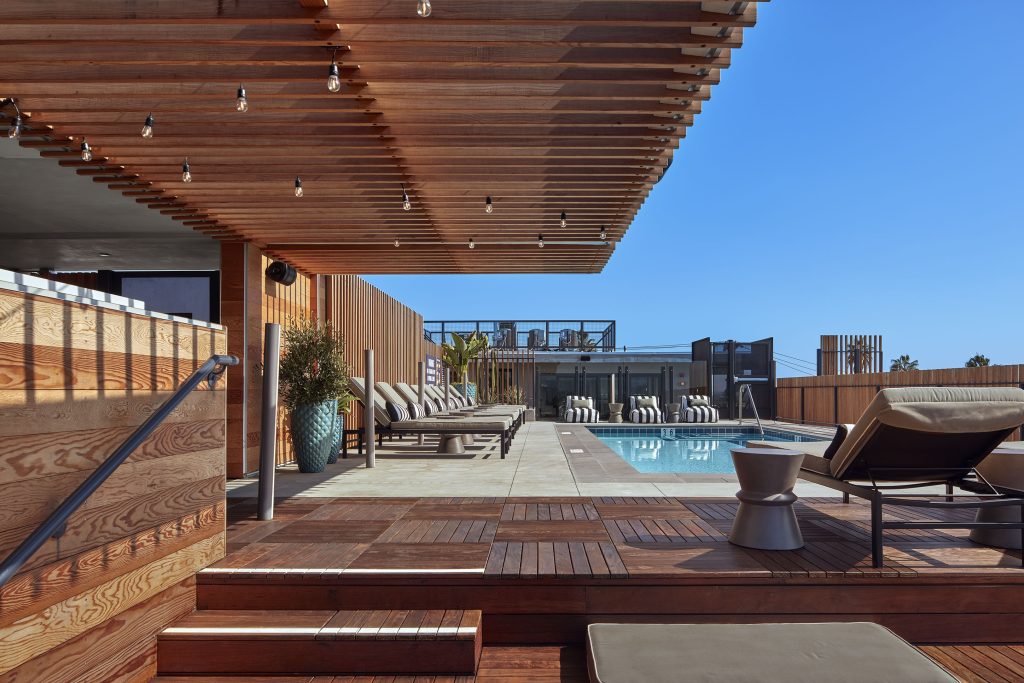
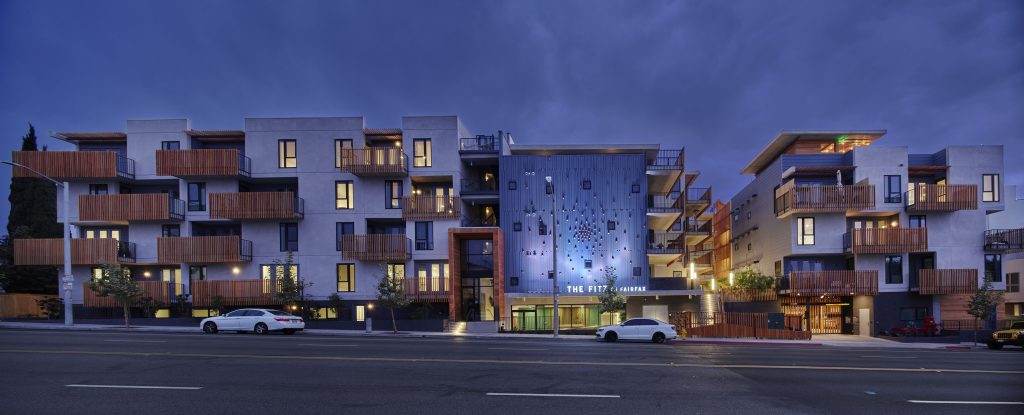
At about the same time as BCG-Digital Ventures, OU moved into medium and large-scale multi-family and hospitality projects. These include The ‘Fitz’, a 53-unit apartment project in West Hollywood, recently published in Common Ground a book by Frances Anderton (a noted architectural journalist in Los Angeles); the ‘Harland’, a luxury apartment building also in West Hollywood; and Bay Point Landing, a re-imagined cabin resort, on the central Oregon Pacific Ocean coast, which won an Architizer Award in 2017. All were designed around the same time as the BCG-Digital Ventures projects and equally approached with a “newcomers” mindset of questioning established design typologies. Capitalizing on the simultaneous investigations in the office, OU started to cross-pollinate between the projects, requiring team members to work on and learn about very different scales and programs, while seamlessly crossing between architecture and interior design. A culture of fearless generalists started to emerge at the office characterized by their curiosity in finding genuinely innovative design solutions.
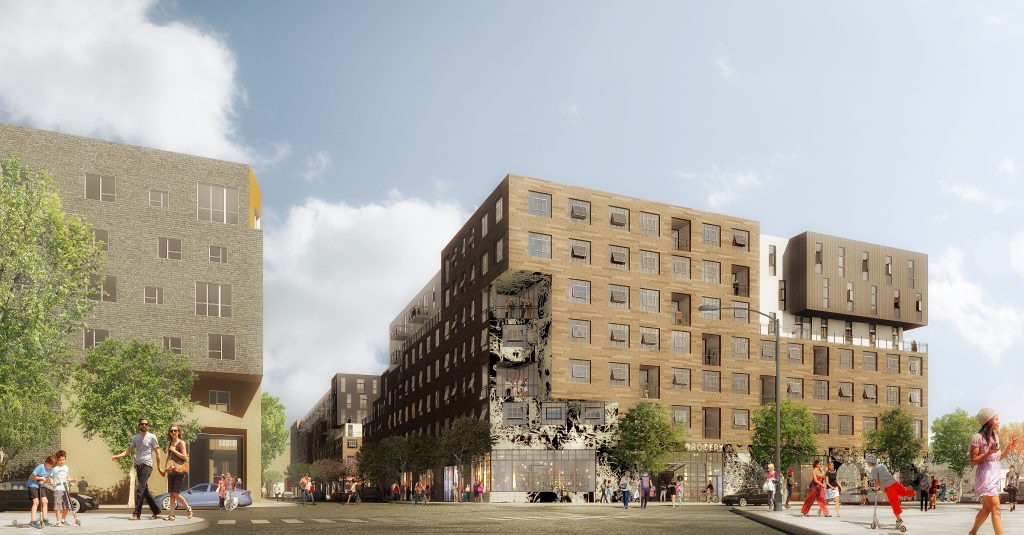
The positive reception of these initial projects and their fresh approach to design led to several more projects in and beyond West Hollywood and Los Angeles, including in Utah, Europe and Asia. New clients also entrusted OU also with larger-scale local projects beyond the current scale of the office’s portfolio but in line with the individual experience of the Partners in their prior work experience. Notably a mixed-use residential and office tower on Sunset Boulevard in West Hollywood with varying cantilevering floor plates over 300 feet in height; and a 470-unit ‘AVA’ project in Downtown LA’s Art district. To deliver these larger-scale projects, OU started to team with or ‘parachute in’ partners, such as typology experts and other architecture firms, allowing the team of “fearless Generalists'' to continue to focus on innovation, while ensuring the integration of the technical aspects of more complex projects.
During this time, OU continued to attract like-minded clients who wanted to push the boundaries of their project’s typologies. Cayton Children’s Museum, relocating from a mid-city office building basement location to a former artisan food court in a shopping mall in Santa Monica, commissioned OU to design their 22,000 children’s museums and offices. Bringing play indoors, OU designed a series of unexpected spaces that inspire kids to learn about and engage in their community. The concept took the typology of a kids’ museum and paired it with an architectural approach where each of the larger program elements became a larger abstract animal. The exterior of each architectural object was designed to have a unique interactive or tactile experience associated with it, furthering the museum’s mandate for storytelling. It is a great example of how advanced 3D modelling and parametric modelling helped OU to create a story from a complex idea.


Cayton Children’s Museum by OFFICEUNTITLED Image Credits: Paul Vu
Looking back, being in Los Angeles proved to be essential for OU’s success and one of the best places to be as a young firm after the country was emerging out of the great economic depression in 2013. Even within a field of other talented and more established architecture firms, OU was able to differentiate itself and tap into the open-minded and design-focused Los Angeles’ culture of what OU calls a new generation of younger “Enlighted Developers” who saw design as a key factor in creating commercial success. This type of developer differentiates themselves with a more unique product while keeping the budget in mind and are open to exploring more experimental design ideas.
Architecture project timelines for medium to large scale can range from three to eight years or more from their initiation to completion. Given the founder's experience in large offices, OU was able to work on larger-scale projects while keeping the office size nimble until the project proceeds into construction, however, the office needs to generate a larger number of projects to allow for some projects going on hold or being cancelled. Focusing on innovation and cross-pollination, OU was able to grow quickly from an initial team of 5 people into a team of 25 people by 2017, and then again up to 45 full-time staff members currently in 2022.


The Harland by OFFICEUNTITLED, Image Credits: Hunter Kerhart
Currently, the office is working on a number of larger urban scale projects, such as the 400 feet (120m) tall Hollywood Toyota project, a collection of residential and office buildings in the heart of Los Angeles, and more prominent national commissions such as a flagship visitor centre for a global Fortune 50 company in the San Francisco bay area.


Hollywood Toyota by OFFICEUNTITLED, Rendering by Kilograph
Christian describes the culture at OFFICEUNTITLED as a group of people with garage band mashup-style personalities who are very equal but also very open and relentlessly curious. At OU each project is led by a Principal in charge. The rest of the Principals and the office are pulled in for constructive critiques along key milestones for fresh feedback and to further cross-pollinate between teams and project types. OU is always searching for how to approach things differently than expected, and mixing different topologies is a key way to guarantee that. For business development, OU built a strong network of partners and collaborators outside the firm who have become advocates for their work, making personal introductions and recommendations to like-minded clients. Building these relationships and continuing to grow this network leads to more and more opportunities and repeat clients while nurturing their innovative approach to design.
“We discover the unseen, the unexpected, and the fantastic through relentless curiosity, research, and fearless exploration to reimagine new typologies for a better future.”
Ou's mantra
Inspired by the partnership with BCG’s Digital Ventures, OU expanded its offering into design and strategy consulting, focusing on larger firmwide real estate strategies, the development of design standards, and new unique solutions tailored to each client. These new services allowed them to open offices in New York, and Europe in 2023, assisting clients with projects and strategies in those regional markets.

About Christian Robert
With an aesthetic and environmental awareness informed by his European upbringing and education, his work balances modernism and a playful spirit that’s grounded in West Coast culture, and a strong desire to transform existing expected typologies.
Since co-founding the firm in 2013, Christian has led a series of award-winning projects including the luxury apartment complex “The Harland” in West Hollywood, California, an iconic 25 story Tower on Sunset Boulevard, slated to open in 2025, as well as new workplace strategies and worldwide innovation centres for Boston Consulting Group’s Digital Ventures. He is currently expanding OU’s services into design strategy consulting, growing OU’s footprint into New York, London and Germany.
Christian Robert has been pushing the boundaries of design for more than 20 years. He spent his childhood and upbringing in a small village in Germany and has been living in the US for the past 20 years. During his studies at the University of Stuttgart, he received a scholarship to attend Arizona State’s Graduate School of Architecture after which he moved to Los Angeles and San Diego to work for a number of firms where he met his co-founders, Benjamin Anderson, Shawn Gehle and Lindsay Green.

About officeuntitled
OFFICEUNTITLED (OU) is a young, energetic architecture and design firm focused on creative solutions across multiple scales and typologies, including commercial, hospitality, residential, and mixed-use. Established in 2013 as R&A and rebranded in 2019 as OFFICEUNTITLED, the practice leverages the award-winning design and project leadership of its four principals and a broad portfolio of experience in transformative architecture and interior projects. OFFICEUNTITLED sees the value in every project as an opportunity for transformation and impact. In 2019, OU started a new design strategy subsidiary, OUx, as a collection of design strategy thinkers and creatives at OFFICEUNTITLED (OU). This specialized group brings innovative and resilient thinking to define and solve complex problems. Based in Los Angeles, CA, and New York, OU currently has a team of more than 40 fearless generalists.