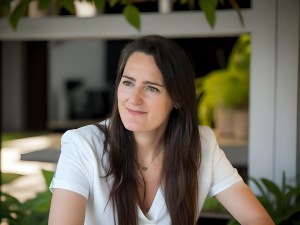
Andrés Jaque’s work transcends the traditional confines of the discipline, exploring architecture as a dynamic interplay of bodies, technologies, and environments. As an architect, researcher, and curator, Jaque's approach to materiality is characterised by its relational, trans-scalar, and inherently political nature.
At the helm of Columbia University’s Graduate School of Architecture, Planning and Preservation (GSAPP) as Dean and Professor, Jaque brings a wealth of knowledge and experience to the academic sphere. Additionally, as the founder of the New York- and Madrid-based architecture practice Office for Political Innovation (OFFPOLINN), Jaque embodies a multidisciplinary approach to architectural design, activism, and research.
Established in 2003, OFFPOLINN operates at the nexus of research, architectural design, and activism, undertaking projects that challenge societal norms and provoke critical dialogue. Jaque's portfolio is an array of groundbreaking projects, including the Ocean Space for the Thyssen-Bornemisza Contemporary Art Collection in Venice and the Babyn Yar Museum of Memory and Oblivion in Kiev, among others.
His work has garnered international acclaim, earning prestigious accolades such as the Frederick Kiesler Prize for Architecture and the Arts and the Silver Lion at the Venice Architecture Biennale. In addition to his creative endeavours, Jaque has made significant contributions to the curatorial sphere, serving as the chief curator of the 13th Shanghai Biennale and co-curator of Manifesta 12 Palermo.
Andrés reflects on his architectural journey sharing his fascination with the intricacies of daily life, emphasising its often-overlooked designed nature. His interest, he explains, stems from a desire to perceive reality from a perspective beyond mere design. His perception of architecture is the key to unravelling the hidden blueprints of our lives.
He admits his early awareness of architecture's essence. Initially disappointed by the emphasis on style and aesthetics in his studies, he sought to broaden his understanding by exploring anthropology, sociology, and other domains. Highlighting the importance of interdisciplinary learning, he discusses his approach, centered on the intertwining of social and environmental aspects. He coins the term 'body environmental' to illustrate how bodies are ecological constructs, advocating for viewing bodies and environments as inseparable entities.
Andrés also discusses the growing realisation since the 1970s that bodies are interconnected parts of larger ecosystems. He believes in the radical transil scholar approach, emphasising the interconnectedness of various scales from molecules to planets, and its pivotal role in addressing the complexities of our world. Andrés Jaque champions an architectural approach deeply rooted in ecological thinking, challenging conventional notions and embracing the interconnectedness of all facets of life.

Architectural Transformation Through Ecosystem Repair
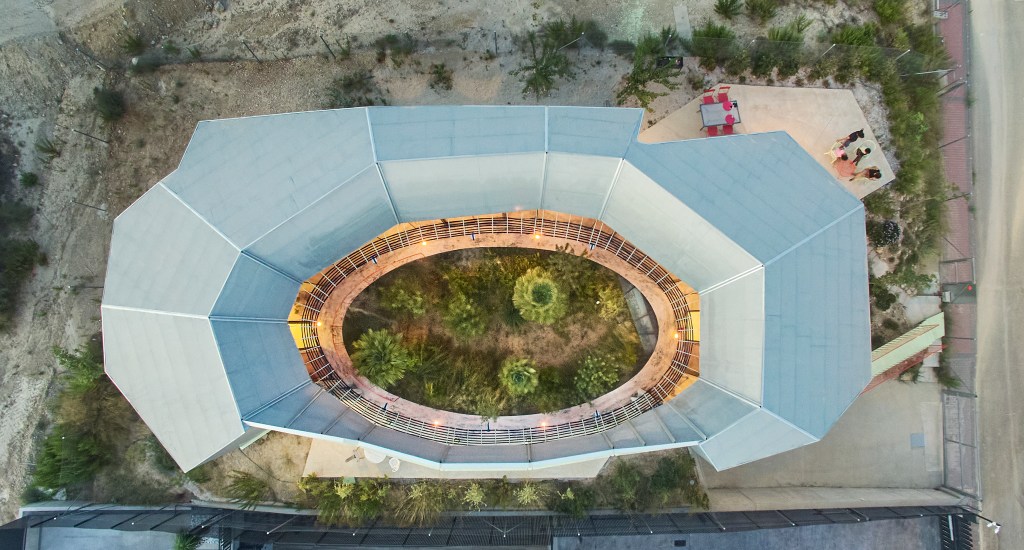
Detailing an example, Andrés Jaque discusses a project completed two years ago. He describes a landscape marked by ravines formed from heavy rainfall, which, despite being a dry ecosystem, once concentrated biodiversity. However, extensive land organisation efforts led to the destruction of these ravines, fragmenting the ecosystem. The house design emerged as a means of repair atop a dead ravine fragment. It was devised to collect rainfall and graywater, filtering and redistributing it automatically to revive the ravine. This intervention not only revitalised the ecosystem but also served as a persuasive example for neighbouring residents to embark on similar restoration efforts.
Highlighting the transformative potential of architecture, Andrés Jaque emphasises how a small-scale intervention can catalyse broader ecosystem repair. His trans-scalar approach illustrates how architecture can facilitate associative repair within ecosystems, a notion he finds profoundly beautiful.
Sara Kolata initiates a discussion about Andrés Jaque's architectural office, inquiring about its operations and the types of projects undertaken.
Andrés Jaque notes the presence of offices in both New York and Madrid. He reveals a core team of approximately 12 individuals, complemented by a network of specialised collaborators from diverse fields. The office maintains a focused approach, handling only one or two projects simultaneously to ensure full concentration. Emphasising a research-based methodology, he explains how each project involves in-depth architectural research, delving into the social conditions underlying them.
Highlighting specific projects such as the Museum of Memory and Oblivion in Babyn Yar in Ukraine, and others, Andrés Jaque underscores the importance of reconstructing entire histories and relational frameworks. Currently, the office is fully dedicated to two projects, with a significant focus on one located in Montevideo, Uruguay. This project involves the transformation of a former landfill site into a cultural centre, commissioned by the municipality to provide a space for local associations advocating for environmental justice.
Expressing their commitment to maintaining their current team size while expanding their ambitions, Andrés Jaque emphasises a desire for growth in the scope and impact of their projects. He also affirms their dedication to projects that inspire and engage their entire team.


Embracing Intersectionality in Architecture
The conscious decision-making behind the size of the business and the selective approach towards picking projects are from meaningfulness and a research-based nature evident even in exhibitions, art installations, and architecture work.
For Andrés, research, design, and activism are inseparable. He elaborates on their ideology, emphasising a different understanding of how things affect each other, rejecting the notion of nature and embracing construction, heterogeneity, and expansion. He highlights the inseparability of queerness from transness, advocating for non-binaryism as fundamental. This ideological framing, he explains, informs their approach to design, viewing everything as designed and constructed without natural impositions. Design, he believes, plays a role in navigating the messiness of constructed realities rather than imposing clarity.
Andrés emphasises the political nature of architecture, which intersects with various systems and dissidences, including those related to advanced capitalism, extractivism, and racialisation. Queer architecture, he asserts, addresses these issues simultaneously, extending beyond LGBTQ activism to become a paradigm that embraces complexity rather than attempting to fix things. He speaks of the intersectionality of architecture with activism, politics, and various cultural paradigms, advocating for an approach that embraces messiness and complexity.
Andrés places emphasis on honouring perspectives and values within architectural spaces. He reflects on the challenges faced by non-binary individuals in navigating architectural spaces, particularly in areas like toilet design, and highlights the importance of a mindset that informs architecture beyond its traditional forms, embracing queerness in various aspects. Andrés asserts that activism influences culture, art, and architecture, and emphasises the need for architecture to adapt and embrace this mindset.


Shaping Future Practice
Transitioning to a discussion on academia's role in preparing architects for practice, Andrés raises concerns about traditional education failing to adequately equip architects, particularly in terms of leadership. He expresses enthusiasm about his role as the dean of Columbia University Graduate School of Architecture, emphasising the school's forward-thinking approach and its anticipation of future challenges and opportunities. He highlights emerging paradigms in architecture, emphasising the importance of addressing crises and embracing experimental approaches to create inclusive environments.
Andrés Jaque shares his excitement about the positive response to Columbia's initiatives, including an increase in applications and participation in public programs. He describes the school's shift towards affirming positive developments rather than lamenting challenges, citing examples of planetary conversations that engage participants from diverse backgrounds and locations around the world. He expresses confidence in the transformative potential of architectural education and practice, envisioning a future where architecture plays a central role in addressing global challenges and fostering inclusive environments.
There is a need for the traditional education system and architectural practices to adapt to shifts in diversity, inclusion, and evolving societal values and instilling diverse and queer principles in architectural education to empower the next generation of architects to shape the future of the industry.

Embracing Evolution for a Diverse Future
Andrés Jaque says there is a need to move beyond traditional notions of architecture solely focused on building structures. He emphasises the distributed nature of practice, which involves designing processes and connections across different scales. Furthermore, redefining materiality in architecture helps away from conventional notions towards a perspective that views materials as interconnected and in constant flow. He describes innovative materials being developed at Columbia University GSAPP, emphasising their ability to circulate and connect different bodies and environments.
Lines are now blurring between the online and offline worlds, emphasising the role of technology in shaping our existence and the need for architecture to design spaces that accommodate this layered form of existence. Lastly, Andrés touches on the intersectionality of politics and design decisions, highlighting how daily choices influence the political landscape and how architecture mediates these interactions. He expresses excitement about witnessing the emergence of a new world where architecture plays a central role in shaping our collective existence. The conversation underscores the need for architecture to evolve in response to societal shifts and embrace a more holistic and inclusive approach to design and practice.
Andrés Jaque explores the intricacies of politics and decision-making, particularly within the context of queerness and societal development. Sara emphasises the importance of active participation in decision-making processes, underscoring how choices impact societal dynamics and the dissemination of information through media channels.
Approach to Architectural Education
The scarcity of business education in architecture curricula poses questions about how institutions like Columbia University GSAPP address the skill gap and nurture students to become autonomous practitioners. Andrés highlights Columbia's approach, emphasising that the school prioritises fostering an environment of exploration rather than instruction. He underscores the importance of students navigating complexity and disagreement within the academic ecosystem to develop their unique perspectives. By encouraging students to challenge traditional norms and contribute to shaping the future of architecture, Columbia University GSAPP prepares them for entrepreneurial endeavours and leadership roles in the field.
In Columbia's approach, the university's stance is against dictating students' paths. Instead, he advocates for a supportive environment that exposes individuals to diverse perspectives and fosters growth through exploration. Describing Columbia University GSAPP as an ecosystem of acceleration, he acknowledges the presence of influential voices in architecture within the institution.
He mentions renowned figures like Mabel O. Wilson, Bernard Tschumi, and others, noting their diverse viewpoints and the ongoing intellectual discourse among faculty members. This environment, characterised by brilliant minds and passionate exchanges, encourages students to develop their own ideas and navigate disagreements constructively.
The transformative nature of Columbia University GSAPP's education allows graduates to emerge as distinct voices with innovative approaches to architecture. He attributes this success to the school's transparency in embracing diversity and its commitment to facilitating dialogue on differing opinions. In Columbia's perpetual state of unfinishedness, new students are invited to contribute to shaping the future of architecture. By fostering an environment of continuous exploration and collaboration, the university empowers students to navigate the complexities of the field and chart their own paths forward.
In Conclusion
Andrés Jaque's architectural journey reflects a profound fascination with the intricacies of daily life, emphasising the designed nature often overlooked in our surroundings. His quest for understanding extends beyond mere design, seeking to unravel the hidden blueprints shaping our lives. Central to Andrés' approach is the intertwining of social and environmental aspects, epitomised by the term 'body environmental.'
Through transformative projects like the ecosystem repair intervention, Andrés exemplifies architecture's potential to catalyse broader societal change. By revitalising ravines and advocating for associative repair within ecosystems, he showcases how architecture can serve as a persuasive example for fostering environmental stewardship.
He advocates for queerness as a paradigm that embraces complexity, rejecting fixed notions and embracing messiness. In conclusion, Andrés Jaque's journey embodies a holistic approach to architecture, intertwining design, activism, and societal engagement. Through his work and advocacy, he challenges conventional notions, embracing complexity, and diversity to shape a more inclusive and sustainable future for architecture and society alike.