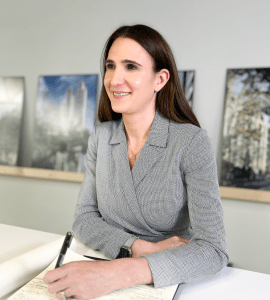
In the male-dominated realm of construction, Rachel Bell has not only carved a distinguished career path for herself but has also emerged as a tireless advocate for gender diversity and leadership equality. As the Director of Partnerships at Stride Treglown, a renowned architectural practice, Rachel applies her architectural expertise and innate relationship-building skills to foster meaningful connections with clients, consultants, and contractors.
Graduating from the University of Bath in 2000, Rachel embarked on a trajectory marked by resilience, passion, and a relentless pursuit of excellence. Alongside her professional endeavours, she actively engaged in initiatives aimed at promoting gender diversity and inclusion, recognising the pivotal role women play in shaping the future of construction. In March 2022, Rachel concluded her tenure as the National Chair for Women in Property, and through her leadership, propelled conversations surrounding gender diversity to the forefront, challenging entrenched biases and fostering a culture of inclusivity within the industry.
Her passion for empowering women extends beyond borders, as evidenced by her transformative trips to Malawi, where she engages with local entrepreneurs and facilitated skills exchange workshops for aspiring businesswomen and schoolgirls. From being named a UK Construction Week Role Model to earning recognition as the Insider South West Property Personality of the Year, Rachel's impact reverberates far and wide, inspiring change and driving progress in an industry ripe for transformation.


Delving into what initially propelled her towards a career in construction, Rachel Bell recollects her introduction to the industry as fairly typical. Her father worked as an electrician, her uncle as a developer, and much of her childhood was spent on construction sites. Actively assisting her father with household projects, she developed a keen interest in the field. Despite her inclination towards art and craftsmanship during her school years, she opted against the stereotypical path of architecture. Instead, she pursued a BTEC in construction, relishing its diverse curriculum encompassing surveying, mathematics, and technical drawing. Notably, she was the sole female participant, an experience she cherished.
Upon completion, Rachel embarked on university education, selecting Bath for its technical emphasis and shared degree course with engineers. Despite the challenges of university life, she flourished, completing her Part I, Part II, and Part III studies at Bath. During this time, she also gained valuable industry exposure through placements at various practices, ultimately joining Stride Treglown, where she has remained for 24 years.
Within Stride Treglown, Rachel has had the opportunity to explore diverse sectors, including education, defence, and retail. Notably, she highlights her stint at Heathrow Airport, where she worked alongside Grimshaw Architects, as a particularly enriching experience. Over time, she transitioned from project roles to a leadership position, assuming the role of Winning Work Director in 2020. In this capacity, she oversees a team of 11, focusing on business development, bids, events, and marketing. Without actively pursuing these chances, one risks getting lost in everyday work life, possibly missing out on promotions and advancements.


Embracing Opportunities in Construction
Rachel Bell delves into various facets of her personality and experiences. Known for her #StandTall mantra, Rachel's stature, both literally and metaphorically, has been a topic of discussion, driving her to advocate for stepping out of her comfort zone. During her tenure as the Women in Property Southwest chair, she championed this philosophy, encouraging others to embrace challenges and opportunities, regardless of initial apprehensions.
Rachel's willingness to embrace new experiences, even without fully considering the details, underscores her adventurous spirit. Whether it's committing to initiatives like the Malawi trip or pursuing senior roles such as her involvement at Heathrow, her mantra of saying "yes" first and figuring out the details later has proven instrumental. Despite occasional doubts about her suitability for certain tasks, Rachel emphasises the importance of authenticity, enthusiasm, and genuine interest in making a difference. Her journey thus exemplifies the power of seizing opportunities with fervour and authenticity, traits that have propelled her towards remarkable achievements in the construction industry.


Career Pathways and Gender Dynamics in the Construction Industry
Rachel Bell reflects on the significance of embracing opportunities, highlighting the challenges and rewards of carving out a non-linear career path. In a candid conversation with Sara Kolata, she discusses the notion of the "tall poppy syndrome" prevalent in England, where standing out can sometimes lead to criticism or resistance.
Acknowledging the lack of clear milestones in the architecture field, Rachel emphasises the importance of tenacity and adaptability. She describes her career as a "squiggly" journey, characterised by unexpected twists and turns that ultimately lead to growth and new opportunities. While promotions may not always be the immediate outcome, she stresses the value of exploring different avenues and taking calculated risks.
As a woman in the construction industry, Rachel shares her experiences of facing gender-related challenges, recalling instances where she questioned her place in a male-dominated environment. Despite significant progress over the years, she believes there's still work to be done in achieving gender equality within the industry.
Addressing the scepticism surrounding the continued need for initiatives supporting women in property, Rachel points out the persistent gender gap in mid-to-senior career levels. She highlights the importance of networks like Women in Property as invaluable sources of support, offering both professional guidance and camaraderie during both challenging and successful times.

Women in Property
Rachel Bell elaborates on her engagement with Women in Property, shedding light on the organisation's history and her extensive involvement spanning nearly two decades. Established in 1987, Women in Property boasts over 1,500 members nationwide, offering a platform for networking and professional development within the property and construction sectors.
Rachel's journey with Women in Property began shortly after she qualified, driven by a desire to expand her industry network and explore interests beyond her day job. Immersing herself in committee work, she dedicated over 14 years to the Southwest committee, eventually assuming leadership roles as Regional Chair and, later, National Chair in 2021. Currently, she serves as a director, contributing to the organisation's strategic direction and supporting the national executive team.
While Women in Property primarily caters to women, it actively encourages male participation in its events and initiatives. Beyond networking opportunities, the organisation offers a range of activities, including CPD sessions, site visits, and student awards programs. Rachel highlights the significance of the latter, which supports university students studying property and construction disciplines, fostering talent development and industry connections.
A key focus for Rachel and Women in Property is their outreach efforts, engaging with students as young as four or five to challenge stereotypes and promote diversity within the industry. Additionally, the organisation advocates for policy changes through involvement in parliamentary groups, addressing issues of workplace equality and inclusion.
Rachel's dedication to Women in Property shows the importance of women supporting each other in a traditionally male-dominated field. She underscores the need for women to embrace opportunities and aspire for leadership roles, particularly in the context of evolving workplace dynamics post-pandemic. With increasing emphasis on diversity and inclusion, she sees Women in Property as a vital platform for women of all backgrounds to thrive and make their mark in the construction industry.


Empowering Women in Construction
Rachel Bell expresses her admiration for the expansive reach of events organised by Women in Property throughout the UK. Her longstanding role as a director and chief within the organisation allowed her observations and insights over the years regarding women in construction.
Reflecting on the impact of the COVID-19 pandemic, Rachel highlights the increased focus on flexible work policies, a subject explored in a survey initiated during her regional tenure. The survey aimed to understand how companies approached flexible working arrangements, recognising its relevance for both men and women. With the pandemic accelerating this discussion, Rachel notes the ongoing challenges faced by some businesses insisting on traditional office-based work cultures, despite the changing landscape.
Rachel acknowledges her organisation, Stride Treglown, as an early adopter of flexible working practices, including flexi-days and core hours. However, she emphasises the importance of addressing challenges around parental and maternity leave policies, particularly for female employees. Women in Property plays a crucial role in providing support and guidance to individuals navigating such issues, drawing on collective experiences and legal insights.
Beyond traditional networking events, Rachel discusses initiatives aimed at fostering a sense of community and well-being among members, such as the "Step Into Summer" walking challenge and golf lessons for women in the construction industry. These activities offer opportunities for women to connect outside of their professional responsibilities and challenge norms surrounding industry-related events.
There is value in breaking away from conventional networking formats and embracing alternative activities for leadership-level engagement. Creating diverse and inclusive spaces within the industry, where individuals can connect and support each other beyond traditional work environments is crucial.
Rachel Bell discusses the significance of social interactions beyond the workplace, recognising their potential to foster business relationships and personal growth. She expresses admiration for the diverse nature of Stride Treglown, providing insight into its multidisciplinary services and employee ownership structure as a certified B Corp organisation. Founded over seven decades ago in Bristol, the company boasts nine offices across the UK, with a strong presence in various sectors including education, healthcare, residential, technology and innovation and specialised areas like defence.


Women in Leadership Positions
Transitioning to the topic of leadership, Rachel reflects on her evolving leadership style throughout her tenure. Emphasising her natural inclination towards empathy and communication, she describes her approach as supportive and engaged, prioritising transparency and open dialogue. Despite lacking formal leadership training, Rachel's leadership style is characterised by a light-touch approach, allowing team members autonomy while providing support when needed. She acknowledges the importance of adaptability, recognising the diversity of leadership styles within the organisation and their respective impacts on team dynamics.
Rachel shares her recent experience with personality profiling, reflecting on her leadership traits and the balance between precision and relaxed leadership style along with the importance of authenticity in leadership development.
In her role as Winning Work director, which began in January 2020 when she joined the board of Stride Treglown, initially, she found herself navigating uncertainties amidst the challenges of lockdown, but her experience on the board has been characterised by effective collaboration and mutual trust among its members. Rachel emphasises the importance of authenticity in leadership, acknowledging that being a director doesn't equate to having all the answers. Instead, she encourages vulnerability and openness to learn from others, recognising strengths and weaknesses, and leveraging one's network for support.
Humility and authenticity in leadership, particularly for women leaders highlight the transformative power of embracing vulnerability and showing one's true self, rejecting traditional notions of leadership based solely on competitiveness or intellect. While she maintains high standards and competitiveness, her approach differs from traditional models, emphasising collaboration and authenticity.
The conversation shifts to the nature of female leadership, exploring how women draw power from within, contrasting with historically masculine notions of leadership rooted in assertiveness and dominance. Rachel finds this perspective intriguing, recognising the importance of acknowledging and embracing diverse leadership styles, regardless of gender.
Dynamics of Female Leadership
There is unique value that women leaders bring to the table within environments historically shaped by male decision-making. Rachel Bell shares her insights, emphasising the prevalence of self-doubt and the importance of self-reflection among leaders, regardless of gender. She underscores the collective strength derived from diverse leadership styles and qualities present among board members, transcending gender distinctions.
The conversation delves into the topic of imposter syndrome and Rachel acknowledging its universal presence across various life stages and career paths. Destigmatising vulnerability and fostering open dialogue to navigate moments of self-doubt are often effective. Rachel reflects on the ego-driven nature of architecture and the transformative power of finding purpose in one's work to make a meaningful impact.
Rachel Bell's journey through the construction industry involves seizing opportunities, embracing authenticity, and challenging traditional norms. Rachel's trajectory underscores the importance of perseverance and self-belief in navigating a non-linear career path.
As a vocal advocate for women in property and construction, Rachel's involvement with Women in Property exemplifies her commitment to fostering diversity and inclusion within the industry. Rachel's leadership style, characterised by empathy, transparency, and adaptability, challenges conventional notions of authority, emphasising the value of collaboration and genuine connection. In a field historically dominated by male voices, Rachel's insights into the dynamics of female leadership offer valuable perspectives on the unique strengths and challenges faced by women in construction.
Ultimately, Rachel Bell's journey serves as an inspiration to aspiring leaders, regardless of gender, encouraging them to embrace their individuality, pursue their passions, and create positive change within their communities and beyond. Through her unwavering dedication and pioneering spirit, she continues to leave an indelible mark on the construction industry, shaping a more inclusive and dynamic landscape for generations to come.