Safdie Architects is a research-oriented architecture and urban design studio active in a wide variety of project types, scales, and sectors. Safdie Architects’ global practice is directed from its headquarters in Boston, Massachusetts, with satellite offices in Jerusalem, Shanghai, and Singapore. Projects are designed, managed, and executed by a global team that hovers around 65 people! The practice is organised as a partnership and operates in the model of an intimate design studio environment. The firm's partners – many of whom joined Safdie shortly after graduation – have been working together for decades.
Managing partners at Safdie Architects, Chris Mulvey and Sean Scensor have joined the first edition of Disrupt Symposium to share with us the business strategy behind the practice. This article is a summary of their presentation.
Both Chris and Sean work closely with the core leadership team at Safdie Architects to choreograph and oversee the business management, strategic planning and operations of the global practice. Both have worked in the practice for over 24 years playing a pivotal role in the design of prominent projects as well as being instrumental in developing internal and external initiatives to support the firm's future generation of leaders. Their everyday decisions drive the practices’ success.
What is compact bigness?
The firm's seminal first project, Habitat 67, showed ambition and innovation as a hallmark of the practice. With a portfolio of extraordinary work, research and design thinking of over 60 years, Moshe Safdie, friend and mentor set a strong trajectory for the office with brilliant, insightful and active leadership. It continues to evolve and thrive today.
Safdie's team works out of a disarmingly small ivy-covered brick studio in Boston with a handful of partners and a team of around 50 architects. They've managed to design and fully realise over 50 billion dollars worth of construction just in the past 10 years including some of the most complex and acclaimed projects in the world. Kind of like a David and Goliath situation. They routinely compete against corporate giant offices or design firms with crores of regional offices and 100s of architects. To design a project of 10 or 20M sq. ft is one thing but to maintain a hands-on involvement, and quality control over design and construction across 12 time zones in 30 countries is a far greater feat.

Safdie Architects as a truly global practice:
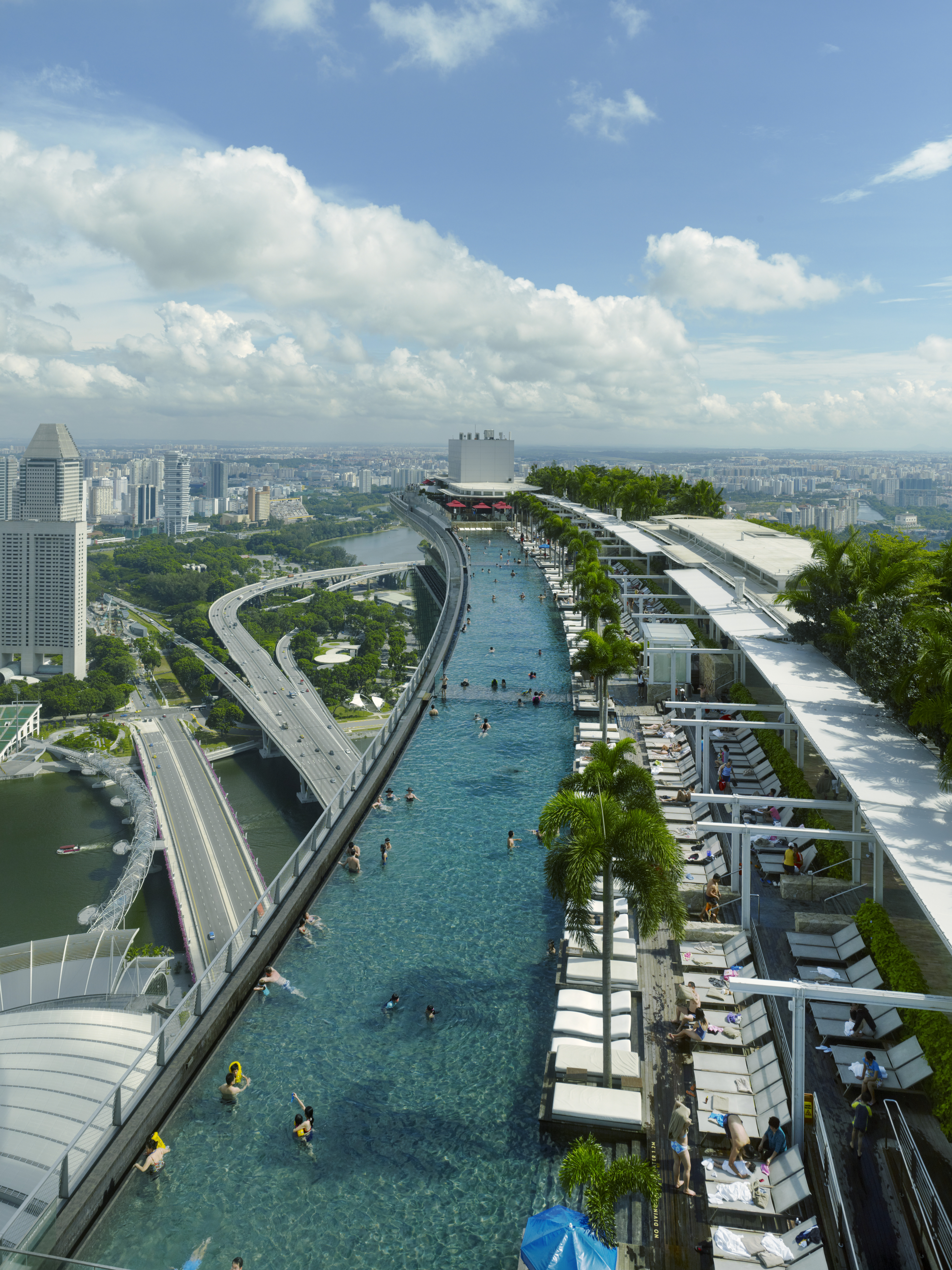
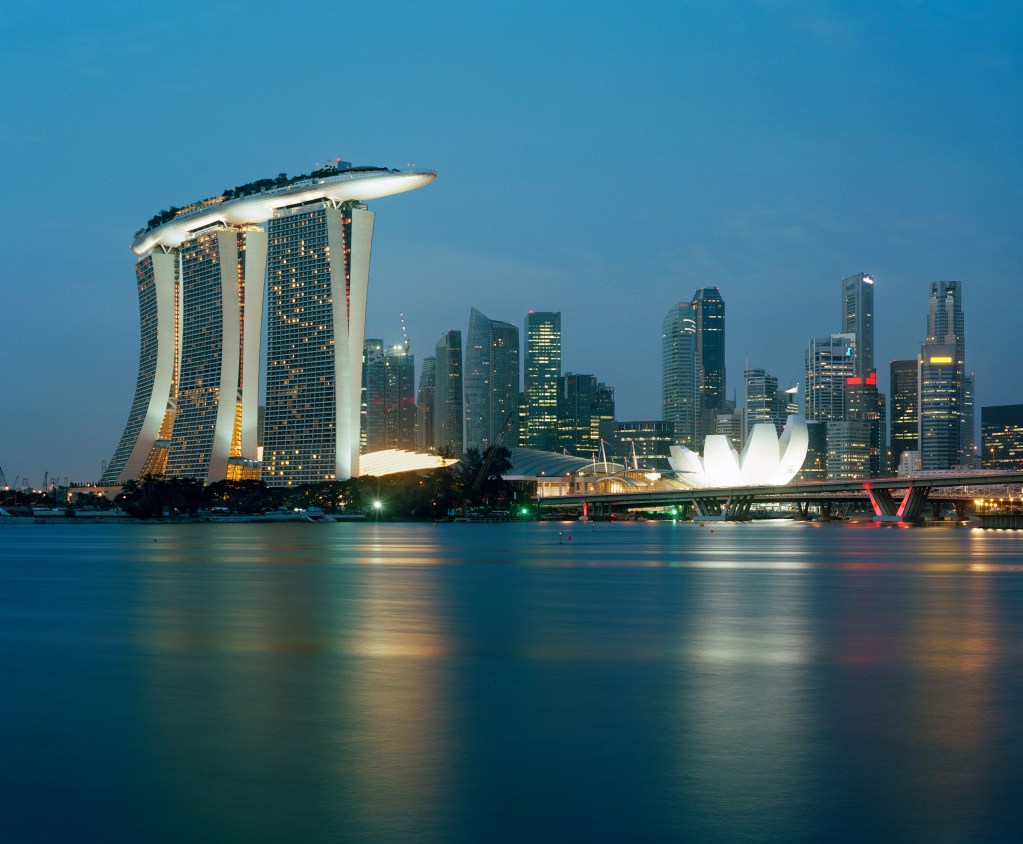
There is a process of creation for important and diverse bodies of work like the cultural complex in LA- the Skirball Cultural Centre, Yad Vashem Museum in Jerusalem, Virasat-e-Khalsa Museum in India as well as concert halls and major institutions like the United States Institute of Peace. There is also an impressive collection of art museums that are beautifully integrated into their natural settings such as the Crystal Bridges in the USA. The practice has also made its mark with iconic mixed-use work like Marina Bay Sands in Singapore.
In some cases, complex projects are clearly planned and thoughtfully sited to maximise value and impact. The design and delivery of those projects in different continents, climates, and contexts mean that attention to detail and individual human experience is also integrated. In short, Safdie Architects strive toward humanistic placemaking.


Safdie Architects want to work globally and fight the risks and challenges this might bring because of the interesting diversity and wide-reaching impact of the work. They chose to do this by concentrating all design efforts and operations in one office and centralising how they practice. They chose not to be specialists or departmentalise their operations and compartmentalise their thinking. They approach projects as generalists which helps them bring a fresh and inventive approach to typologies that they haven't yet worked on. Nevertheless, they pull in the expertise as needed.
"We like to work at a mega scale because it allows us to meaningfully address issues we think are at the forefront of consideration and urbanism. Yet we remain involved in the smallest of details."
SEAN SCENSOR
At face value, this set of practices may seem a bit contradictory but for the team, it is not an either/or situation but about how they can achieve both- working at a large scale while working from a small office- and find meaning in the opportunity. They work hard to humanise mega-scale development by articulating the building in a considerate manner and driving meaningful connections in nature.
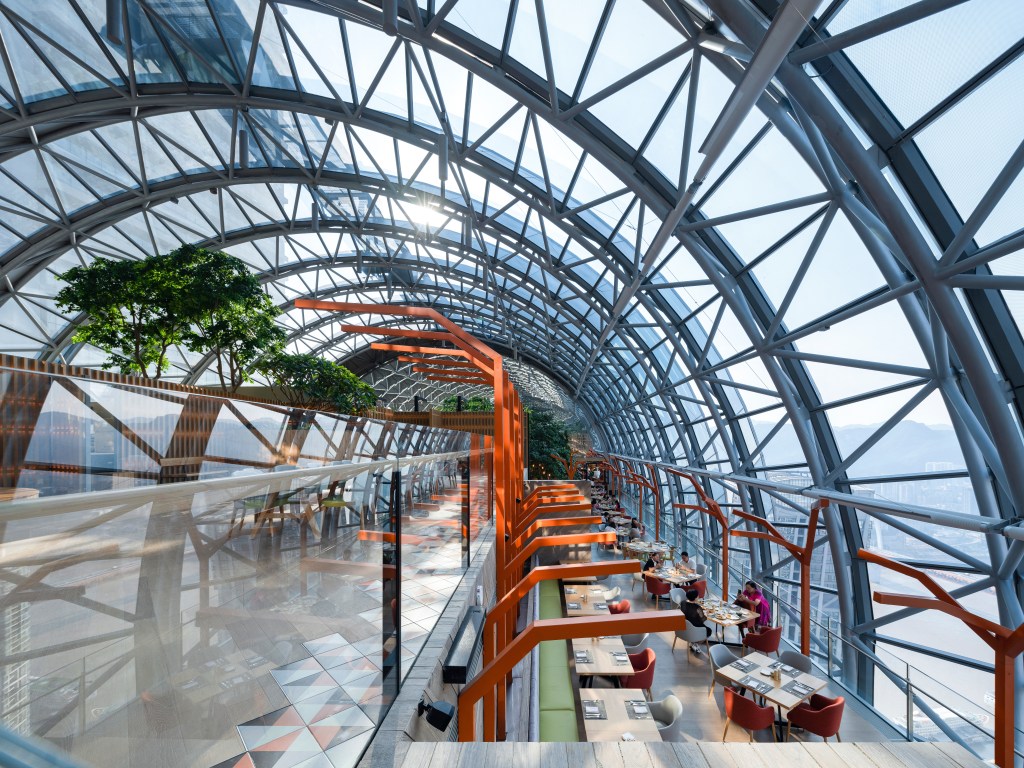
Mega-scale projects begin with defining and shaping the public realm and setting the stage for the vibrant urban life that exists. This is particularly important when it is exterior but it is more so when the public realm becomes indoor, which is an increasing issue. Working globally by responding to the uniqueness of culture, climate and different construction technologies enriches what they do while creating spaces that foster engagement and enhance the quality of daily life for the community, be it indoor or outdoor.

So how are they able to do this?
Or more importantly, how do they work and why do they work?
Their practice model emerges and derives from how they think about architecture. The values and beliefs that drive Chris and Sean professionally and personally result in a distinctive method of practice that has shaped the special culture that the whole team now enjoys in the office.
Habitat 67: the housing component of it is only a small piece of what was originally envisioned as a highly complex and ambitious mixed-use complex.
Stepping back a little to start, Chris and Sean also talked about the nature and structure of their practice and the business model, exposing how they operate day to day.
"We have been working alongside each other for more than 20 years and we are continuously surrounded by a collection and interaction of talented and driven individuals who embrace how and what we practise. Our goal at the end of the day is quite simple- we want to be involved, interested and a part of meaningful impact through projects. Most importantly we want to do it in a way that's enjoyable, engaging and rewarding."
CHRIS MUlVEY
The Safdie Architects' practice model
The firm has evolved and approached what is called ‘Compact Bigness’. It operates with the attentiveness that one finds in a small design studio and combines that with the capacity and reach of a global mega practice. Compact bigness is both a method of work but also a way of approach, a mindset. They operate with passion and energy, the kind you would find in a Michelin-star restaurant, with intense energy around a common purpose and an eye for quality and excellence but also for detail and execution.
They have a talented team with diverse and complementary skills in an inspiring environment and enormous opportunities to do excellent work and grow. It's important to say that Compact Bigness is not about doing more with less. It’s not about eking out an extra level of productivity from the staff. It’s rather more a state of mind, a set of choices made every day, very intentionally. By not specialising in particular programmes there is a fresh and curious approach to each project.
At first, partners assemble the perfect team for each project in the right way.
By choosing to concentrate design activities from one main office in Boston, maximum engagement, intimate involvement from the key partners and staff, and discipline in quality control and construction are ensured. Given the global projects and scale, they deploy resources strategically to travel constantly, co-locate with local regional partners, consultants and architects and also have staff at all levels including partners who routinely relocate for extended periods to regional site offices.
“To go back to compactness and bigness I think what it requires to operate at scale and have an impact at that scale by a small group, requires each and every member of the firm to continue to play integral roles across the life of the project.”
Chris Mulvey
The office with brick walls covered in ivy in Harvard Square has heavy timber beams with daylight streaming through the steel windows. It is a residential neighbourhood where people typically walk to work. It’s a livable neighbourhood and a place to work. The environment they try to build and foster is collegial, supportive and hands-on. They direct engagement through design workshops and together with collaborators, invest in physical models to be with each other.
Covid has been difficult for the firm because Moshe and a small group of partners are highly involved in every project and the details of the project. Every project is loved and known and gets a lot of attention in the office. Their office culture and livable environment mirror the humane environments they design and create for their projects.
It’s an office that both Chris and Sean walked into soon after school because of the opportunity not only to work with Moshe directly, and on the different types of projects but because it allowed them space to unfold and take on much more responsibility than they probably should have had at that time.
As partners, they are nimble, hands-on throughout the life of the project, and involved in the drawings, models and details. Even working at a megascale they stay attentive to the craft and stay true to the practice. Sean mentioned each project is known very intimately by those involved and cared for by a very passionate and resourceful team. The small team has to find ways to expand its reach and capacity and a conceptual sense of growth by leveraging a global network of extraordinary collaborators, engineers and specialists that have been working with them for years and are trusted like family. Chris and Sean assemble that team in a bespoke fashion for every project that they undertake and explore.

Selecting a Perfect Project
Project selection is a critical key and has to be very carefully considered because it impacts not only their daily life but the trajectory of the firm as well. The firm selectively chooses projects and clients intentionally based on quality and opportunity rather than typology or sector and region. Not only must the opportunities be interesting but the parameters of the project and means of engagement must be conducive to doing something special. A committed client, an exceptional site, an interesting programme, and an adequate budget with a design challenge are what draw the firm to it. To do it in a manner that requires intellect, knowledge and insight to achieve something that hasn’t been done before is largely satisfying. The team follows each project through its construction.
Each time it’s a new playbook to meet different cultural expectations, construction skills and business practices which in terms of the process is similar to having a start-up under the umbrella of a legacy firm about 50-60 years old. But they also emulate energy and newness as each project keeps the staff and the team interested while giving them a chance to grow and develop.
Because they design with an intention to build, craft and construction are very important. They employ full-scale mockups very early on in the design stages both as a design infill and as a vehicle for working with local craftsmen and contractors. Mockups are used for evaluating quality and experiential characteristics.


But does the same system work while executing projects across the world?
Not only the resident architect and technical staff but also the design team and leadership are on the construction site regularly. The site teams are comprised of locally hired architects who have been recruited and hired in the region, particularly for large-scale mega projects. Each of those architects has over the course of the project spent time in Boston and is co-located with the design team so they understand the work and its importance to the firm. Boston-based team members are also brought to the site to spend extended periods overseas. They bring with them the institutional knowledge of the office that can help and guide those who have just joined the office regionally.
Safdie Architects as calculated risk-takers
They have a track record of creating enormous economic value and positive social impact through 60 years of work. Many of the projects have become global landmarks beloved by their communities and by the public at large. The stature and the reputation of the firm afford them some privileges. It allows them to think boldly, and be courageous designers but also take business risks which not all firms are in a position to do. That privilege allows them to focus on doing good work and meaningful work but also to selectively invest in the right competition where they feel there is an opportunity to make a big impact. They are also confident to turn away work when they feel that it's the wrong kind.
The flip side of that is that those sorts of privileges also come with a sense of accountability and a feeling of obligation to act with responsibility as architects. Their strong belief is that architects not only have a duty to their clients but also a fiduciary duty to the public they serve. The integrity of our profession is noble and they don’t work and trivialise their value by chasing fashion capriciously or by undertaking projects where design is considered just a cheap commodity for sale.
Their impact on communities and cities
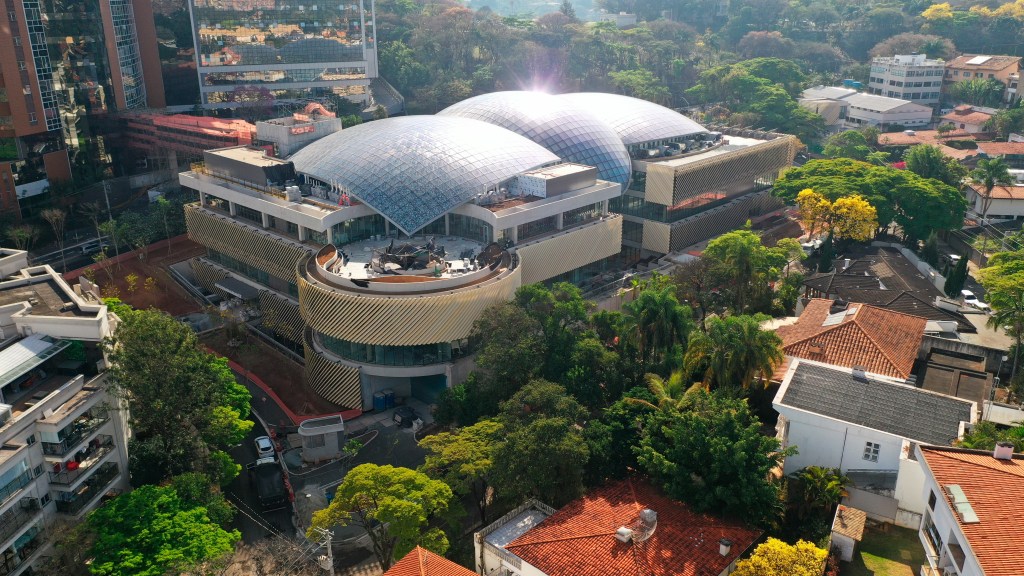
Safdie Architects designs for a lasting impact and lasting value. The positive impact of many of the projects has rippled outwards and revitalised the communities in projects like the Kansas City area Kauffman Centre for Arts. Their work has brought together communities, in this case, the medical community at the Albert Einstein Education and Research Centre in Sao Paolo, Brazil or through educational programmes in their buildings at the Crystal Bridges Museum or even historical and political communities in contexts like the Peace Institute or Yad Vashem Holocaust History Museum in Jerusalem. And through social media, the projects have taken a very vibrant life of their own and are loved by diverse communities of people unpredictably engaging with the work.
Their projects have sparked interest both in the professional press where you wonder ‘How did you build it?’, technical interest in the construction and different kinds of interest in the public press and media about the impact of the projects on cities and countries in some cases. Some projects have captured a wider public imagination in a way that no one could have foreseen.
Do those design ideologies translate financially?
When the office moved into a partnership a little bit over a decade ago a considerable amount of time was spent thinking through the structure of how the partnership would work financially and governance-wise with different approaches. It then became a way to try to evolve a business model, a governance structure and a financial model based on how the team worked and how and why Chris and Sean wanted to work.
A project-centric office with projects at the forefront helps in creating opportunities for the staff and for those who want to develop and grow and find ways to increase their learning capacity and capabilities. From a partnership perspective, the compensation model bears the firm's values. So through this collective approach of collegiality as partners, Chris and Sean share compensation and firm ownership equally.
The critical step for them was to recognise though each of the team members played very different roles in the practice, they all contributed equally to the success of the firm. Setting that aside is what incentivises them to work collectively, and collegiately. Even though they are critical towards each other it is done so in a constructive manner. By picking the right partners and handing them projects that play to their strengths, they set up a motto that’s conducive to developing projects.
Chris says “We share the profits of the firm with all team members through a generous bonus program. We heavily reinvest in the firm through both staff-driven and firm-led initiatives. We’re constantly undertaking internal and external research efforts and producing exhibitions and publications. We also maintain an archive of the firm's work embracing the legacy because it enriches who we are and what we do and supports the profession and involvement of each member of the firm”.
Role of research and writing in the firm
They publish quite frequently to share their values, thoughts and ideals. These are the books behind the buildings. They establish an in-house research scholarship to explore issues that are important and that need to be explored outside of the context and constraints of the day-to-day projects but still within the framework of the practice so that it has resources and is grounded in study. Their work has been the subject of major travelling exhibitions which offers the opportunity to not only look across time and projects but to tell the story of each project and celebrate the efforts of those involved.
They write and speak regularly about their work which drives them to raise awareness about issues and requires the collective attention of the general public and the profession at large while highlighting those issues. When time permits the team also likes to visit completed projects together.
Is working in a Compact Bigness for everyone?
The studio and practice model is an idea of Compact Bigness, which is a distinct and exhilarating place to work but it doesn't suit everyone. Not everyone wants to work with the intensity of a Michelin-star environment but for many, the studios become a unique place where a relatively talented compact group of professionals and passionate architects can find the opportunity to design and build. More than a few exceptional projects have high quality and Safdie Architects always try to make a big impact.
Sean adds “Working at scale but in a compact manner provides each member of the firm - from interns to partners - with fast learning opportunities, a chance to relocate and travel, gain project experiences and also have the ability to learn and grow at quite an accelerated pace. It becomes a good way of practising and a good way of plying our trade”.
While the Compact Bigness model may not suit everyone, it provides a unique opportunity for talented architects to work in a dynamic learning environment, allowing for personal and professional growth. Safdie Architects' approach of "Compact Bigness" presents a unique and successful model for growing a global practice in the field of architecture. The firm makes it possible to combine the intimacy of a small design studio with the capacity and reach of a global mega practice. Through their innovative mindset, project selection, and dedication to quality and craftsmanship, Safdie Architects continues to inspire with their iconic projects.