As Group COO for Broadway Malyan, Sabrina is responsible for the operational and strategic oversight of all business operations including commercial and project performance, risk management, group support services and change management programmes. A key focus of her role is the standardisation of approaches globally, ensuring that projects and processes are as efficient as possible, with the allocation of the right resources to achieve the best design and delivery quality for our clients.
Sabrina has a passion for education and equal opportunities within the construction industry as well as mentoring colleagues internally. She is a strong supporter of the Design Engineer Construct (DEC) initiative that promotes the built environment sector to young people as a career. She is a mentor in this year’s Mentoring Programme.

Architectural Assistant to COO
Innovation isn't confined to projects and new materials; groundbreaking ideas can reshape the very structure of design practices. Sabrina’s journey from architectural assistant to Chief Operations Officer (COO) at Broadway Malyan is a masterclass in identifying gaps and turning them into opportunities for growth.
"I have always had a passion for efficient and effective ways of working," she says, reflecting on her early days. "More importantly, my objective has always been to make the machine work without me having to pedal it."
This innate drive for efficiency led Sabrina to develop standardised, repeatable processes that empowered her teams and helped to strengthen client relationships. Her ability to simplify complex project operations quickly made her the go-to person for managing challenging projects. "At first, I would run them, but later in my career, I advised and managed them at a different level, empowering others to handle issues directly."
Sabrina's expertise extended beyond individual projects, tackling broader operational issues across the business. This gradual expansion of her role laid the foundation for a position that didn't previously exist at Broadway Malyan.
"We didn't have a COO role initially," Sabrina notes. There was an operations director, but he was doing a completely different role to the one she has shaped today. Her approach to leadership is deeply rooted in her architectural background, applying the same principles of efficiency and collaboration to business operations, that she once applied to building designs. This unique perspective has allowed her to identify and address operational risks and inefficiencies that might go unnoticed by those without her experience.
"I was constantly looking at how we can do more with less, how we can be better, and how we can collaborate more effectively, with our external stakeholders" she says with passion.
Sabrina's journey serves as an inspiration for other practices looking to innovate not just in design, but in their operational structures as well. Demonstrating that success isn't just about creating beautiful spaces - it's about building efficient, collaborative, and resilient organisations that can adapt to any challenge.
"My job is to run the business of today," she explains, distinguishing her role from that of the CEO who manages the business of tomorrow.
This division of responsibilities addresses a crucial challenge in architectural leadership. As Sabrina acknowledges, "It's a bit like asking architects to hold a vision as well as do the daily detail tasks... It's difficult, isn't it?"
Her approach focuses on creating self-sustaining systems: "It's about ensuring things are running by themselves."
However, implementing these changes wasn't without its challenges, especially when dealing with creative professionals accustomed to established practices. She recalls, "In the beginning, it was extremely difficult because my role hadn’t existed before. There was resistance to change the way the business had been operating for years. Change is hard but it comes with the continuous improvement reward that will keep businesses thriving for the long term.
Her strategy for overcoming resistance was to demonstrate tangible benefits: "I've actually worked it through leading by example and showing our leadership team what's in it for them." This approach gradually won over sceptics as they realised the potential for more design time and increased project profitability.
Sabrina emphasises the importance of people skills which aren’t taught as part of architectural education, “We just have to learn on the go." Her path to COO wasn't always smooth. After her third maternity leave, she faced a crossroads: "I felt like I needed more [than leading projects], I knew I could give so much more to our business, but I needed the opportunity to demonstrate this."
This led to a pivotal decision. "I was seriously considering doing something completely different," she admits.
Her loyalty to Broadway Malyan prompted her to give it another chance. This not only reshaped her career but also transformed the operational structure of the practice, illustrating how personal growth and organisational evolution can go hand in hand.
"I prepared a paper which focused mostly on commercial and operational issues, where I thought the business was lacking," she explains. Her approach was not just to highlight problems, but to offer solutions. "It wasn't just a rant; it was a rant with solutions. These are the weaknesses, and this is what I could do to help."
Reflecting on this moment, Sabrina highlights the simplicity of her initial proposals: "When I look at these today, I think, wow, it was quite basic, but to be honest, this is exactly what we needed at the time."
The boldness of her move is particularly striking given the context. After taking maternity leave, she felt undervalued and lost . "I had all these ideas that I wanted to put in place but needed the sponsorship to put them to action. This frustration fueled her determination to make a change.
Despite her limited understanding of formal business operations at the time, Sabrina's proposal caught the attention of the CEO. "I was terrified because, in that meeting, my paper was full of red marks," she remembers. She asked for a chance to prove herself: "The only thing I'm asking you is to give me the opportunity to show you that I can do this. If I fail, it's on me." she vividly recalls saying.
This gamble paid off, marking the beginning of her ascent in the company. Her role quickly expanded from local operations to overseeing global functions. "First I was just working in the UK looking mostly at commercially related issues and very quickly it grew to the rest of the business operations in our studios around the world," she explains.
Comparing Apples with Bananas
One of Sabrina's first major impacts was standardising reporting across the company's international studios.
"We were comparing apples with bananas with strawberries because the definition of terms in one place was completely different from another," she admits. This lack of consistency made it impossible to trust the data being collected.
Sabrina's initiatives included standardising time recording, fee structures, and cash collection protocols. "This changed the way we report operate and measure ourselves," she states. "Just making sure that we call our fees the same way and that we differentiate what we are billing out each month and what is it that we are trying to win... it was revolutionary."
This provided reliable visibility into the company's performance. As she puts it, "We did have the visibility. We were collecting the reports, but the data meant nothing because you couldn't trust it."
"What I did is I got under the surface level data to understand what's behind the numbers." This deep dive into the company's financial and operational data was unprecedented.
Her focus extended beyond mere data analysis, "I put systematic processes in place that people could easily follow. It's like someone holding your hand. What would I do next if this happened to me?"
This operational shift was slow initially. Sabrina admits, "It took a while because the biggest challenge was changing the embedded culture." She emphasises the importance of change management, a skill she acquired on the job, " I recognised this when we were at least halfway through the transformation."
The impact of these changes has been profound.
"Today the way we operate our business commercially has become second nature,” she says with great pride. She's now looking towards the future, exploring ways to further enhance operations. "Now I'm looking at the next level: How can we automate? How can we use new technology? How can we make the most of the data that is available to us?"


Baptism of Fire
Reflecting on pivotal moments in her career, Sabrina shares two experiences that shaped her trajectory. The first was her decision to move to London to study with limited resources: "I came to London to do a master's degree in Cambridge on interdisciplinary design for the built environment. She came by herself with a thousand pounds in her pocket and without a job. This taught her resilience and survival skills.
The second transformative experience came early in her career at Broadway Malyan. "I worked on a competition, and I prepared all of the information on my own. The director in charge sent me by myself to Abu Dhabi with a physical model under my arm and a few A1 panels to present to one of the biggest local developers."
This experience was a baptism by fire that set the tone for her future career. "It was a year's worth of experience in a couple of days. We won that competition and after that, I travelled around the world for ten years doing the same."
Sabrina acknowledges that each of these experiences pushed her out of her comfort zone, preparing her for future challenges. This pattern of embracing discomfort and change has been a constant in her career, culminating in her current role as COO.
Her approach to career advancement and problem-solving offers valuable insights for professionals in architecture and beyond.
Highlighting the importance of self-awareness in tackling new challenges. This confidence allows her to embrace opportunities without hesitation, even if the full scope of the challenge only becomes apparent later.
"It's when I think of what I've done that I think, was I crazy?”
She trusts her instincts and rarely thinks about the risks whilst she’s busy doing something. She is confident in her ability to figure things out along the way.
Sabrina advocates for a proactive approach to career development, particularly for women: "Don't overthink situations before you step into them. Have this deep knowing about what you're capable of, step into it and then see what happens." This philosophy has been a cornerstone of her career strategy. "I've always put my hand up to do whatever it was on offer. And then I always think, don't worry, I will figure out how to do it later."
Her current role continues to present new challenges, but her problem-solving mindset, honed through her architectural training, serves her well.
"When faced with something unfamiliar, I either seek guidance or dive into research to figure it out myself. I'm passionate about continuous learning—it's what keeps me engaged and inspired. Without learning, I lose interest."
Architectural education equips professionals with versatile problem-solving skills applicable beyond design. "We think we're trained as designers, but actually we're trained as problem solvers. You can apply this to so many different facets within an architectural practice and beyond." We need to think about what other skills complement these to multiply the outcomes, such as finance acumen and people skills.

Data Wave
Looking ahead, Sabrina is excited about the potential of data-driven design and digital transformation in architecture. "I call it the data wave... This is the data-driven environments we operate within and the digitalisation of our profession." She sees this as a significant opportunity for the industry, emphasising the need for a fundamental change. "We can't just fix the top of the tree by cutting leaves to keep it tidy. That's not going to get us anywhere. We need to tackle it from the root."
Sabrina envisions a future where data integration leads to better designs and more informed business decisions.
"We'll be able to steer our business in different ways much quicker and less painfully than today." This transformation represents a significant leap for the architectural profession. "Remember, we are a business that used to work on tracing paper and drawing boards not long ago... So, are we going from there to getting a computer to do an image for a client in 30 seconds?"
Her insights into the challenges and opportunities facing architectural practices today reveal a leader deeply engaged with both the operational and strategic aspects of the industry. Her perspective is shaped by regular interactions with other COOs in the built environment sector, providing a broader view of industry trends.
This diverse group of COO’s are grappling with several common challenges. Data management is a key issue, alongside region-specific concerns such as regulatory changes in the UK and skills shortage globally. However, one universal challenge stands out: "Environmental, social and governance (ESG) factors are extremely critical, not only for our projects but also for the ways we operate our businesses."
ESG brings a new dimension to operational management, moving beyond numbers to encompass a broader impact. She sees this as an opportunity to engage with operations in a more meaningful way.
"The social part of it is huge in terms of how we act socially responsibly within our organisations and with our people. But also, how do we do it in the projects that we create for our clients whilst also helping to educate them."
Sabrina emphasises, "Our people are our greatest asset. This isn’t just rhetoric, it’s true. Ensuring our colleagues can achieve their personal and project goals, continuously upskill and feel a sense of belonging and pride in their work, is a top priority."

Scaling Responsibly
Addressing the challenges of scale in growing practices, she advocates for a balanced approach: "You're always going to have pockets of either different studios or different studio units within a larger practice. It's about making sure that each of those smaller units can sustain themselves and collaborate with each other."
The key is maintaining individuality while fostering a sense of collective identity. "You must keep individuality. That's what matters to people.” Business is about interacting with people and clients. At the same time, you need to ensure people and studios feel part of the wider business.
How do you achieve both? Leadership plays a crucial role in this balance.
Sabrina admits, "It's about making sure that you create a positive environment that empowers people and is constantly upskilling and feeling supported. The business values, goals and objectives must be clear to everyone."
Looking to the future, she highlights the role of digital communication and media presence: "Staying visible and staying relevant for us globally because we are a global business. I think it is something that we shouldn't drop the ball on."
Architects and built environment professionals need to broaden their communication: “For a long time architects have just been talking to other architects about what we do.” We should be more vocal in educating clients and developers about our problem-solving skills and what we can bring to the table to expand our remit. This will improve our influence and allow design teams to work on better and more impactful projects.
Rapid Change
As Sabrina looks to the future of Broadway Malyan and the architectural industry at large, she notes the rapid change that makes long-term predictions a challenge.
"I think society and our industry is evolving so tremendously quickly that I don't think we can predict what's going to happen in five years time," she observes. Despite the uncertainty, she is actively shaping the future of the practice through strategic initiatives. "We are currently rewriting our business strategy and a framework rooted deeply in our company values and goals. By doing this, we are allowing ourselves to deliver these objectives at the same time as being flexible and adaptable enough to phase the rapidly market and trends changes," she explains.
"There's two parts: one is running the business today and the other is delivering the business strategies that will continue to support this in the future."
Central to this strategy is the focus on data and digitalisation. Sabrina believes these areas will be crucial for future success. "We are underestimating the importance of using data to operate businesses more effectively and to continue to be successful in two to three years."
She cautions against being overwhelmed by data, emphasising the need for smart collection and utilisation. "It's about removing the human toil," she states, "and then releasing that time for creatives to do other things that add value to our clients, our projects and the places that we deliver."
Global-Local Model
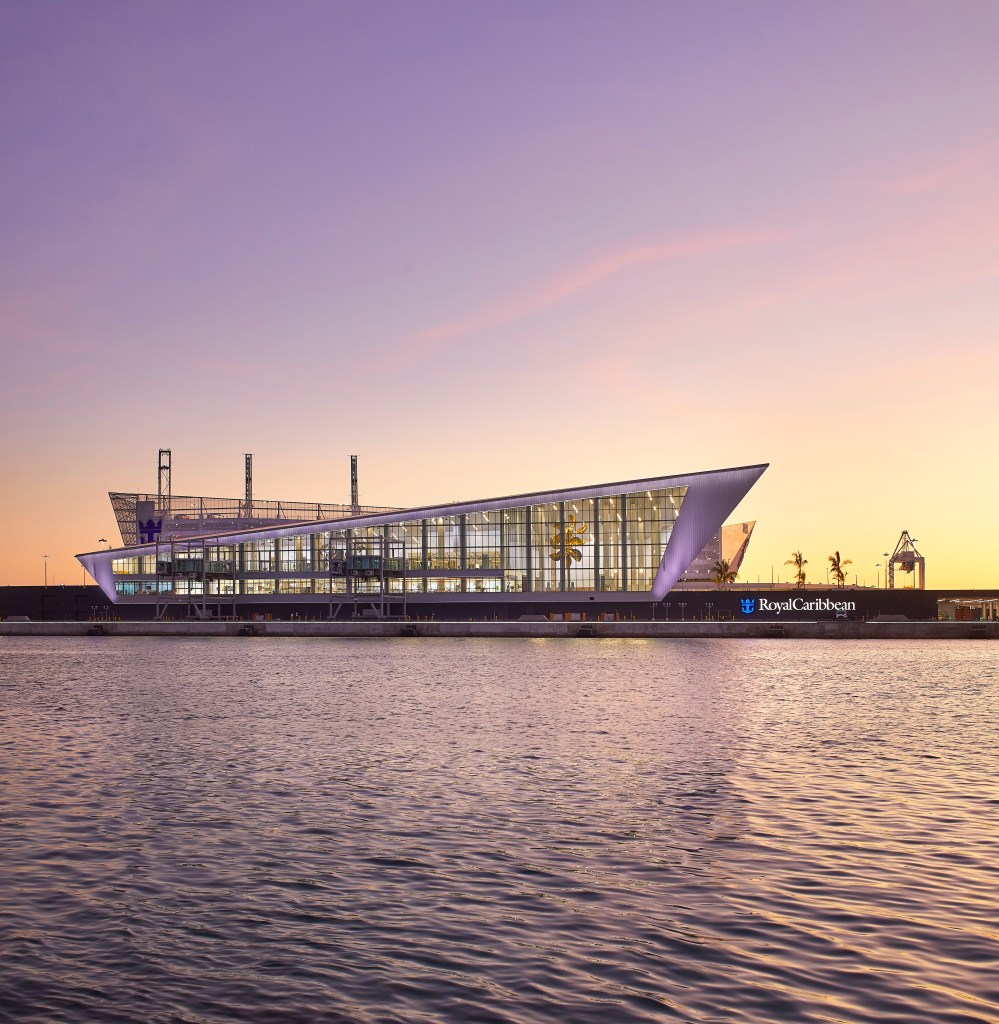
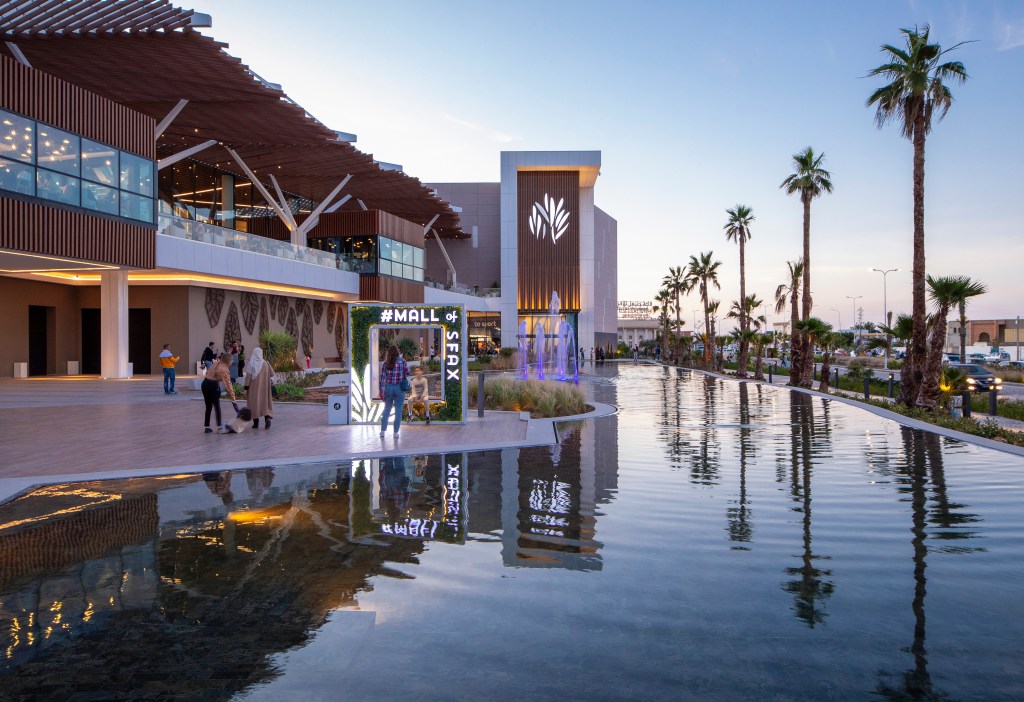
Broadway Malyan's focus remains primarily on the eastern hemisphere. Sabrina confirms the priority is not necessarily geographic growth but rather improving the quality and impact of their work. "What we're really focusing on is being better and delivering better projects for our clients."
This approach extends to how the practice establishes and maintains its international presence. "We are global, but the way we operate is local to where we are," she explains. "All our studios have local people. We build teams with a local culture and client base."
Sabrina attributes this successful global-local model to the company's robust operational protocols. These systems allow Broadway Malyan to maintain consistency across diverse locations without resorting to offshoring talent from headquarters. Instead, they focus on building strong local teams that embody the firm's values while understanding and serving their specific markets.
This approach reflects a significant evolution in strategy over the past 15 years. The practice has shifted from a centralised model to a more localised, interconnected network of studios that leverages global talent while maintaining strong local roots.
"Each of our Studios employ local people and deliver projects for both the local and overseas markets." Sabrina confirms that this is supported by a robust system of inter-studio collaboration, which is one of the practice's key strengths. "There's a lot of communication and intercompany work between our studios across the world, which leads to our success.”
The practice's flexible talent deployment strategy ensures that each project benefits from the most suitable expertise, regardless of geographic location. "We always ensure that we put the best talent into each of the projects... an opportunity might come in the studio that doesn't have that particular talent. We'll resource that expertise from a different place.”
This collaborative model has been further enhanced by the rise of remote working and facilitated by established systems and protocols, enabling seamless collaboration across the practice.
"I've put a process, protocols and systems in place to eliminate friction between teams.”
At the heart of her approach is a commitment to recognising and nurturing talent across the organisation. "I try my best, to ensure that everybody has a voice. Everybody is being noticed and seen in every corner of the world.” This harks back to Sabrina’s personal experience, where this wasn’t always evident to her. It also extends to developing future leaders. She is passionate about training the next generation in people management and leadership skills.
Key Takeaways
Sabrina Klor's journey to becoming Chief Operations Officer at Broadway Malyan is a testament to her innovative approach to reshaping traditional architectural practice structures.
Her role, uncommon in architecture practices, but prevalent in other industries, marks a significant shift in how design practices of the future can operate. Her story illustrates how a combination of frustration, vision, and courage can lead to significant organisational change, even when starting from a position of perceived lack of experience.
Practices need to be adaptable and focus on near-term strategies because the industry is evolving rapidly. Data and digitalisation will be crucial for future success. It’s important to collect trustworthy data and use it smartly - without becoming overwhelmed.
She reminds us that the goal of embracing technology and data is to remove "human toil" and free up time for higher-value work that benefits clients and projects. A successful global-local model that involves creating local teams while leveraging a collaborative talent network is a valuable business proposition to explore, alongside operational excellence.
Run your business of today and simultaneously build the business of tomorrow.