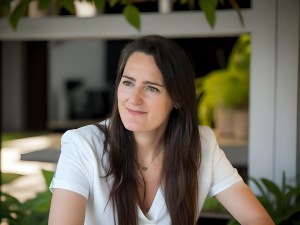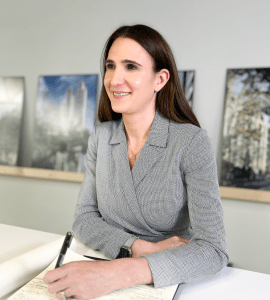
With a fervent belief in the power of compelling, authentic narratives to shape our cities and buildings, Karen Zabarsky Blashek has carved a unique path in the industry, blending her diverse skill set to create impactful spaces that resonate deeply with communities.
Currently serving as the Founder and Principal of Ground Up, a multidisciplinary creative studio, and as the Editor-in-Chief of Austin Home Magazine, Karen brings a wealth of experience and expertise to her endeavours. Ground Up, founded in 2022, is not merely a studio but a philosophy—a commitment to telling stories that bring value to communities, achieve cultural and economic goals, and ultimately transform the built environment.
Karen's journey extends far beyond her professional roles. Born in Tel Aviv, raised in Dallas, and shaped in New York City, her diverse background and experiences have imbued her with a unique perspective on the intersection of culture, community, and design.

The story of Karen Zabarsky Blashek's journey traces back to her upbringing, split between Israel and Dallas, Texas. Her mother's penchant for exploration led her to frequent visits to museums, sculpture gardens, and parks from a tender age, fostering a profound appreciation for architecture and urban landscapes. This early immersion set the stage for her future endeavours.
Enrolling at NYU, Karen pursued Urban Design and Architecture, driven by a love for mathematics and the allure of cities. Yet, it was the addition of a business and creative writing minor that sparked a pivotal shift in her trajectory. Despite the seemingly disparate interests, she felt compelled to merge them into a cohesive pursuit, driven purely by passion.
As graduation loomed, Karen envisioned herself pursuing a master's in architecture, poised to become an architect. However, fate intervened when she secured her first internship as a marketing associate at Studio V in New York. Immersed in the world of design storytelling, she discovered a newfound excitement in bridging the gap between architectural brilliance and audience comprehension.
This revelation altered her course, delaying her plans for further education as she delved deeper into the realms of design, business development, and marketing. Transitioning to Kushner, a prominent real estate developer, she honed her skills over seven formative years, assimilating invaluable insights that would shape her future work.
Reflecting on her journey, Blashek acknowledges the profound influence of her experiences, particularly in cultivating a nuanced understanding of business dynamics. Today, as she grows her own entrepreneurial venture, she draws upon these lessons, striving to carve a path that seamlessly merges design excellence with strategic acumen.


Revolutionising the Creative Process in Real Estate Development
Upon joining Kushner, Blashek found herself in a unique position as the sole creative director amidst a sea of analysts and acquisitions experts. Tasked with all things related to creative communication, from marketing brochures to branding, her role quickly became synonymous with creativity and innovation.
Observing the conventional creative process for new developments, Blashek noticed a pattern: architects would design the structure, interior designers would add aesthetic appeal, and then, almost as an afterthought, branding and naming decisions would be made. However, she realised that working on positioning and branding at the start of the process (as opposed to the end) made decision-making throughout the lifespan of a development much easier.
Recognising the need for a more strategic approach, Blashek began to collaborate closely with the acquisition team from the project's inception. Conducting comprehensive studies of the site, neighbourhood, market trends, and economic factors, they crafted a strategic positioning for each asset, envisioning it not just as a building, but as a beloved community asset.
This shift in approach ultimately led to Blashek's ascension to the role of head of design and branding, marking the culmination of her efforts to infuse strategic thinking into every aspect of the development process.


Bridging Communication, Design, and Development in Real Estate
Blashek reflects on the harmonious fusion of her passions—communication, branding, and design—in her collaborative role within the development team. At Kushner, alongside the head of development, head of construction, and firm owners, she meticulously shaped each project, implementing a system that streamlined decision-making.
As they embraced this strategic approach, decisions became clearer, smoother, and inherently more aligned with the project's objectives. By understanding their target audience, city needs, and market dynamics, the team crafted developments that resonated deeply with the community upon unveiling.
Two and a half years ago, Blashek embarked on a new venture, Ground Up, mirroring the scope of her previous endeavours. Yet, her role as a creative director in real estate remains somewhat novel, challenging conventional norms. Ground Up offers a flexible approach, tailoring services to specific project needs, whether it's comprehensive strategy, design, or a combination thereof, all aimed at realising the dream of holistic project involvement.
Empowering Real Estate Development Through Strategic Insights
Blashek finds herself predominantly catering to developers, a clientele that she deeply understands given her developer mindset ingrained over time. Surprisingly, she's also become a go-to for PropTech firms, recognising the value of her insights in aligning their offerings with developer needs, be it in refining positioning or crafting fundraising pitches.
Delving into her process, each project commences with a thorough site immersion involving all stakeholders, a step she deems essential for success. Recognising the pitfalls of assigning such tasks solely to marketing heads, Blashek advocates for inclusive sessions with ownership partners, architects, interior designers, and other key team members. This immersive approach spans extensive research, from online investigations to on-the-ground interactions with community figures, cultural spaces, and geographic features.
She emphasises the importance of understanding the local ecosystem's needs, citing examples like the absence of essential services in certain neighbourhoods. This holistic view extends to historical research, analysing site evolution and future projections, as well as studying comparable projects not just digitally but also through firsthand visits. By synthesising these insights, Blashek and her team aim to develop unique, impactful offerings tailored to each project's specific context.


Unique Property Identities: A Comprehensive Approach
Blashek underscores the importance of crafting a property that stands out distinctly from others in the market. Ensuring its uniqueness and significance is paramount. To achieve this, she advocates for a comprehensive approach involving various components.
Firstly, she emphasises the need to gather all stakeholders around the table for a brand charette, a workshop led by her to foster creativity and alignment. Through a series of probing questions, the team explores the intended audience, the desired impact on the community, and the personality of the place. These discussions delve into nuanced details, such as the ambience and character, which are crucial in shaping the property's identity.
This thorough process not only fosters creativity but also ensures that everyone is on the same page regarding the project's vision. By addressing these fundamental questions upfront, potential discrepancies are ironed out, laying the groundwork for a coherent and compelling property positioning.


Navigating a New Role: Media and Shaping Design Narratives
In January, Blashek started a new role as the Editor-in-Chief of Austin Home Magazine, the city’s pre-eminent design publication.
Two distinct yet parallel events shaped her trajectory. Firstly, her burgeoning interest in media and storytelling within the built environment was fueled by a perceived gap in publications that seamlessly integrated real estate, design, technology, and strategy. This led her to launch a newsletter and host local events, garnering positive responses and sparking further curiosity about the media landscape in this domain.
Secondly, her observations of Austin's vibrant design community, characterised by innovation and camaraderie, stood in stark contrast to her experiences in New York. This juxtaposition prompted her to contemplate starting her own platform. However, fate intervened when she stumbled upon an opportunity with Austin Home, a venerable publication in the city's design scene. Impressed by its longstanding reputation, Blashek seized the chance and eventually assumed the position after engaging in fruitful discussions with the former editor-in-chief.
Since assuming her role at Austin Home, Blashek finds parallels between her work there and with Ground Up, despite the apparent dichotomy. Both endeavours share a common ethos: sharing and shaping the narrative of the built environment. By spotlighting projects and individuals driving positive change, she aims to shape the trajectory of the industry, akin to the impact of strategy, branding, and design in a more tangible sense.
Substance in both strategy and branding work, as well as editorial endeavours in storytelling, must originate from a place of authenticity to truly resonate with the audience. According to her, storytelling falls flat when it lacks authenticity and feels arbitrary or disconnected from reality. Even the term "storytelling" can sometimes imply fabrication. Instead, she advocates for messaging that is grounded in truth and meaning, making it difficult to dispute or ignore. While forward-thinking and future-oriented, it must also retain a sense of authenticity to maintain audience engagement.
Crafting Authentic and Clear Communication Strategies for Design Firms
Blashek highlights the need for design firms to communicate authentically and emotionally with the outside world. She suggests that firms should strive to be more literal and emotional in their communication strategies to stand out from the crowd.
From an emotional perspective, firms should articulate their ethos and values, conveying what sets them apart and makes them unique. This involves a thorough analysis of competitors to ensure differentiation and authenticity in messaging.
On the more literal side, Blashek underscores the importance of transparency regarding processes and capabilities, particularly for developers who seek clarity and efficiency. Firms should clearly outline their processes, capabilities, and past projects to provide developers with immediate understanding and confidence in their suitability for the job.
She acknowledges that while her insights are most relevant to the design and real estate industries, similar principles may apply across other sectors. Ultimately, the goal is to ensure that firms' messaging is immediately digestible and resonant with their target audience, leaving no room for confusion or hesitation.

Roadrunner Venture Studios: A Collaborative Model for Innovation
Blashek’s approach is best exemplified by a recently completed project called Roadrunner Venture Studios in Albuquerque, New Mexico. In collaboration with a broader team, Ground Up designed the space, and contributed to various aspects including strategy, design, partnerships, and exhibition installations.
Providing context, she explains that Roadrunner Venture Studios is a unique venture studio operating in New Mexico. Despite the state's rich history of innovation and scientific expertise, it faces economic challenges. The studio works with entrepreneurs and scientists from National Labs to commercialise their intellectual property, with support from the state government, building owners, and local stakeholders.
This project exemplifies multi-level collaboration involving state and city governments, private developers, building owners, and local and national tenants. Such partnerships are instrumental in driving economic growth and innovation, leveraging the region's intellectual capital for commercial success.
Blashek was tasked with transforming a former warehouse into an office space while ensuring aesthetic appeal. However, she chose to approach the project holistically, focusing on shaping its narrative and significance.
Blashek delved into the essence of the space, pondering its implications for New Mexico and Albuquerque, as well as the entrepreneurs it would host. Her aim was to design a space conducive to expansive thinking, encouraging scientists to push the boundaries of reality. Grounding herself in a narrative of innovation, she envisioned the space as a pivotal node in New Mexico's trajectory, bridging past achievements with future progress.
Beginning with strategic planning, Blashek's approach energised the team and facilitated fundraising efforts. Collaborating closely with local architects, she oversaw the interior design process, from floor plans to finishes. Notably, she advocated for a small event space, initially overlooked, to be prominently featured within the layout.
Blashek emphasises the importance of integrating design with strategy and narrative to enhance the overall experience of a space. She cites the example of relocating an event space to the forefront of a building, creating a dialogue with the public realm. This decision was guided by the belief that innovation and history should be accessible to the public as much as to the scientists behind them.
Collaborating with the University of New Mexico, Blashek facilitated the creation of an exhibition showcasing innovative materials made by students. This initiative transformed the space into a community treasure, enriching both the local community and the state of New Mexico.


Collaborative Leadership in the Built Environment
Blashek believes in a leadership approach she describes as "leading from behind," a philosophy rooted in empowering others rather than seeking personal recognition. In her view, true leaders in the built environment nurture a culture where credit is shared and accountability is embraced.
She advocates for hiring exceptional individuals and providing them with opportunities to lead and grow. Rather than micromanaging, she emphasises mentorship and encouragement, fostering an environment where diverse perspectives are valued and innovation thrives. For her, the solution to challenges in the built environment lies in collaborative efforts and open dialogue, where fresh ideas can emerge and lead the way forward.
Gender Dynamics in Real Estate and Architecture: A Personal Perspective
Karen reflects on her experience as a woman in the field of real estate development and architecture. She acknowledges the challenges faced by women in the industry but also shares her personal perspective, finding advantages in her gender. In her observation, being the only woman in the room, though less common nowadays, has often worked to her advantage. She brings her feminine energy into spaces, feeling empowered to captivate audiences and foster engagement.
She emphasises the importance of recognising varying experiences within the industry, noting that while she personally hasn't encountered significant obstacles, she acknowledges that others may have faced more challenging situations. She expresses gratitude for her male mentors and acknowledges the role of supportive individuals, regardless of gender, in her career journey.
Overall, she suggests that embracing feminine qualities, such as strong communication skills and empathy, can be advantageous in professional settings, fostering connection and collaboration across diverse identities.


Mentorship through Encouragement and Empowerment
Blashek reflects on her experiences with mentors, noting that the best ones have shared a similar approach. Throughout her career, she has encountered individuals who have expressed trust in her abilities, offering support and empowerment rather than micromanagement. From a young age, she has benefited from mentors who have encouraged her to take ownership of her work and provided the confidence to pursue her goals. One notable mentor, Rhonda Grubbs, made a significant impact on her career path by recognising her strengths and suggesting alternative directions. Mentors not only empower but also take the time to understand and guide individuals based on their unique personalities and aspirations.
Blashek shares her enthusiasm for engaging with design entrepreneurs, especially those on the brink of launching their own architectural or design ventures. She reflects on her personal journey, acknowledging the intimidating nature of embarking on entrepreneurship and the invaluable impact of receiving encouragement at critical junctures. She particularly empathises with women navigating the decision to transition into entrepreneurship. Blashek advises individuals to explore diverse avenues for demonstrating their leadership potential and skills, such as volunteering for leadership roles in industry organisations or establishing online platforms to showcase their unique perspectives and insights.
In conclusion, Blashek's journey embodies the transformative power of passion, perseverance, and collaboration in the realms of real estate development, architecture, and design entrepreneurship. As she navigates her role as a creative director and entrepreneur, Blashek champions a strategic approach that prioritises authenticity, collaboration, and empowerment. Her emphasis on mentorship and encouragement reflects a belief in the transformative power of supportive relationships in shaping career trajectories and driving positive change.
Karen Zabarsky Blashek's journey serves as a testament to the limitless possibilities that arise when passion meets purpose and collaboration drives innovation. Her commitment to authenticity, strategic thinking, and inclusive leadership paves the way for a future where creativity, empathy, and empowerment converge to shape vibrant, resilient communities and transformative built environments.