Mollie Claypool is the Co-Founder and CEO of Automated Architecture (AUAR) pronounced ‘our’. As a thought leader working on the question of how the intersection of the design of architectural systems and automation impacts construction, she believes in radically changing the way we build so we can change the way we live. Key to this for her is issues of labour as well as material and social sustainability. Her work at AUAR is informed by her background as an educator and activist, having been involved for many years in environmental, housing and maternal rights activism. As an author, her publications include “Robotic Building: Architecture in the Age of Automation” and “The Digital in Architecture: Then, Now and in the Future,” essential readings in the field of computational architecture. As an Associate Professor at The Bartlett School of Architecture, UCL, she co-directs AUAR Labs, celebrated for its social sustainability impact.
Gilles Retsin, is the Co-Founder, CTO, and Chief Architect of AUAR. He is an architect and thought leader, driven by the desire to rewire the way we design and build so that we can again deliver beautiful spaces in large quantities: architecture for the many. His pioneering approach intersects design, technology, AI, and robotics, aiming to address both the core of architecture as well as social and environmental challenges. Retsin's design work and critical discourse have gained international acclaim, with his work featured in prestigious venues like the Museum of Art and Design in New York, The Royal Academy and the Centre Pompidou. Gilles obtained his PhD from RMIT and is an Associate Professor at UCL's Bartlett School of Architecture where he co-directs AUAR Labs.
Identifying the Opportunity
The building industry struggles with productivity and a lack of digitisation. At the same time, there is also an enormous need to deliver sustainable low-energy homes to mitigate both the climate and housing crises. It has historically been proven that the building industry can change radically. After the Second World War, the industry adopted new construction materials like steel and concrete, and new building typologies designed for those materials. The first versions of industrialised construction were put into practice, where homes were delivered in prefab panels from factories. Thousands of new homes were built to house millions of people. Today, in the face of the climate and housing crisis, a similar moment of transformation is about to happen.
Until now, the main attention has gone to the same modular factories which were invented half a century ago. However, these factories are no longer a viable model today: we are confronted with much more complex and fragmented supply chains, complex planning and expensive labour costs. Modular factories are often hardly automated. Companies that tried to construct vertically integrated factories keep on failing.
AUAR presents a radically different approach.
AUAR’s mission is to reshape the design and manufacturing process of house building and to empower builders to create the homes the world needs and desires. They propose developing technologies and methodologies that rethink the building blocks of construction itself. "Rather than saying we'll take a bunch of robots and try to have them build a typical house in the way it's done today," Mollie explains, AUAR has rethought the entire design and manufacturing process so that it’s designed for automation.” This investigation into the core components of the building process has been central to their work, both in practice and academia and in founding AUAR.
With a shared vision of a world where sustainable housing is universally accessible to everyone, they have spent over a decade exploring the intersection of the climate crisis, housing, and new technologies. Especially through their research lab at the Bartlett, University College London (UCL), called AUAR Labs.
With AUAR Labs they established a partnership with a community-led housing association and a digital manufacturing hub, which enabled them to co-develop processes for delivering homes within communities. Mollie was active in the history and theory community; researching, writing articles, editing books and developing a teaching practice focused on the influence of automation and technology on the architecture discipline. Gilles was running his architectural practice, following the typical path of the “young architect”, doing competitions, small commissions and installations for museums and biennales to try and materialise his ideas on a new kind of automated timber architecture.

Leveraging Consultancy for Seed Funding
As their ideas gained traction, Mollie and Gilles were approached by SPACE 10, an IKEA-funded research lab to develop a system for digitally manufactured furniture. This led to them establishing AUAR first as a consultancy outfit. Several other consultancy jobs helped them build a larger team and bootstrap the business.
An early strategic partnership with ABB Robotics allowed them to start implementing robotic manufacturing and deliver their first built products: small garden studios. These allowed them to iterate fast and learn. Last year they raised £2.6m for their first seed round with investors Miles Ahead, ABB RA Ventures, Morgan Stanley, Rival Holdings, Vandenbussche NV and angel investors from real estate, climate tech and robotics. AUAR now has an R&D lab in Bethnal Green, London and has grown to a team of 15 people. They have a micro-factory in Belgium with a European partner and are setting up two further micro-factories with their US partners in the US later this year.
Through their innovative approach, Mollie and Gilles are paving the way for a future where high-quality, affordable housing is not just a vision but a reality.
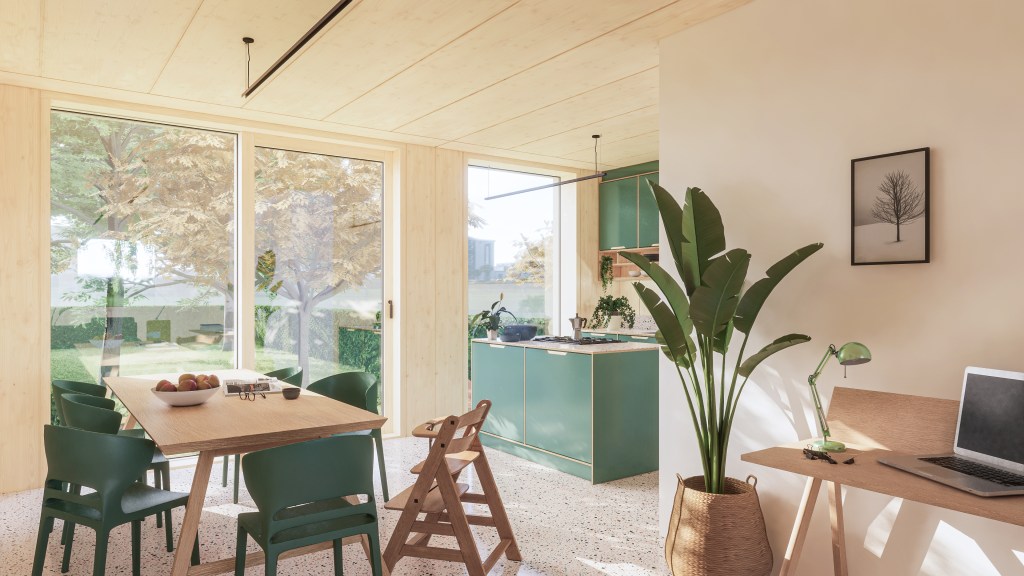
First Principles Thinking in Architecture
By questioning the very foundation upon which architecture and the building industry are based, Mollie and Giles have opened the door to innovative solutions that address the industry's most pressing challenges. "We are a first principles team through and through," Mollie states, emphasising the importance of holistic thinking. AUAR questions every aspect of the design and construction process, from the materials used to the impact of each decision on the broader value chain.
Their shared 'activist adventurer' mindset from their days as scouts, has imbued their work with a sense of purpose and a drive to effect real change.
Navigating an Industry that Needs to Change
The construction industry desperately needs and wants to change, but it is not easy, especially in a business that has extremely low margins, which makes it difficult to take risks. Mollie and Gilles’ strategy has been to derisk the adoption of new approaches such as AUAR by forming partnerships with developers and builders. These partnerships, built on shared values and mutual trust, are essential for testing and validating new concepts in a real-world context.
Finding the right collaborators and de-risking projects as early as possible, has been key to the success of AUAR to date. “We focus on what we do best and seek partners with expertise in other areas,” Mollie confirms.
One of the key strategies employed by AUAR involves taking an existing product from a developer and showcasing how automation can significantly alter the project's cost structure. By starting with something familiar to the developer and demonstrating immediate value, they effectively de-risk the project for their partners.
This approach establishes a foundation for a productive partnership. The process is meticulously designed to build a roadmap with contractors, understand their organisation, identify barriers, and inform decision-making to foster long-term partnerships.
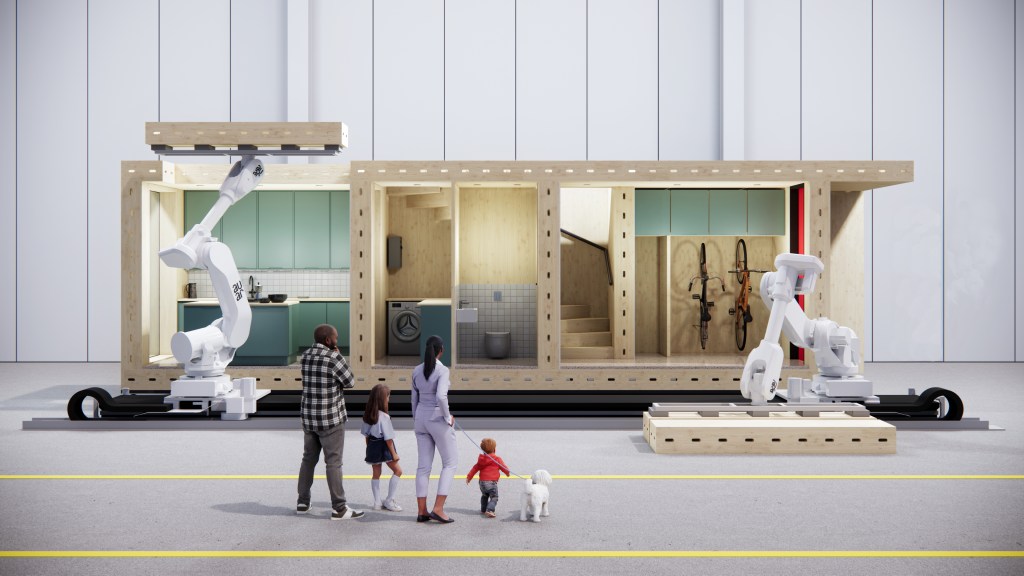
Building a Business Case
Addressing the upfront investment concerns, Mollie highlights the cost-effectiveness of their technology. With an upfront capital expenditure (CapEx) of £250,000 for a micro-factory, which is dramatically lower compared to other technologies, the investment pays back swiftly once in full production mode. This investment translates into a £6.2 million revenue opportunity per year, yielding an ROI of £2.5 million annually on a £250K investment.
These numbers are indeed compelling.
So, why is it that modular construction has typically failed in the past?
Mollie suggests that the high CapEx and operational expenditure (OpEx) upfront lead to ROI problems. Also, the customisation demands of the industry, juxtaposed with the need for standardisation in modular systems, create a conceptual conflict.
In contrast, AUAR delivers customisation at no extra cost, circumventing the inherent conflict in modular construction.
The transition towards micro factories represents a significant shift in the modular construction paradigm. These smaller, more agile factories allow for just-in-time manufacturing, paralleling the efficiency seen in larger centralised setups but with greater flexibility and lower costs. This model supports a wide range of typologies and spatial requirements, overcoming the limitations of traditional modular construction methods.
The building industry is a very complex, but highly agile ecosystem of companies working together to deliver buildings. It’s also an industry that is highly localised, especially when it comes to home building. This system is now under pressure from rising labour costs and the need to transition to greener building methods, but modular is not a solution as it merely replaces high labour costs with high CapEx costs of building large factories. These factories are not agile. Gilles suggests that’s why it makes a lot of sense to think about micro-factories on-site or close to site, that require very little investment and enable the existing network to enhance their productivity.
Robotic microfactories without a supporting software approach would be meaningless.
AUAR also strategically intervenes early on in the design process of homes. Using their software platform, architects and developers can “digitise” their homes early on and get crucial cost information. This “design for manufacturing and assembly” approach allows them to develop better homes and also streamlines production.
Their innovative software platform is a game-changer, offering real-time costings across the value chain. This level of upfront transparency is unprecedented in the industry, where traditionally, the cost consequences of design decisions are not transparent. Now, with AUAR's technology, architects can immediately understand the impact of any design change, streamlining the process and eliminating the tedious back-and-forth with builders and developers. This efficiency frees design teams to focus on design and business best practices.
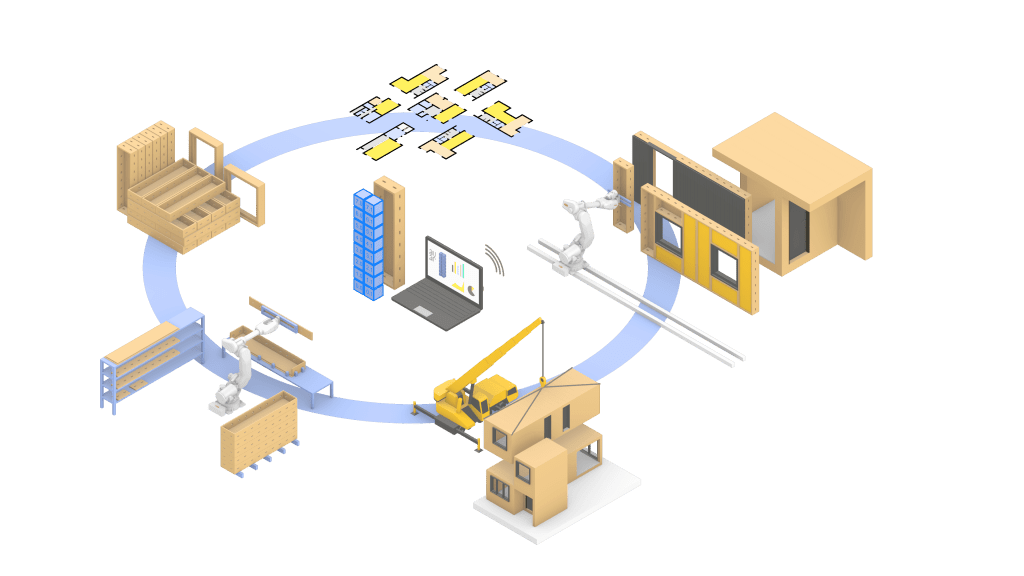
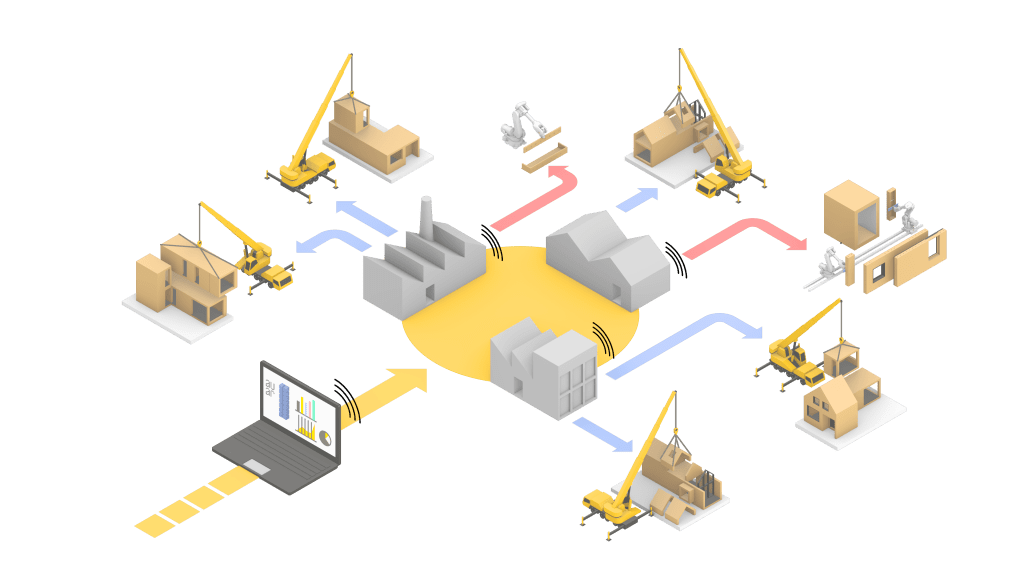
Business Plan and Tech Stack Overview. Image credit: AUAR
Overcoming Fear of Change
AUAR's success is underpinned by its highly multidisciplinary team, comprising architects, automation engineers, structural timber engineers, software developers and operators. This diverse team is led by individuals who have a deep understanding of architectural problems and opportunities, all of whom are mission-driven and advocate for good design
By embedding design into every aspect of their operations and collaborations, AUAR upholds a standard of good design that resonates with their partners and has helped to influence change.
Mollie and Gilles’ different interests naturally combined into AUAR: Mollie is a systems thinker and community organiser interested in how technology and automation can accelerate societal change, whereas Gilles is an architect interested in the intersection between design and technology.
Mollie’s passion continues into AUAR which is building a network of partners; or an ecosystem for change in the built environment and how we live. Gilles’s interest in the question of architectural parts and architecture in large quantities, combined with the many installations he built for various museums and biennales alongside the work of AUAR Labs, led to AUAR’s design and technology approach.
In the complex ecosystem of the construction industry, navigating the challenges of collaboration and innovation requires a nuanced understanding of the various stakeholders involved. Mollie highlights the pivotal role education has played in bringing partners and stakeholders with them.
While the construction industry has a reputation for being resistant to change, the experience of the team at AUAR is very different. “Everyone we speak with is eager for change and wants to change. It’s just easier said than done, and it is very difficult for builders to find the right way to change. They operate in a difficult industry with low margins, and there is no easy and accessible solution out there that they can just adopt.
Many startups that develop more holistic solutions are focused on outcompeting the existing industry, rather than working together. We have taken a very different approach, where we’re all about understanding what could help builders and where we can add value and keep this as accessible as possible. Both builders and developers are motivated primarily by cost, speed, risk and ease of adoption - which makes perfect sense.”
Collaborating with the building industry also goes both ways.
“AUAR has learned an incredible amount from their partners. One of the key takeaways is that one needs to be pragmatic if you want to change things. It’s easy to say you want to revolutionise an industry, but you also need to be very precise about where you can add value and where not, or where you can go later."
You need to focus. For example, while we are highly innovative in terms of our manufacturing methods, whatever our robots produce needs to be known by the market and pass regulation. If you come up with a super innovative new building method you will have a tough battle and you won't be able to have impact or scale. In our case, we rationalised our building system so that it ticks all the boxes of a normal timber frame - the only difference is that it can be made by a robot on site!”
The industry is now in the kind of perfect storm that forces change: there is an increased requirement from real estate investors to hit sustainability targets, there is a lack of skilled labour, and the labour has become very expensive, driving up prices. This situation is not going to change, the labour force is only getting smaller and more expensive and the need for greener buildings will only get larger and more urgent. At the same time, the price of robots and automation is coming down radically. In the past, a company like AUAR would require a lot of capital expenses to build their micro-factories, but today they can build them in-house and at low cost. Robots will only get cheaper, while labour will only get more expensive. The pressure to change is there, and builders know it.

Social Value Proposition
Mollie advocates for extensive stakeholder engagement early in the process of adopting AUAR’s approach. Collaborating with developers like Re-Vive, a sustainable developer active in several European countries, which prioritises sustainable and affordable housing while embedding social value into their projects, has enabled AUAR to leverage the strengths of partners to foster livable and cohesive communities.
This approach underscores the importance of selecting partners who share common values such as a commitment to social responsibility and community well-being, and ensuring that their expertise complements your in-house core competencies.
One of the most significant hurdles in the construction industry, particularly in the UK, is the high cost and limited availability of land. This financial barrier makes it challenging for developers to justify their investments and secure the necessary funding for land acquisition. The uncertainty surrounding build costs and the return on investment complicates developers' ability to make informed decisions, leading to hesitancy and potential stagnation in project initiation.
AUAR's approach to mitigating this issue involves providing developers with certainty and de-risking their investments through providing early de-risked cost insights, thereby enabling them to navigate the volatile landscape of land acquisition more effectively.
Gilles says, “In discussions around the housing crisis it often comes up that the main issue is just the cost of land and not the cost of construction. This is true in the case of highly valuable inner-city sites, but in many cases, the construction cost does have a crucial impact. Also when it comes to land acquisition: if a developer knows the build cost of their project upfront, and if that build cost is substantially lower for the same quality, they can essentially safely acquire any piece of land. By working with AUAR they can also complete their project quicker through both the design and construction phase, so they increase their productivity.”
Parts of Europe demonstrate a more progressive approach to tackling housing needs. There is a noticeable movement towards de-risking construction projects by embracing innovative materials like timber and investing heavily in the circular economy. This approach not only addresses the immediate need for housing but also aligns with broader sustainability goals. Europe's commitment to these initiatives is evident in the scale of investment and the adoption of policies that support the use of sustainable materials and construction practices.
Material Sourcing and Specialisation
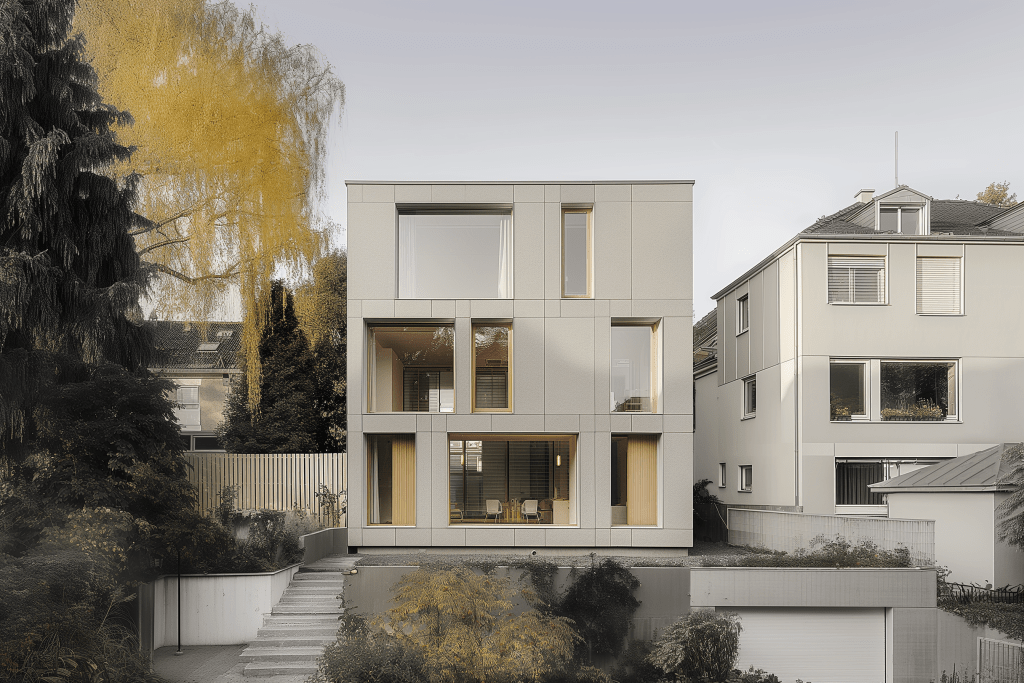
AUAR is an advocate of local manufacturing. This also means that they push their partners to work with local timber supply chains. They decided to enter the market using really simple and widely available timber materials, which they can easily adapt their designs with to local code. AUAR’s team engages local architects and engineers during this process, to learn as much as possible from context-specific knowledge. This then gets shared through AUAR’s partner ecosystem so that solutions to what may typically seem like hyper-local problems can be used in other geographies AUAR is working in.
AUAR also radically reduces the amount of different materials and parts needed, to establish a lean and short supply chain. This is key to their idea of scaling into multiple regions and countries at once. At the same time, this approach also lowers the embodied carbon and the carbon emissions associated with transport.
Avoiding the Pitfalls of Vertical Integration
AUAR’s critique of fully vertically integrated models in the housing space highlights the inherent risks associated with attempting to manage every aspect of the construction process in-house, from planning and procurement to design, building, installation, and post-occupancy. Such models, exemplified by notable failures like Katerra or Veev in the US and Ilke Homes in the UK, take on excessive supply chain risk and operational complexity, ultimately jeopardising the business's viability. At the same time, the building industry is notoriously fragmented and would benefit from more integration, leaving startups and technology companies with a dilemma. Vertical integration has failed, but further reinforcing the fragmented industry is also not a solution. AUAR takes a different approach, where they think holistically about the industry as an agile system of collaborative partners. Rather than trying to integrate these partners, they identify precise points across the value chain where they can add value. This allows them to integrate processes and enables the existing system to increase its productivity.
AUAR supports a central role for architects. Just as AUAR creates a network of developers and contractors, they also engage architects to design housing types with their system and oversee their delivery on site. Architects working with AUAR can focus on the design process and help the implementation of AUAR’s systems gain specificity and contextual response. At the same time, a lot of the more tedious and repetitive work associated with architectural practice is automated by AUAR, saving the architect's labour and risk. As Mollie says, “We are always very excited to see what architects design with our system. We learn a lot from how they can adapt our system to produce something unique to a specific brief and context.” This is a very different model from traditional approaches to modular construction, where adaptation is a real pitfall.
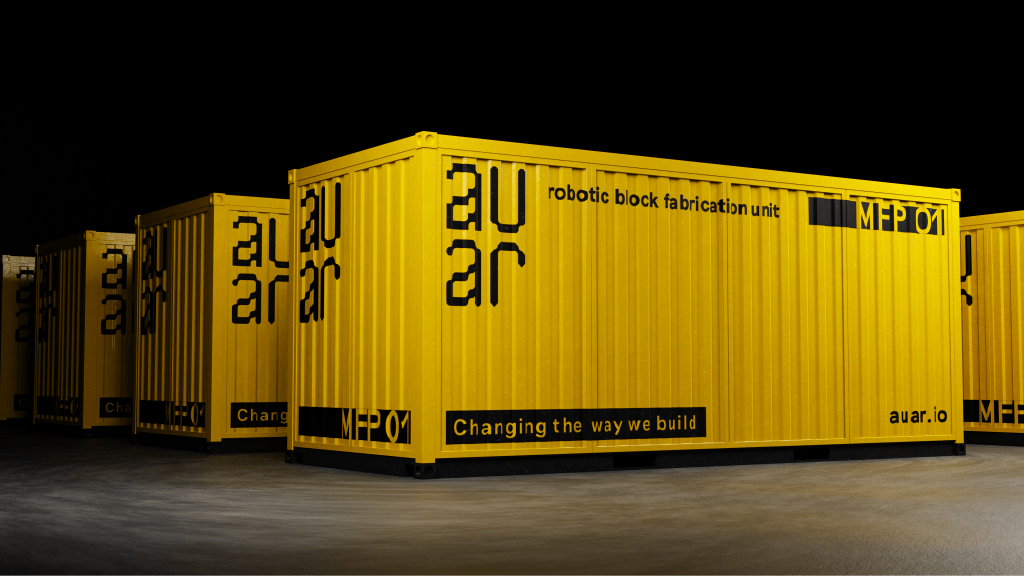
Modular builders struggle to deal with adapting fixed, container-sized units to unique sites. Gilles elaborates on this point “From an architectural perspective volumetric modular construction is also very limiting. It’s ultimately a kind of sad vision of the world where all designs would have to conform to container-sized modules. Working with our smaller building blocks allows for multiple ideas of space, ways of living, responses to context, etc.”
The Plight of Traditional Architectural Practices
“The architectural profession has been eroded over the past few decades,” Gilles says. “Architecture used to be a discipline concerned with the big societal question of housing, but through socio-political changes we ended up with a very limited scope of designing beautiful homes for the few who can afford it. Architecture today has never been this good, there are so many fantastic practices and ideas, but it’s also never been for this few people. Architecture is a state of exception today. On top of that, because of the way we build, the profession has also been fragmented and a lot of our work is outsourced to armies of consultants. A lot of our material decisions are no longer in our hands but have to be picked from catalogues with commodified products delivered through long and often polluting supply chains. The business model of the architect has not adapted to this reality: architects work long hours on a single design, which is then never repeated again. We start again from scratch with each project.”
AUAR challenges this approach by shifting thinking to architecture in large quantities: an architecture that can repeat itself in variations, without losing its qualities. It’s a shift from a service-oriented model to a product-based model. As it’s in AUAR’s ethos to “build together”, architects are part of the “ecologies” that AUAR is building with their network. AUAR collaborates with architects to design housing types using their system, which can then be digitised and built-in multiple instances. This establishes a more continuous revenue stream for architects and their efforts to design something of great quality and then pay back every time an instance of a design is built.
One thing AUAR also learned is that design is as important as technology in trying to reduce the cost of a building. A lot can be achieved by automating construction with robots and AI, but design has a disproportionate impact on cost. It also has the power to turn things on their head: through good design, you can achieve a lot with little means. It’s the classic mantra of “more with less”, but it still holds today.

Vision for the Future
AUAR’s immediate future is focused on learning as much from their pilot partnerships and first completed projects. AUAR is deploying two micro-factories in the US later this year and is working on several sites in both Belgium and the UK. Their next steps are to prepare for growing their partner network. A crucial theme here is to develop their micro-factories to become faster and faster in order to deploy them on building sites or in existing industrial facilities. Another key theme is to make adoption easier and easier: AUAR’s partners should be able to run a micro-factory with just a few days of training.
AUAR envisions gradually addressing more and more aspects of a typical house. They currently impact about 20% of the cost of a building but have identified ways to address up to 60%. However, they emphasise it’s important to be pragmatic at first and pick your battles. “To have some of the first robots out in the wild delivering a substantial part of a home is already a big step,” says Gilles.
AUAR has ambitious plans when it comes to its generative software platform. Their software is a cloud-based solution of small bits of software, not unlike their modular building blocks, which are used at crucial moments in the value chain where they can have the most impact.
Essentially, AUAR doesn't want to reinvent something that already exists but rather focuses on adding small bits of software that combine together to produce a design-to-manufacturing workflow, from developer to contractor. Their software starts with a library of adaptable house designs that link to highly accurate cost data. This helps developers derisk land acquisitions and enables them to deliver higher quality schemes, as they have cost transparency upfront. At the other end of the software, a finalised design produces the code that drives their robots.
While their software is currently based on a library of adaptable house designs, they’re working on AI strategies to turn it into a fully generative model. In this case, a user could request designs for a specific budget and programme, and the AI model then resolves a series of proposals.

Scaling for Impact
Central to AUAR’s mission is the question of scale. “Scale is what is needed to tackle the global need for housing and the response required to address the climate crisis. A lot of architects engaging with climate do the right things but are not considering if their approach is scalable. And ultimately it’s only something scaleable that will have impact” says Gilles. Mollie expands on this point: “One of the reasons why we founded AUAR was a desire for impact, to make a difference. From a very different perspective, investors are also looking for companies that can scale, so in this sense, there is a good overlap between our mission and the requirements of venture capital for rapid scale.”
AUAR’s technology is thought of as a system that can be replicated over and over again. To do this in the building industry means that you need to be able to easily adapt your system each time you enter a new market or engage with a new customer or project. Nothing repeats in the building industry. AUAR approached this question by thinking about buildings not as static, finalised designs, but as assemblies of parts. It’s much easier to adapt one of these underlying parts than a whole building. Thinking about making our systems adaptable to be scalable was there from early on,” Gilles says, “as we were from the beginning active in both Europe and the UK. We learned quickly that our systems need to be able to adapt to local building codes and practices.”
AUAR’s robot microfactories operate in the same way, as smaller “building blocks” which can be quickly built and deployed at low cost, and added together into larger factories if needed. This technological approach also enables AUAR’s business model. Rather than trying to do everything themselves, AUAR partners with existing builders who pay them a license fee to use their technology. This allows the company to quickly enter new markets, without needing to start their own factories in each new location. It’s also a form of community building and collaboration, which aligns with the company's values of “building together”.
At the same time, AUAR’s partner network is also a form of distribution for their product. Mollie says, “A classic startup mantra is that it’s great to have a good idea and a good product, but if you don’t know how to distribute it it’s worthless.” AUAR envisions a global network of builders, developers, and communities producing 75,000 to 100,000 sustainable, affordable, and high-quality homes annually by 2030. These numbers would make AUAR’s network one of the largest homebuilders in the world, but it would still only deliver a fraction of the 2 billion new homes required by 2050.

Leadership and Entrepreneurial Spirit
Reflecting on their journey from academia to entrepreneurship, Mollie emphasises the importance of embracing collective responsibility and being creative, bold and radical. Architects have an explicit responsibility to use their knowledge in order to make the world better. For her, this means you need to learn how to ask great questions and cultivate a sense of radical curiosity about the world around you: is the way things are currently done the best way? How could we do things differently? Who holds the power to keep the status quo ‘business as usual’, and how can that power be shifted for the purpose of change?
Gilles emphasises the shift in entrepreneurship towards purpose and mission. More and more new companies are founded with a clear mission to make a difference. As a founder, it’s crucial to start a company with a clear purpose and larger mission that you truly believe in. When there is a lot of pressure and stress, this is also what gives you the resilience to keep going. AUAR’s purpose, mission and values are something that AUAR uses on a daily basis in the company. Mission alignment is, for example, a make-or-break factor in AUAR’s hiring processes.
AUAR's vision for the future of construction is not just about building homes; it's about redefining how we think about and engage with the built environment. In this sense, AUAR is as much a company as it is a movement: it’s about creating systemic change in the industry, bringing companies and people together to make a difference.
Through innovative approaches, strategic collaborations, and a commitment to sustainability and quality, Mollie, Gilles and their team are paving the way for a new era in construction that promises to address some of the most pressing challenges of our time.
Key Takeaways
Mollie and Giles have been at the forefront of reimagining the architecture and construction industry from the ground up. Their approach, deeply rooted in first principles thinking, challenges the status quo of practice, business model, material use, and labour processes. This radical mindset, combined with a commitment to holistic thinking, sets their venture apart in an industry known for its resistance to change.
AUAR's work exemplifies the transformative potential of questioning an industry's most intractable problems. They present a compelling case for the future of the industry, enabling both developers and builders to deliver high-quality sustainable homes at scale.
AUAR also shows a very different mode of practising architecture: it’s no longer about designing unique, one-off instances for a limited group of people, but all about thinking in large numbers. It’s about “architecture in large quantities”. The company shows how architecture can escape the traditional architectural office, and live on in the format of a technology company.
AUAR is setting a new standard for housing, one that promises to make design-focused, sustainable architecture more affordable and widely available to address the needs of communities and the environment.