Camila Rock De Luigi brings a wealth of experience and a passion for sustainable design to her diverse portfolio of world-class projects. With a keen focus on regenerative design, biomimicry, and biophilia, she harnesses the power of computational processes and technology to create holistic solutions that harmonise with the natural world.
As an Associate Principal Architect at Grimshaw, Camila has spent over a decade leading the charge on large-scale, complex projects, demonstrating her proficiency in holistic design approaches, project planning, budget management, and collaborative problem-solving. Her role extends beyond conventional architecture, as she also serves as a Tutor at the Architectural Association, specialising in Environmental Technical Studies and Regenerative Design Solutions. She also has a lecturing agenda with other schools of architecture with the aim of transferring knowledge stimulating collaboration in between academia and architectural practice. Her academic contributions have earned her a qualification as a Fellow at the Higher Education Academy UK and a Living Future Accreditation from the International Living Future Institute, ILFI.
From her beginnings as an Independent Architect-Designer in Chile to her current leadership position in London, Camila reflects a commitment to pushing boundaries and shaping the future of sustainable architecture.
Camila’s interest in architecture and regenerative design, started from architecture school or even earlier, as that’s often where the initial inspiration occurs. Camila, hailing from Chile, noted the contrast between her remote homeland and her current residence in the UK. Specifically, she grew up in Talca, a small town two and a half hours south of Santiago, situated in Chile's Central Valley. This region is renowned for its rich soils, agriculture, and excellent wine.
Growing up, Camila was surrounded by old rural warehouses built for production and storage, such as crop storage, animal feed areas, and wine cellars. These structures were often precarious, lacking modern design elements but serving their functional purposes well. The atmosphere inside these spaces was particularly captivating due to the dramatic interplay of texture and light, with natural environments contrasting against dark interiors pierced by sunlight. This environment fascinated Camila and sparked her initial interest in architecture.
Camila’s journey in architecture began at the University of Talca, situated in her hometown. By then the only School of Architecture in the Central Valley. Uniquely positioned between Chile's major cities of Santiago and Concepción, it offered a curriculum deeply rooted in material exploration and local context. The program emphasised the significance of understanding regional building methods and engaging with the community, sparking Camila’s profound interest in the relationship between the contextual natural surroundings, material properties and architectural form, as well as the important role that architecture would play in people’s lives.
Seeking to deepen her expertise, Camila pursued a degree in Emerging Technologies and Design at the AA's EmTech programme. This advanced study allowed her to explore material systems and biomimicry for design more comprehensively, solidifying her passion for this area of architecture. Despite the demanding nature of her academic pursuits, she felt fortunate to continue exploring her interests.
A pivotal moment in Camila's career came when she encountered the Eden Project in Cornwall. This experience crystallised her desire to work in a field aligned with her aspirations. Serendipity played a role as she applied to three practices, including Grimshaw, and received offers from all. Choosing Grimshaw, she embarked on a journey that would see her remain with the firm for over a decade.
Camila never anticipated that she would eventually work with the Eden Project team, a project she admired since its inception shortly after her graduation. Her interests in Sustainability and Regenerative Design in the built environment had always driven her towards such endeavours, even as her career took diverse and exciting turns.
Integrating Biomimicry and Biophilia in Architectural Design
Integrated living systems and organisms in nature emerge from a complex hierarchical synthesis between function and form, resulting in a constant feedback loop. This interaction between material distribution and form adapts to meet the functional needs of organisms, ensuring their survival. This continuous interaction allows living organisms to evolve and perform against dynamic conditions within their environments. When discussing biomimicry, she emphasised that it is this efficiency and beauty found in nature that inform their designs, while making sure the concept always maintains a direct relationship with the client's vision, project context and objectives.


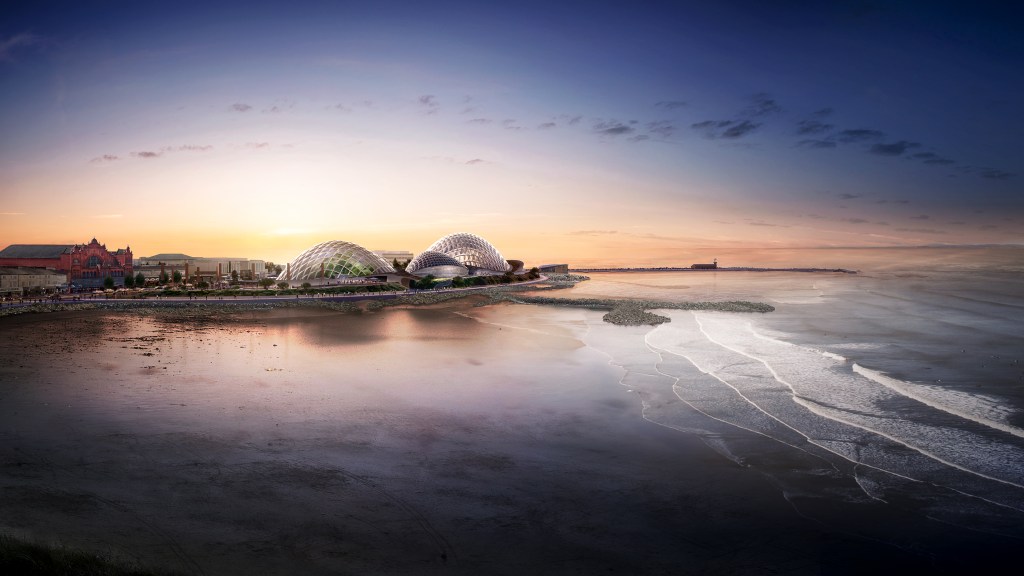
The Eden Project in Morecambe, is inspired by the nature of Morecambe Bay, particularly by mussels and how their very thin shells can span long distances to protect and help the organism inside to thrive. Grimshaw Architects together with Eden Project and Schlaich Bergermann Partners - SBP (Structural Engineers) developed the design idea of an envelope capable of spanning structurally significant distances to fulfil not only clients' sustainability and experiential requirements but also to safeguard future changes within the building. This inspiration led to superstructures made of timber with varying opacity levels to suit different design needs, from immersive experiences to planted human environments which intend to get visitors closer to nature through natural rhythms.
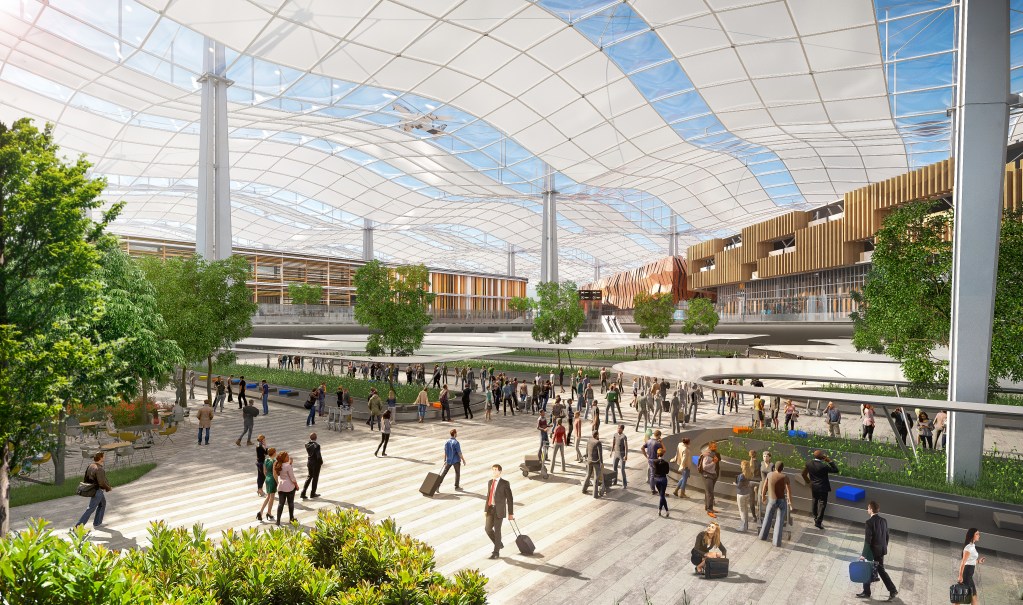
Shenzhen Airport East Integrated Transport Hub is another example. Won in competition, the design inspiration looks to mangroves - ancient trees that thrive in saline environments and play a critical role in the ecology of their context. An airport is in its essence a highly functional, technical and efficient structure, but despite this pragmatism, nature plays an integral role. Applying biomimicry and biophilic design can be realised in even the most ‘challenging’ of contexts.
Camila also discussed biophilia, a principle she always keeps in mind regardless of the project type, site, or client nature. She aims to connect people to nature through the use of natural materials, access to natural light, outdoor areas, and green spaces. These design principles benefit humans from a health and wellness perspective as well as from communal, economic, and social perspectives.
Inclusive, informed design – connecting people, places and nature
Working to help the Eden Project Trust expand its national and international portfolio has been one of the most insightful and impactful experiences over the past decade for Camila. This work extends beyond design and construction, involving collaboration with people from diverse backgrounds and expertise, all aiming to make meaningful changes in how we live.
The Eden Project focuses on place-based projects, which means learning a lot about the local context and the people who live in that specific place. As architects, this involves extensive community engagement, explaining the project to local people. In the making of potential new Eden Projects, Camila states that every visit to Eden Project Cornwall involves meeting different interesting individuals whose lives have been positively impacted by the Eden Project. Some have even shared stories of overcoming personal struggles, and finding solace and purpose through their involvement with Eden, like caring for trees and spending time in the biomes. The social interactions and relationships fostered by the project, especially among young and elderly people post-pandemic, show significant improvements in people’s lives. Seeing these positive changes makes it impossible for her to imagine doing anything else.
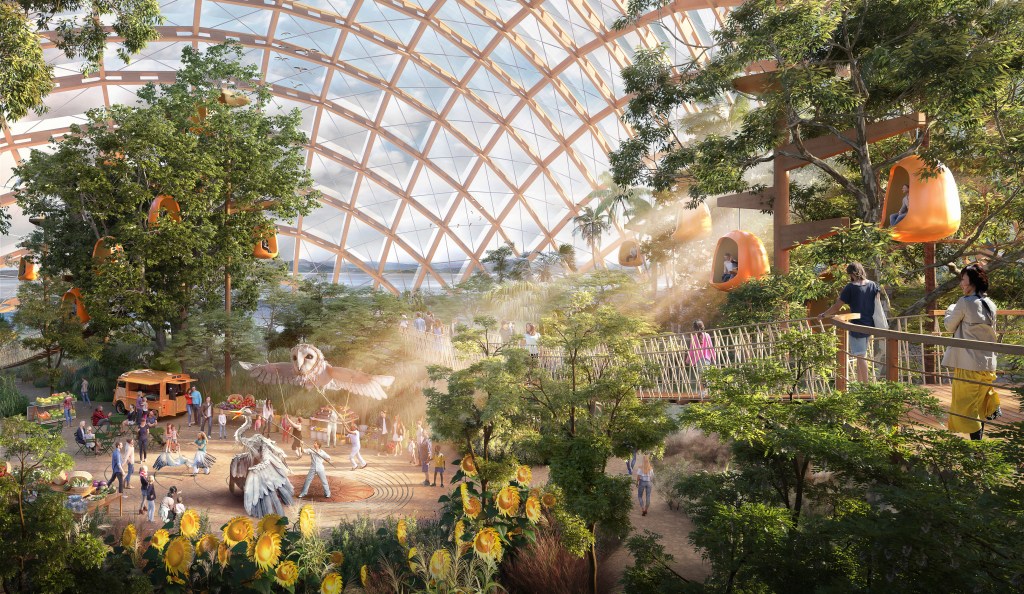
There is a lot of community engagement in the process of designing an Eden Project. And in addition to the one in Cornwall, Eden Project Morecambe is a great example of this. Like Camila mentions, the Eden Project team usually starts by "planting the seed," laying the groundwork before the actual project begins which opens the door for a meaningful dialogue and collaboration among locals and the Project and Design Teams with the help of local government and academic institutions such as Lancaster University in this specific case. This has materialised in Morecambe through the introduction of community consultations and even the integration of Eden-related themes into the local educational curriculum where students of all ages could become familiar with the Eden Project concept before the project physically materialises. Once the project budget and logistics are in place, the community is already engaged and supportive.
Equally exciting is transferring this knowledge and design principles to other large-scale projects Camila has worked on, such as the Heathrow Expansion Programme and the Shenzhen East Transport Hub. These projects aim to create spaces where people don't just rush through but have the opportunity to enjoy the environment, enhancing user experiences even in transit. This transformative approach to design in high-traffic areas is incredibly rewarding as it has a positive impact on users too.
Challenges and Opportunities in Sustainable and Regenerative Design
One of the main challenges and opportunities in the field is the ability to coordinate people from different fields & professional backgrounds. This usually involves a complex collaboration between internal teams, wider design teams, clients, supply chains, and communities. While this process can be exhausting, it is equally fascinating, presenting both in Camila’s words: "a challenge and a great opportunity at the same time."
From a design perspective, defining baselines for applying regenerative design principles on large-scale leading-edge complex projects can be particularly challenging due to the lack of established benchmarks and precedents. This requires from the firm to set their own baselines and targets, which is difficult but essential.
Technology has significantly aided this process, especially in measuring tools. For instance, conducting Life Cycle Assessments (LCAs) and low-carbon assessments used to be done manually before advancements in tools like One Click LCA and materials in 2015. Now, these processes are more streamlined, making it easier to see the end of the tunnel.
Another persistent challenge is client understanding and buy-in. When working on projects focused on sustainability and/or regenerative design, clients often struggle to grasp the benefits of designing projects based on Regenerative Design Principles, especially as things like water management, energy management, and operational carbon can have a higher capital expenditure (CAPEX) but the journey of educating clients is exciting, and one of the most important things is to bring them into the journey from day one of the design process. Once clients understand that a higher capex can lead to lower operational costs in the long run and that benefits for users' health and wellbeing and impact on the natural environment is notable it makes a significant difference.

Nature-inspired design and technology
Camila expressed her passion for integrating nature-inspired design with high-tech solutions, a philosophy she embraced since her days at the AA. She emphasised the importance of involving the design technology team from the outset, considering them more than just technicians but crucial problem solvers. This early integration, she believed, streamlined the design process, making design programmes, workload and team resources way more efficient.
Incorporating innovation and computational processes, particularly in parametric design, allowed for improved design parameters and facilitated the assessment of various options based on specific criteria. This approach aimed to achieve optimum solutions that aligned with the local context, client vision, and experiential brief.
The choice of tools depended on the project stage. Parametric design played a significant role from concept generation to analysing and iterating different parameters which will have an impact on the design outcomes, including environmental design principles. Virtual reality (VR) and augmented reality (AR) were essential for visualising spaces not only for internal teams as a design tool to provide a sense of scale (especially in large-scale projects), but also served as a valuable tool for clients and community engagement.
For structural and environmental performance assessments, a variety of algorithms and software tools were utilised, such as Kangaroo, GeometryGym, Ladybug, Honeybee, and others. Camila highlighted the recent incorporation of AI tools like Mid Journey, Dal-E and Twinmotion among others recognising their novelty and ongoing exploration of their potential benefits. She viewed these tools as allies rather than adversaries, emphasising the importance of embracing technological advancements in design.
Once the iteration processes of ideation and early concept design solidified into a building, a dedicated building team took charge of materialising the processes using BIM. Additionally, and not less important is to incorporate very early on, the design tools that allow us to assess sustainability from a carbon perspective and incorporate important aspects such as Life Cycle Assessments (LCAs) and low carbon assessments, using tools like One Click Materials 2050 to enhance their systems.
As a tutor and lecturer at the Architectural Association, Camila discussed how this role influenced her professional work and vice versa. Despite the challenges of balancing this role with being a mother of three, she emphasised the importance of knowledge transfer for creating a better world. Sharing experiences with younger generations fosters collaboration and positive outcomes. She found the teaching process incredibly inspiring, as it not only allowed her to impart knowledge but also provided opportunities for learning from students. This mutual exchange encouraged her to push boundaries both in teaching and in her professional projects, leading to new explorations and discoveries.
Camila highlighted a collaboration between Grimshaw and the University of Lancaster which focuses on finding low-carbon solutions for the built environment using AI as the main tool for the process. This collaboration, particularly in Lancaster, demonstrated the exciting intersections between academia and professional practice. Engaging in academia keeps half of your mind constantly connecting pieces and dots, driving innovation and progress. The opportunities from academia and work complement each other, leading to fascinating discoveries and advancements.

Creating Healthy Work Environments in Architectural Leadership
In terms of leadership at Grimshaw Architects, Camila explained the partnership system in place, where each group collaborates with a partner leading different projects. Regardless of roles, what's crucial in their working approach is maintaining a flat structure when it comes to design, ensuring everyone's voice holds equal importance. This fosters collaboration and encourages the emergence of the best ideas during design discussions and ideation processes, irrespective of hierarchy.
Another aspect was fostering a healthy work environment, acknowledging the prevalent culture in architecture where overwork is normalised. To counter this, they prioritise flexibility in work and mindful management of workloads and deadlines. Camila advocates for the mental health and well-being of team members, overseeing resources to ensure efficiency as much as possible, acknowledging that there are always challenging periods, but the effort gets focused on it not becoming the routine pattern.
In terms of collaboration within Grimshaw, both locally in London and globally, various groups specialise in different fields such as sustainability, health & wellness and regenerative design, as well as sector-specialised groups which take care of moving the business forward in the specific field such as the aviation group. These groups aim to support needs and foster collaboration between the different offices in specific sectors. Camila's involvement in setting up the regenerative design framework at Grimshaw is an example of this collaborative effort, aiming to apply principles from day one of the design projects, leveraging the expertise of different offices for more comprehensive solutions.
Insights on Innovation, Education, and Collaboration
The UK's regulatory landscape can sometimes hinder the adoption of innovative materials until they become widely accepted. However, there are emerging solutions that prioritise environmental sustainability and collaboration between academia, research, and practice. Integrating technological advancements into research and design processes, such as immersive technologies aid in better communication and the development of efficient, renewable energy systems.
In her environmental technical study teachings, Camila encourages students to leverage their academic freedom to push boundaries and explore new processes. Foundational design principles aim to be transformative from a sustainability perspective. For example, understanding material properties can lead to efficient and aesthetically pleasing designs when coupled with technology.
To stay abreast of the latest developments in architecture and design, a synergy between academia and practice is required. Camila has been teaching at the AA since 2013 and regularly engages with students and professionals to discuss advancements in the built environment. Additionally, she leads collaborative efforts, such as the partnership with Lancaster University, to explore innovative solutions and foster knowledge exchange between different fields and has a lecturing agenda with different Universities which encourage this collaboration. Camila believes that maintaining a proactive approach to learning and knowledge-sharing is essential for driving positive change in the industry.
Pioneering a Sustainable Future
In terms of pioneering a sustainable and regenerative design approach, active listening is key, aiming to comprehend the client's true desires and involve them right from the project's inception. This, coupled with fostering strong relationships, and a will to collaborate with all different disciplines forms the cornerstone of a strategy for project success.
Regarding the future of architecture and urban design, projects characterised by holistic, place-based methodologies that harmonise with the natural world enhance societal well-being. Such endeavours will contribute positively to society's health and economy, fostering integrated communities and resilient ecosystems.


As for her own trajectory, Camila foresees a continued commitment to perseverance and forward momentum. Recognising the challenges inherent in an industry struggling against degenerative systems, she remains steadfast in her belief that meaningful contributions can be made to facilitate a transition towards regeneration.
The problem is that we have become disconnected from Nature not understanding that we (humans) are part of a larger system. Nature is seen as a resource so instead of creating a virtuous circle, you end up with a vicious circle. It is crucial to acknowledge this relationship because it makes us conscious that we need to actively collaborate with the natural environment around us for the benefit of both. We must design with nature and for nature
- Camila Rock De Luigi
With a steadfast "keep going" mindset, she anticipates reaching exciting destinations, even if the exact destination remains uncertain for now. She emphasises the significance of this approach, underscoring its pivotal role in fostering thriving communities and resilient ecosystems. The interconnectedness between people and the natural world, she notes, is crucial for progress toward a better world.

Camila’s involvement in global collaborations and initiatives like the regenerative design framework exemplifies her dedication to pushing boundaries and driving positive change. Looking ahead, Camila envisions a future where architecture embraces holistic, place-based methodologies that harmonise with the natural world.
Embracing a future where architecture harmonises with nature, Camila Rock De Luigi has championed innovative approaches that prioritise collaboration, biophilia, and regenerative practices. As she continues to navigate challenges and opportunities in the field, Camila remains steadfast in her commitment to pushing boundaries and fostering thriving communities and resilient ecosystems. With her unwavering mindset, she embodies the spirit of resilience and progress, paving the way for a more sustainable and harmonious built environment where human and natural systems co-evolve.