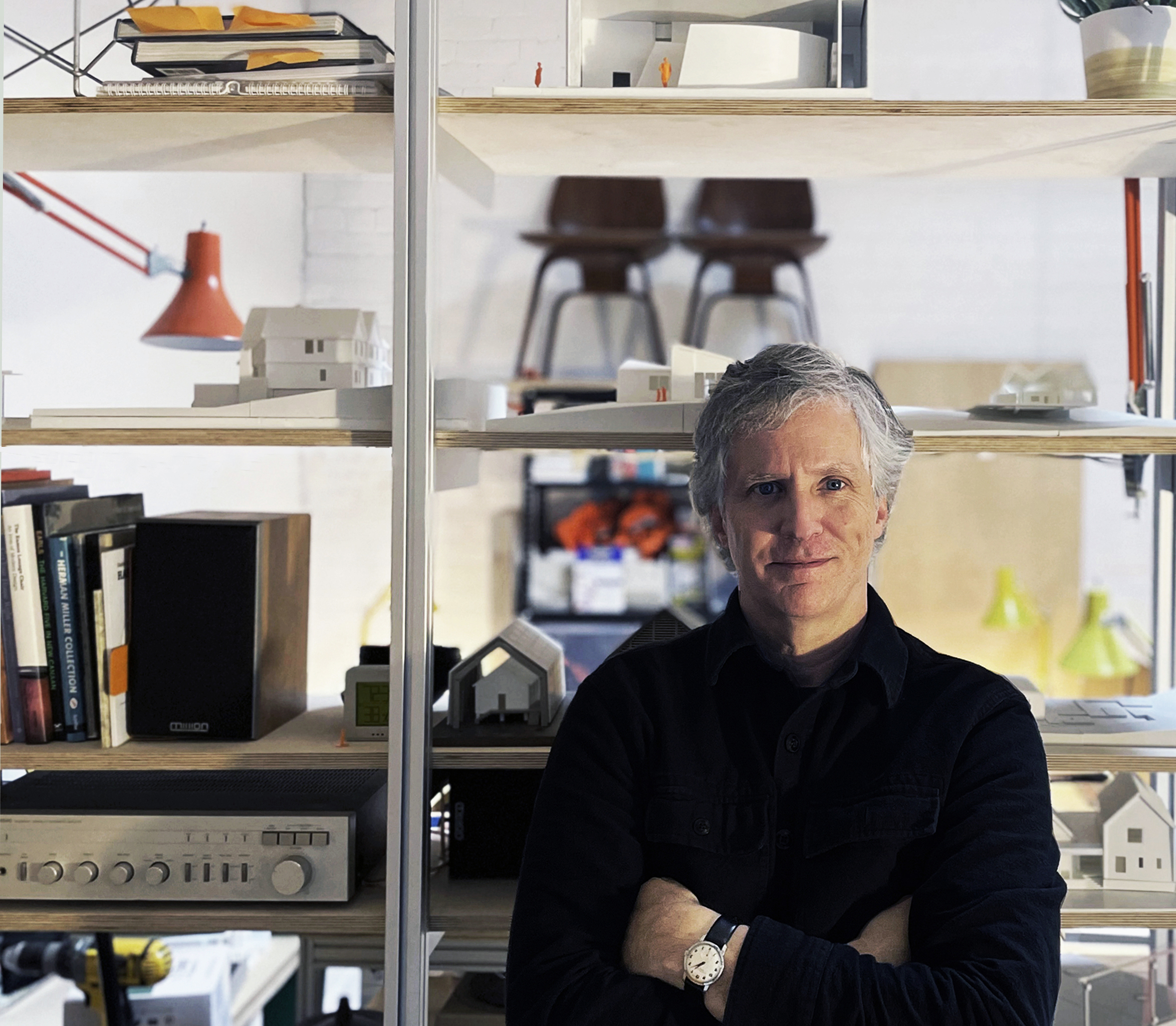
In the realm of architectural inspiration and career inception, Reid Freeman of REID architecture PLLC has traversed a fascinating trajectory. Initially rooted in the Fine Arts, Freeman's passions for painting, photography, and film intersected with a scientific inclination, birthing a quest for synthesis. Delving into the depths of creativity while seeking stability, architecture emerged as a promising avenue, albeit with unforeseen challenges. After graduating from Colgate University with a Bachelor's in Studio Arts, Freeman's migration to New York heralded an immersion into the architectural domain, commencing with a fervent engagement in a notably intense office environment of Eisenman Architects before attending and receiving a Master of Architecture from Harvard’s Graduate School of Architecture.
Reflecting on the genesis of his architectural odyssey, Freeman reminisces about the formative years steeped in the crucible of the late 80s and early 90s. Within the crucible of initial experience in the practice of architecture, creativity ignited, instilling a realisation that architectural design need not forsake artistic fervour. As Freeman elucidates, the fusion of architectural craftsmanship with unabated creativity became an enduring motif, fueling his subsequent endeavours and experiences.


Venturing forth into a career spanning over three decades, Freeman's professional peregrinations epitomise diversity, encapsulating a plethora of projects spanning varied landscapes. Central to his design ethos lies an unwavering commitment to collaborative synergy. The alchemy of diverse talents coalescing within multifarious teams catalyses innovation, epitomising Freeman's collaborative ethos.
Drawing from formidable projects during the nascent stages of his career, Freeman underscores the invaluable lessons gleaned from navigating the intricacies of mammoth undertakings. Indelible stints collaborating with luminaries from ARO and OMA on the Prada NYC Epicenter and JCDA on the Israel Museum Jerusalem Expansion, sculpted Freeman's architectural sensibilities, etching an indelible imprint on his professional tapestry.
In dissecting the guiding principles underpinning his design philosophy, Freeman extols the virtues of experiential osmosis. Harnessing the reservoir of expertise accrued through seminal collaborations, Freeman seamlessly transmutes these insights into his architectural praxis. Embracing the duality of navigating both colossal and intimate projects, Freeman's oeuvre stands as a testament to the symbiosis between artistic ingenuity and architectural pragmatism.


In the realm of collaboration, Reid Freeman's insights paint a vivid picture of the intricate dance inherent in architectural projects. Among all his endeavours, collaboration unfolds on multiple fronts, each with its unique dynamics and imperatives. Internally, Freeman elucidates the importance of maintaining constancy amidst project dynamics. Structural engineers, such as LERA Structural Consulting Engineers and Eckerley O’Callaghan in particular, emerge as repeat collaborators, their recurring presence fostering a relationship conducive to creative synergy. Yet, with each new project, this shifts, as clients have new collaborators, forming delicate dialogue and rapport.
This interaction also includes contractors and speciality fabricators, where the ebb and flow of project demands determine when to bring in new perspectives. By carefully balancing innovation and continuity, Freeman's strategic orchestration makes sure that new ideas are incorporated into the creative fabric without overpowering the core team or clients.
Over the landscape of architectural projects, Freeman moves with a leadership approach that emphasises flexibility and openness. By striking a balance between the demands of leadership and collaboration, Freeman's approach reflects a sophisticated combination of vision and pragmatism. His leadership philosophy, which is influenced by the principles of empowerment and inclusivity, acts as a beacon that directs the course of cooperative projects.


Entering the field of business development, Freeman's observations provide an open window into the erratic currents influencing customer acquisition. Freeman recognises that client engagement is based on flexibility, even though his outreach efforts are primarily focused on strategy and submissions. Referrals from friends, past clients, and professional peers prove to be effective channels, highlighting the importance of reputation and chance in attracting new customers.
When it comes to education and student involvement, Reid Freeman's path blends in perfectly with his architectural endeavours, adding educational influence to his career. He explains how the symbiotic relationship between practice and teaching creates a mutually beneficial dynamic in which both parties learn from and enrich one another through a complex dance of intellectual interchange.
Freeman's academic career is a testament to his ability to both teach and learn from the rich fabric of academic discourse. He has a strong teaching background from teaching in the Masters of Architecture programs at prestigious schools like Princeton University SOA, Pratt Institute GAUD, and Parsons School of Design SCE. In his reflections on the transforming power of mentoring, Freeman emphasises the critical role that education plays in producing the next wave of distinguished designers and design leaders.
Accepting the fluidity of the academic environment, Freeman recognises how technological innovation and design thinking continue to evolve, keeping an eye on the trends in modern architecture. His dual responsibilities as an educator and practitioner come together well, encouraging an interaction between theory and practice.
However, Freeman's observations are not limited to the classroom; they are ingrained in his architectural practice and work. Freeman's work in academia informs his architectural endeavours with a nuanced understanding of theory and practical application. This is evident in his portfolio, which is highlighted by projects for academic institutions. Whether teaching in the esteemed halls of academia, Freeman's journey goes beyond simple pedagogy to embrace a comprehensive philosophy that harmonises with the demands of professional practice.


In the world of architectural design, Reid Freeman's expertise is renowned for its sensitivity to context. Balancing tradition with innovation is a tightrope act he navigates with finesse. For Freeman, contextual sensitivity means grasping fundamental elements like scale and relationship to surroundings. While he values tradition, Freeman believes that modern solutions can coexist harmoniously.
When working within historical contexts, Freeman emphasises understanding the essence rather than replicating old forms. He advocates for new additions to be distinct, avoiding confusion between historical and contemporary elements. This approach respects tradition while allowing for architectural evolution.
As a licensed and practising architect with a focus on sustainability, Freeman integrates this ethos seamlessly into his projects. Passive design solutions, tailored to factors like orientation and climate, are his go-to. While most clients are receptive to passive strategies, active solutions often pose budgetary challenges. Freeman advises architects to engage and educate clients in discussions about sustainable building practices, as not all may see the value in additional costs.
Reflecting on his journey as a business owner, Freeman acknowledges the trials of running a small architectural firm. Administrative tasks often consume precious time, diverting attention from core design pursuits. The unpredictable nature of the architectural market adds another layer of complexity. Despite these challenges, Freeman emphasises the importance of consistency in design principles and workflow management.
In Freeman's view, navigating the architectural landscape requires adaptability and resilience. While he may not have all the answers, his candid acknowledgement of the profession's challenges resonates with fellow architects facing similar trials.


In the vast expanse of architectural innovation and professional evolution, Reid Freeman's narrative unfolds as a captivating chronicle of creativity, collaboration, and resilience. Spanning over three decades, Freeman's professional voyage epitomises diversity, encapsulating a kaleidoscope of projects spanning varied landscapes.
His design philosophy effectively incorporates knowledge and experience gained from joint projects into architectural practice. This integration gives Freeman's designs a subtle depth where creative vision and practical necessity coexist peacefully. It is this balance that underpins Freeman's collaborative ethos, ensuring that each project unfolds as a symphony of creative expression and technical mastery.
In essence, Reid Freeman's narrative serves as a testament to the transformative power of creativity, collaboration, and resilience in shaping architectural destinies. As Freeman continues to chart new horizons and push the boundaries of design innovation, his journey stands as an inspiring testament to the enduring spirit and persistence in pursuit of architectural excellence.