Roberto Bannura has been a pivotal figure in the global architecture scene, with a distinguished career that spans over two decades and multiple continents. Since joining Steven Holl Architects in 2007, Roberto has spent the last 16 years living and working in Beijing, where his contributions have been instrumental in shaping the firm’s award-winning portfolio across Asia and beyond. As Director of the Beijing office since 2010 and a Partner since 2018, Roberto has overseen a series of landmark projects throughout Mainland China, Taiwan, Russia, Australia, Albania, and the Middle East.
His leadership and vision have brought to life several iconic structures, including the Sliced Porosity Block Mixed-Use Development in Chengdu, the ICarbonX Headquarters in Shenzhen, the Cifi International Headquarters in Beijing, and the Cofco Cultural and Health Center in Shanghai. Additionally, Roberto has been responsible for a significant portfolio of master plans that demonstrate his ability to marry innovative design with complex urban landscapes.
Beyond his professional achievements, Roberto has made significant contributions to the academic and architectural communities. He has delivered over 60 lectures and interviews across the globe, from China and Russia to the Netherlands, New Zealand, Australia, and Chile. His expertise is frequently sought after as a guest critic at prestigious institutions, including the Melbourne School of Design, the Architectural Association Visiting School, Tsinghua University, and the University of Hong Kong, among others. Roberto has also served as a juror for eight international competitions and his work has been featured in over 30 architectural publications.

Roberto Bannura's journey into architecture is a compelling narrative of intellectual curiosity and the pursuit of a discipline that harmonizes art and science. Born and raised in Chile, Bannura exhibited an early passion for the arts and literature, alongside a notable proficiency in mathematics and physics. This unique combination of interests led him to explore architecture, a field he soon discovered to be an ideal convergence of his varied talents.
Despite not having any familial ties to the profession, Bannura embraced architecture as a new and exciting challenge. His academic path began at a public university in Chile, where he undertook a rigorous six-year program that is equivalent to a master's degree. This program, with a strong emphasis on both architecture and structural design, provided him with a comprehensive foundation in the field. The experience was demanding, yet it profoundly shaped his understanding of architecture, blending technical expertise with an appreciation for the aesthetic and literary dimensions of the discipline.
After completing his studies, Bannura embarked on his professional career in Santiago, Chile. He began as a freelancer, working on various architectural and structural design projects. These early years were marked by a dedication to his craft and a continuous exploration of the possibilities within the field. However, driven by a desire for broader horizons, Bannura decided to take a sabbatical—a "gap year" that had been widely discussed but seldom acted upon in his circle. What was intended as a brief sojourn in New York City ultimately transformed into a decade-long residency, a period that would significantly influence both his personal and professional life.
Roberto Bannura's time in New York City is a testament to the city's magnetic pull and its profound influence on his career. Initially planning a brief stay, Bannura found himself captivated by the city's vibrant diversity—not only in its people but in its rich cultural tapestry and the profound impact of international architecture. His brief visit extended indefinitely as he immersed himself in the architectural world of New York.
Bannura's early work in New York began with a local company, but his career took a significant leap forward when he secured a position at Charles Gwathmey and Robert Siegel's firm, an experience he describes as his "second formation" in architecture. This period, which lasted nearly six years, was pivotal in his professional development. Working under the guidance of Gwathmey, one of the renowned "New York Five," Bannura honed his skills in high-level architectural design, mastering the nuances of design depth, quality detailing, documentation, and site management. This experience provided him with a comprehensive understanding of architectural practice at the highest level.

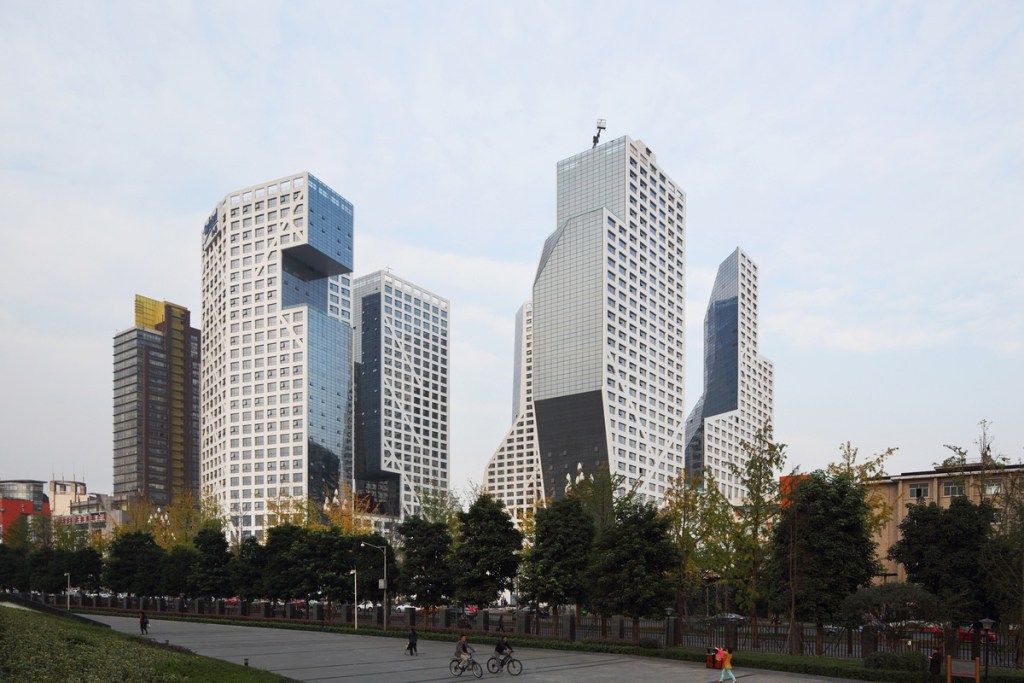
Despite the invaluable experience gained, Bannura sought greater intellectual challenges. This desire led him to an opportunity with Steven Holl, a prominent architect whose work had deeply influenced Bannura since his university days. Holl, known for his innovative and conceptually driven designs, was looking for someone to lead one of his firm's most ambitious projects in China—the Sliced Porosity Block in Chengdu, a massive mixed-use development spanning 300,000 square meters (over three million square feet).
At just 35 years old, Bannura was entrusted with this monumental task—a rare opportunity for an architect of his age. The project marked a significant departure from the rigid geometries and disciplined structures of his previous work, challenging Bannura to explore a more phenomenological approach to architecture. This shift allowed him to focus on how people experience buildings, rather than strictly adhering to pre-defined geometric principles. The experience was transformative, deepening his understanding of architecture as an experiential and dynamic art form.
Following his success in China, Bannura's career continued to ascend. By 2010, he had become the Director of Steven Holl Architects, further solidifying his role within the firm. His influence and responsibilities grew, and by 2018, he had been made a partner. Throughout this period, Bannura expanded his portfolio to include diverse projects across the globe, while also engaging in academic and lecturing commitments, sharing his insights and experiences with the next generation of architects.


The Impact of International Experience on Architectural Philosophy and Practice
Roberto Bannura’s architectural philosophy and approach have been profoundly shaped by his international experiences, spanning from his roots in Chile to his extensive work in New York, Beijing, and beyond. Each region has contributed uniquely to his understanding of architecture, not only as a craft but as a complex social practice. Reflecting on his journey, Bannura emphasizes the intellectual enrichment that comes with engaging diverse cultures and architectural challenges across the globe.
The transition from working on smaller projects in Chile to tackling larger, more intricate designs in New York and then to leading monumental developments in China has broadened Bannura's perspective on the human dimension of architecture. He highlights that architecture is far more than the relationship between a master architect and their team; it is a collaborative process involving a wide array of stakeholders. These include clients, consultants, city planners, and the craftsmen who bring designs to life. This human complexity, Bannura notes, becomes increasingly pronounced as projects grow in scale and intricacy, offering him a continuously evolving learning experience.
Bannura’s leadership on international projects has spanned various regions, including Taiwan, Russia, Albania, and the Middle East, each adding layers to his architectural approach. The challenges and cultural nuances of these projects have not only been intellectually stimulating but also personally rewarding, further enhancing his appreciation for the diverse influences that shape architectural practice.


Business Development Through Academic and Cultural Engagement
Bannura’s insights into business development reveal a strategic approach that is deeply intertwined with academic and cultural engagements. He acknowledges that the methods employed by his firm, Steven Holl Architects, may not be universally applicable across all practices, as they are closely linked to the unique ethos established by Steven Holl. Holl’s commitment to academia—evidenced by his longstanding teaching role at Columbia University—has fostered a practice where research and education are integral to architectural work.
This strong connection to academia and cultural institutions has proven to be a fruitful avenue for business development. Instead of relying on conventional methods such as cold calls or aggressive commercial outreach, Bannura’s firm focuses on cultural engagements and exhibitions, which naturally attract like-minded clients and organizations. This approach not only aligns with the firm’s philosophy but also allows them to connect with clients who share a similar vision.
Publications also play a critical role in their business development strategy. Bannura emphasizes the importance of transparency in their work, noting that they publish all projects unless restricted by non-disclosure agreements. This openness in sharing their designs with the world has been one of the most effective ways to showcase their work and attract new opportunities.
Through these methods, Roberto Bannura has navigated the complexities of international practice, leveraging his global experiences to enrich his architectural philosophy while fostering meaningful connections that drive the business forward.
Key Projects that Elevated Steven Holl Architects in Asia
Roberto Bannura reflects on several pivotal projects that have significantly contributed to the recognition and growth of Steven Holl Architects in Asia, particularly in China. Among these, three stand out for their impact and architectural innovation.
The first is the Sliced Porosity Block in Chengdu, a project that Bannura personally led. This development has been particularly important due to its substantial public component, featuring a 12,000-square-meter plaza. The design seamlessly integrates architecture with urban public spaces, exemplifying the firm's commitment to creating environments that engage with the city in meaningful ways. This project not only elevated the firm's profile but also demonstrated a sophisticated approach to urban integration in a rapidly developing region.

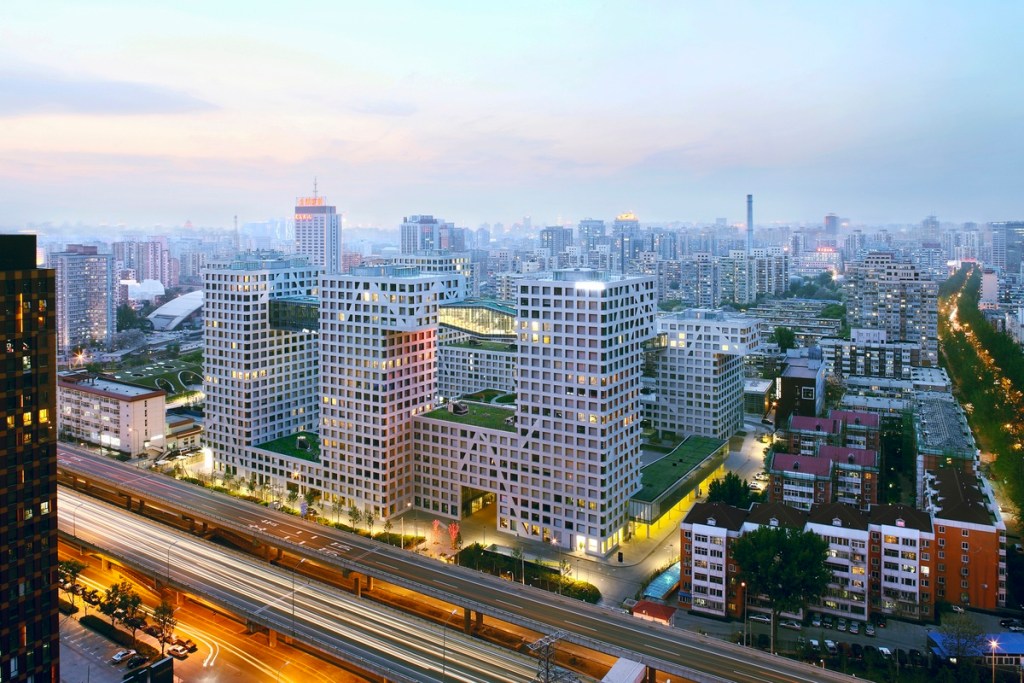
Another notable project is the Linked Hybrid in Beijing. Located adjacent to the firm’s Beijing office, this complex of interconnected towers was groundbreaking as one of the first mixed-use developments in China that was truly open to the public. It features a cinémathèque at its core, drawing a diverse demographic and enriching the local cultural landscape. The project also emphasized environmental sustainability, incorporating geothermal wells and other green technologies, setting a new standard for sustainable urban development in the region.
The third project Bannura highlights is the Horizontal Skyscraper in Shenzhen, also known as the Vanke Headquarters. This project is remarkable for its innovative approach to sustainability and urban planning. The building is elevated above the ground, allowing the entire site beneath to be utilized as a public park, open to the community. This design not only maximizes green space but also represents a bold statement on the integration of architecture and nature. The project is a prime example of how Steven Holl Architects have successfully pushed the boundaries of traditional architectural forms while maintaining a strong focus on environmental responsibility.
These three projects, each unique in its approach and execution, have played crucial roles in establishing Steven Holl Architects as a leading firm in Asia, particularly in China. They exemplify the firm's dedication to blending sustainability, public engagement, and architectural innovation.
Navigating the Challenges of International Expansion
When discussing the challenges of scaling Steven Holl Architects internationally, Roberto Bannura reframes these challenges as opportunities. With 90% of the firm’s practice being international, operating primarily from offices in New York, Beijing, and a small studio in Rhinebeck, New York, the firm has had to adeptly navigate various cultural and business landscapes.
Bannura emphasizes that success in international markets requires a deep understanding of local business practices rather than simply adapting to ancient cultural norms. This includes learning how to build and manage teams, finding clients whose vision aligns with the firm's high standards, and fostering collaborations with consultants who are willing to push beyond conventional boundaries.
A key to their international success has been finding and engaging with clients and consultants who share their ambition to create one-of-a-kind projects. Bannura points out that the firm’s diverse portfolio demands consultants who are willing to innovate, whether it involves designing buildings where each floor plate differs or integrating advanced sustainability measures uncommon in the local context. The ability to form these collaborations and achieve collective excellence is seen as a significant opportunity, albeit a challenging one, in their global practice.
This approach has allowed Steven Holl Architects to consistently deliver distinctive and innovative projects across the world, reinforcing their reputation as a firm that thrives on intellectual rigour and creative collaboration.

Tailoring Architectural Designs to Cultural and Client Needs Globally
Roberto Bannura shares that, over the years, the firm has developed a nuanced approach to tailoring architectural designs that resonate with the cultural expectations and specific needs of clients from different parts of the world. He emphasizes that each project is deeply ingrained with cultural elements, but not through mere replication or superficial references. Instead, the firm engages in a process of association, seeking out unique cultural aspects that can be integrated into their designs from a contemporary perspective. This method goes beyond copying traditional forms; it involves working with historical precedents and reflecting them in various design elements such as color, geometry, and spatial organization.
The firm’s approach is particularly evident in how public spaces are designed within their larger projects, especially in Asia. He underscores that each public space is distinct, tailored to reflect the specific city or community it serves. For instance, a large, urban plaza in the heart of a bustling city is designed to be deeply connected to the local vernacular and the rhythms of city life. In contrast, a residential project might feature more landscaped and intimate public spaces, catering to the needs of the community. The key, according to Bannura, is creating spaces that are not only contextually appropriate but also actively used and appreciated by the public. If a space is unused, it fails in its purpose, a notion that underscores the firm’s commitment to designing functional and culturally resonant environments.

Leadership and Mentorship in Architectural Practice
Bannura’s leadership style has evolved significantly over his nearly two decades with Steven Holl Architects. From the outset, he led by example, never asking his team to do something he wouldn’t do himself. As his role expanded, he realised the importance of allowing his team members to showcase their talents. He became more attuned to the strengths of his colleagues, recognising that he wasn’t always the most knowledgeable person on every aspect of a project. This realisation led him to encourage open communication and the sharing of ideas within his team, fostering an environment where creativity and innovation could thrive.
Over the years, Bannura has also refined his approach to leadership, particularly in large, complex projects that involve multiple stakeholders. He has learned the value of finding and connecting with key individuals within each stakeholder group—whether it be a client, city official, or contractor—who can share and advance common principles. Establishing these connections ensures smoother collaboration and helps align diverse interests towards a unified goal.
Mentorship plays a critical role in Bannura’s leadership philosophy. He values the opportunity to guide and support emerging talent within the firm, seeing it as an extension of the teaching roles he has held in the past. Bannura believes in the philosophy of "paying it forward," ensuring that knowledge and experience are passed on to the next generation of architects. He encourages an open exchange of ideas within the firm, fostering a culture where everyone, from senior architects to new team members, can learn from one another.
This approach to mentorship is not limited to internal team dynamics. Bannura also sees mentorship as a two-way street, where he learns as much from others—whether they are clients, construction workers, or fellow architects—as they do from him. This continuous learning and exchange of ideas contribute to the firm’s vibrant and collaborative working environment, driving innovation and excellence in their architectural practice.