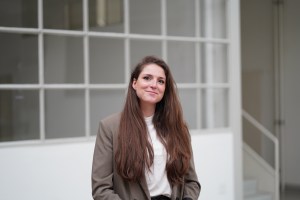
Martha Tsigkari stands at the forefront of architectural innovation, groundbreaking research and development initiatives as the Senior Partner and Head of the Applied Research + Development group at Foster + Partners. With a unique blend of expertise in architecture, engineering, and computer science, Martha brings over two decades of experience to the table, shaping the future of architecture through cutting-edge technologies and visionary leadership.
As the head of Applied A+D, Martha leads a dynamic team dedicated to pushing the boundaries of architectural practice. Her multifaceted role encompasses a diverse range of specialities, from computational design and performance-driven optimisation to machine learning and robotics. Her extensive portfolio includes the development of simulation tools, integrated processes, and physical interfaces, all aimed at enhancing design efficiency and efficacy. Since joining Foster + Partners in 2006, Martha has played a pivotal role in delivering innovative solutions for numerous projects, leaving an indelible mark on the architectural landscape.
In addition to her role at Foster + Partners, Martha is also an associate professor at UCL, where she shares her expertise with the next generation of architects. Through teaching, lecturing, and publishing internationally on computational design, Martha is shaping the future of architectural education, inspiring students to embrace technology and innovation in their practice.
In delving into the origin story, it's fascinating to uncover what initially propelled Martha Tsigkari towards architecture. Reflecting on the roots, she candidly attributes this trajectory to familial influence, specifically, her father who was a civil engineer. She acknowledges the somewhat unconventional path, admitting that her father harboured a curious rapport with architects, envisioning a bespoke collaboration of the two professions. Thus Martha navigated the realm of architecture, only to realise, after a few years in the field, that perhaps her calling lay elsewhere.

Working with Foster + Partners
Talking with Sara Kolata, Martha shares how she ended up leading the Applied R+D team at Foster + Partners. It all started with her studies in architecture and engineering. While learning the ropes from her dad, Martha also developed a keen interest in technology. This interest led her to pursue a Master's degree at UCL focusing on using computers in architecture.
During this time, Martha learned a lot from mentors like Alastair, who showed her the ropes of computational design. Then, something unexpected happened when the team at Foster + Partners saw her work and were impressed and offered her a job, even before Martha finished her studies.
Thinking back on this path, Martha gratefully admits that talent and luck came together to make her rise within the company possible. Foster + Partners saw her potential even though she was a recent college graduate and provided an opportunity for skill development and a passionate approach to challenges. This culture of lifelong learning and unwavering commitment cleared the way for me to take on leadership roles in the field of computational design at Foster + Partners.
Reflecting on this evolution, Martha highlights the seismic shifts that have characterised the profession over the past two decades. What once constituted the pinnacle of sophistication now appears quaint in retrospect. Martha remembers a time before software like Revit became commonplace when desktop tools for architects were the standard. It's evidence of how quickly technology advances, making previous innovations outdated.
But Martha suggests that her journey goes beyond simply adjusting to new technology. Her story is centred on an unwavering dedication to pushing boundaries and an unrelenting pursuit of innovation. Her team's proactive approach to investigating emerging technologies and skillfully incorporating them into their workflows is a perfect example of this culture. Martha and her team have endeavoured to stay ahead of the curve by exploring new areas such as digital twins and machine learning, as well as by pioneering parametric design. Foster + Partners' versatility and vision have not only catapulted them to the forefront of the architectural profession but also established them as industry pioneers.


Performance Driven Design and Optimisation
Martha provides insightful information about the forces reshaping the architectural scene. The industry's traditional systems, defined by deeply ingrained workflows, have long been at odds with the changing requirements of a multidisciplinary design philosophy. Martha emphasises how the architectural process is cyclical, involving real-time feedback and iterative refinement, a dynamic that is frequently hindered by traditional methods.
When she looks back on the early 2000s, she describes a turning point characterised by the emerging possibilities of real-time interaction, which were first introduced in the film and gaming industries. This change in perspective acted as a stimulus for reflection, leading Martha Tsigkari. and the team to investigate methods of smoothly incorporating real-time analysis into the design process. The objective was straightforward but revolutionary: giving designers the capacity to not only imagine but also to evaluate and improve their works in real-time.
The creation of interactive applications using in-house simulation engines was essential to this project because it represented a technological achievement meant to quicken decision-making while encouraging a culture of well-informed design intuition. By means of this process, Martha and their team aimed to proactively tackle possible design pitfalls, thereby reducing the necessity for expensive revisions in the future.
The journey didn't end there. Armed with an insatiable appetite for innovation, Martha and her collaborators embarked on a quest to redefine the parameters of design optimisation. This led them to delve into the realm of genetic algorithms and distributed computing aimed at unlocking new frontiers in design efficiency and efficacy.
In fact, the desire to design more effectively, quickly, and cooperatively served as the driving force behind these initiatives. Through a combination of adaptability, foresight, and an unwavering commitment to pushing the boundaries of what's possible, Martha and the team usher in a new era by unlocking the potential of already-existing tools and incorporating them into their workflows.

Incorporating Cutting-Edge Technologies like AI
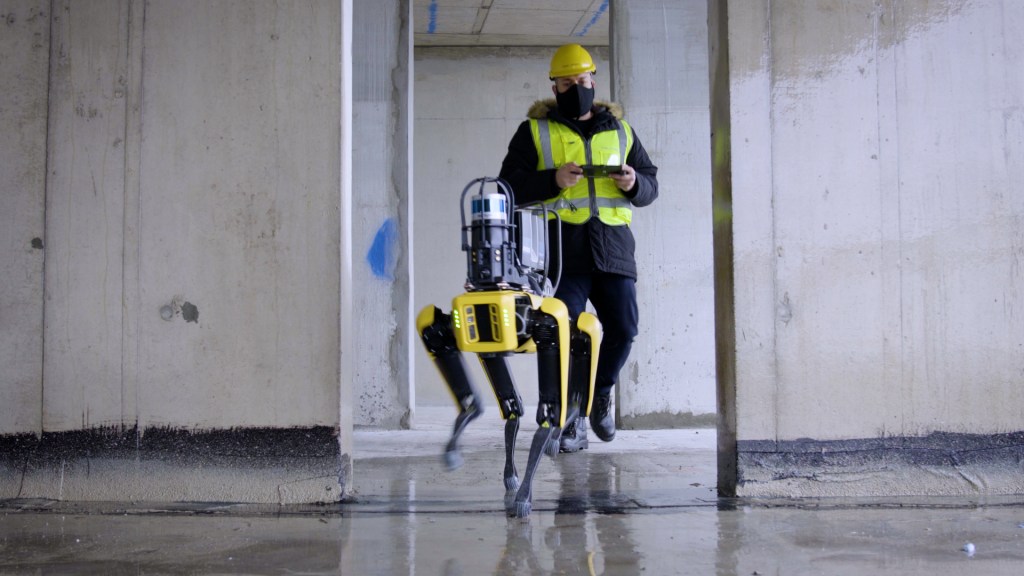
In delving into the evolution of technology and its impact on architectural practice, Martha offers a compelling narrative of her role's trajectory. Her journey unfolds as a symbiosis of organic evolution and strategic foresight, underscored by a proactive approach to innovation. Strategic meetings with the team served in envisioning the future trajectory of their practice. Drawing inspiration from diverse sources—be it conferences, networking encounters, or academic pursuits—they embarked on a quest to explore ideas with transformative potential. This proactive engagement culminated in their participation as early adopters in pioneering initiatives like Spot, thereby affording them the opportunity to test and refine novel concepts well before commercialisation.
Martha’s academic endeavours also played a pivotal role in shaping her foray into artificial intelligence. Drawing from her tenure as an associate professor at the Bartlett, she embraced imparting knowledge on neural networks and genetic algorithms to eager minds. This foundational understanding laid the groundwork for her subsequent exploration of emerging AI technologies, catalysing a paradigm shift in her approach to architectural practice.
As AI and machine learning developed into new frontiers, Martha Tsigkari and the team embarked on understanding the practical implications within their domain. Striving for efficiency and innovation, they sought to unearth the potential of these technologies, envisioning new applications that could streamline workflows, enhance performance, and foster a culture of creativity.
Martha expresses a deep sense of urgency, highlighting the transformative potential of AI within the industry. She emphasises the imminent shift towards AI-driven processes, marking a pivotal moment that demands attention. Martha articulates a vision where AI disrupts traditional workflows, ushering in a new era of automation and augmentation. She foresees a levelling of the playing field, where expertise becomes commoditised through AI-driven analysis and tools. This prompts a fundamental question: What unique value do architects and designers bring to the table in a landscape increasingly shaped by AI?

The discussion delves into the essence of creativity and the evolving role of architects. Martha underscores the importance of defining creative value beyond conventional metrics, urging reflection on the true essence of architectural practice. She stresses the need for introspection and adaptation, both within the profession and in educational frameworks, to navigate the evolving relationship between human expertise and AI capabilities. She calls for proactive engagement with these questions today to ensure a resilient and meaningful role for architects in the future architectural landscape.
Martha emphasises the dynamic nature of progress, stressing that the current landscape is merely a snapshot of what lies ahead. She reflects on the potential pitfalls of AI, particularly the risk of feedback loops perpetuating subpar data quality within systems. However, she remains forward-thinking, contemplating the role of humans in tandem with AI-driven processes. She raises thought-provoking questions about the integration of AI into creative workflows, urging a strategic approach to ensure that AI enhances rather than diminishes human creativity.
She speaks of the importance of maintaining human agency and creativity in the face of advancing technology. She also anticipates a shift towards more sustainable design practices driven by advancements in material science and urban planning. Additionally, she envisions self-driving cars reshaping urban landscapes and commuting patterns, prompting a reevaluation of traditional city planning paradigms.

Technology to Enhance Business and Profitability
The discussion then explores the fundamentals of disruption and innovation, which Martha goes into further detail about. Key performance indicators (KPIs) and how important they are for using technology to increase team performance, profitability, and business efficacy are at the centre of this discussion. To clarify this, Martha describes her function as an advisor, whose job it is to enable designers to be the best at what they do and produce outstanding architectural masterpieces.
A fundamental component of her methodology is identifying recurrent problems and coming up with creative ways to turn them into goods or services that can be sold. This strategy emphasises a dedication to optimising designers' creative capacity by freeing them from routine work and providing them with sufficient time for brainstorming and creativity. For Martha, the quest for optimisation is an ethos—a dedication to creating an atmosphere free from the restraints of logistics—rather than just a necessary business decision. This philosophy permeates every aspect of her work.


Applied Research and Development Initiatives
As head of Applied R+D, Martha oversees cutting-edge research spanning various fields. In response to the inquiry about recent projects or initiatives, she reflects on the multifaceted nature of her team’s work, which touches upon diverse aspects of the architectural process.
he team's contributions range from the initial stages of design conception to the final phases of production and delivery. This comprehensive involvement makes it challenging to pinpoint a single project. However, Martha notes that her expertise is often called upon for projects requiring specialised knowledge. Additionally, her team develops tools that are utilised across the office, enhancing efficiency and innovation.
While confidentiality constraints limit discussion on some projects, Martha provides insights into past endeavours. Notably, her team played a pivotal role in the development of algorithmic processes for the New Mexico City airport project. This involved optimising the entire space frame against various structural, environmental, and spatial considerations. Collaborating closely with the design team, she facilitated the delivery of the optimised space frame, contributing to the project's success.
Beyond this, Martha highlights their involvement in optimising aspects such as masking to maximise views or daylight in large-scale projects. This demonstrates the team's versatility in tackling diverse objectives, even across entire cities.

Sustainability and Technological Advancement
The focus at Foster + Partners is to see how research and development efforts align with the practice’s core values and goals. Their software development initiatives, for instance, stemmed from the need to create more sustainable buildings. By enabling designers to conduct performative analysis throughout the design process, they empower them to gauge a building's performance against key sustainability criteria without solely relying on third-party experts. This commitment manifests in various tools, ranging from interactive applications to bespoke solutions tailored to optimise against specific sustainability metrics like embodied or operational carbon.
However, Martha emphasises that sustainability encompasses a spectrum of criteria, and her aim is to equip individuals with the tools and processes to make informed decisions. This collaborative effort extends beyond the team, leveraging the expertise of the sustainability and environmental engineering group, as well as the intuition of designers.


Interdisciplinary Collaboration
Transitioning to the topic of interdisciplinary collaboration within their team, Martha highlights the diverse array of backgrounds represented, spanning from artists to computer scientists and structural engineers. This amalgamation of expertise fosters a multifaceted approach to problem-solving, enhancing the design and analytical capabilities of the team. This interdisciplinary ethos, ingrained within the company's DNA since its inception by Norman Foster, underscores a commitment to seeking the best solutions through diverse perspectives—a philosophy perpetuated by the executive board and deeply ingrained within the company culture.
Academics and Professional Practice
Acknowledging Martha’s dual role as an associate professor at UCL and her international teaching engagements, the conversation explores how she manages his academic responsibilities alongside her professional commitments and the relationship between the two.
Martha candidly admits that finding free time amidst her packed schedule is a challenge. However, she remains committed to his academic role at UCL, driven by a belief in the transformative power of education within the architectural profession. Drawing inspiration from her mentor, Alice, Martha sees teaching as an opportunity to pay forward the guidance she received, nurturing future talent and contributing to the advancement of the field. Additionally, she notes the benefits of having access to exceptional students who may eventually join her team or make meaningful contributions to architectural practice globally.
Transitioning to the topic of architectural education, Martha reflects on the need for reform to better prepare students for professional practice. She critiques the prevalent emphasis on abstract and impractical concepts in architectural education, advocating for a more balanced approach that incorporates practical considerations and constraints. By grounding students in the realities of the profession while still fostering creativity, Martha believes they can better navigate the evolving landscape of architecture, especially in light of technological advancements like machine learning and AI.

Leadership Role at Foster + Partners
Martha advocates for instilling confidence in oneself, not in the sense of believing one knows everything, but rather in acknowledging one's knowledge gaps and actively seeking to fill them. She underscores the importance of continuous learning and self-improvement, emphasising the mindset of striving to be the best one can be without fixating solely on promotions or advancement.
Furthermore, she highlights the significance of being proactive problem solvers and contributors at every level of one's career. By actively seeking opportunities to contribute and solve problems, individuals can demonstrate their value and readiness for leadership roles. This proactive attitude, coupled with a willingness to listen, speak up, and collaborate effectively, forms the foundation for growth and advancement within the organisation.
Martha says that there is no one-size-fits-all path to leadership, but rather a journey shaped by continuous learning, self-improvement, proactive problem-solving, and effective communication. This holistic approach, grounded in confidence and a commitment to personal and professional growth, paves the way for individuals to progress and thrive within the organisation.
While discussing the conventional notion of leadership, Martha Tsigkari. emphasises a philosophy centred on nurturing leaders within the team rather than asserting authority. This approach, she believes, fosters a collaborative environment where everyone has the opportunity to contribute and grow.
She values open communication and listens attentively to team members regardless of their hierarchical position, recognising that everyone brings valuable insights to the table. By focusing on maximising each individual's potential and fostering a culture of mutual respect, Martha aims to empower team members to assume leadership roles when needed.
Her leadership style forgoes ego and insecurity, focusing instead on building a team where each member understands their strengths and weaknesses. By encouraging self-awareness and a proactive mindset, Martha seeks to create an environment where individuals feel confident to step into leadership roles as opportunities arise, facilitating a dynamic and adaptable team dynamic.
Future of Architecture and Design
Martha approaches the topic with an exploratory mindset, viewing herself as a thought leader who thrives on possibilities. She draws parallels to historical shifts, likening the potential impact of emerging technologies to the transformative effect of photography on art. Expressing excitement about the creative possibilities afforded by new technologies, she envisions a paradigm shift akin to photography's influence on painting. Rather than viewing technological advancements as threats, she anticipates the emergence of novel architectural genres and innovations facilitated by automation and computational capabilities. By framing the future of architecture as a realm ripe for exploration and experimentation, Martha embraces change and leverages technological advancements to unlock new creative frontiers in design.