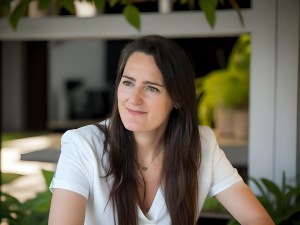
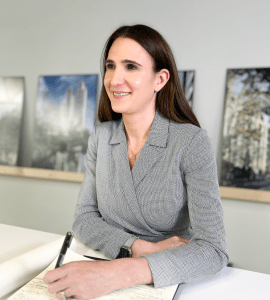
As the Director of Engineering and Operations of the Virtual Construction Lab at Schüco USA LLLP, Aude Webanck orchestrates a multi-disciplinary team, driving the development of cutting-edge solutions that redefine the industry's landscape. Her pivotal role is marked by a blend of academic prowess and professional acumen. With dual master's degrees in architecture and engineering from prestigious institutions in France, she embarked on a career trajectory that seamlessly integrates design sensibilities with technical expertise.
From her formative years as an Architect-Engineer Intern at Enclos Corp, where she honed her skills in customised curtain wall design, to her tenure as a Project Controls Manager overseeing iconic projects like 53 W 53rd Street in New York, Aude's journey exemplifies a relentless pursuit of excellence.
In her transition to Schüco, she assumed leadership of the Virtual Construction Lab, a crucible of innovation at the intersection of design, engineering, and software development. Here, she oversees a diverse team of designers, engineers, CG artists, and software developers, charting new frontiers in sustainable buildings, product development, and digital solutions.
Aude Webanck reflected on the genesis of her career journey when questioned about the inspiration behind her choice to venture into engineering and operations. Recollecting her schooling years, she noted her innate proficiency in math and physics, which naturally steered her towards the scientific path—a trajectory many anticipated. However, she took everyone by surprise when she announced her intent to study architecture, a less conventional choice given her initial inclinations and the perceived lack of artistic skills. Nevertheless, driven by her experiences of exploring various cities and cultures, she found herself drawn to the art and science of architecture.
Discussing her academic trajectory, Aude elaborated on the educational system in France, where pursuing architecture or engineering involves a master's program followed by additional licensing requirements. She clarified that she embarked on a unique educational journey, not simply pursuing two separate degrees but engaging in a combined curriculum that integrated both disciplines. This entailed completing a double master's program spanning seven years, with three years of overlap between architecture and engineering studies. Though acknowledging the challenges of navigating such a rigorous schedule, Aude emphasised the value of the experience, characterising it as a period of intense learning and personal growth.
About the latter years of her academic pursuit, Aude described the transition from architecture-focused studies to a dedicated focus on engineering. Despite the intensity of her studies, she deemed the endeavour worthwhile, emphasising the enriching diversity of her educational background. Through this comprehensive approach, she believed she acquired a unique perspective and skill set, distinct from those who pursued either discipline in isolation.


From Paris to New York: Aude Webanck's Journey in Architecture and Engineering
After graduation, Aude transitioned to working in New York, following previous experiences in Paris and the United States. Reflecting on how her education shaped her career in New York, she acknowledged the rarity of holding dual master's degrees in architecture and engineering, especially within the American and European professional landscapes.
Recalling her childhood stint in the United States, Aude expressed a desire to revisit the country as a young adult, having previously lived in Pennsylvania during middle school. She recounted her internships in Paris and the customary gap year taken before completing the final year of engineering school in France, which provided her with a diverse range of experiences to explore potential career paths. Determined to combine her architectural and engineering skills, she sought internships abroad, ultimately securing a year-long opportunity in the U.S.
Despite the complexities of integrating both disciplines abroad, Aude successfully arranged an internship at Enclos, where she alternated between architectural design and structural engineering responsibilities. Following her stint in the U.S., she returned to complete her final year of studies before embarking on a professional journey that led her to work in Paris for a year and a half. During this period, she engaged in various projects, gaining valuable insights into both architectural and engineering practices.
However, the allure of New York beckoned once again when Aude received an offer to work with Enclos in the city. Despite initial hesitations stemming from personal reasons and the distance from family, she ultimately seized the opportunity and made the move. Reflecting on her journey, she noted the unpredictable nature of life's trajectories, acknowledging how one decision can lead to unexpected outcomes and opportunities.


From Academia to Professional Practice
Aude reflected on the transition from academia to the practical realm, acknowledging the common gap between engineering and architecture schooling and the demands of professional practice, particularly in terms of business acumen. Drawing from her combined background in architecture and engineering, Aude highlighted the value of multidisciplinary knowledge in fostering effective communication, especially amidst the varied perspectives of architects, engineers, and individuals from diverse backgrounds. Empathy and understanding bridge communication gaps fostering collaboration.
Navigating the complexities of real-world projects, Aude encountered new challenges, from client meetings to site logistics and change orders. Despite lacking a structured training program at Enclos, she found herself immersed in a learning-by-doing approach. While the company offered a project manager training program, Aude opted to dive straight into her role, relying on on-the-job learning and guidance from mentors and peers.
Although the training process lacked formal structure, Aude emphasised the importance of proactive engagement and seeking guidance when needed. She found her colleagues supportive and readily available to address queries and provide assistance, fostering a collaborative environment conducive to her professional growth and development. Through this hands-on approach and the willingness to seek guidance, Aude navigated the complexities of her role and thrived in the dynamic landscape of project management at Enclos.
Complex Projects in Project Management and Controls
Aude reflected on her experiences working with prestigious architects such as Jean Nouvel on significant projects and delved into her professional journey, particularly her role as a project controls manager upon returning to Enclos in New York.
Recalling her initial stint in Paris, Aude began her career in project management, focusing on supporting project owners, notably a large-scale concert hall in the city. Transitioning to New York, her role at Enclos shifted to project controls, involving meticulous oversight to ensure projects remained on track and within schedule. Given the magnitude of the facade projects and the towering structures characteristic of Manhattan, Aude found herself immersed in managing highly complex endeavours within the bustling urban environment.
Her tenure at Enclos provided invaluable insights into facade intricacies, emphasising the importance of coordination with other trades and optimising design systems for efficiency. Aude's focus extended to streamlining processes to minimise fieldwork, thereby enhancing quality control and risk mitigation. Despite the inherent challenges of managing such intricate projects, she found fulfilment in the dynamic nature of her role, where she collaborated closely with project managers to anticipate and address issues proactively.
Navigating through these complexities, Aude recognised the rewarding aspect of her work, despite its inherent challenges. Her role demanded a keen understanding of project dynamics and a proactive approach to ensure successful outcomes amidst the intricate web of construction complexities.


Leadership and Approach to Business Strategy at Schüco
After spending three years at Enclos, Aude made a significant move to Schüco, where she currently works. She explained that the shift stemmed from the opportunity to lead a team, a prospect she had long aspired to. The chance to work with familiar faces from her internship days at Enclos was particularly appealing. At Schüco, she found herself at the helm of a multidisciplinary team within an R&D lab setting. This environment, comprising architects, engineers, and even artists, seemed tailor-made for her skill set and interests.
The prospect of delving into technical topics and research, deviating from her previous role in project management, resonated deeply with Aude. She expressed enthusiasm for the R&D aspect of her new position, seeing it as an opportunity to broaden her horizons and deepen her expertise. Managing a team of twelve initially, and now overseeing a team of twenty-five in the US, with a support team in India, presented a steep learning curve for Aude, who had no prior managerial experience.
Over the course of five years, the team at Schüco has evolved, expanding its focus from visualisation to a more concentrated effort on R&D and software development. Aude recounted the journey as an adventure, marked by growth and transformation, highlighting the dynamic nature of her role and the exciting developments within the team.
Aude reflected on her leadership approach, which reflects a balanced perspective and the importance of managing pressure effectively. Aude acknowledged her past tendency to place excessive pressure on herself, leading her to reassess her priorities and adopt a more measured approach. She outlined her strategy of identifying top priorities and focusing her efforts on those areas, striving for excellence while recognising the inevitability of life's fluctuations.
She describes herself as a perfectionist, committed to delivering her best efforts while maintaining honesty and integrity. She credited her success to surrounding herself with a capable and dependable team, particularly significant given the recent addition of motherhood to her responsibilities. Organisational skills, setting priorities, and adept pressure management have become indispensable in navigating the challenges posed by the current economic climate and the aftermath of COVID-19.
Central to Aude's approach is maintaining composure in the face of adversity, calmly assessing situations, and finding practical solutions. She attributes her ascent to her dedication to delivering high-quality results and fostering collaborative environments where individuals can thrive and contribute collectively to achieving common goals. Aude emphasised her belief in the power of teamwork, underscoring the value of collaboration when individuals work cohesively towards a shared objective.
Aude expressed her enthusiasm for the prospect of managing a team and business strategy as she stepped into this leadership role. Reflecting on her initial foray into management, Aude shared her approach to learning about business strategy. She delved into the dynamics of leading a smaller R&D team within the larger global entity of Schüco, a company with a significant presence worldwide. Aude found the juxtaposition of global strategy and the unique challenges faced by their isolated R&D team intriguing.
Navigating this terrain, Aude found herself contemplating the strategic direction of their team and its alignment with Schüco 's overarching goals. Despite being based in the US, their team's work extended to servicing various entities within Schüco, primarily collaborating with headquarters in Germany. Aude emphasised the importance of identifying projects with global applicability and adapting them to suit the team's objectives and Schüco's broader strategy.

Team Management
Aude's role entailed synthesising business strategy at both the team and company levels, ensuring their work contributed to Schüco 's growth and addressed the evolving challenges within the construction industry. She sheds light on her team's role within Schüco International KG, operating as a distinct entity under Schüco USA. Reflecting on her experience, she expresses admiration for the company's conducive environment, attributing her personal growth and abundant opportunities to it. With her team primarily focusing on research and development (R&D), they enjoy the liberty to delve into diverse subjects, fostering an environment conducive to exploration and innovation. In this capacity, Aude aims to spearhead a transformative shift, leveraging the team's autonomy to drive progress within the organisation.
Reflecting on her five-year journey, Aude acknowledged the learning curve involved in managing teams. She highlighted the significance of observing and learning from past experiences with various leaders and managers encountered throughout her career. Drawing inspiration from role models, she sought to emulate their effective practices while discerning areas for improvement.
In addition to practical learning, Aude turned to literature to deepen her understanding of leadership dynamics. She confessed to grappling with the balance between firmness and empathy, recognising the importance of finding the right equilibrium. For Aude, leadership revolves around facilitating growth and empowerment among team members, fostering an environment where individuals feel supported to excel.
Aude underscored the diversity within her team, comprising individuals with varied backgrounds and expertise. Leveraging this diversity is important for collaboration in generating optimal outcomes. Her approach centres on creating conditions conducive to performance and fulfilment, ensuring team members find value and satisfaction in their work.
Navigating the complexities of leadership inevitably entails tough decisions and challenging moments. Honesty and transparency maintain trust within the team. She welcomed feedback, both positive and negative, viewing it as essential for personal and professional growth.
Innovating at the Intersection of Design, Engineering, and Software Development
Aude elaborated on her approach to leadership with authenticity and creating conducive conditions for team members to thrive. She acknowledged the inevitability of mistakes, underscoring the importance of accountability and learning from such experiences. As for the current focus of her team, there is a division between design and engineering, alongside a significant emphasis on software development.
In her role, she oversees designers, engineers, and product innovation initiatives. Their projects span various stages, from research and development to proof of concept or MVP (Minimum Viable Product) stages. They are committed to exploring ideas deemed valuable to Schüco, whether they involve short-term experiments or long-term projects.
The team's work encompasses both technical design and software development, with a keen eye on leveraging technology to enhance efficiency across the construction process. From project management tools to building physics calculations, their software development initiatives aim to streamline processes and improve outcomes at every stage of the building project lifecycle.
In discussing the digital realm of construction, Aude acknowledges the historical lag in technological adoption within the industry. However, she highlights Schüco 's proactive approach, consistently striving to remain at the forefront of innovation. This proactive stance is now yielding promising results, with the company spearheading numerous exciting projects. Aude perceives abundant opportunities, particularly for individuals intersecting construction and technology. Despite her background primarily lying in architecture and engineering rather than technology, she aims to expand her knowledge in this domain. This reflects Schüco 's overarching commitment to global leadership in digital solutions within the construction landscape.


Learning and Growth
Surrounding oneself with the right people and fostering collaboration helps achieve optimal outcomes. Reflecting on her experiences, Aude highlighted the importance of maintaining perspective and managing pressure effectively. She recalled the challenges she faced during her studies, particularly the demanding nature of architecture school compared to her aptitude in engineering. Despite the initial difficulties, Aude remained committed to excelling in both fields, driven by the determination to succeed in the rigorous double program.
Upon entering the workforce, Aude found herself adopting a more balanced approach, having learned from the pressures of academia. She acknowledged the need to avoid placing undue stress on herself while striving for excellence in her professional endeavours.
During her studies, Aude took her own health for granted—a realisation that came later in her late twenties. When managing a team, there is a responsibility to take care of them, and one cannot take care of others without taking care of oneself. For the last few years, Aude has placed this at the heart of her management style. She prioritises her health by ensuring she gets enough sleep, even after having her first baby and making time to work out. Her commute from Brooklyn to Manhattan, a 10km distance, doubles as her workout as she usually bikes or runs to the office. Efficiency is crucial when juggling self-care, raising a child, and managing work responsibilities. Spending appropriate time with her daughter is also a top priority, so she adjusts her work hours around her daughter's schedule and works again if needed when her daughter is asleep.
Age and Gender Dynamics in a Male-Dominated Industry
Aude speaks of the added pressure of navigating a male-dominated environment within the construction industry. Despite shifts in gender dynamics, her experiences in engineering school, where women were in the minority, underscored the ongoing challenges. She noted the disparity, with architecture schools boasting a more balanced gender ratio.
Throughout her career, Aude encountered instances where her voice wasn't heard or meetings were disregarded, prompting her to advocate more assertively. Such experiences led her to question the underlying biases and unfair treatment based on gender. However, she recognised the futility of dwelling on each instance, opting instead to focus on her own capabilities and resilience.
Over time, as Aude ascended to leadership positions, she found that her authority was taken more seriously, alleviating some of the earlier struggles. While acknowledging the difficulties, she expressed confidence in her approach and saw little need for substantial changes in hindsight.
Acknowledging the existence of ageism, particularly concerning young individuals assuming directorial roles she noted the challenges faced by young women in leadership positions, often encountering resistance in male-dominated environments. This dynamic, she observed, is prevalent across industries, where younger professionals may struggle to ascend to leadership positions, facing friction from more senior counterparts who haven't achieved similar roles.
Aude also noted that while she faced some challenges earlier in her career due to her youthful appearance, it hasn't been a significant issue in her current role. She shared instances from her past where she had to assert herself confidently, learning to navigate interactions with respect and resilience. Drawing from her experiences, she now mentors younger colleagues facing similar situations, by maintaining confidence and not letting others' perceptions affect self-esteem.
There is an ongoing need for vigilance in ensuring respectful communication, particularly in meetings, where everyone should have the opportunity to contribute. She encouraged women, especially those starting their careers, to remain steadfast in their abilities and not be deterred by detractors, recognising that confidence in oneself is paramount, even when faced with challenges from less confident or knowledgeable individuals.


Internal Product Development at Schüco
In her role, Aude primarily focuses on developing products for Schüco, which often involves internal projects and proposals. The team's approach typically includes a significant research and development component, where they delve into topics such as sustainability and AI, both prominent trends in the industry. After identifying a promising area, they conduct thorough research to uncover potential business opportunities and then proceed to create a proof of concept or minimum viable product (MVP). Subsequently, they compile a proposal to present to management in Germany, aiming to secure funding and support for further project development. This internal focus sets their work apart from engagements with external clients.
Aude Webanck elucidates that the majority of their endeavours at Schüco are geared towards internal product development, primarily focused on demonstrating the value propositions tailored to Schüco's interests before proceeding with a project. Sometimes, however, certain projects are temporarily set aside to accommodate priority tasks that demand immediate attention, which poses a significant challenge in resource management.
Aude highlights the intricate balance required to manage resources effectively, especially concerning ongoing projects and allocating time for research and development (R&D) initiatives. With a multidisciplinary approach essential for comprehensive solutions, maintaining coordination and juggling diverse expertise become paramount. Despite the absence of dedicated project teams, robust processes ensure that each project is meticulously handled from inception to completion, mitigating risks and addressing challenges.
After thorough preparation, the team presents their proposals to Schüco 's management in Germany, awaiting approval or deferral based on current priorities and feasibility assessments. Occasionally, shelved projects resurface later, either due to changing circumstances or evolving organisational strategies.
Leveraging Expertise
Aude acknowledges the invaluable guidance provided by their experienced manager in the United States, particularly in the facade industry and technological advancements. Drawing from his wealth of knowledge and insights, the team navigates through industry trends and reorganises its structure to accommodate experts in various domains, from engineering to software development and product innovation.
Collaboration with academia, including partnerships with universities like Columbia University, enriches their research endeavours, offering valuable insights and expertise. By engaging with professors and leveraging academic resources, the team stays abreast of emerging trends and cutting-edge developments, enhancing the depth and quality of their internal projects at Schüco.
Embracing Values
In reflecting on the company's values, Aude expresses satisfaction with the level of respect and recognition she has received since assuming her managerial role, despite her relatively young age at the time. She appreciates the supportive environment that encourages motivated individuals to flourish and contribute new ideas. This freedom to explore and innovate is a rare privilege within many companies. Despite the challenges posed by the current economic climate, Aude maintains a positive outlook, emphasising the importance of trust and opportunities in fostering professional growth and satisfaction.


Future Vision for Engineering and Operations Growth
Aude Webanck, reflecting on the future trajectory of her role as director of engineering and operations, envisions a path marked by growth and impactful achievements. Her foremost goal revolves around nurturing the potential within her team, ensuring that each member is provided ample opportunities to flourish. With several pivotal projects underway, she perceives these endeavours as potential game-changers in the industry.
In navigating the landscape of future challenges, Aude underscores the significance of sustainability. The company has a proactive stance on sustainability initiatives, aiming to lead the necessary change within the construction industry and she recognises its looming importance and advocates for a humble yet determined approach to tackling related issues. Embracing the need for novel solutions, she emphasises the necessity of reimagining established norms in construction, urban design, and business practices.
Amidst the complexities of these endeavours, Aude remains steadfast in her commitment to contributing meaningful solutions to industry-wide challenges. She envisions her role as a conduit for change, aiming to address substantial issues and propel her team towards impactful outcomes.
Advice for Aspiring Engineers
Drawing from personal experience, she highlights the pitfalls of comparison and competition, advocating instead for a mindset centred on personal growth and excellence and the importance of self-belief and individual focus.
Aude underscores the significance of maintaining confidence in one's abilities while also acknowledging the perpetual journey of learning and self-improvement. Humility, recognising both strengths and areas for development, and seeking assistance when needed is important.
The power of teamwork and the critical role of surrounding oneself with compatible collaborators and aligning with individuals who complement one's skill set are key factors in achieving success and fostering a supportive environment.
Ultimately, her advice boils down to a blend of self-assurance, continuous learning, and strategic collaboration—an approach she believes is fundamental for aspiring professionals in the engineering and management realms.
In the culmination of her reflective journey, Aude Webanck emerges not just as a leader in engineering and operations, but also of resilience and innovation in a dynamic industry. Her trajectory from academia to professional practice underscores the transformative power of determination and a multidisciplinary approach. As she navigates the complexities of project management, internal product development, and sustainability initiatives, Aude remains steadfast in her commitment to driving positive change within the construction landscape.
With a focus on nurturing talent, embracing innovation, and fostering collaboration, she embodies the ethos of continuous learning and strategic growth. In the spirit of innovation and resilience, her story inspires individuals to embrace challenges, seize opportunities, and drive meaningful change within their respective fields. Aspiring engineers and managers can draw inspiration from her journey, recognising the importance of self-belief, humility, and relentless pursuit of excellence.