Wandile Mthiyane, a visionary architect and advocate for racial justice, has embarked on a transformative journey. Born amidst post-apartheid South Africa, he was influenced by icons like Nelson Mandela, Robert Mugabe, and Barack Obama, igniting his passion for equity and inclusion. With a turbulent childhood marked by 13 relocations, Wandile's pursuit of architecture transcends physical structures; it's a quest for justice. He pioneers innovative solutions to address systemic racism, offering non-physical homes through The Anti-Racist Hotdog.
Wandile Mthiyane’s work which is primarily purpose-driven is shaped by where he’s from - South Africa. Obama Foundation said it best - places reveal your purpose. Growing up in post-apartheid South Africa, he realized that at the core and centre of a lot of social ills was the lack of dignified housing. Because if you don't have a dignified house, you don't have a physical address. And if you don't have a physical address, you can't apply for a job and have no income. If you don't have income, you don't have money to build a home, which then feeds the cycle of poverty.
Without a safe place like home, kids do not have a place to do homework or a social life. A market shack causes asthma attacks due to mold and moisture in the walls, and a one-room home does not provide a separate space for you to take a break from work or chores. It affects more than education and health; It affects opportunities. Wandile was motivated to study architecture in order to provide people with respectable homes in his community. In college, he started a multi-design group with a mission to build homes for women-headed households. Each home consisted of a commercial space to enable the family to financially sustain themselves.

One time when Wandile was asked to leave an all-white club in a public space in Durban he realised it was not enough to address equity from the standpoint of just a physical building as there was a strong need for cultural change, because what happened was illegal and racist.
This prompted the beginning of Anti-Racist Hot Dog, a venture into investing in education. He says “The Anti-Racist Hot Dog is doing the same work I'm doing in architecture. It's just in architecture, I am building physical homes and with the Anti-Racist Hot Dog I am building non-physical homes which are helping workplaces foster a culture of belonging and a culture where everyone can come to work and thrive, regardless of their socioeconomic status.”
What is innovative in his approach is that it uses food, something that connects all of us. Engaging tools such as the Anti-Racist Hot Dog tarts and cooking classes are also used. “If racism bias and exclusion are so inherent within our workplace and within our lives, then anti-racism has to be fun.” he says. This is also the approach of the organisations he works with. He adds “Our goal is to turn workplaces into communities where we all belong and once we create those communities we are able to outperform our competitors because as research suggests, we are more creative and more profitable.”
A Creative Business Model
Anti-racist Hot Dog, a cooking show educating people about racism not only creatively deals with the social issue but is also a lesson in turning passion, purpose and social awareness into a business. Wandile says “The show is the fullest extent of who I am. I do stand-up comedy, I love food like everyone else and I love house music. So I combined all of these things.”
Most DE&I materials and mediums are PowerPoint which are repetitive and after a point turn boring. As a fan of Trevor Noah and Jon Stewart, he attended their shows to study and then design his very own show in a late-night-show set-up. Stephen Colbert inspired the format of his show beginning with a monologue, followed by an interview and a cooking segment. It’s his idea that when education is engaging it is more effective.


Understanding and Implementing Inclusion
These kinds of subjects are difficult to discuss, so it works better if you take the time to think things through and gain personal knowledge. Anti-racist Hotdog attempts to educate viewers while also entertaining them, much like Netflix does. It also creates space to have a collective discussion on the subject later. Some of the topics covered are: Does racism exist? What is racism? Why should I care? How does it affect my work? And how can I be a part of this solution? This walks the viewers through the whole story arc and is based on the research from the book The Conversation by Dr. Robert Livingston, who is a Harvard professor and a good friend of the show.
As an architect, he has built a large following within architecture who are loyal supporters of his work. Discussions facilitate the creation of more inclusive workplaces, how one can feel more embraced in the company and how this in turn can influence the quality of work, especially in an industry like architecture. One of Wandile’s articles on Architizer poses the question ‘If architects are building the world, who is the architect of architects?”
There is a huge responsibility for architects to design inclusive spaces for people from different walks of life. But does their education enable them? Do offices that look very homogeneous and have a singular culture promote inclusive thinking? The Anti-racist Hot Dog sees itself as the architect of architects, where they help architecture firms understand inclusion, to be inclusive first so that they can design spaces and places that are inclusive.
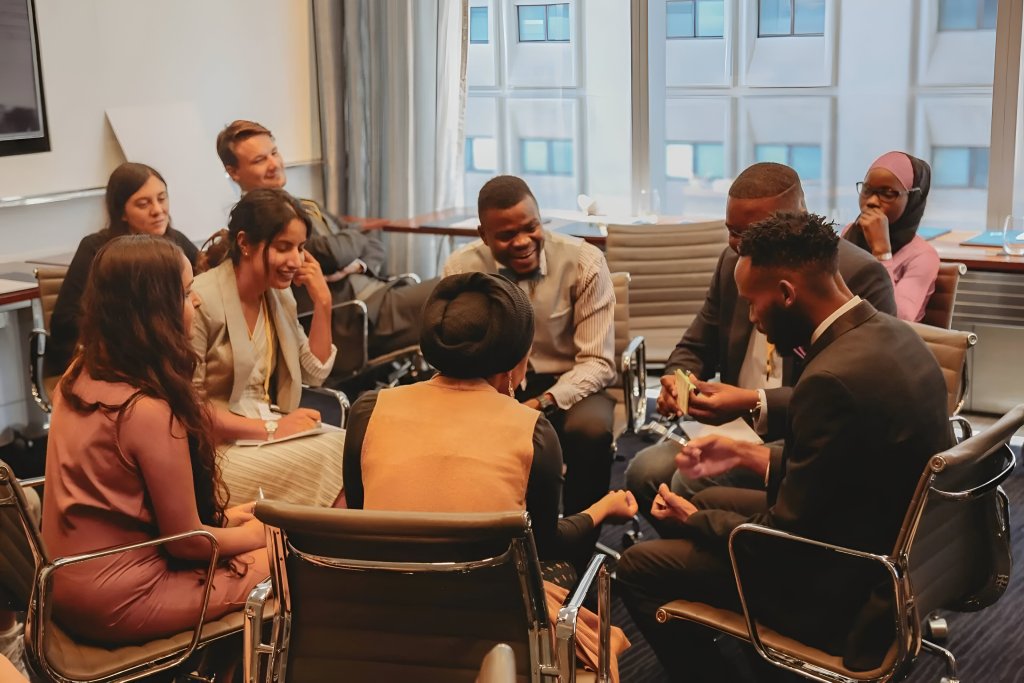
The first step to effectively become inclusive is to acknowledge the feelings and emotions that other people are going through that make it potentially harder for them to exist in their workplace. As someone who was born in an all-black community in South Africa and lived in an all-white community in Idaho, Wandile experienced a cultural shift in college and the workplace amongst a diverse group of people. “So there's a huge cultural gap that is often filled by racial stereotypes that we either learn from within our friend group or our parents or media and we show up to work and we're expected to instantly forget that's not how things work.” He adds. “Understanding these cultural gaps helps us better understand and learn about each other so that we can better work with each other.” As the internet, technology and global migration make us more connected, transformation is needed in all different sectors.
Working with Firms
Through his consultancy he seeks to understand where specifically the firm needs improvements and the data collected highlights the issues. In the next step, the organisation works with researchers from Deloitte and Harvard to help better answer “What does race look like?’ within the workplace. The survey highlights criteria like hiring, salaries, and leadership that need to be improved. In transparent terms, the data plainly reveals black, white, women and other people groups that the firms need to focus on. He works with companies like Deloitte Global and more recently EndlessOS Foundation which works in England, Europe, Asia, and North America to provide and democratize access to technology in dead zones.

Working with the Obama Foundation
After being chosen from among 200,000 applicants, Wandile became an Obama leader in 2019. Leveraging the network and resources there he joined a fellowship as a Resolution Fellow where he gained mentors. In the future, he would also like to extend his work beyond the fraternity to raise awareness for his most believed causes. His accolades have also given him platforms at the esteemed Yale Institute and the University of Notre Dame to hold DE&I conversations. To learn more about creating an equitable world, visit antiracisthotdog.com.
Wandile Mthiyane is on a mission to redefine the role of architects in addressing systemic inequalities. At the heart of Wandile's work is a deep-rooted commitment to building inclusive communities where every individual has the opportunity to thrive. Recognising the lack of dignified housing he worked on designing homes with commercial spaces to make them self-sustainable households for women. Realizing that true equity requires addressing systemic biases and cultural barriers, he launched the Anti-Racist Hot Dog to educate and engage people in conversations about racism and inclusion. By leveraging the power of storytelling and humour, Wandile is fostering a culture of belonging and understanding in workplaces and communities around the world. He is challenging traditional norms and redefining the role of architects as agents of social transformation. By creating spaces for collective reflection and dialogue, he is empowering individuals to confront their biases and work towards a more inclusive and equitable society.
As we navigate an increasingly interconnected world, Wandile's work is a reminder of the potential of empathy, creativity, and collaboration. By challenging stereotypes, starting conversations, and advocating for change, Wandile Mthiyane is building a more inclusive future—one where every individual has the opportunity to thrive, regardless of their background or circumstances.