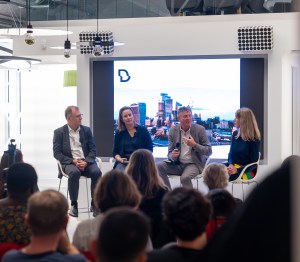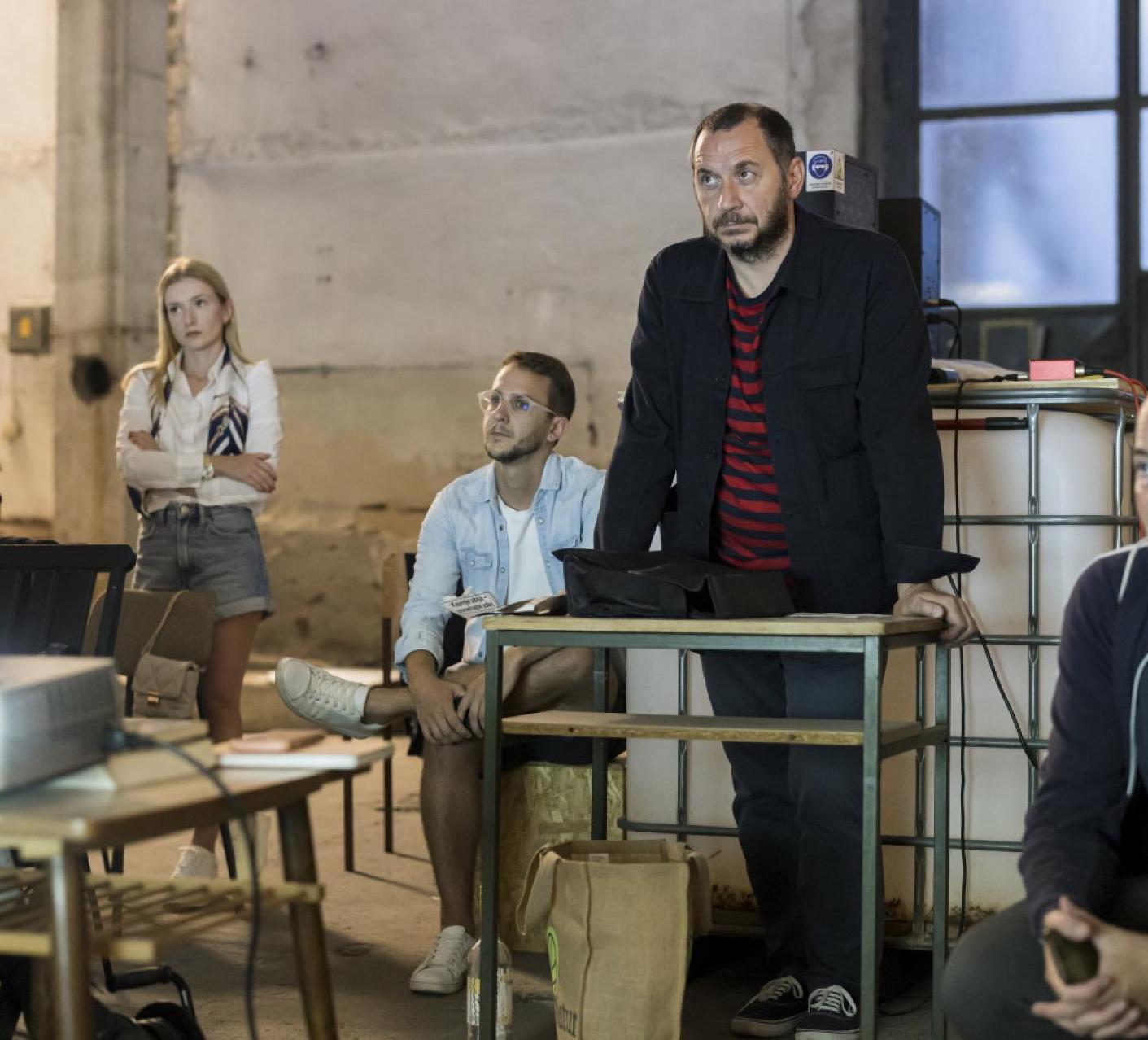
Erin Pellegrino, in the wake of the Disrupt X OOA collaboration for the symposium, talks to long-time friend Alessio Rosati about the themes covering staying in and transitioning out of architecture to reveal glimpses of his career outside of Architecture.
Alessio Rosati was born in Rome where he studied at the local architecture school. He founded an independent design firm while working for some of the main cultural Italian institutions, namely the Auditorium Parco della Musica and Rome International Film Fest. In 2010 he started his collaboration with MAXXI - Museo Nazionale delle Arti del XXI Secolo (The National Museum of 21st Century Arts) where he headed the Research Department, curating exhibitions and editing publications. Currently, he's the Head of Institutional Projects, curating events ranging from art to architecture, literature to film and more. He regularly gives lectures in both Italian and North American architecture schools and engages in the architectural design process, either entering competitions or designing and building spaces.


Curious, stubborn, idealist - the three words that define Alessio the best as also agreed upon by Erin who has been his long-time friend. Working beyond architecture holds a colossally different meaning to Alessio than it does to you or me. While many might say all they took from architecture was the skillset to nurture their interests in other fields of work Alessio has a different perspective. He believes he is working for and not just in or beyond architecture as one does not just work in a profession. Especially in one like architecture, where you work for the profession, people and community.
“Whatever I do is always connected. Cooking, tidying up the house, and even choosing what to wear in the morning is always a design to me. It’s always about combining forms and patterns and colours. So to me at least, there is no way out of architecture.” he says.
Quoting Martin Scorsese about films, “Films are like poison. The only antidote to a film is other films. The same, I think, applies to architecture. The only way to escape architecture is to look at some other architecture. There is no way out.”Everything he chooses to do out of architecture is always meant or aimed at enabling him to practise architecture the way he would like. Any occupation or any of his jobs, as old as they may be, are always tied to architecture. They provide him with the freedom to practise architecture his way and by his rules. “So I can name thousands of ways to be out of architecture, but will always find a way to get back to it.”
In his own way he is serving an industry he is incredibly passionate about. Architecture expanding its influence on him is reflected in everything from what he wears, to educating both non-architects and architects in turn propagating architecture further in his life.
When Erin jokingly says that he’s been chosen for a reason to speak at the symposium, Alessio humorously responds by saying:
“Yes. My obsessions. Obsessions are the only way to do things. Otherwise, you just reject, just dismiss, you just step back. I don't want to step back. I want to pursue my obsession. I'm enslaved by that obsession”
he adds.
Realisations through Architecture
Alessio narrates his story of how he got into architecture. He has been striving today in the field regardless of what, when, how or who. He once had a fellow student in University who said building is an addiction. Once you start building, you want to build some more. And then larger. In a design, one always wants to refine and fine-tune details because the emotion you feel when you envision them is a different kind of state of mind. Although unsure of whether his ideas are detrimental to the theme of Out of Architecture he strongly believes that there is no getting out.
The idea of disruption and going against the way things have always been can be circumstantial. Professions and practises always have to change and evolve with time, as long as the question of authorship is posed to understand who is heading for change and if they are taking a stance on the core understanding of how and why. Here approaching these ideas of obsessions and treating everything like a design problem fits incredibly well.


Architecture and Emotion
When something is well-conceived, well-designed and well-made, it is a pleasure to the eye and rest to the soul. It makes the world a better place to be. Thinking about beauty is up to designers, and creative minds. Architecture is not just about being a part of this process but also being able to take a step back and watch from afar to see something that has been well-conceived, well-designed and well-done. It gives you hope. It gives you a brighter future. It says that things can be done.
Most people are unaware of what a space is. But they have to understand space because it’s where they are moving. They must also understand the potential of spatial design. This awareness comes in every time they choose a shirt or a garment, which is designed themselves, as it is a way of representing one's own self. Fashion has always existed throughout the centuries when people used to paint their faces as being part of mankind designing themselves and the world around us. This is your own true identity.
There is no greater satisfaction than when the owner talks about the project with Rosati, “You must tell this story to people.” Alessio’s response to this?
“This is private. This story is between you and me and I will not share it with anyone else. I know every corner. And I know every detail of the corner that took months to make.”
The client-architect relationship then becomes more than just professional. You share the emotion and identity of the project with them.
Designing Life
Alessio, through the power of design, has taken on many roles such as that of a researcher, curator, architect, writer and father. He has worn multiple hats through the lens of being an architect. Being a jack of all trades is a habit he can not get rid of as that approach has taught him many skills in work and life.
“My life is a part of my design. My life is my design. It is the most crucial design so I have no fear of putting it at stake, whatever it takes.”
His strong belief is that a person needs to have an ideal of his own because the other option is having an ideal defined for you by someone else. And this to him is pointless. His focus in all walks of life is to foster his ideas and communicate them to people so they understand his interests.
In a project he was designing for a graphic designer he remembers having to fight for many little details as the budget was not large. A door handle, a curtain, and the moulding on the floor were all points of argument for the sake of a couple hundred euros. Once the client saw the outcome she thanked Alessio, appreciated his vision, and became more demanding in terms of the quality of design. This was the power of his ideals.
Closing Thoughts
In Erin’s words, Out of Architecture works with people throughout architecture who are in the midst of trying to grapple with how to make their career in, out, or adjacent to architecture. The goal of the Disrupt X OOA Symposium was to bring people who have done incredible work in different tangents to talk about what it means to them to practise architecture, what architecture means to them and what skills they have taken from architecture to build their lives and careers today whether that's a career in space or a career in critique, thinking, and curation. The event is about the voice that these people bring to reflect on ideas of legacy after or through architecture. The event brought to stage speakers whose opinions, perspectives and journeys the audience can resonate with or learn from. Their candid thoughts as opposed to an editorialized version will shed light on struggles and successes be it of any scale in any industry and at whatever capacity.
“Any success comes from struggle as the design process is a struggle,” says Erin. Alessio adds to this that while working on one of his projects he was completely moved by the vision after the furniture was set up exactly as planned. Seeing it transform from a balanced composition on a sheet to reality made him realise how everything was exactly the way the team envisioned it.
Alessio's journey, intricately intertwined with his passion for design, unfolds a narrative of relentless pursuit and unwavering dedication. His philosophy, rooted in the belief that every aspect of life is a design problem, informs his multifaceted roles as a researcher, curator, architect, and father. Alessio epitomises the essence of design permeating every facet of his existence and the symbiotic relationship between passion and profession, resonates deeply, inspiring how we perceive and embrace the art of architecture. Through their bold decisions and unfiltered career narratives, Alessio and his peers invite us to a space where every challenge encountered becomes a stepping stone towards boundless creativity and fulfilment.