Three awe-inspiring leaders are in conversation with our Editorial Director, Tania Ihlenfeld, exploring what it takes to make a meaningful impact in architecture and bring people with you on the design journey. Not, as a woman, but as talented individuals who just happen to be women.
Alison Brooks is the Principal and Creative Director at Alison Brooks Architects (ABA). Alison is one of the UK’s most highly awarded and internationally acclaimed architects. Since founding her practice in 1996, she has emerged as one of the country’s most inventive architects with works encompassing urban design and housing, higher educational buildings, private houses and public buildings. She is the only architect in the country who has received all three of the profession's most prestigious building awards, the RIBA Stirling Prize, the Manser Medal and a Stephen Lawrence Prize. Her unique architectural approach springs from invested research into the specific geography, climate and cultures of each project so that her design solutions emerge as both unique and relevant to the constituencies they serve.
Jane Clay is a Strategy Director and Principal at Gensler. Jane regularly advises clients on best practice workplace design, approaching each project with a detailed understanding of the impact of design on business performance. With more than 25 years of experience spanning all aspects of workplace consultancy, Jane’s portfolio contains a variety of well-known projects across a range of sectors including advertising, media, banking, publishing, education, and the private sector. Recognised by colleagues and clients alike for her ability to provide positive and unambiguous solutions to complex client briefs, Jane approaches each project with a thorough understanding of the physical, social, and cultural mechanics that contribute to highly efficient workplaces.
Alice Dietsch is a Director at AL_A. Alice has led the V&A Museum Extension project since it was won through an international competition, encompassing a new entrance, gallery and courtyard and which opened to the public in 2016. She now leads the remodeling of the D’Ieteren headquarter in Brussels and. coordinates AL_A’s competition team, with entries for the Eiffel Tower Site or the Belgarde Philharmonic Concert Hall, which was awarded in 2021. . Her working methods are driven by extensive research, experimentation and intellectual challenge.
Brave: The New Way Forward
Successful leaders need to navigate through twists, turns, and unexpected challenges, somehow emboldened by moments that demand courage beyond measure. Let’s explore three career journeys where being brave was not just an option - it was the only way forward.
We discuss how some of the most transformative projects delivered in the UK and internationally were conceived and delivered, stories about forging new ways of designing and procuring projects and what it takes to build and sustain momentum to achieve these ambitious schemes.
Brave clients are part of this equation. As is a need for architects and design teams to build strong relationships to nurture this courage. We discover that you can create new materials with manufacturers that have never produced these innovations before - when you have the trust and support of your client. We tackle the often misunderstood and undervalued role of a strategy-first approach. This helps define a clear why - becoming a filter for every major decision throughout a project’s lifecycle. We imagine what it looks like when architects extend their reach to areas of the built environment usually devoid of specialist design services. We also unravel the inequitable competition process in the UK and propose ideas for how smaller and emerging practices can enter this portfolio-enhancing arena.
Designing with purpose and co-creating ideas without ego is a running thread throughout this insightful and heartfelt conversation.

Alison's Unconventional Interview
Alison's career path was marked by an audacious move - one that blended professional ambition with maternal instincts. Imagine being invited to meet with the CEO of a major housing trust and bringing your one-week-old baby into the meeting, nestling him under the desk, and hoping you could stay focused on making a good impression. This unexpected encounter, born out of sheer necessity, showcased Alison's unwavering determination and her willingness to seize rare opportunities.
“I still can’t believe I was brave enough to do this!”
Another pivotal moment came when Alison entered her first residential project for a RIBA award. She explains that as a young practitioner, you accept that you're in the wilderness, no one knows about you yet. At the time there was no internet and the awards represented a brilliant way to propel young architects into the competitive arena.
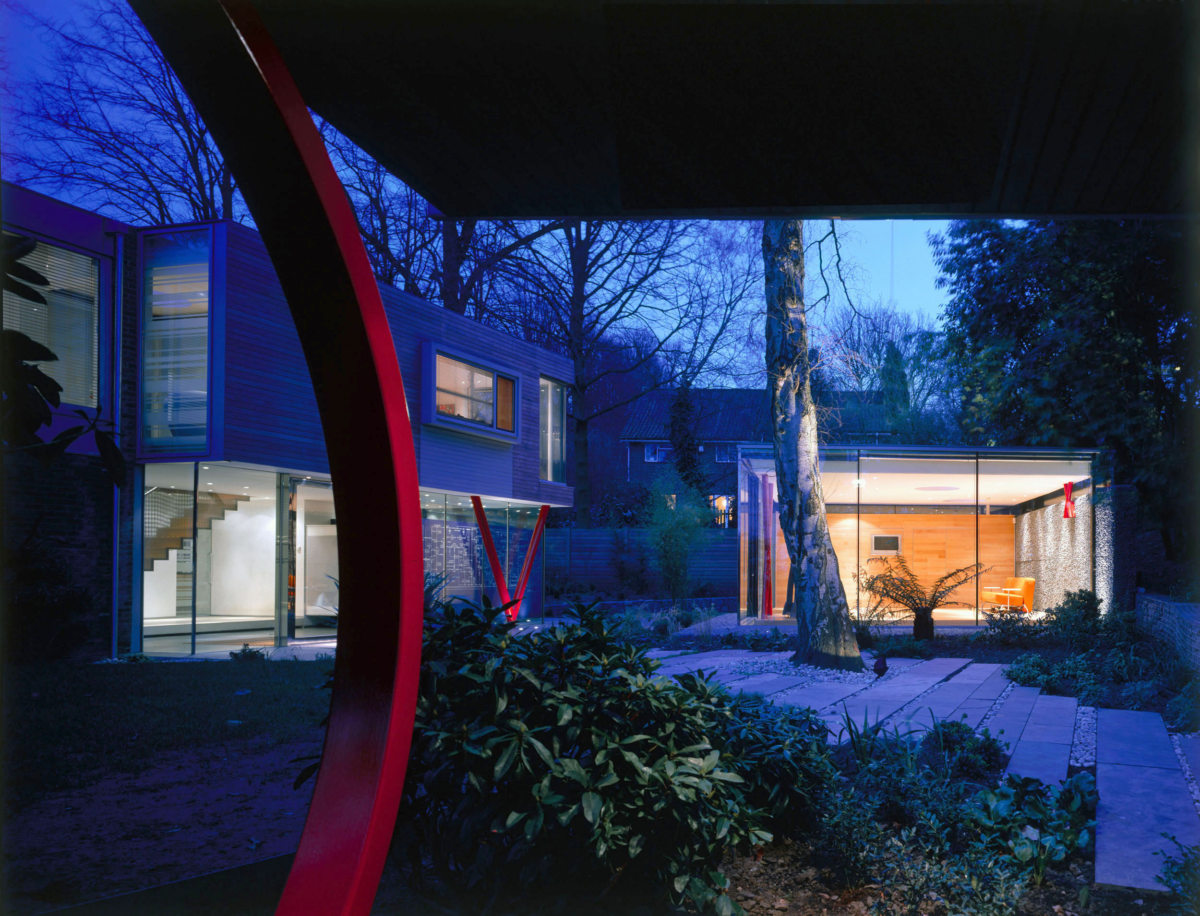
Signed original photographs were required to be hand-delivered. As Alison stood before the imposing bronze doors at the RIBA headquarters at Portland Place, five minutes past the submission deadline, she faced a make-or-break moment. With fortuitous assistance from a thoughtful security guard, her submission for the VXO House in London was accepted and it went on to receive a Regional Award.
Timing is everything Alison reflects.
She often wonders if the RIBA had not accepted her submission, whether her practice would have achieved the momentum for success and increased visibility that it did - just four years into founding the practice.
Shifting Perspectives: Jane's Journey into Strategy
Jane's career trajectory embodies the spirit of fearless exploration. Transitioning from interior design to the uncharted territory of strategy. At the time strategy was often relegated to the sidelines, if discussed at all. Jane dared to challenge convention and redefine her professional identity. This bold move laid the groundwork for a distinguished career at Gensler, where she became a trailblazer in merging design sensibilities with strategic foresight.
Shifting from interior design to strategy set her up for success. Jane says, “I was curious about what was going on in people’s heads. I wanted to dig deeper into what was behind the decision-making within organisations.” Strategic thinking became her means to do just that.
She never lost touch with her passion for design.
One client in particular was prepared to give Jane and her team, a chance to pitch for a design proposal. Jane recalled that we had been working with this technology client for several years leading seven different strategy worksteams. But we wanted to win an interior design project off the back of our strong understanding of their strategy.
Jane says emphatically, “We needed a fresh approach and profiling who works on your projects is key. Think of it like speed dating, you need to match your team's skills and characteristics with your client's and the specific aspirations of the project. Sometimes the person you might need on your team is not easy to resource on other projects because they think outside the box.”
When you have the mentality that you are putting the best team together for a specific project, you can incentivise support systems to make it work. “We had one woman who was brilliant at storytelling and experiential design. She used to talk about the impact of smell on people’s perception of space, as well as sound and other sensory aspects.” Jane describes it as a 360-degree view that most designers aren’t fully cognisant of when creating spaces.
Crowd-sourcing ideas from junior members of the team, unburdened by preconceived ideas, also played an important role, Jane recalls. “We drew the floor plans as a landscape plan, rooted in the cultural and historic references of Dublin and this is what finally won us the pitch.”
When is a risk, not a risk?
There can be a wonderful sense of freedom in choosing to pursue a project innovatively. Jane admits it can be a risk not to try.
Brave Clients: Taking a Chance on You
For Alice, it's difficult to pinpoint a single instance of bravery. She contemplates that there have been countless moments where courage was essential, especially in her role leading the competition team at AL_A. “It’s intense, we typically lose more often than we win, yet it's crucial to persevere and maintain momentum, generating fresh ideas for future opportunities.”
Bravery, to Alice, means persisting despite outcomes - to keep going. It's about finding positivity in the work, regardless of the results.
Being brave is one thing, but Alice recognises that it’s also worthwhile considering where others are brave towards you. Reflecting on this Alice is grateful for the autonomy she has been afforded in designing and executing incredibly ambitious projects for AL_A. Winning the V&A Museum Extension, the largest endeavour for the museum in a century exemplifies this. The practice was newly formed, and she was a relatively inexperienced foreigner.
“Both the client and Amanda Levete entrusted me to lead the project to completion.”
Alice spoke of the challenges of being young and foreign to the UK. “It requires others to take a leap of faith in you.”
In her current role, relentlessly pursuing new work and ideas, she acknowledges that many design proposals won't be selected. Alice reminds us that it's crucial not to take these rejections personally; often, they stem from a mismatch with the client's or stakeholders' needs rather than the proposal's quality.
Clients aren’t always brave enough to choose your proposal. It’s as simple as that.
It begs the question: How can we help develop greater courage in clients and stakeholder organisations to take more calculated risks in selecting winning schemes?
Perhaps this is one for a future Disrupting Norms panel event!

Transparent Models: Designing Dreams with Purpose
Bringing design teams with you on an ambitious design journey isn’t easy. Alison reiterates that when you enter competitions you put everything on the line. As a practice, “We win most of our work through this process, so we have developed a very transparent model for sharing ideas. It’s a myth that a single design hand sketches a concept and the rest of the team delivers it.”
Not only does this not fit the contemporary architectural practice, it isn’t conducive to bringing people together for a longer mission. Alison describes that of course, in design, decisions need to be made. This can be achieved by selecting a specific scheme or merging ideas, knowing that designing is iterative and requires further testing before a resolution is achieved.
Alison infuses another layer in her design process - testing and hypothesising the opposite of what has been conceived. This creates a healthy dialogue within the team, allowing you to understand what you’re not yet seeing. This can either validate the original option or open up new opportunities.
Preempting the critique of your proposal is also a smart strategy Alison advises. Working through the counter-argument to your design will mean that you can more effectively articulate what lies behind your decision-making.
ABA undertakes significant research before designing. This extends to visiting the site and becoming an investigative journalist to understand the people and culture that make the site and surrounding place special.
“We’re finding clues to respond to and weave together to define the true spirit of the place.”
We’re also dreaming up a vision and trying to imagine the desired outcome for our clients and the communities they serve. We’re looking for an identity that will mean something to the people that will ultimately use this place. It’s a combination of intensive research, fact-finding and dreaming.
“Everything must answer the project’s ‘why’.”
Being able to critically appraise your work and gain clarity on what the project is seeking to do will enable you to bring your client with you. Alison reminds us that everything is dependent on the client’s level of ambition, and in a competition setting, whether the jury can tune into this vision and reasoning.
Jane agrees. Arriving at the north star, even if it morphs slightly, is how you filter all of your key decisions and enrich your proposal. Too many projects dive deep into design proposals before questioning a project’s why.
This can mean that you miss opportunities for a nuanced response to place.

A Balancing Act: Unique Designs, A Motivated Team and Listening to End Users
Alice prompts us to put things into perspective. A competition design phase is a short moment in the lifecycle of the project, that may span more than five or ten years. Along this journey, you need to ask yourself: How do I keep the excitement of the initial design phase alive?
If your team has been involved in the design conception and feels a sense of ownership for its development, it will be easier to build and sustain momentum.
Also, you never start from scratch on a competition scheme, you carry aspects of your research and development from one relevant scheme to another. Reassuringly, not everything is lost when you are unsuccessful. You need to be able to have fun, take risks and work together, Alice confirms with a huge smile. If you enjoy what you’re doing it will show in what you produce.
“I’m driven by the story that emerges through research and experimentation - it’s a powerful motivator.”


Alison describes the challenges of working in isolation during the competition phase when you are bound by non-disclosure agreements precluding you from talking with communities and wider stakeholder groups. ABA typically sets up project Miro boards to aid collaboration with the wider competition team. Sharing every aspect of the design journey from research to the design iterations and decision-making. Alison acknowledges, “We’re very transparent.”
She notices that the consultant team enjoy watching and understanding this process but, they often hold back offering solutions until we have honed into a smaller selection of options.
Architects have a reputation for delivering thirty times as much work as everyone else in pursuit of the best design - rightly or wrongly. Alison says, “It’s up to us to coordinate regular meetings to draw in this wider expertise.”
When you finally win a competition, it’s time to engage with the local communities and key stakeholders and listen to what they need. Making sure that the entire process of stakeholder consultation is transparent, recorded, tracked and shared. Alison has real joy in her eyes as she talks about these next exciting project phases.
Interestingly, she claims, many clients want to be led by their expert design teams but there is a need to deeply listen and actively co-create with the end-users to achieve the best outcome. This can appear in conflict with the project sponsors who have selected a scheme and want to progress this at speed.
Alison warns, that a balance is required and you may not always be supported, despite good intentions.
Jane agrees with this sentiment. She says, that when you have a clear consensus from the client about a winning proposal but, there’s an obstacle on how this can be delivered due to a physical site constraint or some other emergent information that wasn’t previously known, it can put design teams in a bind.
A misalignment of ambitions between sponsors and end-users is common, panellists agree. Architects are caught in the middle trying to do the right thing by all parties, including future users who aren’t invited to the design table. You need to navigate a clear path with decision-makers who may never experience the design and with stakeholders who may not be able to imagine how spaces will be utilised in ten or twenty years.
Diplomacy is necessary, Jane declares. Also, the ability to read the room is essential to understanding what is not being said and who is genuinely making decisions behind the scenes.

A Risk Worth Taking: New Materials and New Manufacturers
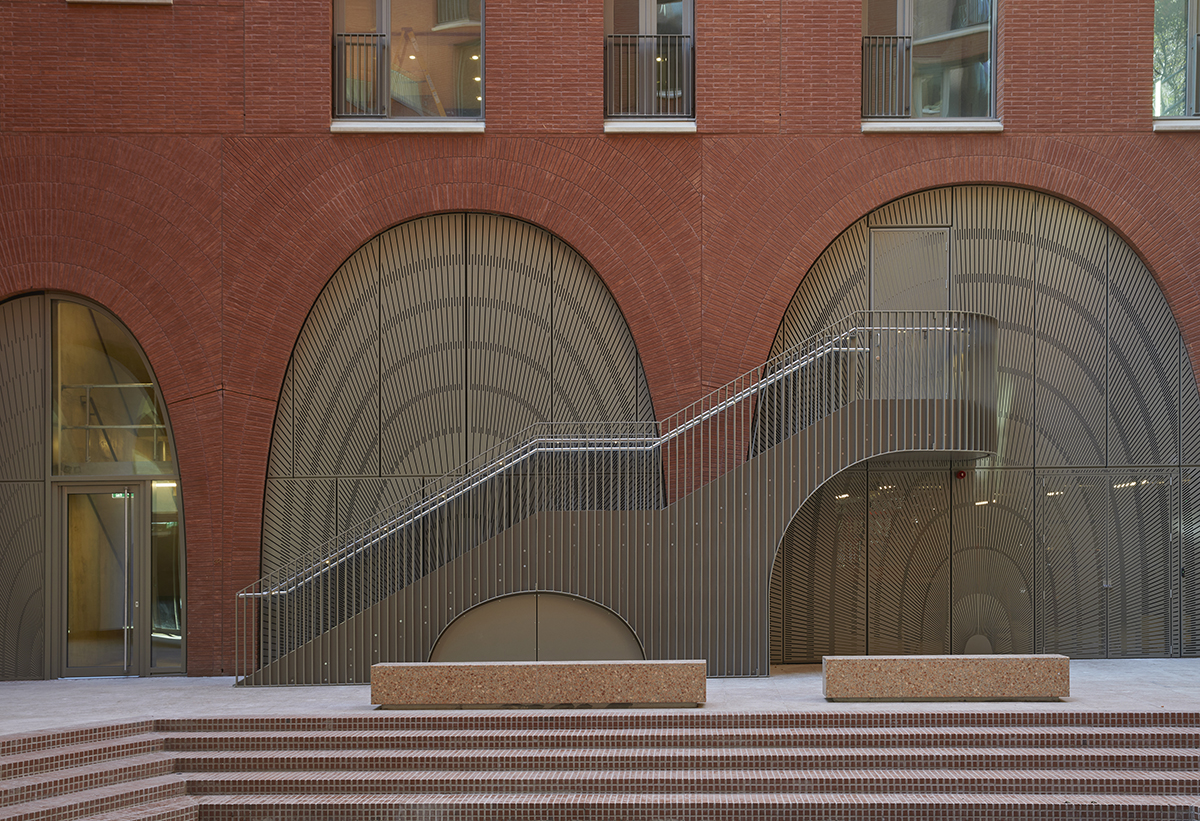
Alice reveals there were numerous obstacles to conquer in realising the V&A Museum Courtyard Extension project. For example, the porcelain courtyard tiles – that continue the arts and crafts tradition of the museum and its collection - came with a leap into the unknown.
We persuaded our team and the museum to come on the journey to design a product that didn’t exist yet and find a manufacturer to produce it for us. It was a process that required significant research into the material properties and production techniques. Alice recalls we travelled to potteries in the north of England and the Netherlands to better educate ourselves.
Through the joy of exploring something new, we created a narrative that our wider team bought into. Our chosen manufacturer was making the transition from porcelain figurines to floor tiles and we became a means to fast-track their market shift. This created additional excitement for our project across the team.


Plea for Change: Embedding Strategy with Love
Jane appeals that strategy should be embedded in every single project. It shouldn’t be shortened or short-circuited in favour of jumping into design.
“When strategy is done right you take time to understand the story, to engage in the joy of this narrative and how it stems from and often leads to strengthening a client's why.”
Multiple vision sessions enrich the strategy and enable you to create a blueprint for design development, Jane affirms. This is the time to have meaningful conversations about regeneration, sustainability, future uses and other core values intrinsic to the client and project needs.
Devote time to properly interrogating the brief and desired outcomes.

According to Jane, strategy is the plan around the vision. At a high level, this represents the guard rails that secure the essence of the vision. You will often hear a client say, “Wow, you understand us, you’ve got it!” Meaning: you’re correctly interpreting what they want.
The next step is to make this more granular and more tangible for your team to latch onto and develop a design. Good designers instinctively know how to do this. The trap to avoid is not integrating these steps and allowing strategy to communicate with the concept and vice versa.
Very often you need to tease out the strategy by asking the right questions. Jane suggests, “It’s usually on the other side of a question that isn’t being asked or answered properly.”
Have the courage to listen to what goes unsaid or to people who aren’t sharing their opinions.
“If you’re not clear about something, then others aren’t either,” Jane says cheekily.
Be curious. Dig deep to get to the nub of the problem, beyond what the brief is telling you. Ask: “Why is this important to you and what sits behind this reasoning?”
When you express a real joy in understanding your client’s story and a project's why, then they’re in and it will help you streamline decisions throughout every stage of the journey.

Broader Remit: To Leverage Research and Skills
Alice’s wish for change is to broaden the remit of architects all the way to business parks or supermarkets so that the built environment can benefit from the knowledge that is undertaken in many practices, and the good practice, on sustainability notably.
Of course, this is dependent on how projects are commissioned and where the money is for design teams to get involved. She advocates that perhaps local authorities could be empowered to bring in design expertise and the public could have a say in which aspects of their local communities are designed with care.
Ultimately this could mean more socially conscious and environmentally responsible projects would be realised and a higher value placed on design by the general public.
Alison’s wish list for change in our industry is extensive, but it starts with design education. The interrelationship between the built environment, nature, infrastructure and systems in shaping our cities, is evidence that we are surrounded by design. Yet, young children are not taught to understand or appreciate design, she says passionately.
The correlation between well-being and quality of life supported by our environments is only becoming clear to us now. Alison invites us to imagine if we began a discourse with children in primary school that enabled them to engage in how they use and impact their immediate environments.
We would develop more empathetic next-generation designers and innovators.
With a degree of scepticism, Alison dares to challenge: “I would also love to change how projects are procured in the UK.”
She suggests that you take procuring via Local Authority Frameworks as an example. Whilst it’s a low-risk, well-honed mechanism for procuring public projects - it is unnecessarily onerous and exclusive. The process often precludes small practices from entering because they can’t tick all the boxes. Requirements such as minimum turnover, mean that despite having the necessary expertise and talent to execute incredible projects, small practices are often unable to contend.


Research into Great War Island and the flood plain of the Danube River informed AL_A’s competition proposal to set the concert hall in a re-widened Ušće Park and to bring the forest close to the building.
Unpaid and poorly paid competition projects are another source of frustration for many small practices, Alison acknowledges. The RIBA should support this change and declare for clients what architects should reasonably be expected to do to secure projects. She notes that in Europe and North America, architectural practices strictly adhere to limitations for the amount of free work they can undertake.
Alison defends that competitions are research and development opportunities and a means to skill up your team. Regardless of the outcome, you can demonstrate your process and understanding within your portfolio.
But, it does come with a huge cost.
In the UK, you might receive £10k to design an entire University precinct, whereas, in North America, the minimum is typically $100k. It’s an outrageous discrepancy and it speaks volumes about the value we place on design, Alison says with conviction.
We need to ask ourselves, how do we make the procurement of architecture more equitable, inclusive and profitable?
The gargantuan effort and cost of winning work impact the entire industry. It contributes to inequitable success and limits everyone's earning capabilities.
As a profession, we can’t stand by and let this continue.

Disrupting Norms: More to Come
As the industry grapples with inequities and inefficiencies in architectural procurement, leaders like Alison, Jane and Alice advocate for systemic change. From challenging the status quo of unpaid competition projects to advocating for taking a chance on individuals and deploying new ways of thinking strategically about design, They champion a vision of equity and greater earning capabilities and usher in a new era of transparency, accountability, and empowerment within the profession.
In this conversation, bravery weaves a thread of resilience through bold decisions, audacious leaps, and unwavering determination. It’s a potent reminder that leaders can help us dare to dream of a brighter tomorrow.
Thank you, Alison Brooks, Jane Clay and Alice Dietsch for your generosity.
We set out to create an intimate in-conversation panel event in London with some of the most brilliant leaders in our industry - at it delivered! Discussing topics in a way they don’t usually get presented and engaging with a live audience.
Our mission here at Disrupt MAG is to drive change in the built environment industry, break down unhelpful solos and give a platform for voices that aren’t typically heard. It’s also about building relationships and connections.
Future Disrupting Norms Events are in the pipeline - come with us to lead change!
You can watch the full recording of the event here (add link to full recording)
With thanks to our venue host: E.H Smith Architectural Solutions, Design Centre, London, EC1M 4DL
Collaboration sponsors: Ede Enablers, Curio Careers & Auricle Studio.
Photography and filming by: You See Media.