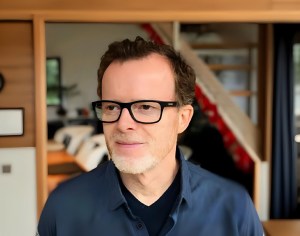
Dale Sinclair, spearheads project delivery by melding digital technologies with offsite manufacturing methods. With over 35 years of architectural expertise, including pivotal roles in shaping industry standards, Sinclair champions innovation on a global scale. As the Director and Head of Digital Innovation at WSP in the UK, his vision extends beyond conventional boundaries, aiming to reshape how architects approach design complexity and address pressing challenges like achieving net-zero emissions.
He's the lead author of influential publications like the RIBA Plan of Work 2020 Overview, and his books on design management have redefined the role of lead designers in the digital age. Actively engaged in industry forums, Sinclair chairs prominent committees and advises on initiatives driving digital transformation. His illustrious career spans prestigious positions at AECOM, Dyer, and Building Design Partnership, underpinned by a Master of Architecture from The Glasgow School of Art.
In contemplating the evolution of architectural design methodologies, Dale Sinclair reflects on the pivotal role of technology in AEC. Dale begins with his experience with Computer-Aided Design (CAD) that traces back to his early years as a budding architect when the allure of innovation captivated his imagination.
In the bygone era when CAD emerged as a groundbreaking tool, it revolutionised the traditional drawing board approach. Sinclair's fascination with CAD stemmed from its capacity to streamline the design process, enabling architects to manipulate scale and replicate intricate details with unprecedented ease. In his professional trajectory, a pivotal project—a monumental office building in Edinburgh—epitomised the transformative potential of CAD. Despite the advancements brought forth by CAD, there is persistent reliance on traditional scale drawings within the architectural community. He discusses how, despite technological innovations, architects continue to adhere to age-old conventions, prompting him to advocate for a paradigm shift in design methodologies.
Findings from his "Design Management: For Architects" Book
Beyond his architectural pursuits, Sinclair engages in design management and published a book on Design Management with a profound interest in the intricacies of the design process and building construction. When Dale Sinclair observed a notable influx of project managers entering the industry, it was initially promising as it aimed to address issues surrounding project delays. However, as the design and build approach gained traction and procurement methods evolved, it became apparent to him that there was a gap in the industry's focus on the design process itself.
Design is inherently distinct from project management, and despite efforts to integrate design programs and support design managers, there remains room for improvement in the understanding and execution of design management. Design management is a complex and multifaceted discipline, characterised by its varied approaches and considerations. From navigating stakeholder dynamics to reconciling modern designs with historical contexts, the process entails numerous negotiations to achieve a satisfactory outcome for all parties involved. Achieving consensus amidst diverse perspectives poses a significant challenge, due to the intricate nature of design management.


Role as Director and Head of Digital Innovation at WSP
Titles, for Dale Sinclair, serve as more than mere labels; they represent a catalyst for change and innovation. As a leader, rather than imposing predetermined solutions, Dale advocates for aligning with market demands and client preferences, which increasingly prioritise faster and more efficient design and construction processes. Integrated project delivery methods, such as Design-Build, address these evolving needs. By adopting a program-level approach, Sinclair contends that the architectural profession can better streamline decision-making processes and enhance project efficiency. Looking ahead, he predicts a shift towards viewing projects as interconnected components within larger programs, rather than isolated endeavors.
Challenges in integrating AI and Digital Technologies into disciplinary workflows
Accessing knowledge within the architectural industry is a challenge as it primarily resides in individuals' minds rather than readily accessible databases. He compares this situation to other professions like law, where vast repositories of information are readily available for AI tools to utilise. Sinclair emphasises the necessity of laying the groundwork in terms of data classification and integration before fully embracing AI-driven solutions.
While acknowledging the potential of AI tools to streamline processes and generate new knowledge, Dale expresses caution regarding their current limitations. He suggests that AI's tendency to produce erroneous outcomes necessitates a more nuanced approach, focusing on incremental progress rather than wholesale adoption. He also discusses ongoing efforts to incorporate AI elements into simulation tools and building models, as their potential impact on the architectural landscape calls for additional data refinement and content development to realise AI's transformative potential fully.
A transformative leap in contemporary architectural methods can lead to the development of commoditised building components akin to Lego pieces. His team's efforts streamline construction processes by reducing the number of individual components required for building projects.


The Role of Offsite Manufacturing in Achieving Net Zero Targets
Offsite manufacturing (OSM) advances sustainability goals within the built environment. With a keen eye on achieving Net Zero targets, Dale cites significant benefits of OSM like reduced waste and enhanced efficiency. By shifting a substantial portion of the construction workforce from onsite to offsite settings, a more sustainable future where skilled labourers operate in local factories, minimising transportation-related emissions and fostering economic growth in underserved communities can be achieved.
Moreover, there is potential for OSM to drive social value and innovation through the establishment of microfactories. These localised production hubs not only promote job creation but also empower communities by leveraging local skills and resources. The concept of economies of scale, wherein increased automation and larger production volumes lead to cost savings and scalability is central to his vision. By optimising manufacturing processes and harnessing the power of robotics, there can be more efficient and cost-effective construction methods.
Looking ahead, OSM and artificial intelligence (AI) can converge to revolutionise the built environment. With a robust catalogue of standardised components produced through OSM, AI-powered tools can streamline design and construction processes, driving further innovation and sustainability in AEC.

Leadership Encouraging Innovation and Cultivating Change
Recognising that industry-wide transformation is a gradual process, Sinclair notices the need to play the long game and approach challenges with resilience. To him, storytelling serves as a powerful tool for driving change. Drawing inspiration from Jeffrey Moore's seminal work, "Crossing the Chasm," he showcases tangible case studies that demonstrate the feasibility and impact of innovative practices. By leveraging these success stories, Dale aims to overcome scepticism and inspire confidence among clients and stakeholders.
Moreover, Dale fosters a culture of innovation and collaboration within his firm by challenging conventional thinking and encouraging experimentation. Rejecting the notion of "that's the way we've always done it," he empowers his team to explore new approaches that prioritise efficiency, sustainability, and cost-effectiveness. He adopts a strategic approach to innovation, dedicating Fridays to positive calls with fellow innovators to reflect on achievements and set the stage for the week ahead. Through these interactions, Sinclair cultivates a sense of optimism and perseverance, driving momentum towards realising ambitious goals.
“What I'm trying to do is keep making the sphere of influence that we have as a team within WSP bigger and we are looking at projects all over the world. I think people are beginning to resonate with what we're doing and can see that we bring a completely different way of thinking to the whole problem of trying to change the industry.”

Key Principles for Delivering Faster Designs
Dale's methodology centres around three core components: program perspective, transformative Modern Methods of Construction (MMC) technology, and digital tools integration. By adopting a program-centric approach, he aims to extract maximum value from each project, allowing design teams to focus on addressing unique challenges efficiently.
The integration of transformative MMC technologies lies at the heart of Dale's strategy for accelerating design processes. By reimagining traditional construction methods and embracing innovative manufacturing techniques, Sinclair seeks to revolutionise the way buildings are conceived and constructed, thereby enhancing speed and efficiency.
Furthermore, with the strategic deployment of digital tools as a critical enabler of faster design delivery and an extensive toolkit of over 100 digital resources at his disposal, Dale navigates the complex landscape of technological solutions with precision and foresight. Through careful evaluation and prioritisation, he ensures the seamless integration of digital tools into the design process, optimising efficiency and effectiveness.
RIBA Plan of Work 2020
Dale Sinclair engaged with the RIBA Plan of Work, for his authorship of books on design management as a foundational influence. Since the publication of the Plan of Work 2020, Sinclair has authored several overlays, which he views as invaluable tools for complementing and enhancing the original framework. Overlays are significant as a means of expanding upon the Plan of Work, addressing topics that may not be fully articulated within the primary document. By providing additional clarity and guidance on driving innovation in various areas, overlays serve to augment the utility of the Plan of Work while accommodating the diverse needs of different stakeholders.
Having engaged with numerous stakeholders through talks and discussions on the Plan of Work, Sinclair has encountered various perspectives and queries regarding its implementation. He emphasises the importance of understanding the intent behind the framework and fostering collaboration to effectively leverage its principles in business strategies.


Exploring WSP's Approach to Digital Transformation in the Built Environment
Amidst the built environment sector, WSP stands at the forefront of innovation, navigating the challenges and seizing the opportunities presented by digital transformation. Dale delves into the realm of structural engineering, highlighting WSP's endeavours to seamlessly integrate disparate data sources. By harnessing cutting-edge tools, WSP aims to facilitate seamless collaboration between structural analysis and architectural conceptualisation, ultimately streamlining the design-to-manufacturing workflow.
A key focus for WSP lies in breaking down traditional barriers within the design and manufacturing process. There is an opportunity for a future where the click of a button initiates an automated workflow, seamlessly translating design concepts into tangible products. Such a paradigm shift holds the promise of enhanced reliability and efficiency, revolutionising the construction supply chain.
Moreover, WSP's ambitious sustainability goals, particularly its commitment to achieving carbon neutrality across all designs and advisory services by 2030 involve its Future Ready program, where WSP spearheads initiatives aimed at addressing various facets of sustainability, from carbon reduction to biodiversity preservation.
WSP's sustainability strategy also includes the integration of circular economy principles into standard practices. By designing buildings with dismantlability in mind, it aims to minimise waste and maximise resource efficiency. In contemplating the future of architecture, Sinclair proposes a thought-provoking notion: the trend towards adaptive reuse and building extensions may redefine the role of architects in the coming century.

Path to Carbon Neutrality in Construction
The journey toward achieving carbon neutrality in the construction industry is multifaceted, with the most promising technologies and methods. WSP’s focus is on reducing embodied carbon, acknowledging the challenges of obtaining accurate carbon data for all products and materials. However, there is potential in localised, low-carbon manufacturing and micro-factories, where old and new materials are combined to minimise environmental impact in the future.
To understand the complexities of balancing carbon reduction with ecological considerations, we need to acknowledge the long-term commitment required for initiatives like forest planting and the importance of integrating sustainability into local economies. The industry must advocate for a forward-thinking approach that prioritises carbon-neutral building materials over conventional alternatives, recognising the need for careful consideration of short-term versus long-term carbon costs.
Looking ahead, Sinclair offers valuable advice for aspiring leaders in digital innovation within architecture and construction. He stresses the importance of setting ambitious goals and mapping out a clear path towards the future, rather than relying on incremental changes. By embracing innovation and strategic planning he believes that professionals can drive meaningful transformation within the industry.
Collaborations with other Organisations
WSP's collaborative endeavours comprise an interdisciplinary approach, epitomised by teams like the System Thinking Team. Comprising experts from diverse fields including anthropology and psychology, these teams inject fresh perspectives into the innovation process. Dale finds inspiration in the timeless wisdom of ancient philosophers like Aristotle, for the enduring relevance of collective intelligence.
For Dale, the journey towards digital transformation is not merely about adopting cutting-edge technologies, but rather about harnessing the power of thoughtful leadership. He emphasises the importance of aligning digital initiatives with strategic goals and client needs, stressing the imperative of delivering outcomes that are faster, greener, and safer. In challenging the notion of client resistance to innovation, there is a shared desire among clients for progress and improvement. By fostering a culture of collaboration and innovation, WSP navigates the complexities of digital transformation with agility and purpose.


Collaborating with Other Shareholders
Engaging with clients and contractors is pivotal for the successful implementation of progressive manufacturing methods. Approximately half of WPS’s clients are contractors, each seeking unique ways to distinguish themselves within the industry. Collaborating with these forward-thinking contractors presents an opportunity to drive innovation collectively.
While change can be challenging to instigate from downstream positions, their most exciting projects often involve engaging with clients right from the outset. For instance, they're currently working with a client to develop a briefing tool that seamlessly integrates with manufacturing processes. This approach not only streamlines the briefing process but also fosters transformative change by incorporating innovation from the initial stages.
Looking ahead, the key lies in architects leveraging the front end of the process to drive innovation and automation throughout the entire design and manufacturing journey. By actively involving clients and contractors in this collaborative effort, we can pave the way for a more progressive and efficient construction industry.
As a closing thought, Dale Sinclair envisions orchestrating two paradigm shifts within the construction industry. The foremost shift involves revolutionising building construction, aiming for low-carbon, efficiently deliverable structures. He advocates for reimagining the design process to swiftly address project-specific challenges, moving away from repetitive tasks like redesigning details such as carpet nosing and staircases. Next, he emphasises the need to elevate focus towards tackling larger, more impactful challenges to drive transformative change in the industry.
Dale Sinclair emerges as a visionary amidst the ever-evolving landscape of technological advancement. His expertise spans beyond traditional architectural realms, encompassing design management intricacies and project delivery nuances. Through astute leadership and collaborative endeavours, Sinclair propels the industry towards heightened efficiency and sustainability.
Sinclair's journey underscores the multifaceted nature of design management, where navigating stakeholder dynamics and harmonising modern designs with historical contexts are paramount. His commitment to innovation resonates throughout his career, shaping a trajectory marked by transformative change within the AEC industry. His strategic initiatives and unwavering advocacy herald a future where architecture and construction converge with innovation and excellence. Through his pioneering spirit and collaborative ethos, Sinclair lays the groundwork for a dynamic future, where the built environment reflects the pinnacle of ingenuity and forward-thinking design