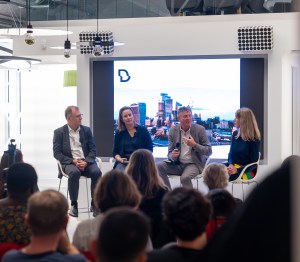
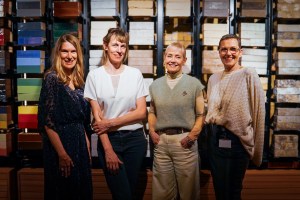
The business of architecture was a learning curve for Michael Poris and Douglas McIntosh. In their firm’s formative years, the partners worked on residential projects, plans, and feasibility studies while pursuing larger projects. Michael assumed the firm’s business leadership role. To learn the best financial practices for running a firm, he started attending AIA conventions, workshops, and seminars.
Michael Poris, AIA, is the co-founder of McIntosh Poris Architects (www.mcintoshporis.com) and has led preservation efforts to save Detroit's historic buildings. After working on both coasts and overseas, Michael returned to his native Detroit in 1994. Since then, he has worked tirelessly to preserve the city’s legacy of 20th-century architecture, helping implement change through innovative design and policy reform. His architectural leadership has transformed Detroit with groundbreaking projects, notably adaptive-reuse designs that reconfigure historic buildings for modern needs. The firm has received more than 130 design accolades, including 30 AIA awards and more than 70 Detroit design awards. McIntosh Poris Architects’ work has been featured in more than 100 prestigious publications worldwide, including Dwell, Urban Land, Architectural Record, and Interior Design.
Origin Story
Michael Poris grew up in Detroit with his late business partner, Doug McIntosh. They studied architecture together at the University of Michigan, after which Doug got hired by celebrated architect César Pelli. Michael followed Doug to Pelli’s, and the firm grew from 20 to 70 people during Michael’s two-year tenure there. Michael then went to Los Angeles and got a master’s degree at Southern California Institute of Architecture (SCI-Arc), working part-time for Frank Gehry, Richard Meier, and Morphosis Architects while still a student.
After college, Michael worked at a variety of Los Angeles firms, including Frank Israel’s (on the well-known Goldberg-Bean House). He obtained his license while at Nadel Partnership, where Michael learned about market-responsive design. He became a self-employed residential architect following an economic downturn and firm layoffs. By 1994, Doug McIntosh had returned to Detroit to also work for himself and asked Michael to help him with a residential project there. Michael went to Detroit, quickly recognised the city’s extensive opportunities for young architects, returned to Los Angeles to pack his belongings, and formed a business partnership with Doug.
Detroit had experienced decades of post-industrial economic decline and political unrest. Michael recognized an opportunity to be a part of his hometown’s resurgence, applying experience gained from working on a variety of projects around the world.
“Build a collaborative and ever-growing firm or place where people strive to be present. The lone-genius concept doesn’t work here.”
Michael Poris

Beginnings and Discovering Detroit’s Potential
Detroit has an enduring reputation for being a city in decline. Michael witnessed its history as one of the world’s most important manufacturing centres being erased as abandoned buildings were razed. He envisioned preserving Detroit’s architectural history through the adaptive reuse of old buildings. To provide cash flow for the young firm, McIntosh Poris did residential projects, masterplans, and feasibility studies while pursuing a larger-scale mission.
Old buildings that stood testament to Detroit’s 20-century status as a major American city (perhaps trailing only New York and Chicago in vitality during the automotive boom) were being demolished, with no redevelopment plan in place. Interested in preserving these brick-and-mortar reminders of Detroit’s glory years, Michael joined a mayor’s planning committee. He invited speakers from cities with successful urban renewal programs such as Denver and Charlotte to share their experiences with Detroit’s civic leaders.
To make adaptive reuse of existing buildings attractive for real-estate investment, Michael worked with city leaders to reassess restrictive ordinances that limited building use, particularly in industrial and historic preservation zones. This opened the door for residential and mixed-use reuse of existing buildings. During the past 30 years, Michael and McIntosh Poris have helped preserve more than 90 buildings, serving as design and/or executive architects on several of the revitalisation projects.
In 1996, legalised gambling created a demand for casinos in Detroit. Proposed casinos coincided with new sports stadiums, posing challenges to downtown Detroit’s revitalisation efforts. Old buildings on historic Park Avenue were targeted for demolition to create parking for the new casinos and stadiums. In response, Michael and Doug educated developers and city officials about historic tax credits and the economic benefits of saving the buildings. These efforts led to a revised downtown development plan. Park Avenue received a Historic District designation as a result.
Michael and Doug’s initial unpaid advocacy grew from their devotion to preserving Detroit’s architectural and cultural history. They demonstrated that buildings designed by such influential architects as Albert Khan, Eero Saarinen, and Minoru Yamasaki helped shape the city’s character and why it made historic and economic sense to preserve these landmarks. McIntosh Poris Architects then shifted the conversation to modernising old buildings to meet the real estate market’s current needs.


Saving Historic Buildings from Demolition
Both McIntosh Poris partners worked diligently to promote building preservation. Doug McIntosh, who passed away unexpectedly in 2006, even headed a local group, Preservation Wayne. Iconic factories on the city’s demolition list included the Ford Piquette Plant, where Henry Ford revolutionised the assembly line and shaped automotive history with the Model T, Fisher Body Plants, and Studebaker factories. These buildings represent some of Detroit’s many global contributions to commerce and culture, dating back more than 100 years. Doug and Michael rallied public support to save these buildings. Although some were lost, McIntosh Poris had several successes.
“Architects need to raise their voices to educate people.”
Michael Poris
When Michael and Doug met with the non-profit Detroit Economic Growth Corporation, the prevailing attitude was to tear down historic buildings under the assumption that rebuilding was more cost-effective than repurposing. Architects were afraid to speak out against these demolitions or risk being blacklisted by the city. This fear resulted in silence.


Role of an Architect in Detroit
Michael and Doug faced several challenges when establishing McIntosh Poris. Detroit’s population had slid from 2 million in the 1950s to about half that when Michael and Doug launched the firm. The city’s infrastructure had declined, and McIntosh Poris saw an opportunity for architects to help lead Detroit’s revitalisation. Further, Detroit’s history of political and economic instability motivated Michael to consider architects’ social responsibility and how their contributions can improve citizen’s quality of life by designing better environments. One example is McIntosh Poris’s significant contributions to the Detroit East Riverfront project. It will create public access to the riverfront for the first time in 300 years.

Working on Preservation Projects
Michael defines adaptive reuse and preservation as working with existing entities, be it a building, a site, or an urban plan. Having a vision and a context of the relationship of the entity with the surroundings is crucial. Context elevates a sense of place with authenticity, growing from the existing state rather than creating something new from scratch. Michael and his team routinely use 3D scans of buildings to generate BIM documents. The original plans for old buildings often no longer exist, and the digital twin is significantly more accurate than the original drawings when they are available. This process allows McIntosh Poris to fully comprehend every aspect of a project and to repurpose as much of the existing building as is feasible.

The Future of Adaptive Reuse
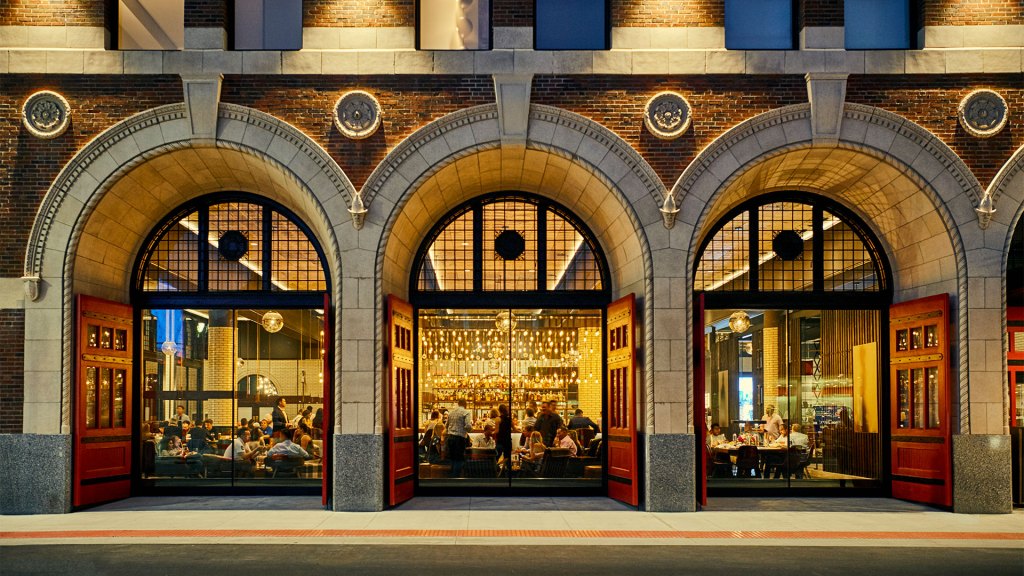
Adaptive reuse is a sustainable alternative for ground-up construction. In Detroit, Michael envisions vacant buildings as creative propositions and opportunities for architects to create meaning. A stellar example is the McIntosh Poris redesign of the Detroit Fire Department Headquarters into the award-winning Foundation Hotel. This 100-room boutique hotel sustainably reuses the building and also helps preserve its history by retaining the façade and its fire-department heritage.
“To achieve excellence in reusing a building, it is essential to apply creativity and take the project beyond what already exists, transforming it into a remarkable creation.”
Michael Poris
Financial Viability of Projects
The business of architecture was a learning curve for McIntosh Poris. High-end residential projects in suburban Detroit provided start-up capital. Michael oversaw the firm’s finances, prompting him to attend AIA conventions, workshops, and seminars.
“At its core, all businesses are the same. They are all about generating revenue and ensuring that the cash flow is positive. Architecture is no different. The business of architecture has evolved to become increasingly sophisticated. Today, architects need to be more than just designers. They need to be able to think strategically about how to finance projects, manage risks, and market their services.”
Michael Poris
Every business works on the principle of levels. It all starts with a single individual. In the beginning, the owner spends on himself and the business expenses. When a company grows and starts to hire employees, expenses increase and a new level is reached, which demands a reinvention of the system. Managing cash flow becomes more challenging. Michael stresses that formal architectural education doesn’t place high enough emphasis on the business of the profession, even though the best lessons are learned from actual practice.

Lessons From Past Experiences
Michael highlights how working in 10 different offices during a 15-year period dating back to part-time college apprenticeships allowed him to experience a wide variety of practices. He recalls César Pelli and Morphosis Architects as two firms that taught him about the collaborative nature of the profession. At Pelli’s, everyone was given space to voice their ideas and opinions about designs and processes. Outside voices are invaluable—especially the clients’. Michael advises young leaders to pull away from the computer screen and work on listening skills, collaborative communications, and face-to-face networking.
"It is imperative that everyone involved in a project, from the clients to the contractors to the city itself, be given a seat at the table. We must all stay humble and listen to each other's ideas if we want to produce a successful outcome. It will create all the difference."
Michael Poris
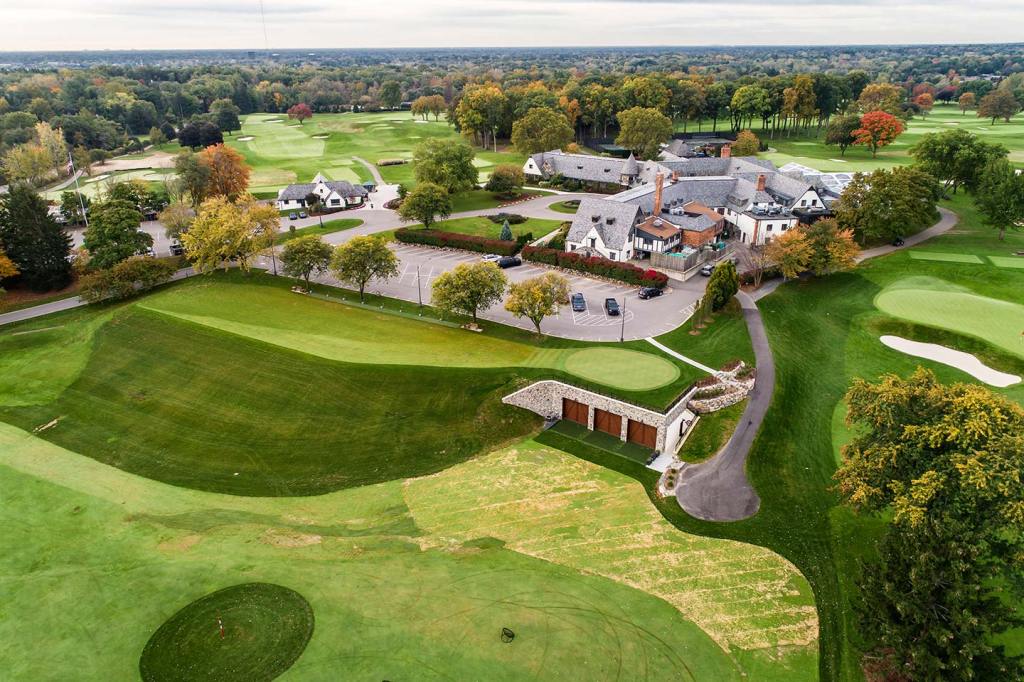
The founders of McIntosh Poris Architects’ passion contributed to Detroit’s renaissance by reviving interest in the city’s rich architectural history. This long-term vision, which involved substantial civic volunteerism, presented some financial challenges in the firm’s early years. McIntosh Poris’s persistent preservation efforts resulted in increased work for the firm. The initial mission—to transform Detroit into a thriving, more livable city—continues to be realised. In recent years, McIntosh Poris Architects’ expertise on adaptive reuse and market-responsive design expanded on a national level. It includes extensive research on modular construction as a possible solution for affordable multifamily housing.
Michael Poris’s journey exemplifies the transformative power of architectural vision and steadfast dedication to community revitalisation. Through McIntosh Poris Architects, he has not only restored Detroit’s architectural heritage but also reshaped its urban landscape, notably by reviving automotive factories as mixed-use multifamily housing communities. His commitment to preservation projects underscores the profound impact architects can have on the cultural and social fabric of a city. From advocating for historic buildings to pioneering adaptive reuse architecture, Michael’s legacy reflects a deep-seated belief in the intrinsic value of thoughtful architecture and the importance of sustainable urban development. As Detroit continues to evolve, Michael’s vision serves as a beacon of inspiration for architects worldwide, demonstrating the enduring relevance of architecture in shaping vibrant, resilient communities.