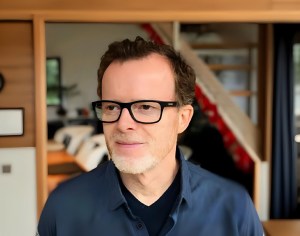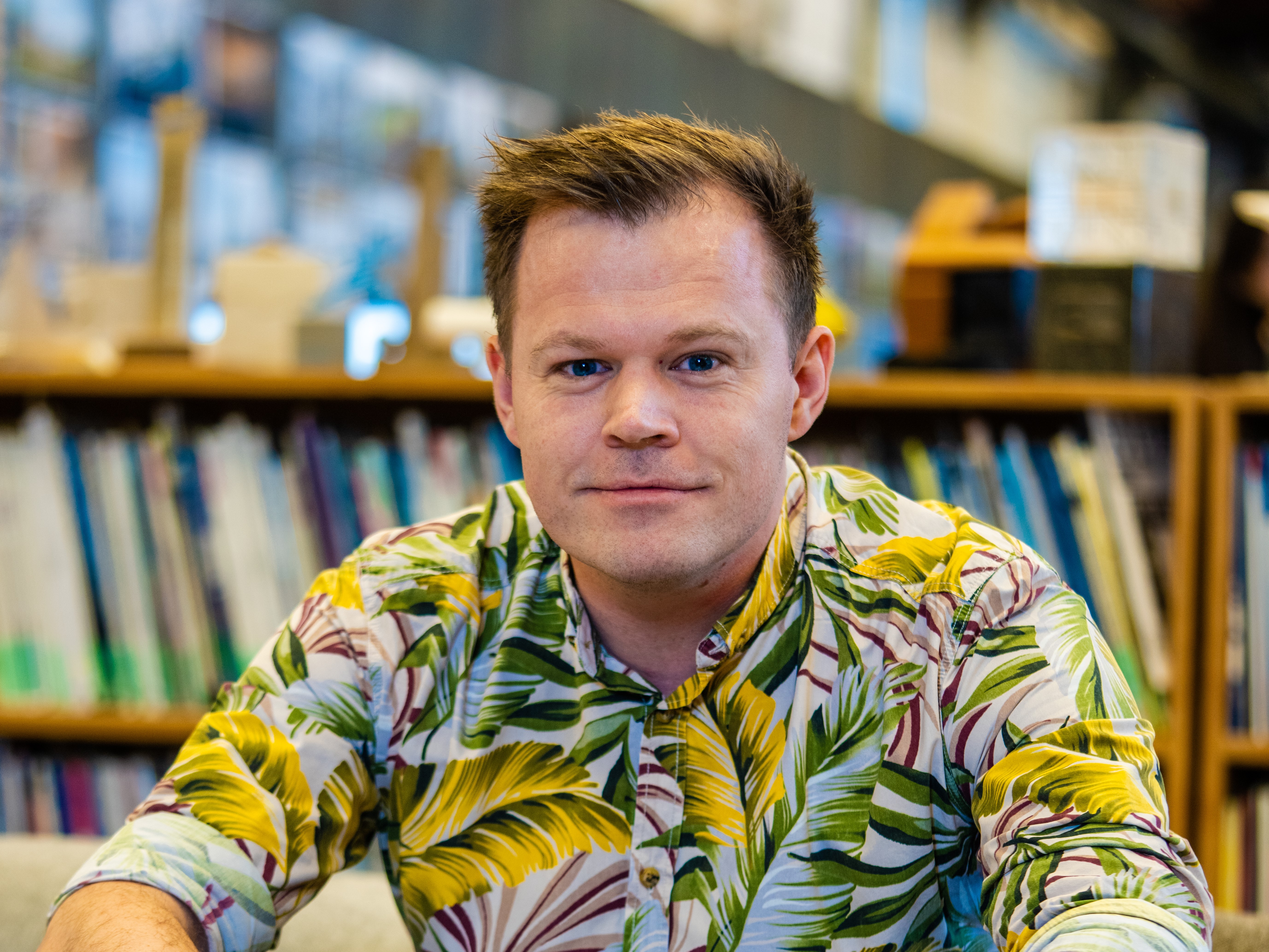
Jens Majdal Kaarsholm, the Director of Design Technology at BIG (Bjarke Ingels Group), brings a wealth of expertise and a forward-thinking approach to the realm of architecture and technology. Rejoining BIG in 2018 as the BIM Manager for the Copenhagen office, Jens has since expanded his oversight to include Design Technology and all the teams that fall under the umbrella. Initially, his primary mission was to guide the transition to the BIM software Revit, a task he had previously helped execute on a larger scale at Foster and Partners in London.
With a career marked by significant roles and achievements, including his work on the 220,000 m² Oceanwide Center in San Francisco, Jens has demonstrated a consistent ability to blend technology with architectural creativity. His leadership in implementing BIM strategies ensures that architects retain as much creative freedom as possible while embracing cutting-edge digital tools, thus driving innovative solutions to complex design challenges.
Jens Kaarsholm’s journey into architecture and construction is a fascinating tale of serendipity and determination. Not an architect by profession, Jens hails from Denmark, where his background was as a constructing architect—a profession that blends elements of engineering and architecture. Unlike traditional architects, constructing architects undergo a shorter, more technically focused education.
Interestingly, Jens Kaarsholm’s journey into this field was somewhat random. Initially, he aspired to be a game designer, film visualizer, or 3D artist. However, he felt his hand-drawing skills, particularly in character design, were not strong enough. Moreover, the education required for those fields in Denmark was prohibitively expensive and not funded by the government during that time. Having grown up playing various computer games since the early '90s, and many of the early 3D games, Jens's interest always involved a 3D component, hence he spent a large portion of his time with tools like 3ds Max, Hammer etc.
Around 2006 or 2007, Jens met someone who mentioned that the construction sector was beginning to adopt 3D technology increasingly, specifically with Building Information Modeling (BIM). This piqued his interest, as it seemed like an opportunity to work in 3D, but within the context of buildings rather than movies or computer games. This revelation marked his entry into architecture and construction, and he maintained a strong focus on 3D and later BIM as his primary motivation.
Jens Kaarsholm never initially intended to work at renowned global practices like BIG or Foster + Partners as his initial long-term career goal was to become a BIM manager at one of the bigger Danish architectural firms. Surprisingly, he became the global BIM Operations Manager at Foster + Partners before turning 30, a surreal development that was not part of his original plan.
During his studies, Jens interned at BIG and always knew he wanted to return. He was drawn to their "Yes is More" mantra and the positive, can-do attitude toward overcoming challenges. After spending a few years in London, he returned to Copenhagen, partly due to meeting someone special, and this prompted him to aim for a position at BIG again.
Interestingly, Jens had discussions with the firm about a potential role a year before he actually joined, but they couldn't agree on terms at that time. Despite the initial setbacks, he eventually found his way back. Now, after almost ten years with global practices, Jens reflects on how quickly time has passed and how unexpected his career trajectory has been.
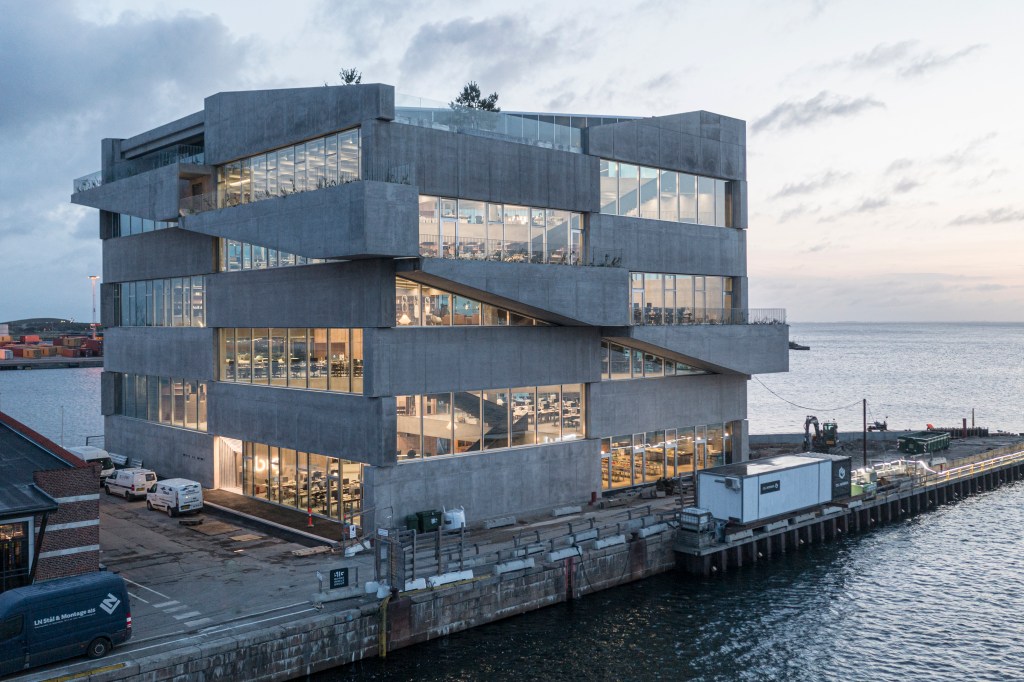
Comparative Insights on Foster + Partners and BIG
Jens highlights the similarities and differences between working at Foster + Partners and BIG. At Foster + Partners, the practice is well-established, innovative, and highly regarded for its research and development. However, it is also a very corporate company with a steep structure. This often necessitates seeking permissions for various tasks, making it a more bureaucratic environment.
In contrast, BIG operates with a flatter organisational structure, offering more flexibility and less need for hierarchical approval. This allows for quicker decision-making and execution of ideas. Although some at the firm still view the company as somewhat of a startup, it has also increasingly become more corporate over the years.
From a design and technology standpoint, there are notable similarities between the two firms. Both use software like Rhino and Revit extensively. Jens Kaarsholm acknowledges that he drew inspiration from his experiences at Foster + Partners and brought similar tools and practices to BIG. At Foster + Partners, he was part of the early team that implemented BIM and helped the transition from traditional 2D MicroStation to more 3D/BIM-based workflows in Autodesk Revit, and the ecosystem of tools that come with that.
The transition at BIG, however, involved moving away from ArchiCAD, which they had been experimenting with for a few years, to Revit. This shift was primarily on the Copenhagen side, as BIG’s New York department was already proficient in Revit. Jens notes that BIG had a more 3D-oriented approach, less entrenched in traditional 2D workflows compared to some of the senior architects at Foster + Partners at the time. This difference made it somewhat easier and smoother to adapt the design technology at BIG.


Transitioning from ArchiCAD to Revit: Strategic Overhaul at BIG
Jens Kaarsholm explains the transition from using ArchiCAD to Revit in their Copenhagen office. Initially, after using Revit, the team was persuaded to switch to ArchiCAD, which they used for three to four years. However, they encountered several issues with ArchiCAD. Kaarsholm believes that the debate between ArchiCAD and Revit is not crucial, as they are almost equally old and both tools have their strengths and weaknesses. The primary issue was related to recruitment and the natural preference for Revit in the U.S., where the New York team, led by Jan Leenknegt, was excelling with Revit.
Copenhagen’s struggles with ArchiCAD persisted despite initial promises that it would solve their problems. After three years of ongoing issues, the decision was made to revert to Revit to achieve a more unified global alignment of tools. Kaarsholm, along with his colleague Søren Mortensen, was tasked with leading this transition. Although the process was generally straightforward, it required making some bold decisions. One notable challenge involved a project that shared a car park with neighbouring projects. Faced with the risk of not having any ArchiCAD skills left upon the restart of the project, they decided to scrap the current work and redo the entire project in Revit right after the submission of the Design Development phase.
This decision, though difficult, was necessary for the firm's long-term efficiency. Kaarsholm recalls delivering the news to the project team, who had just submitted a full design development package. Despite his initial nervousness, the team responded positively, embodying BIG’s "Yes is More" attitude. They accepted the challenge without complaints, which Kaarsholm found remarkable.
The transition required significant reconfiguration and upskilling. Some team members, especially hardcore ArchiCAD experts, left the firm, which was unfortunate but necessary for technological alignment. While it was difficult to lose valued colleagues, the change was essential for the firm's progress.
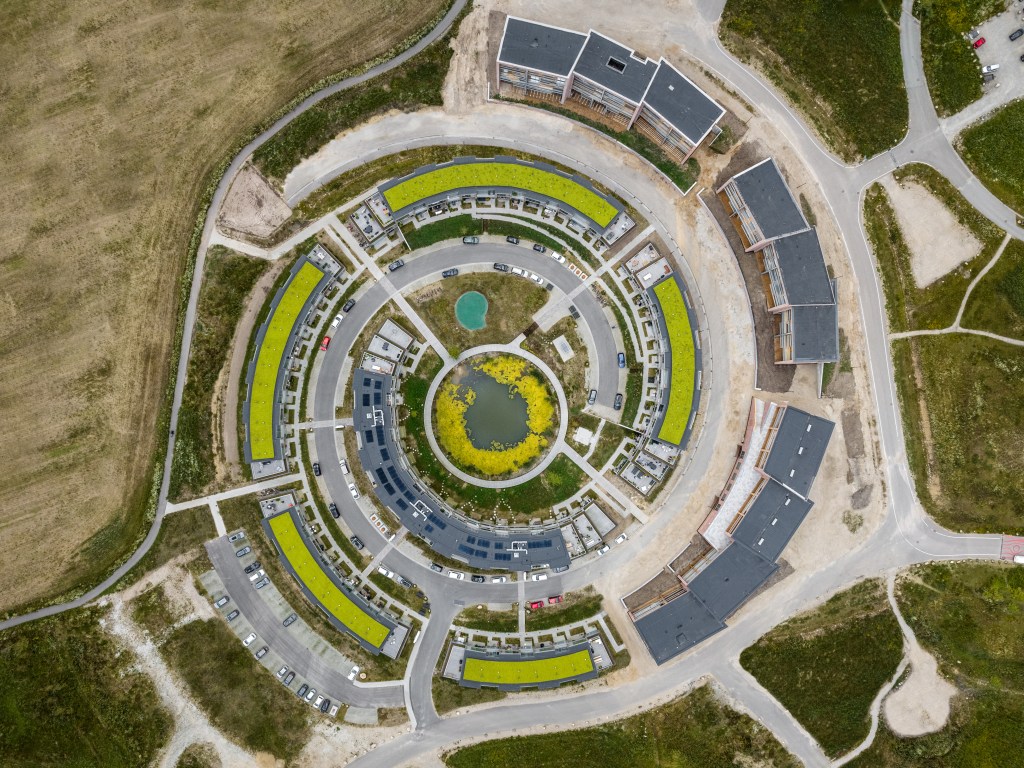
Jens points to the Dymak HQ project in Denmark as a prime example of the power of an integrated design approach. At BIG, they advocate for this approach, often referred to internally as the LEAPP approach, encompassing Landscape, Engineering, Architecture, Planning, and Products. Both the Dymak HQ project and their new headquarters in Nordhavn, Copenhagen, exemplify the benefits of bringing together specialist knowledge under one roof, showcasing how such collaboration can lead to innovative solutions.

Evolution and Challenges of BIM
Jens Kaarsholm of BIG reflects on the evolution of Building Information Modeling (BIM) in the architecture industry. When he began his studies, BIM was considered an emerging technology rather than the norm. By the time he graduated in 2012, Denmark had already mandated BIM in public projects since 2007, making it one of the first countries in the world to do so. Consequently, Danish firms were ahead in adopting BIM, while internationally, it was not as widespread.
He notes that even today, some countries are just beginning their BIM journey. However, in most of Europe, the US, the Middle East and certain parts of Asia, BIM is becoming more standard practice. Despite its growing adoption, the increased bureaucracy associated with BIM is a significant issue. Different countries have various requirements, standards, and paperwork, complicating the process. This added complexity combined with often shorter timelines, creates a challenging situation that Kaarsholm describes as a "dark spiral."
Addressing bureaucratic challenges while acknowledging change is difficult. Kaarsholm uses every opportunity to voice his concerns and raise awareness about the need for a more pragmatic approach to BIM and the associated requirements. Looking to the future, he anticipates more cloud-based approaches for managing BIM data, which could improve interoperability between tools and workflows. While the impact of AI on BIM remains uncertain, he believes the fundamental principles of BIM will endure.
Jens reflects on the evolving trends in the industry over the past decade, noting a significant shift towards new norms compared to ten years ago. However, he acknowledges that despite progress, challenges persist, particularly concerning the tendency to overcomplicate processes, especially within BIM. Jens expresses a desire for a more pragmatic approach in addressing these complexities. He anticipates a future increasingly reliant on cloud-based technologies, with a greater emphasis on 3D modelling over traditional 2D methods. Despite these advancements, Jens remains cautious about the concept of a "drawingless" future, expressing reservations about its feasibility at present.
Maintaining equilibrium between technical precision and creative expression poses a significant challenge, particularly within structured systems such as BIM. In navigating this delicate balance, individuals encounter complexities inherent in their current BIM offerings, which often constrain creative liberties. However, these systems yield numerous benefits in the long run, thus necessitating a nuanced approach.
The struggle lies in harmonising the utilisation of tools like Rhino in initial stages, celebrated for its creative flexibility, with the transition to Revit in later phases, renowned for its technical precision. Determining the optimal moment to make this switch remains a perpetual concern.
Standards and Protocols
Jens discusses the approach taken to develop standards, protocols and guidelines to ensure their adoption across various offices. Emphasising the importance of simplicity, Jens highlights the efforts made to streamline complex concepts into more manageable components. He credits Søren Mortensen, the Technical BIM Manager at BIG, for his invaluable contribution to this endeavour. Both Jens and Søren began their journey at BIG around the same time, collaborating to facilitate the transition from ArchiCAD to Revit. Søren's role in overseeing templates and standards from the outset has been instrumental in maintaining consistency and efficiency in this regard. "We both agreed to this 'Keep it Simple' approach from day one, and it's something we still keep reminding ourselves about. So we don't overcomplicate things" says Jens.

Balancing Innovation and Tradition: Future of Drawings and 3D Models in Construction
Jens Kaarsholm discusses the industry's shift towards producing fewer traditional drawings and relying more on 3D models directly for construction. He acknowledges that many companies are moving in this direction and predicts this trend will continue. However, he remains sceptical about the feasibility of entirely eliminating drawings. Kaarsholm believes there will always be a need for detailed drawings, particularly for specific project elements.
He points out that many projects touted as "drawing-less" still involve a significant number of drawings, particularly for detailed elements like facades. The claim of being completely drawing-less is often overstated.
Looking ahead, Kaarsholm envisions a future where AI plays a significant role in automating mundane documentation tasks, such as dimensioning, tagging, and specifications. He hopes that such automation will reduce the time spent on these tasks over the next decade, though he acknowledges the uncertainty of these developments.


Clarity and Practicality in Technical Training
Jens Kaarsholm of BIG emphasises the importance of keeping guidelines, templates, and standards lightweight, pragmatic, and straightforward. When dealing with highly technical topics, he believes in presenting information in a way that doesn't assume the audience is as technically proficient as the presenter.
He advocates for using plain language to explain concepts, avoiding an overuse of acronyms and jargon that can easily confuse readers. By breaking down information into manageable chunks, Kaarsholm ensures that people are not overwhelmed and can digest the material more effectively. This approach is particularly important in training, where he prefers in-house training sessions over external ones, aligning training with the moment people need it most.
For instance, instead of sending someone on a comprehensive three-day Revit course, Kaarsholm suggests providing training in smaller, more relevant sessions as the need arises. This method helps reinforce learning by applying it immediately to practical tasks, enhancing retention and understanding.
Overall, the focus is on clarity, accessibility, and timing, ensuring that everyone, regardless of their technical background, can grasp and implement guidelines effectively. This approach not only improves comprehension but also facilitates smoother workflows and better adherence to standards across the team.
A few weeks ahead of when they actually need to use Revit or when they will start on a certain project, they will surely have forgotten half of it, if not two-thirds of it, or more. It's really about making sure that people are taught what they need to know right before they actually have to apply it. This approach is something BIG has been trying to implement.
Additionally, over the last couple of years, there has been a focus on global alignment around knowledge sharing. Jens Kaarsholm encourages making knowledge easily available to teams. To achieve this, BIG uses Notion, where they place a lot of their knowledge, guidelines, templates, and other resources for the wider team to use and learn from. This is integrated into their custom toolbox and scripts within Rhino and Revit, allowing the knowledge base to be accessible with one click.
The idea is to make information readily available to everyone. Instead of having to browse through an intranet or a folder system, there is a button at the top of the toolbar that takes users directly to the knowledge base of the specific discipline they need. This setup includes links to external knowledge bases like Revit Pure, as well as direct links to drawing standards and other resources. Essentially, it creates a portal within Revit and Rhino to access documents, tools, and training materials.
While there's always a need for ongoing training and refreshing due to staff turnover, Kaarsholm believes that having a "one button" approach makes it significantly easier for people to find what they need and get started quickly. This method aims to streamline the learning process and ensure that employees have immediate access to the resources they need when they need them.

Cultivating Collaborative Teams by Integrating Technology
Jens Kaarsholm has always prioritised building positive relationships with those around him, seeking out individuals he enjoys working with, and who he considers to be intellectually superior. When recruiting, he often asks himself whether a candidate is someone he would like to share a beer with, particularly when it comes down to the final selection process.
He believes in leading with a strong people-oriented approach, striving to treat others with the same respect and kindness he expects for himself. This philosophy extends to his role as a mentor, where he aims to create an environment where everyone feels valued and appreciated.
Kaarsholm takes pride in assembling high-performing teams comprised of individuals who collaborate effectively. While technical skills are important, he finds that personal compatibility often plays a decisive role in his recruitment decisions. He values candidates with whom he can envision engaging in meaningful conversations over a beer, as he believes this indicates a good fit for team dynamics.
“I see myself very much like the “Digital Janitor”, that operates in the background, and makes sure the ship sails smoothly.”
When reflecting on his leadership journey in technology, Jens Kaarsholm admits that becoming a technology leader was never his primary goal. Nevertheless, he has consistently found himself in leadership roles since his early years, spanning from school to his professional life.
In the context of architecture and technology, particularly within BIG, Kaarsholm's contributions lie in his comprehensive understanding of design technology. He brings to the table a broad knowledge of various tools, project stages, and typical challenges, drawn from his experience working on projects in different phases around the world. Additionally, his extensive network within the industry provides him with insights into the direction of other firms and software providers, which he leverages in his role at BIG.
Despite his technical expertise, Kaarsholm places greater importance on fostering a motivated and cohesive team. He takes pride in ensuring that his team operates smoothly and enjoys their work. For him, the happiness and satisfaction of his team members outweigh any technological achievements. This emphasis on team morale reflects his overarching leadership philosophy.
“I want my teams to enjoy what they do, and feel challenged, if they don’t they won’t perform”

Counterparts and Mentors
Jens reflects on the individuals who have greatly influenced his learning journey. One standout figure is his former colleague, Radu-Ionut Boeriu a former colleague from Fosters, who imparted invaluable technical knowledge. Initially considering himself a Revit Jedi, Jens quickly realised his limitations when compared to Radu's expertise, likening himself to a Padavan in comparison. Additionally, Jens highlights his fortunate connections with individuals like Michael Drobnik from Herzog and Alfonso Monedero from Heatherwick, with whom he has engaged in insightful idea exchanges over the years.
“I have built up a really strong connection and friendship with my counterpart in New York, our BIM Director Jan Leenknegt, who also served as a mentor for me in the beginning after returning to BIG, and still does in many ways. Jan really laid the foundation for BIM at BIG, which enabled us to build upon it” adds Jens.
Global Collaboration
Jens Kaarsholm finds the question about collaboration to be quite challenging, having pondered it extensively upon encountering it. He acknowledges a common issue faced by many global firms, including BIG, which operates across various regions worldwide.
The challenge arises from encountering new clients with unique requirements and collaborating with different teams for each project. While efforts are made to maintain consistent collaborations with certain clients or partners, the reality is that sometimes external factors dictate the teams involved. In such scenarios, the key is to make the most out of the situation and strive for effective collaboration.
“It’s almost a new setup every time, and the bureaucracy is only increasing, as more and more countries are adopting BIM. For some reason, no one wants to copy what the neighbour did”
Kaarsholm emphasises that there is no one-size-fits-all answer to the question, as collaboration dynamics vary greatly depending on the geographical location of the project. Factors such as the tools used, collaboration platforms, and the extent of involvement in the project lifecycle differ based on the region. For instance, in some cases, BIG may act as the design architect throughout all project phases, while in others, they may transition to a design guardian role early on and hand over to local entities for further development. The specifics of collaboration setups depend on the project's location and context.
Impact and Perception of AI
Jens Kaarsholm acknowledged the prevalent fascination with AI, recognising it as the current hype in the industry. While he acknowledged its significance, he also hinted at a degree of overhype surrounding it. Comparing it to past trends like the metaverse, which did not fully materialise as initially envisioned, he emphasised the unique impact of AI across various sectors, including architecture.
Expressing his perspective on AI's potential to disrupt certain professions, Jens remained optimistic about its role in architecture. He rejected doomsday scenarios of AI replacing architects and engineers entirely, emphasising its utility as a supportive tool rather than a replacement for human creativity and control. He emphasised the importance of finding a balance in integrating AI tools effectively, acknowledging the challenges posed by the rapid evolution of AI technology and the need to manage resources effectively.
In ensuring the adoption of new tools and subscriptions within the office, there's a vital need for transparency and accessibility to ensure everyone is aware of their availability. Moreover, considering the legal aspects is equally crucial due to the plethora of terms and conditions accompanying these tools. Failure to thoroughly comprehend these legalities may lead to unwitting breaches of agreements with clients.
Jens Kaarsholm highlights a scenario where designers, unaware of the legal implications, utilised free AI tools without first reviewing the terms and conditions. Such oversight could result in unintended ownership disputes over images or reference materials uploaded to these platforms. Consequently, legal considerations are paramount, often overlooked by designers focused solely on creative freedom.
“Although I do think there is a certain hype level associated with AI that will taper off, similar to the Metaverse etc. those two cannot be compared! AI is a completely different beast, which will impact so many things in our world, and already does.”
The challenge lies in striking a balance between creative liberty and adherence to legal constraints. While the team at BIG acknowledges the importance of embracing new technologies, they're cautious not to overlook the legal implications. Despite not yet employing internal AI developers, they remain vigilant, ensuring they're not left behind in the rapidly evolving technological landscape.
Regarding AI, there's a growing recognition of its non-sexy components, particularly in data-related tasks. While many in architecture associate AI with creative endeavours, its potential in data analysis simulation and classification holds significant promise. Therefore, he advocates for more attention to be directed towards these less glamorous but equally crucial aspects of AI technology.
Future Goals
In discussing future goals, Jens reflects on his long-term aspirations at BIG and his strategy for attaining them. He acknowledges his habit of setting goals for himself and clarifies that this isn't intended to come across as arrogant. Upon graduating in 2012, he established one primary goal and two subsidiary goals. His main ambition was to eventually serve as the BIM Manager for a prominent Danish firm. While he didn't set specific timelines initially, his appointment as the Global BIM Operations Manager at Fosters before the age of 30 exceeded his expectations completely. Additionally, he aimed to establish himself as a respected figure in the BIM industry and enhance his skills as a public speaker at events and conferences.
With achievements like featuring on the front cover of the AEC Magazine and delivering top-rated presentations at BiLT Europe and Autodesk University, Jens feels he has fulfilled these objectives. Currently contemplating his next set of goals, he expresses uncertainty but holds a strong desire to pursue professional gardening before retirement.
Regarding BIG, Jens remains focused on fostering robust global alignment concerning technology and ensuring the firm achieves its desired position in Design Technology.
Jens says "We have come a long way, but we are not done yet, and the technology landscape constantly changes, which is what makes it so interesting."
Jens Kaarsholm's journey embodies the spirit of adaptability and determination in the face of unforeseen challenges. His trajectory from aspiring game designer to global BIM leader is a testament to the transformative power of seizing opportunities and embracing change. As he looks to the future, Jens's reflections offer valuable insights into the evolving landscape of design technology and the critical balance between innovation, collaboration, and legal considerations. His experiences serve as inspiration for professionals navigating career trajectories in architecture and construction.