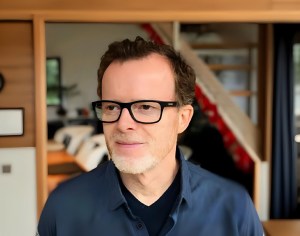
Evy Slabbinck, currently serving as Managing Director at Design-to-Production Zurich, embodies a dynamic fusion of leadership, technical expertise, and academic rigor. In her role, she not only oversees the day-to-day management of the firm but also spearheads international sales, project development, and timber consultancy, collectively with the team shaping the company’s strategic direction in the competitive field of architectural engineering.
Simultaneously, Slabbinck is advancing her academic credentials by pursuing a Master of Business Administration with a focus on leadership and sustainability at the University of Cumbria in collaboration with Robert Kennedy College. This academic endeavor complements her extensive professional background, which includes a significant period as a professional freelancer, during which she contributed to various international architectural offices.
Slabbinck’s academic foundation is robust, with a Master of Science in Architectural Engineering from the Vrije Universiteit Brussel and Université Libre de Bruxelles, obtained in 2014, followed by a second Master of Science from the University of Stuttgart in 2015. Her early career was shaped by roles at prestigious firms such as Bollinger + Grohmann and Teuffel Engineering Consultancy, where she specialized as a membrane engineer and computational specialist, contributing to several high-profile international projects.
Her expertise lies at the intersection of structural and parametric design, form-finding, timber construction, and bending-active tensile structures. This niche focus has led to her work being published and presented at esteemed international conferences and in leading journals, including IASS and IABSE. Slabbinck began her research journey under the supervision of Prof. Dr.-Ing. Jan Knippers in September 2015, as part of the Innochain PhD research network. Her research has particularly concentrated on exploring multiple states of equilibrium for bending-active tensile structures, in collaboration with notable industry partners such as Foster + Partners and McNeel Europe.
Evy Slabbinck's career trajectory reflects a commitment to advancing the field of architectural engineering through both practical application and academic research. Her work continues to influence contemporary architectural practices, particularly in the innovative use of materials and structural systems, positioning her as a key figure in the ongoing discourse on sustainable and parametric design in architecture.


Navigating Innovation and Leadership in Architectural Engineering: The Journey of Evy Slabbinck
Evy Slabbinck, a distinguished structural engineer and architect, has carved a notable path in the field of architectural engineering, with a particular emphasis on integrated design technology and timber construction. Originally from Belgium, Slabbinck’s academic and professional journey led her to Germany, where she pursued a specialized master’s program focusing on advanced design technologies, including robotic fabrication and programming—areas that represent the cutting edge of architectural construction.
Her academic journey took a significant turn when she was invited to pursue a PhD as part of a European Horizon 2020 program. This initiative aimed to bridge the gap between industry and academia by fostering collaboration among PhD students and leading industry partners across Europe. Slabbinck’s involvement in this program connected her with prominent firms such as Foster and Partners and Rhino McNeel, while Design-to-Production, a Zurich-based firm, played a more peripheral role during this time. However, following the completion of her PhD, she approached the CEO of Design-to-Production with a pointed question about the absence of women in the company. His response—a prompt invitation to apply—led to her swift transition into the role of a Timber Consultant within the company.
After several years as a Timber Consultant, Slabbinck found herself stepping up as Managing Director in the wake of an economic downturn that saw significant changes in the company’s leadership. In this role, she has navigated the complexities of business development, daily operations, and financial management, while maintaining a strong focus on the company’s core competencies in timber construction and innovative architectural solutions.

A Passion for Architectural Engineering
Slabbinck’s journey into architectural engineering was not driven by a lifelong dream but rather by a pragmatic shift during her secondary education. Initially aspiring to be a neurosurgeon, she found that biology was not her strongest subject, leading her to explore other fields. Architectural engineering emerged as a suitable alternative, and although her early experiences in the field were not marked by passion, her interest was piqued during her studies in Brussels, where she was introduced to lightweight structures, special shapes, and parametric modelling tools like Grasshopper. This exposure to the creative possibilities of architectural engineering, combined with a growing interest in sustainability, solidified her commitment to the field.
Slabbinck's work is characterized by a dual focus on innovative design and sustainable practices. Her expertise in creating complex structural solutions, particularly in timber construction, is complemented by a deep understanding of the environmental implications of her work. This balance of creativity and responsibility is a hallmark of her approach, allowing her to push the boundaries of what is possible in architectural design while minimizing material usage and maximizing efficiency.


Innovation, Technology, and Sustainability in Timber Construction
As Managing Director at Design-to-Production, Slabbinck plays a crucial role in shaping the firm’s growth strategy, particularly in the context of timber construction. Her expertise in this area is not only technical but also strategic, as she is involved early in the project development process. This early involvement allows her to influence key decisions regarding structural concepts, material selection, fabrication methods, and assembly processes. The projects she oversees are often unique and come with budgets that allow for a significant degree of innovation, enabling the exploration of new strategies and the development of custom solutions that push the boundaries of timber construction.
Slabbinck's recent work in Stockholm exemplifies her approach. The Wisdome Stockholm project involved developing a new structural concept using standard materials, creatively bent and assembled in innovative ways. This approach underscores the central role of both innovation and sustainability in her work—not as mere buzzwords, but as core principles that guide the design and execution of every project. This project marks a pivotal moment in Evy's research and professional journey, seamlessly uniting her extensive studies with her current work. It stands as the first project to employ bending-active elements on such an impressive scale, showcasing a groundbreaking application of innovative design principles.


Leadership in a Complex, International Context
Managing international projects adds another layer of complexity to Slabbinck’s role. Her work spans diverse cultural and regulatory environments, requiring her to navigate varying technical, cultural, and social factors. In these contexts, establishing trust and fostering collaboration among local teams and consultants is crucial. Slabbinck has encountered challenges where local contractors or installers are hesitant to adopt new methods or technologies, particularly when they are unfamiliar or untested in their regions. In such cases, her approach is one of adaptation and respect, balancing the need for innovation with the realities of local industry practices.
Slabbinck’s leadership style is characterised by servant leadership, shaped by her unique position within the company as the only woman and someone who occupies a middle ground between the younger and older members of the team. This approach, combined with her deep technical expertise and strategic insight, allows her to effectively manage the dual responsibilities of overseeing daily operations and driving the company’s innovative agenda. In her role, she views herself not as a traditional leader, but as a facilitator—someone who ensures the smooth operation of the company by addressing the needs of her team, fostering motivation, and guiding everyone towards a common goal. Slabbinck's approach is deeply rooted in a commitment to maintaining a harmonious and effective workplace, where every individual feels supported and valued.


The Role of Women in the Construction Industry
Slabbinck is keenly aware of the need for greater gender diversity in the construction industry, which remains heavily male-dominated. She believes that a more balanced industry—one that includes the perspectives and skills of women—would lead to more innovative and effective solutions. Slabbinck advocates for this change not only through her leadership but also by raising awareness about the importance of empathy and collaboration in the field. She emphasizes that diversity in the industry could significantly improve the way construction projects are managed and executed, ultimately leading to better outcomes.
Advocating for Sustainable Practices
At Design-to-Production Zurich, Slabbinck and her team focus on creating sustainable and innovative solutions in timber construction. While they do not strictly judge the sustainability practices of their partners, they are deeply committed to ensuring that the buildings they work on meet high standards of sustainability. This includes using local materials and fabricators whenever possible, as well as exploring innovative ways to integrate sustainable practices into complex projects. Slabbinck acknowledges the challenges of working on high-profile, complex buildings that may not always be the most sustainable, but she sees these projects as opportunities to demonstrate what can be achieved with sustainable materials and innovative design.

The Evolving Role of Architectural Engineers
Looking ahead, Slabbinck is cautious about the future of use of timber within construction, particularly in the context of the growing focus on sustainability. While she recognizes the potential of timber as a sustainable building material, she is also aware of the risks associated with its overuse or improper application. Slabbinck emphasizes the importance of selecting the right materials for the right applications and cautions against the growing trend of using timber in projects where it may not be the most efficient or suitable choice. He particularly highlights the risks of designing buildings with limited knowledge of timber, as this can lead to issues that ultimately cast the material in a negative light. Timber is fundamentally different from steel and concrete, requiring specialized knowledge, experience, and meticulous decision-making to ensure its successful and sustainable use.
Slabbinck also highlights the need for more research in academic settings and practical solutions that address the current challenges in the construction industry, rather than focusing solely on futuristic technologies. She believes that academia research must strike a balance between innovation and practicality, ensuring that new developments are not only cutting-edge but also beneficial for the present-day construction environment.
A Legacy of Advocacy and Awareness
As she continues her career, Slabbinck hopes to leave a lasting legacy in the field of architectural engineering and sustainability. She is particularly passionate about encouraging more women to enter the industry, recognizing the value they bring to the field. Currently, she is completing an MBA focused on women leadership in sustainable construction companies in Germany, Austria, and Switzerland, which has allowed her to explore the challenges and successes of women leaders in the industry. Slabbinck aspires to use her insights and experiences to inspire young women to pursue careers in engineering and construction, contributing to a more diverse and balanced industry.
Future Directions for Design-to-Production Zurich
As for the future of Design-to-Production Zurich, Slabbinck and her team are focused on both growth and knowledge-sharing. While they aim to expand their impact through digital planning processes and software development, they are also committed to sharing their expertise with the broader industry. This includes running workshops for architects and students to build confidence in timber construction, as well as exploring ways to make their extensive knowledge more accessible to others.
Although the company’s future plans are still taking shape, Slabbinck is determined to continue pushing the industry forward, while also ensuring that the lessons learned and innovations developed at Design-to-Production Zurich are shared widely. This dual focus on innovation and collaboration is central to her vision for the future, as she seeks to create a more sustainable and inclusive construction industry.