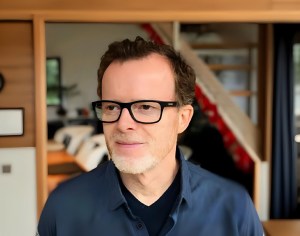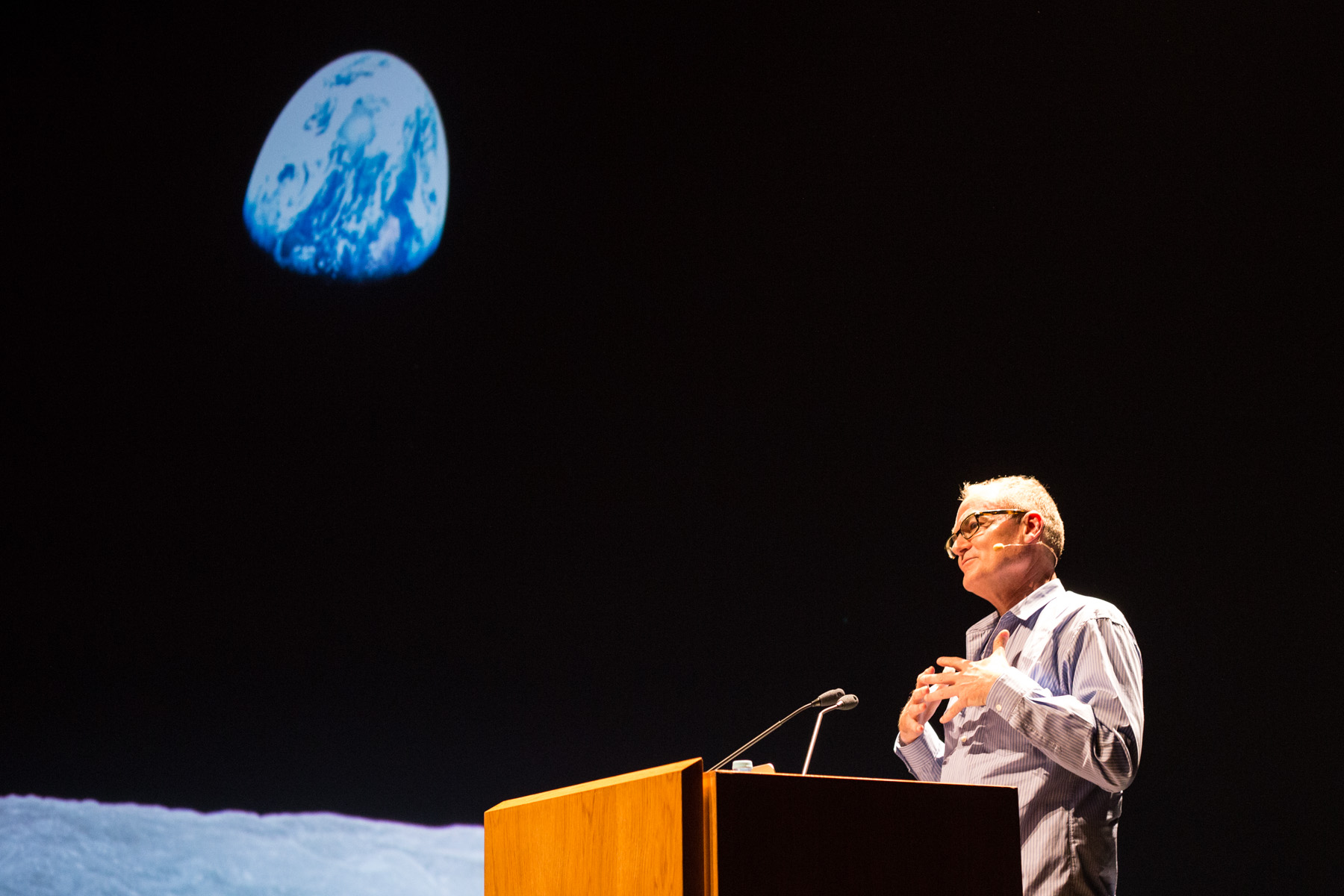
Michael Morris is a visionary architect whose career spans over 30 years on Earth 18 of which are at the forefront of architecture for outer space. Based in New York City, as the Co-founding Partner of SEArch+ (Space Exploration Architecture LLC), with Yoshiko Sato and Christina Ciardullo, he leads a pioneering firm dedicated to developing innovative and sustainable architectures for human life and exploration in space. Also Co-Founder and Principal of Morris Sato Studio with his late wife and partner Yoshiko Sato in 1996, Michael's multidisciplinary firm is renowned for its diverse portfolio encompassing infrastructure, public, institutional, residential, and museum buildings, as well as public art collaborations, installations and museum exhibitions. As an Adjunct Professor at Parsons School of Design and Pratt Institute in parallel to his private practices, Michael has continuously shared his expertise, mentoring aspiring architecture and design students and graduates, sharing his insatiable curiosity and passion for architecture, science, and art to enrich life on Earth and beyond.
Taking his late partner's vision for space architecture to new heights, in 2012 Michael assumed leadership of Sato’s 2006 Space Architecture Studio and Research Lab (SEARC) at Columbia University and in 2015 he became a NASA Research Fellow leading 4 years of Exploration (X-HAB) Innovation Habitat Studio's at Pratt Institute's School of Architecture. His extensive teaching and research have led to multiple NASA award-winning projects, publications, and international exhibitions that have showcased SEArch+ innovative achievements and their potential and feasibility for the realisation of space architecture.

Entrepreneurial Potential, Challenges and Aspirations of a Design Visionary
Born in London to Irish parents who immigrated to the United States, Michael Morris's life took him on a transcontinental odyssey that melded his urban European mindset with New York education and life. Raised amidst the influences of his father's military service in the US Air Force culminating at the Pentagon, he grew up between England, Germany, the US and Ireland before eventually settling in New York, a city that resonated deeply with his worldview. Somewhat unexpectedly, during the recent lockdown years of the COVID-19 pandemic, Michael rediscovered the solace and beauty of his familial home in Ireland. At his Atlantic Ocean home, he found not only respite on the Irish Coastline but also a strategic relocation advantage for his expanding testbed opportunities in aerospace architecture and design.
Michael's interest in aerospace architecture was sparked when he was a Cooper Union and Parsons School of Design student by inspirational figures like Michael Khalil, whose visionary designs for conceptual habitation of residential modules on space stations captured Morris's imagination. Fueled by a childhood surrounded by aeronautic technology, steeped in the awe of Apollo missions that his parents took him to witness launches of, and nurtured by the avant-garde spirit and space aesthetics of figures like David Bowie, Michael set his sights on merging his architectural prowess with his passion for space exploration.
The trajectory of Michael’s career took a poignant turn when he met his classmate Yoshiko Sato, who shared his fascination for space and ignited a shared ambition to design for the cosmos. Together, they embarked on a journey that would not only shape their personal lives but also influence the trajectory of aerospace architecture education. Following Yoshiko's passing in 2012, he was invited to Columbia University to continue her pioneering space architecture program, carrying forward not only her legacy of innovation and mentorship of her former students but his own as well.
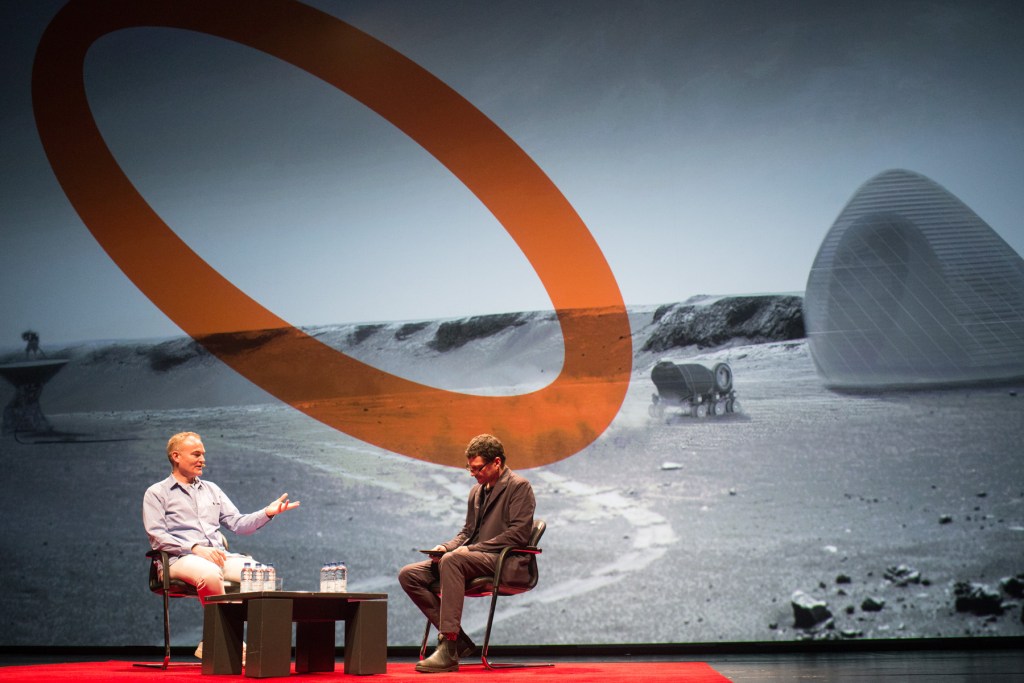
In 2015, Morris led his SEArch+ team and Clouds AO to achieve the monumental feat of winning over Foster + Partners and ESA ( European Space Agency) in the NASA Centennial Challenge competition with their groundbreaking design for a 3D-printed habitat on Mars, aptly named the Mars Ice House. This initial triumph marked the culmination of years of research, collaboration, and advocacy for space-centric architectural design.
With his feet firmly planted in academia and professional practice, Michael vividly describes an evolving aerospace landscape as an incredibly dynamic industry. From teaching to architectural endeavours and space-centric projects, there are diverse paths available to those seeking to carve their niche in this expanding sector. Beyond his own accomplishments, Michael takes pride in the legacy of mentorship he and Sato created by fostering and nurturing individuals who now hold prominent positions within architecture, at NASA and with private aerospace and construction technology outfits. As a creative collaborator, celebrating and acknowledging his teachers, students, mentors, and colleagues comes naturally to Michael. While acknowledging space architecture as terrestrial architecture is also full of big egos and careerist misrepresentations, he optimistically describes the aerospace arena, given all the vast complexities and expertise involved, as the profession where no one person can honestly represent sole visionary authorship. Always wishing to be part of something bigger than himself Michael is drawn towards aerospace for its generosity of spirit and views space exploration as a multi-generational project. He believes that doing so is to critically recognise and honour the lifetime contributions and sacrifices that have been made by so many unheralded collaborators.
Inspirations and Intersection of Creativity and Space
Rooted in a desire to emulate the creative lives of his inspirations and contribute to the growth of others before and after him, Michael navigates the nuanced terrain where creativity intersects with the practicalities of product development and financial viability. He reflects on the holistic approach inherent in the field, where considerations extend beyond mere aesthetics to encompass human psychology, physiology, and community dynamics. To him, the evolving landscape of space exploration presents a forum in which to examine the challenges and opportunities presented by the prospect of humanity becoming a multi-planetary species. This stresses the need for innovative thinking that transcends conventional boundaries that may conversely regenerate life on Earth.
One of Michael's key collaborators in this journey is NASA, an organisation he admires for its pioneering work spirit and forward-thinking ethos. Engaging with rocket scientists and engineers, Morris finds himself in awe of their technical expertise while recognising the unique perspective that architects bring to the table. With lateral thinking as their forte, architects like Morris excel in posing fundamental questions and reframing problems from a fresh vantage point—an invaluable asset in space exploration.
Reflecting on his career trajectory, Morris acknowledges the allure of space exploration, a passion that has fueled his creativity. While he admits to the irony of feeling hemmed in by the confines of traditional architectural practice and the construction industry on Earth, aerospace where the constraints are far greater and more exacting environs has conversely served as a springboard for his imaginative pursuits. Far from charting a linear career path, Morris's journey has been marked by creative meandering, seeking a myriad of collaborative associations, and guided by a deep-seated curiosity and a "beginner's mind" penchant for asking thought-provoking questions.
Architectural Ingenuity
Morris touches upon the inherent differences between the mindsets of engineers and architects, noting that while engineers are often focused on problem-solving, architects are natural at "problematising" and generally thrive on asking probing "outside the box" questions and envisioning new possibilities.
Recalling his early interactions with NASA, Michael reminisces about the initial scepticism faced by his late wife who was a diminutive soft-spoken yet steely Japanese architect, and he a garrulous Irishman, as they ventured into the engineering-dominated world of space exploration. Amidst perceptions of the International Space Station as merely technical and uninspired, Morris and his team found inspiration in the untapped potential of 3D printing technology. By participating in and winning numerous competitions focused on habitat design, Michael, and his collaborators address the unique challenges posed by extraterrestrial environments while pushing the boundaries of architectural innovation.
Michael shed light on the symbiotic relationship between architects and planetary scientists, whose discoveries about the conditions on Mars, the Moon, and beyond serve as catalysts for conceptual and practical design solutions. Drawing inspiration from scientific insights, he emphasises the imperative for architectural designs to not only sustain human life but also facilitate thriving in environments while addressing existential challenges for humans such as extreme radiation and isolation.
Central to Morris's narrative is the theme of risk-taking and nimbleness—a quality he attributes to smaller design firms like his own, in contrast to larger corporate entities. While acknowledging the constraints faced by corporate giants in terms of risk aversion and adherence to brand image, Morris champions the creative freedom afforded by independent design endeavours. In the competitive landscape of space exploration, Morris sees this agility as a double-edged sword—a source of both vulnerability and opportunity.
Intersection of Visionaries and Detail-Oriented Thinkers in Aerospace Innovation
Reflecting on the distinct mindsets of engineers and architects, Morris highlights the inherent role of architects as "problematises," who excel in posing questions and envisioning possibilities. The delicate interplay between visionary foresight and meticulous implementation shapes the trajectory of human exploration beyond the confines of Earth. With a seasoned eye honed by years of traversing the landscapes of both architecture and space exploration, Michael speaks of the distinct roles architects and engineers play within the tapestry of aerospace innovation.
Central to the discussion is the symbiotic relationship between visionaries and detail-oriented individuals—a dynamic exemplified in collaborations within organisations like NASA. The value of diverse perspectives in the intersection of visionary thinking with pragmatic problem-solving redundancies can yield multiple innovative solutions that propel aerospace exploration forward.
The synergy between visionary ideation and methodical implementation lies in the very essence of aerospace innovation. He understands the challenges of securing funding for projects that may not yield immediate commercial returns but emphasises the importance of visionary benefactors who recognise the intrinsic value of pushing the boundaries of space exploration as a long-term, perhaps multi-generational goal.
Michael advocates for a holistic approach to aerospace innovation—one that transcends the boundaries of ego and disciplinary silos. For example, when Michael excitedly describes a colleague's work who is building a space company to send plants into orbit so that their DNA is altered and when they return to earth are able to withstand future effects of climate change as both awe-inspiring and truly visionary.


Landscape of Space Architecture
Delving into the collaborative efforts among architectural firms and aerospace entities, Morris sheds light on the transformative projects reshaping our understanding of human habitation beyond Earth's bounds.
Industry-wide endeavours underpin space architecture, like collaborations between renowned architectural firms and visionary pioneers in the field. The groundbreaking work of architects like his SEArch+ Co-Founder and Partner - Christina Ciardullo, whose pioneering PhD research at Yale's Center for Ecosystems and Architecture probes biotech plant-based support systems that for Christina is informed by her aerospace serves as a testament and testbed for innovation in architecture. Michael has observed that despite the technological advancements, achievements, and powerhouse of the United States, the growing interest in living in space and in space architecture within European, Asian, and Middle Eastern cultural circles seem to be genuinely received with far greater public interest and enthusiasm.
Human-centric design principles can be applied in celebrating human existence within extraterrestrial habitats and Michael advocates for designs that prioritise comfort, sustainability, and cultural resonance. Technological functionality and aesthetic appeal have equal importance in integrating indigenous materials and contextual considerations into design processes.
Venturing into the realm of speculative fiction and scientific reality, Morris examines the portrayal of space exploration in pop culture. Drawing parallels between cinematic depictions and practical constraints, it is imperative to discern fact from fiction in envisioning humanity's future in space. For cautionary lessons learned from historical space missions, he cites NASA's
response to technological setbacks and the subsequent privatisation of space exploration endeavours. There is a complex interplay of technological innovation, ethical considerations, and human aspirations that define the landscape of space architecture.


The Future of Space Architecture
It is evident that space architecture stands at a pivotal juncture, poised between technological aspirations and commercial realities. The prevailing landscape has a noticeable absence of robust educational pathways and industry responsiveness. This void, Michael suggests, stems from the nascent state of technological development and the resultant uncertainty regarding profitability. Such observations prompt reflection on the need for a more conducive ecosystem— one that fosters creativity, lateral thinking, and interdisciplinary collaboration.
Drawing from personal experiences and historical contexts, Michael laments the diminishing emphasis on creative freedom within contemporary educational frameworks. He fondly recalls the liberating environment of art colleges, where unconventional ideas thrived, and where a generation of "misfits", Michael and Yoshiko included, found solace and purpose. There is now, more than ever, a need for nurturing individuality and unorthodox thinking.
Amidst discussions of educational paradigms, the conversation delves into the delicate balance between artistic vision and commercial viability. There is an inherent tension between creative pursuits and financial constraints, requesting visionary benefactors and institutional support to foster groundbreaking projects. It's a call to arms for stakeholders to embrace risk-taking and invest in the transformative potential of architectural innovation.
We need to envision a future where space architecture transcends its utilitarian role to become a symbol of human ingenuity and resilience. Michael vividly describes his vision of sustainable habitats, blending indigenous materials with the biological together with cutting-edge technology to create culturally resonant environments. Only then can architecture as an art form extend beyond terrestrial boundaries.
In discussions surrounding sustainability, climate crises, and societal change, Michael Morris reflects on so many missed opportunities and conversations that must inherently include space exploration and astrobiology as part of our ever-expanding universe. He notes the relevance of questions posed in space-related endeavours to addressing challenges here on Earth, emphasising the concept of Earth itself as a spaceship—a notion not new but framed differently throughout history, echoing the sentiments of visionaries like Buckminster Fuller. The potential for NASA's innovations may produce even greater spin-off benefits, urging for a shift towards more conceptual thinking and a broader perspective to tackle multifaceted problems effectively. This broad and holistic approach, Michael suggests, holds the key to unlocking multitudes of both terrestrial and extraterrestrial life.
Michael Morris's reflections on space architecture, entrepreneurship, and visionary innovation urge us to take immediate action. Through his journey, Morris shows us the importance of collaboration, creativity, and thinking outside the box. He challenges traditional ways of doing things and calls for next-generational academies and educational systems to support unique and less conformist ideas.
Morris envisions a future where space architecture represents human ingenuity and resilience. He sees sustainable habitats that blend local materials with advanced technology, creating cultural landmarks beyond Earth. His story inspires us to embrace the unknown, challenge norms, and pave new paths toward a brighter future. Morris reminds us that the greatest adventure lies not in the destination, but in the journey itself.