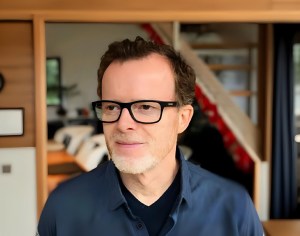
Martha Thorne’s illustrious career in architecture and urban planning has spanned from curating exhibitions to serving as Dean of the IE School of Architecture and Design , to currently serving as Senior Advisor to the Henrik F. Obel Foundation and its work in favour of people and the planet. Thorne’s journey offers invaluable lessons for leaders in the built environment sector. Her passion for urban planning ignited during her college years, where she pursued City Planning as her official degree. Her academic journey took her from undergraduate urban affairs and town and country planning studies in London to earning a master’s degree in City Planning. Upon graduating from Penn, Thorne moved to Spain, intending to stay for just two years. However, she found herself deeply immersed in the world of architecture, recognising the intricate connection between city planning and the physical structures that define urban spaces.
“I’ve always been fascinated by cities,” Thorne reflects. “Rapid urbanisation, climate change, inequality, and innovation make cities incredibly complex and vital. The physical components of a city are essential, but the true focus should always be on the people and their experiences.”
Architects and the Evolution of Cities
Thorne believes that architects have a unique ability to shape the future of cities. “Architects can bridge the gap between the physical environment and the social, economic, and political fabric of a city,” she explains.
“The key is to move beyond seeing buildings as discrete objects and instead understand their impact on the broader urban context.”
She emphasizes the importance of imagination, humanity, and data in architectural training.
“Architects can synthesise vast amounts of information, prioritise it, and propose innovative solutions for the future. This ability to connect the dots and make better spaces is invaluable, especially when addressing issues like inequality and accessibility.”
Global Perspectives and Cultural Influences
Thorne’s international experiences have profoundly shaped her perspective on architecture and design. She highlights the importance of understanding the local context, including national regulations, cultural norms, and natural conditions.
“Architecture is deeply influenced by its surroundings,” she notes. “From the topography and availability of resources to cultural perceptions and behaviours, every element plays a crucial role.”
She also touches on the impact of tourism on architecture, emphasising the need for new models that integrate tourists with local communities. “Tourism can be an agent of extraction if not managed properly. We need to find ways to balance the needs of tourists and residents to create sustainable and meaningful experiences.”
Promoting Sustainability and Resilience
As a senior advisor at the Henrik F. Obel Foundation, Thorne is passionate about promoting sustainability and resilience in architecture. The foundation’s Obel Award recognizes exemplary projects that serve both people and the planet. “The award aims to share knowledge and inspire others,” she says. “From zero carbon cement innovations to the 15-minute city concept, the goal is to support and disseminate groundbreaking ideas.”
Thorne is also involved in a teaching fellowship that bridges the gap between professional practice and academia.
“Professionals gain a wealth of knowledge through their work, but it’s not always shared with students. The fellowship allows professionals to teach and share their insights, enriching the academic community and beyond.”
Shaping Architectural Education
During her tenure as Dean of the IE School of Architecture and Design, Thorne focused on two key areas: broadening students’ perspectives and promoting gender equality. “Architecture is a diverse field with many roles,” she explains. “It’s crucial for students to be flexible and open to various career paths.”
Thorne also championed gender equality, ensuring equal representation in lecture series and hiring practices.
“The profession has been slow to recognise women’s contributions. By promoting equality and providing mentorship, we can create a more inclusive environment for future architects.”
Advocating for Diversity and Inclusion
Thorne’s commitment to diversity extends beyond her academic roles. She has served on numerous international juries and boards, including the International Archive of Women in Architecture. “I’m in a fortunate position where I can call out inequality when I see it,” she says. “Whether it’s refusing to participate in male-dominated conferences or advocating for more women in leadership roles, I’m dedicated to promoting diversity and inclusion in the profession.”
Reflections on Awards and Competitions
As the former executive director of the Pritzker Architecture Prize, Thorne has seen firsthand the challenges and rewards of architectural awards. She emphasizes the importance of forward-looking criteria that consider community impact and sustainability.
“Awards should recognise projects that push boundaries and propose new solutions,” she asserts. “It’s not about maintaining the status quo but about encouraging innovation and change.”
Thorne prefers to be on juries where she can visit projects or buildings. “Experiencing a building firsthand is invaluable,” she states. “You can’t fully grasp its impact through photographs alone. Visiting sites allows for a deeper understanding of the architecture and its context.”
She also highlights the need for competitions to be fair and supportive. “The shortlist should be compensated for their work. Free competitions often exploit the participants, and that’s something I cannot support. Competitions should also involve the client throughout the process to ensure the project’s success beyond the initial design phase.”
Memorable Experiences and Lasting Impressions
Thorne’s career is filled with memorable experiences that have shaped her understanding of architecture. From exhibitions that engage all the senses to profound conversations with renowned architects like Renzo Piano, she has gained invaluable insights.
“Architecture is not just about the physical structure; it’s about touching the human spirit and creating spaces that resonate on an emotional level,” she says.
One concept that has particularly resonated with Thorne is the 15-minute city, which emphasizes accessibility and community within a short walk from home. “Living in Madrid, I’ve experienced the benefits of having everything I need within a 15-minute walk. It’s a simple yet powerful idea that enhances quality of life.”
She recalls a pivotal moment when visiting an exhibition on Charlotte Perriand in Paris. “The installation included gravel, sand, and regular flooring, reminding me that architecture is experienced through all the senses. It’s not just about seeing but also feeling and interacting with the space.”
Another memorable experience was a conversation with the Pritzker jury, including Renzo Piano, who articulated the essential qualities of a building. “He emphasized that a building must be functional, well-constructed, and contextually appropriate, but it must also touch the human spirit. This holistic approach to architecture is something I strive to advocate.”
Looking Ahead
As Thorne continues to explore new horizons in architecture and urban planning, she remains committed to learning and adapting. “I’ve had a long and fulfilling career, but there’s always more to learn,” she says. “I’m excited to see how the next generation of architects will shape our cities and communities.”
In conclusion, Martha Thorne’s journey offers a wealth of insights for leaders in the built environment sector. Her dedication to education, sustainability, and diversity serves as a powerful example of how architects can contribute to a better, more equitable world. By understanding the intricate connections between the physical environment and societal needs, architects can play a pivotal role in shaping the cities of the future. Thorne’s experiences and vision highlight the importance of adaptability, inclusivity, and a holistic approach to architecture, inspiring a new generation of leaders to create spaces that truly enhance the human experience.