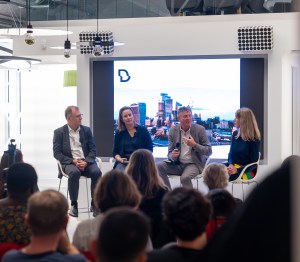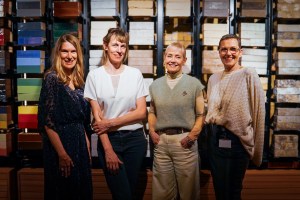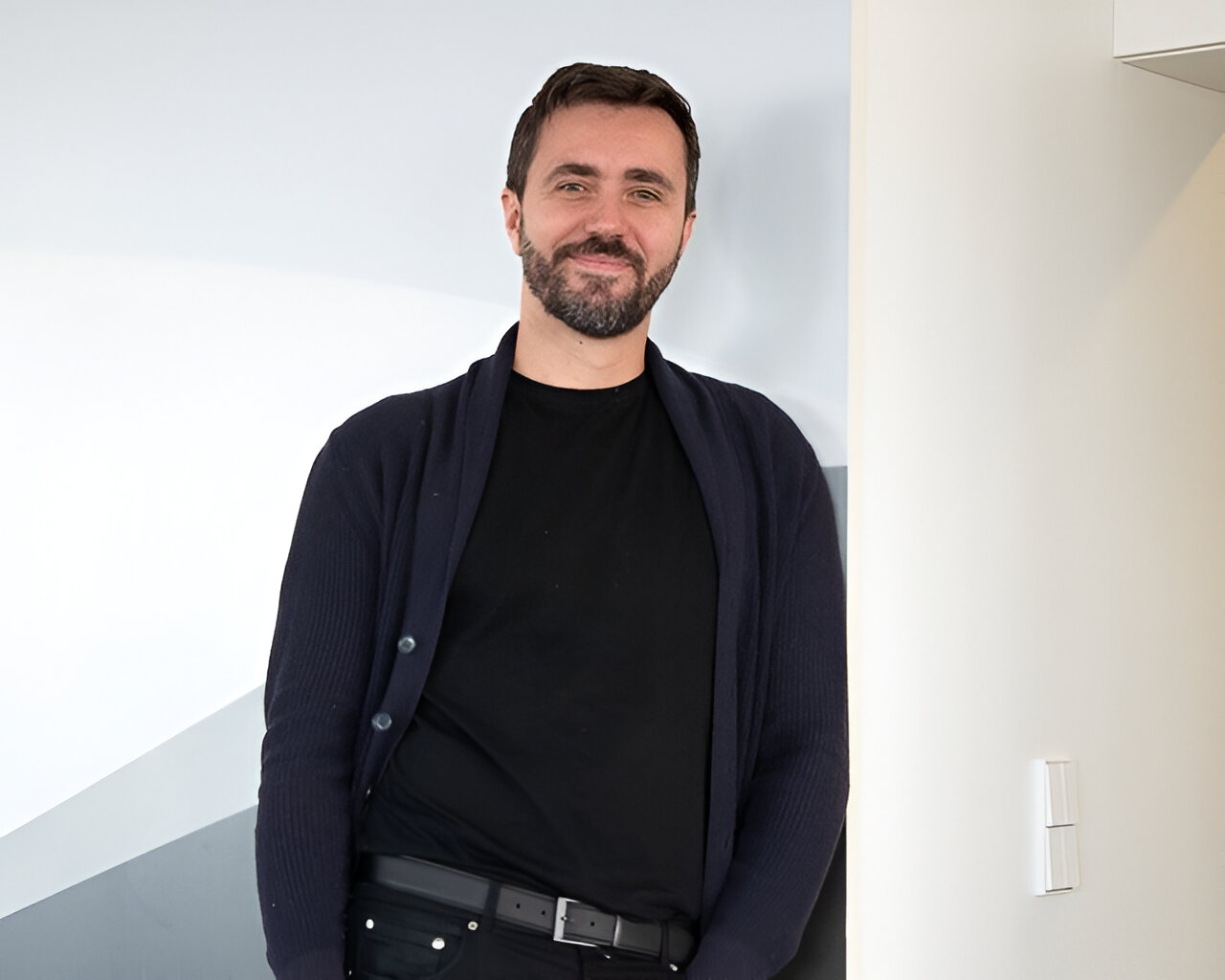
Giovanni Betti is the head of sustainability at HENN and a guest professor of digital and experimental design at the University of the Arts in Berlin. He's a talented designer with experience in complex projects that require a high level of artistic and technological integration, innovative approaches and building techniques that do not compromise the strategic concept. His work spans architectural and engineering disciplines, driven by a desire to design the best possible built environment for the people who will live in it.
Having always worked for relatively large firms his career journey has been a dance between practice and research. Giovanni began his career in 2007, as a part of the specialist modelling group in Foster+Partners, working on projects like the Apple Campus and Bloomberg Headquarters focusing on the aspects of sustainability. He later joined HENN Architects in Berlin as the head of a department focusing on performance simulation for about seven years. After his term at UC Berkeley for two years, he re-joined HENN Architects as their head of sustainability, continuing as a guest professor at UDK, Berlin.
During his short break at UC Berkeley, his work focused on how climate influences architecture where he had the opportunity to exhibit his work on climate change influences on mountain communities in the Italian Alps at the Arquitectura Biennale in Venice. His team of colleagues at UC Berkeley created CBE Clima, an open-source climate analysis for the AEC industry. CBE Clima is a resource that produces high-quality graphics to enable users to have a sense of climate around the world without specialist knowledge. Visit clima.cbe.berkeley.edu and join thousands of people from over 70 countries to help improve their work and create more environmentally responsive architecture.
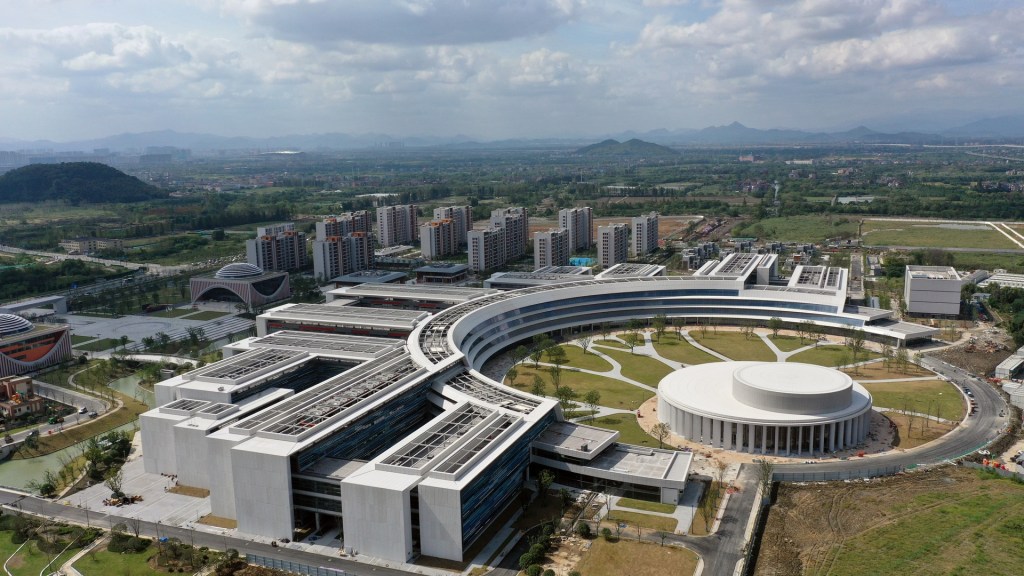
With 400 people across 4 offices around the world, HENN focuses on a wide range of project typologies from offices to labs to education facilities, hospitals, industry, culture and master plans. They also have in-house experts much like Giovanni in sustainability to lead the team and navigate the direction of the firm to tackle massive challenges.
He starts by saying “If all people on the planet were to live life as an average American, we would need a significantly larger planet which we obviously don't have. As a part of the building sector, we have a huge responsibility towards the planet.”
According to statistics, cutting down on flying, driving cars, and going vegetarian or vegan is only a small reduction in a portion of the carbon footprint of a company or a small to medium-sized project of 5,000 square metres. But we as architects, as chief participants in the built environment, have a power that most people do not have in their daily lives to tackle challenges that often feel large and difficult and therefore we must use it.


How can architects contribute?
“Sustainability is not a new word. Funnily enough, it’s not a word that I like much at all,” says Giovanni. The definition of sustainability according to the Bruntland Report of 1987 is ‘meeting the needs of the present without compromising the ability of future generations to meet their own needs.’ The definition hasn't aged very well as the ability of future generations to meet their needs has already been compromised. Especially because it seems to propose that sustainability is some sort of a neutral point of impossible balance, which is hardly the case. All energy either produces loss or gain which is why trying to be ‘not bad’ is not good enough and the need for a framework arises.
The three traditional pillars of sustainability—social, ecological, and economic—lead to sustainable development. Offices thrive because making money is a means for them to continue existing, produce beautiful architecture and live a fulfilling life, but that should not be the goal in itself. As architects, when we produce buildings we must also want to contribute to society and the planet. Thriving people in a thriving planet could then be the framework for sustainability.
Sustainable architecture mediates between society and the environment and exists between a planetary city and a societal foundation. This view has been encapsulated in the book Doughnut Economics by economist Kate Raworth, where the concept tries to balance the two big challenges - safe and just space for humanity and regenerative and distributive economy - that helps maintain our global development within the ecological ceiling to create a just society. This encourages the fraternity to expand the role of the architect to take responsibility for various other dimensions than the ones we’re only used to.
On the ecological front, we need to look at the impacts of materials, energy, and the impacts that we have on ecosystems. On the societal front, there is a need to take into consideration the community that exists around the project, and not just clients and users. We must collectively look at the neighbourhood along with all the people who didn't ask to have the building built but are somehow impacted by its very existence. Labour, the people that actually build the building also is a consideration. If you are an energy-conscious architect, the carbon impact of materials on the existence of the building is often neglected along with other societal dimensions as well. We rather tend to focus too much on users and clients.
Strategies for Carbon Reduction at HENN
Carbon Reduction has many implications on business. In today's day and age, we can not afford still to be agnostic relative to the topic of sustainability. Depending on the geography, there are more and more legislations that draw hard boundaries and put the onus of proving that buildings are sustainable. Labels like LEED and BREEAM and in Germany the DGNB have hard regulatory requirements pushing architects to raise the bar for eco-conscious construction and building practices. This can be achieved by using low-carbon construction technologies and eliminating waste by optimising material usage and design with low-carbon materials.


Build Less
Counter-intuitively, what we can do as architects is to build less. When it is a strategic consultation with developers, this is of course a conflict of interest about building less when there are exciting opportunities in a particular area. In a way, the most sustainable buildings are the ones that have already been built. For instance, now in Europe, modern heritage buildings from the 1970s are coming to the end of their expected life span and renovations are a better solution than building a new structure from foundation to roof.
A towering building in the south of Munich is positioned in a way that it is on the threshold between the city and the countryside. On one side, it has unobstructed views of the Alps and on the other, an urban view. A prerequisite for the development of this building, under the newly passed EU taxonomy, helped massively with convincing the developer to have better financing opportunities for the renovation. The challenge here was that the building has a historic value which had to be preserved in terms of appearance, but one that also complimented and aided the upgrades.
The team at HENN decided that the main building was to be completely renovated, and stripped down to a structure, and two small buildings were added for extra functions to give back to the community around it. Doing so led to massive savings in material - almost 14,000 cubic meters of concrete and a large amount of carbon emissions, enough to drive around the world about 1,300 times reduced. 1,268 reinforced beams improved the building structurally and provided fire protection per the upgraded fire code.
2,105 windows were replaced improving the facade, both in terms of comfort, extending the views, and energy making it a lively, vibrant place for startups to develop. Even at a height, the double skin facade, allowed people to open windows for ventilation through floor-to-ceiling windows, integrating sun shading. The dark spandrel of the building was transformed into a Building Integrated Photovoltaic (BIPV) element, 30,000 square meters of it producing electricity making it a return on investment on the facade.
The social dimension was a catalyst to add amenities like restaurants, cafes, internet points, shopping centres and a sky lounge at the top. A sunken kindergarten was included to be protected from the noise of the adjacent roads. As a way to improve biodiversity trees, and local fauna were planted to create a pleasant and enjoyable space for the occupants.


Build Clever
Analysis, simulation and understanding the relationship between the facade, floor plate, available daylight, energy consumption, and user experience, help quantify parameters to measure aspects of sustainability and convince clients of the decisions behind the aesthetic merits, construction timeline and budget constraints.
Designing with climate in mind has a number of advantages to both creating places that require minimal energy to run and are also more enjoyable and usable. Detailed analysis, generates additional income streams, or at least a foundation for a small team in terms of analysing, visualising and communicating the sustainability choices of projects. Focusing on the materiality of the building, and dissecting the building to understand where the carbon is hidden in facades and double skin facades, taking them apart and understanding the carbon implications, and the trade-offs with energy makes clients more responsive. This way of working also helps gain new projects because the sustainability credential against competitors is an added merit.
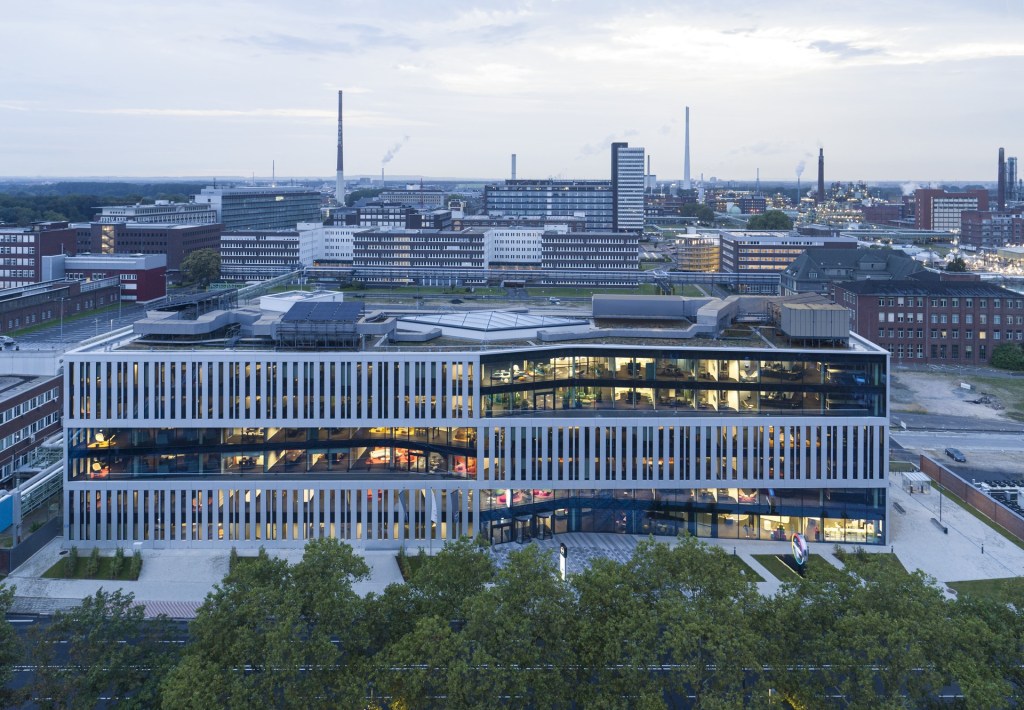
Brainergy, a startup centre, uses timber construction throughout with a facade and a roof that integrates PV panels to create a naturally ventilated environment. As part of HENN's important sustainability strategy, the landscape includes a lake that serves as a retention basin for all the surrounding developments as it grows and shrinks throughout the seasons. The lake is also an important biodiversity feature.
The process of breaking down a 10,000-square-metre project into the main atrium, the terrace, the basement, and the details surrounding the facade, and analysing the carbon impact of each element while considering various options contributes to the decision-making process regarding carbon reduction from the initial stages of conceptualisation at HENN.
“For architects who think measuring embodied carbon poses as an abstract, it is similar to reducing tangible material quantities and converting that not into euros or dollars or pounds but just in terms of carbon footprint. It's just another column in your Excel spreadsheet,” says Giovanni.
At HENN they are finding ways in which this is no longer a specialist task but done almost automatically as a byproduct of the cost calculations.


Build Efficiently
A 200-square-metre project in Dresden was the first building in the world built in carbon fibre reinforced concrete. The University of Dresden played a pioneering role in developing the technology and wanted a building that would demonstrate this new capability. Carbon fibre mats were used to reinforce concrete slabs instead of steel, which was a relatively new technique in construction then. Carbon fibre has been utilised in construction for a number of years, but primarily for structural stabilisation and renovation rather than primary reinforcement.
The design of the building started with the idea of showing off the characteristics of the new material which could facilitate a large amount of reduction in the concrete simply because carbon fibre does not corrode. With an almost textile-like material that is very lightweight and easy to work with, the prefabrication process is often done in a factory but also lends itself to on-site processes. Therefore with a smaller quantity of concrete, a very slim profile can be achieved. The textile-like nature of the material lends a curvaceous form to the building. It allows for easy construction as mats are easily laid out to find the right shape and then troweled, which would be complicated in the case of conventional reinforcement.

Research projects are a wonderful way to establish a presence in the market, show your positioning about certain topics, and lead a conversation. At HENN they also pose the question of how to better communicate design and data in the digital age to the clients and developers. As stakeholders in the project, all parties must take accountability to reflect upon a commitment to pushing the boundaries of eco-conscious design. As we confront the urgent challenges of climate change and urbanisation, building strategies such as these and visionary leadership to lead us through reminds us that sustainability is not just a goal to strive for but a moral imperative to uphold in shaping the future of our built environment.
Giovanni Betti's extensive experience in sustainable architecture and his role as head of sustainability at HENN Architects highlights the evolving responsibilities of architects in addressing global challenges. From his early career at Foster+Partners to his contributions at UC Berkeley, Betti's dedication to sustainable design is evident. Through innovative strategies like building less, designing cleverly, and constructing efficiently, he emphasises the crucial role architects play in mitigating environmental impact and fostering societal well-being. Finding the right balance between equitable design for the people and architecture that is compassionate to the environment, Betti's work exemplifies a paradigm shift in architecture towards a more sustainable and socially conscious future.