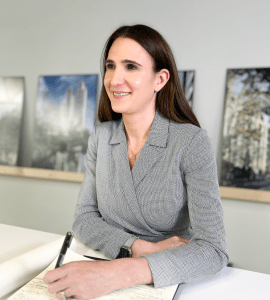
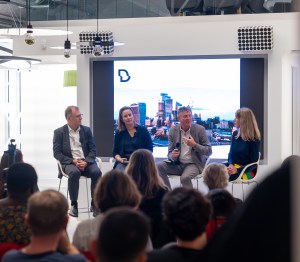
A global marketing and communications professional from Skidmore, Owings & Merrill, SOM, Fadi Asmar emphasised the importance of storytelling which can strengthen and humanise architecture and engineering brands. He elaborated on the idea of focusing on connecting your architecture brand with clients through a string of storytelling. Creating content for a brand which embodies storytelling while being relatable to the public is how a firm can strengthen its position.

The New School University Center by SOM, Image Credits: James Ewing
Leading with the examples from SOM and how the firm adopts these ideas and focuses on the concept. “A picture is worth a thousand words.” SOM uses the concept of presenting ‘one hero shot’ of their projects to display the project and promote it. Fadi Asmar, a photographer himself and with marketing knowledge knows the impact a good picture can bring. Architectural photography is a very crucial part of the investments for any firm and becomes a key element in narrating these stories about the project and the brand. It is a need that a brand must fulfil to impress its clients, followers and viewers to keep them up to date on the latest designs and projects created by the firm. Along with this, it is important to encourage the clients to choose your firm's brand for their next project and even recommend it to others.
Whilst good architectural photography of a project helps in capturing the building, it only remains a small part of the story; an enormous amount of time and resources go into the process of reaching the final stage. This is true for any architectural project and the firm needs to display that process as well to tell a complete story. Behind-the-scenes images and work-in-progress stories have always remained hidden or unknown to people. Lately, it has become a topic of intrigue. Designers know better than anybody that the journey is more important than the destination. Sometimes, the process is the only story that should be told, specifically in the areas of research or architecture and engineering innovation; which benefits the entire industry.
There is a dire need to humanise the AEC brands and Fadi explains that at the end of the day, we are in the business of selling services and it is important to put weight on the human element of the work and let the viewers, clients (who will be working with designers and engineers), academics, potential clients connect with the brand on a more personal level and with the team who is a vital part of that brand. To simplify, Fadi breaks it down into two parts – ‘Why it matters?’ and ‘How to do it effectively?’

Why does it matter for Architecture, Engineering and Construction firms to brand effectively?
Humanising the work is more like an opportunity for the brand to engage in a direct conversation with its users while also serving as an opportunity to be a part of authentic discussions. Fadi quotes that “people respond to people and data proves it”, following with the pictures of Instagram analytics data, he describes the SOM’s recent social media posts. One post with a more humanistic approach outdoes the typical architectural photography post. Both the posts while standing on the same level in terms of likes are placed very differently when engagement is involved which means people have interacted with the post, shared it and talked about it. Data shows that the post with the humanistic approach did 150% better than the typical architecture post. Looking at architects and engineers as storytellers, who want their stories to be viewed and reach as many people as possible and build a diverse audience base.


SOM’s other social media campaign gave an inside look into their work by showing project tours and explaining the project with voiceover, its elements, the concept and the design process and challenges. It allowed the followers of SOM to hear the voices behind the project and get the correct information directly from the creators, which became a better means of connection. SOM’s communications team noted that these types of initiatives brought in more viewership and interaction.
"Being relatable, relevant, and interesting drives more traffic to your content and brings a diverse audience."
Fadi Asmar
Yet, another example of a marketing technique that SOM uses is focusing on not just multimedia promotion but also presenting stories from the office on different social media platforms. Showcasing the human element of SOM is a very important part of their brand building by highlighting key people at key positions in the firm. Publishing interviews of people working at SOM be it, partners, directors, principals and so on; allows clients to know and look into the profile of the people who are in a position of leadership at the firm. Their thoughts might resonate with the audiences who look them up on the internet and if a potential client builds such a personal connection with another person who is associated with a brand, it automatically raises the value of that company. It also presents SOM as a company that embraces diversity and helps them to better engage with their clientele.

SOM is also an interdisciplinary firm with structural engineers, architects, urban designers, and interior designers working on the same project and which means that new and diverse content comes from all these different disciplines. Personalising this helps in building more authentic connections relatable to the firm’s broader audience. This also involves taking a different approach to the website that defines the company, balancing the AEC element of the company and the human element. It allows the readers and viewers to reach out to the people associated with the brand and talk to them directly by elevating the content and showcasing the people behind the greatest designs that are happening today.
“This allows us to nurture existing relationships, and build meaningful connections with our audience across different disciplines.”
Fadi Asmar
Press releases that SOM does typically involve quotes from their designers, engineers and clients; to tell the stories from their lens. Giving the example of the Manhattan West Development project, Fadi describes how they involved the engineers to talk about the navigation of challenges required to successfully execute such a complex project above active train tracks. Similarly, SOM involved its architects, engineers, and interior designers of the 800 Fulton Market, Chicago and included their ideas and quotes in the press releases.


Historically SOM has always shown its work to the public through exhibitions as it is a multidisciplinary firm that addresses almost all areas of the architecture, engineering, and construction industry. Whether exhibiting at the Venice Biennale or curating their exhibitions, SOM craves more person-to-person interaction when talking about their work. This is a crucial part of conveying the story, but it is done only when there is a message that needs to be passed on through the work of SOM. Taking architecture and engineering out of the box and focusing on the human element involved, participating in panel discussions and discussing the experience and the process; talking about lessons learned, and ultimately improvements that can be brought in the future. These are the discussions that should happen in the industry and are necessary for the collective growth of the individual, the brand and the fraternity. In a setting like this, where it is close to a limited number of people, social media becomes a means to reach a larger audience and allow them to take part in these conversations online.
All of the reasons bring out an essential point, adding a human touch is important for any brand be it AEC or not as it becomes more relatable to the people.
“As storytellers, this is an opportunity to tell stories clearly, and communicate more effectively.”
Fadi Asmar
So, how to do it effectively?
Pay attention that what is being said is in line with the branding, professional, to the point and not overdone. Fadi describes the different types of content that can reach more effectively when personalised to the needs of the company.

Technical Content
Technical content that may not always have the strongest visuals as having that “typical hero shot” or may not appeal to a broader audience can be much more relatable when the work is personalized. Given SOM’s example, Fadi talks about the firm’s machine learning initiative. Following the 7.1 magnitude Pueblo-Morelos earthquake in 2017, SOM sent a team of architects and engineers to Mexico City to contribute to post-disaster recovery by documenting building damage and providing technical support to local structural reconnaissance efforts. As part of the documentation, the group took hundreds of photos that were then shared with the Earthquake Engineering Research Institute (EERI) database in support of the institute’s mission to mitigate earthquake risk around the world. Transforming what is traditionally a time-consuming, manual process, the group trained a machine learning model to identify areas of damage. To their surprise, the results were very accurate.
After machine learning was used for damage assessment in Mexico City, SOM engineers have turned the technology into a resource for analyzing buildings and identifying potential problems at any stage, from new construction to renovations. The personal and human element in this situation was showing the people from SOM visiting the area and how they contributed to reconnaissance efforts, yet at the same time utilizing new technology for the first time that proved to be very useful. e. SOM created a small documentary involving the people working on this project, talking to them and understanding their experiences. The idea was to simplify something technical in nature and, at the same time, shed light on the human element of the trip and how it introduced new technologies that can benefit the entire AEC industry.


Another example where SOM added a human touch to their communication was when they showcased the design for the “Kinematic Sculpture” a Morphing Pavilion. Being a different project than SOM’s typical project images and as a very technical concept, it was important for SOM to tell the story behind this research. By only seeing an image or publishing a technical paper, we can be missing a very important part of sharing the firm’s culture - which is a culture of research and innovation. By pushing forward the people who worked on such projects, as storytellers we are communicating in simple words very technical concepts.
SOM’s collaboration with universities and students allowed the firm to reach out to people directly involved in the architecture and engineering field and be a part of a hands-on experience in researching and building through numerous exhibitions that SOM typically does. One collaboration led to another by bringing new audiences to SOM’s various social media platforms.

National Museum of the United States Army by SOM, Image Credits: Dave Burk
Industry Events
Events are opportunities for companies to humanise their work and allow people to learn more about the staff and their stories. This is both an opportunity to give a window to clients to take a peak and learn about the people they would be potentially working with. Equally, it sends a positive message of inclusion to younger generations considering being an architect, or an engineer. Fadi gave the example of International Women in Engineering Day where SOM did a series of interviews and profiled the women in the engineering discipline. Conducting a question-answer round or allowing the means to advise young women who wish to be a part of the industry can help engage with the audience. All of this can be done through several social media campaigns. The analytics of the social media post by SOM on International Women in Engineering Day gained more attention and became the most engaging story of that year, this further proved that people appreciated such content and sought to learn what the firm was doing and how they were doing it. A similar initiative was taken to celebrate Engineer’s Week at SOM, which garnered more audience and viewership that week.
Celebrating Diversity
Similar to industry events, this is also very relevant content and should be done by all companies to celebrate the diversity of their employees. In recent years many companies have come forward to show their support and appreciation for their employees and embrace diversity in the workplace. SOM did a series of interviews with their employees, talked about personal experiences and allowed the viewers to know a person rather than an architect, designer, engineer or employee. Companies also need to take up initiatives to celebrate global events like International Women’s day, Black History Month or pride month and inspire change in society. This can be done by interviewing the people, learning from the challenges they had to overcome, and their ideas and perspectives.

One key thing to keep in mind, there are several initiatives and a lot to do these days. Depending on the size of the firm, one needs to be very careful and be understanding of how much content is to be shared, is the content relevant and does it add value to the brand. It is important to understand which social media content is working for the brand and which isn’t. Balancing and diversifying the content is crucial for building a successful brand image. It is also equally important to be consistent, relevant, professional, and to the point in creating such content.
Storytelling provides a powerful tool for architecture and engineering firms to engage with clients, share their unique narratives, and humanize their brands. Fadi Asmar's storytelling to strengthen and humanize architecture and engineering brands highlights the significance of connecting with clients on a deeper level. Incorporating storytelling techniques into branding strategies enables firms to differentiate themselves, helps them create relatable content that resonates with the public, establishes meaningful connections, and drives greater engagement and strengthens their position in the industry. To learn more visit www.disruptsymposium.com