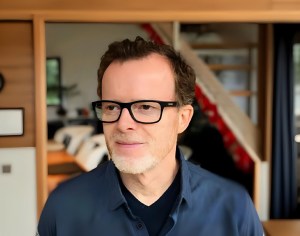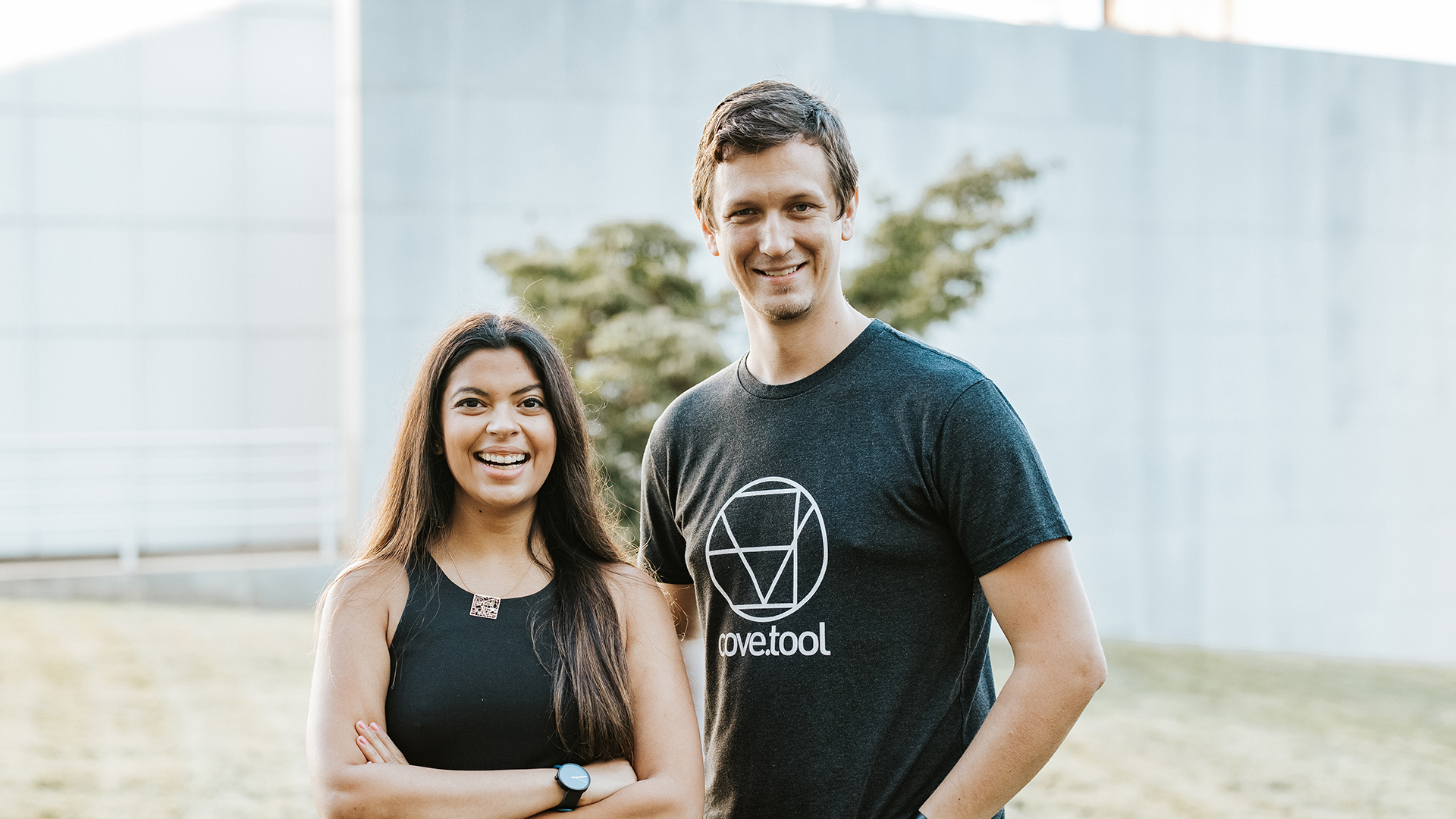
Patrick Chopson is the leader of cove.tool, a suite of building design tools that break down the barriers in the design and construction cycle. As a co-founder, he oversees product development and research. A graduate of Georgia Tech with a Master's in High-Performance Buildings, he is a licensed architect with over 17 years of experience in architecture, research, and mechanical engineering firms. Before cove.tool, he co-founded a successful building performance consulting firm Pattern r+d and is featured in multiple publications including Architect Magazine, Tech Crunch, Site Selection, Archdaily, and more.
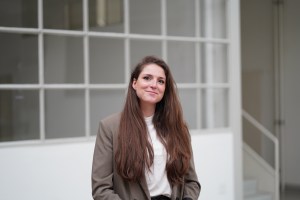
Patrick joins Sara Kolata, the founder of Disrupt Symposium at the Arch Talk: Tank podcast to discuss the crossover of architecture and technology.

Consultancy Business: Challenges and Opportunities
A licensed architect, Patrick had a straightforward career option: a design business. But instead, he chose to travel a lesser-walked path: a consultancy business. What prompted him to do so? The global issue of sustainability and climate change.
People in Atlanta tend to be conservative and show little concern about climate change. Patrick and his teammates chose to solve the problem and decided to work on building sustainability to create an impact. They recognised the need for sustainable construction but at the same time, also realised that changing the approach of already established practices for high-performance and environment-friendly buildings was a hurdle to overcome.
With a clear vision of the need for green buildings, Patrick and his team devised a thoughtful approach to integrating cost-effectiveness with building performance assessment. They tried to persuade developers who were interested in sustainability financially rather than environmental impact.
Despite having the required skill set, the most difficult part for Patrick was gaining recognition. Patrick and his team received a positive kickstart in the form of a quest by a big engineering firm called Newcomb and Boyd. The company pursued a high-performance, net-zero project in Georgis’s tech campus, and sought Patrick’s assistance to enhance their chances of winning the project. The collaboration with a large-scale organisation came as a boon to Patrick and his team and provided them with the required exposure to bring their name into the limelight. Their innovative skills and ability to demonstrate cost-effectiveness and energy saving in building, solidified their reputation. Connection with potential clients gave them opportunities to implement and eventually scale up their services in the market.


The cove.tool: Overview
Architects working on high-performance projects require geometry, geographical location, and typology of buildings to make assumptions about the installation of walls, light schedules and weather conditions. The set of tools, devised by Patrick and his brother Daniel, integrated all of this data along with the detailed maps and performed impeccable daylight simulations at incredible speeds, in fact, the fastest daylight simulations in the world right now. The tools seamlessly integrate with software like Revit, Rhino, Grasshopper and ArchiCad. It enables architects to perform a wide range of analyses and perform a cost vs. energy optimisation, hence the name Cove (Cost vs. Energy).
In the context of a small team handling numerous projects, it is essential to optimise workflow to deliver high-quality services at a low cost and secure more projects. For cove.tool, Patrick leveraged his rhino and grasshopper skills to significantly reduce the time taken to produce results from an entire day to a mere few minutes. These substantial breakthrough inventions empowered his team to deliver projects promptly by automating several tasks. The user-friendly nature of the tools allows even inexperienced team members to deliver consulting solutions, including analysis, daylight assessment and more.


Transition from Architecture to Tech
The development journey of the cove.tool represented a transition among industries: architecture to tech and how skills can be applied from one domain to another. Despite graduating from a tech university, Patrick lacked coding and product development experience, but that did not stop him from creating the tools.
Patrick highlights the similarities in the functioning of architecture and the tech industry. Both industries demand careful planning of end products, buildings in the case of architects, and software in the case of software engineers. Making changes midway can create confusion and delays in both cases. Both professions call for effective management and coordination among stakeholders. And there are challenges in the functioning of both industries to accept that progress is slower than anticipated. This highlights the importance of taking bite-sized, incremental steps, similar to how architects break down complex projects into manageable components. The principles and foundation that carry the architecture industry provide a very strong base to tackle tech challenges. The structured and systematic approach to projects employed in architecture easily translates into the tech industry for smooth functioning.
In terms of the cove.tool, the first step for Patrick and his team was to share the tools with previous consulting clients. They offered clients a cost-effective deal in exchange for their valuable advice which helped the tech team refine tools and enabled a shift from a consulting-oriented model to software development. The entire development process was sustained through venture funding.
Their journey took a significant turn when Patrick and his team introduced the daylight component into the suite. Architects were especially excited by the striking visual outputs, motivating them to embrace the tools for energy modelling and cost optimisation. Patrick emphasises the fact that to encourage users to embrace new technology, it is crucial to provide appealing user-friendly features.
“You have to give people a little bit of chocolate if you want them to eat their carrots.”


Business Development and Future Plans
In the initial stages of their project, Patrick and his team identified the impact of connections and direct communication. They adopted a very personal approach by making phone calls and even visiting potential clients in person. Establishing a face-to-face connection, along with a firm handshake was crucial, especially in the Southern United States. Fostering trust and confidence was pivotal for clients to place faith in their services. “Business is about developing confidence. If someone gives you money, you have to give them something in return,” says Patrick.
To cultivate this confidence, Patrick’s branding campaign ensured that all elements of their presentation including website, business cards and reports possessed a professional and aesthetically pleasing design. They recognised that visual appeal played a vital role in capturing the clients' attention and portrayed their services as reliable and credible.
The cove.tool team has expanded to 60 people and is backed by investors such as Code Two and Iron Man fame, Robert Downey Jr. Patrick and his team invested their early earnings from consulting into their primary focus: software development. They reinvested the business profits into building the software that is being used in 22 countries, in about 25,000 projects, and almost 15,000 people from the AEC industry.
Ideal Customer Profile
The cove.tool's target customers are primarily architecture practices, from small firms with one or two people designing small housing projects to large firms like SOM and Adrian Smith + Gordon Gilldesigning, who design mega towers and monumental structures. The user base for the company spans diverse scales and specialisations and the variety has immensely helped Patrick and his team address the toughest questions. What are the common challenges among firms? How to design a versatile toolkit to accommodate varying use cases to create a workflow that works for them?
Another set of users of cove.tool are Mechanical Engineers who utilise the load modelling tool for detailed energy modelling. This is due to the connectivity between early-stage architectural models and detailed HVAC models. The cove.tool enables seamless data transfer between both sets of models, thus enhancing work efficiency for both user groups. This synergy brings significant value to the entire design and construction process.


Sustainability Challenges
Architects are deeply concerned about climate change and are eager to contribute to solutions. The challenge lies in persuading the leadership within architecture firms to invest and provide training in sustainable practices. To convey the idea that training and integration will provide a quick return is the key. As a counter to this situation, it is necessary to talk about the cost savings and profitability associated with these practices. This means avoiding too many design revisions to raise the firm's profits. A clear picture of factors holding people back from practising sustainability has to be drawn to understand what is holding them behind. Is it the business aspect of their services, the resources or the network? The answer is uncertain but Patrick and his team have taken a huge step in resolving the issue.
As an architect with a profound commitment to sustainability, Patrick navigated a less conventional path by founding a consultancy business that aimed to tackle the global challenges of climate change and promote sustainable construction practices. Their innovative approach, emphasising cost-effectiveness alongside environmental impact, solidified cove.tool’s reputation.
In Patrick's transition from architecture to technology he carried over a systematic approach ingrained in architecture and made it a foundation for addressing challenges in the tech sector. While architects exhibit an eagerness to contribute to sustainable practices, Patrick acknowledges the challenge of persuading leadership within architecture firms to invest in and provide training for these initiatives.
Patrick Chopson's entrepreneurial journey with cove.tool creates a suite of powerful tools and also portrays the narrative of how technology can bridge gaps, drive sustainability, and revolutionise traditional industries. His journey exemplifies the intersection of architecture, technology, and sustainability and shows the power of innovation and the transformative impact architects possess in fields beyond design. By combining skills and knowledge across domains, architects can be the pioneers of change and can address pressing global issues. Today Patrick’s story serves as an inspiring beacon for architects and tech enthusiasts alike, illuminating the path towards a far more sustainable and environmentally conscious future.