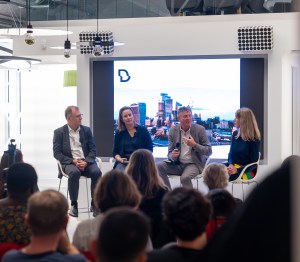
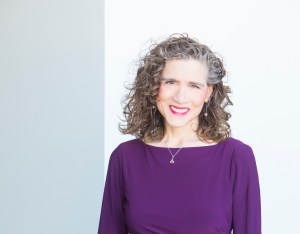
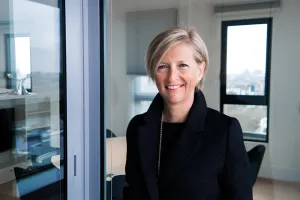
The co-founder of Tanzania Women Architects for Humanity (TAWAH), Victoria Heilman, is bringing good design and decent shelter to people who do not come from money and power. She is also disrupting the Tanzanian construction industry to be a more inclusive and accommodating field. As a keynote speaker at Disrupt Symposium Women’s Edition event, she talks about bringing women into the fold in the construction and design industry of a developing economy like Tanzania and its advantages. She shares her story in a sit-down interview in anticipation of the event.
While studying architecture as an undergraduate student at the University of Dar es Salaam in 1997, her class garnered attention for having many female students: 4 out of 34. She was the only female faculty when she started teaching architecture in 2001 at Ardhi University in Dar es Salaam, Tanzania. When she began her practice, Alama Architecture, in 2012, construction workers and contractors found it hard to digest that a woman was at the helm. She recounts they would wait for “the boss-man” to arrive. As she hails from a matrilineal culture, this came as a shock to her.
Despite both minute and significant hurdles, she strives to create inclusive spaces. The practice of architecture was a male domain, and women in the construction industry were uncommon. She entered a world entrenched in patriarchy and is changing it.
The Foundation of Change
Her first experience with creating inclusive spaces in architecture came from the Tanzanian chapter of Habitat For Humanity (HFHT). She always believed that the recipients of good design must be the underprivileged, but with HFHT, she learned the ins and outs of making that a reality.
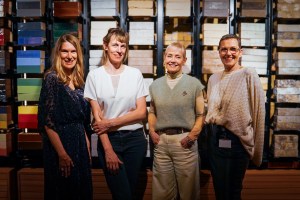
As HFHT moved away from construction to finance, she felt the need to create an organization to bring women in the construction industry together to build for poor communities. Hence, in 2010, she was part of a group of women who founded the Tanzania Women Architects for Humanity (TAWAH).
Her work with TAWAH has changed many disadvantaged communities: from housing the homeless to constructing schools and traditional homes for the Maasai community. TAWAH has shown that introducing decent shelter and infrastructure to children, women, and the elderly helps uplift them. Involving women and people from the communities in the design and construction process helps ensure they meet all their needs.
Her architectural practice, Alama Architecture, has been just as essential as TAWAH and is involved with several projects to improve the built environment of marginalized communities. Including housing and supporting facilities for at-risk girls who do not have or can not stay with their families; in the Pwani region of Tanzania
The Journey So Far
Architecture; and a better built environment is changing the lives of disadvantaged people in Tanzania. “Last project, we built a home for an elderly woman, she wasn't in good health, and we could see she was weak. But we finished the home and moved her in, and we visited her a few months later, and suddenly she looked healthy and strong and was out there working.” Victoria says she has seen many similar examples of such positive changes in individuals they provided with proper housing.
Such positive change does not have to be at a macro level; bringing this change just for a single individual at a time is just as important. As Victoria keeps making these small changes, they have started to show in the communities she has affected. According to the World Bank, significant economic growth within the last 20 years has moved the nation along, “culminating in its transition from low-income to lower-middle income status in July 2020.” In Tanzania, over the last decade, the rate of homelessness has decreased, and school attendance has increased.
Poverty is multidimensional and factors in elements like health, education, and standard of living. Bringing a better built environment and infrastructure to people in need not only brings them a better quality of life but a chance to escape poverty.
But there is a lot left to do. Despite the improvement in the everyday lives of Tanzanians, the nation still has millions of homeless people, and many lack access to good-quality infrastructure. Only with constant and regular interferences in these conditions can these problems be solved.
The Role of Women
As TAWAH brings inclusive design to these communities, it also creates a platform for women to work and make their presence felt in Tanzania’s construction industry. As more women enter this field, the long-held perceptions of people against them start to break down: People will not find it odd to see multiple women studying architecture, or construction workers will learn that women can take up “boss-man” roles. That doesn’t happen just by a single individual; it needs to be a collective movement. Victoria speaks of a sisterhood of women, echoing the idea that women need not rely on men, and that they are capable of supporting and empowering each other.
Victoria Heilman is also a mother and a wife. And as she juggles being a humanitarian, and an architect, with her personal obligations to her family, she declares that it is the support system that we create around ourselves that helps us succeed on all these fronts. She brings the example of her sisters who would babysit for her when she is working, and the time she could rely on her husband to be their kids’ primary caregiver when she was completing her master’s program in Washington, D.C.
She also talks about the importance of letting her organizations work for themselves. As more and more people join her initiatives, she has started to take on lesser and lesser responsibilities; TAWAH and Alama Architecture are becoming entities of their own and continuing Victoria’s work without her constant presence.
People’s Architecture
Tanzania’s first President, Julius Kambarage Nyerere, popularized the ideology of ‘Ujamaa,’ which means ‘family-hood’ or African socialism, that “a person becomes a person through other people, by being part of a community.” This extends to the Tanzanian national ethos of “leaving no one behind.” Victoria Heilman tries to meet these noble goals with her ‘People’s Architecture.’
Victoria Heilman is a keynote speaker at Disrupt Symposium Women’s Edition on March 8th. Get your tickets if you are interested and would like to hear more.