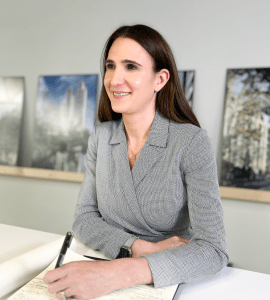
I am a firm believer in people’s architecture. What I mean by people’s architecture is that architects should design comfortable, aesthetically pleasing and well functioning spaces for everyone, not just those with money and power. We as architects have the responsibility to ensure that our skills are available for everyone and not just those who can afford them. The phrase “leaving no one behind” captures what I mean by people’s architecture. It is about setting priorities and taking action to work with everyone who can benefit from architectural services. Architecture should be inclusive in terms of whom we serve and inclusive in terms of who we as architects are. It is important that our profession be open to everyone regardless of race, ethnicity, gender or socio-economic background and that everyone who needs our services can access them.
1. The path to putting people’s architecture into practice
My interest in the ‘people’ part of people’s architecture began many years before I knew what architecture was. I need to admit from the outset that I am not interested in politics or social science theories. I do not read books on those things, nor do I focus my attention there. My ideas on ‘people’s architecture’ are more visceral than intellectual growing out of the environment in which I was raised and my experiences as I entered the world of architecture.
I am Tanzanian and people familiar with my country know of the outsized influence of our first President, Julius Kambarage Nyerere. Every Tanzanian knows about Nyerere’s ideology of ‘Ujamaa’ often translated as family-hood or African socialism. The cornerstone of Ujamaa is that “a person becomes a person through other people, by being part of a community.” The emphasis of Ujamaa is on equality and dignity and those blessed with prosperity helping lift-up those who have not been as fortunate. In essence Ujamaa is a kind of Tanzania national ethos of “leaving no one behind.” Nyerere does have my respect, and the respect of many Tanzanians, because he was the president of a poor country who put the needs of the poor first. His government’s priorities were to provide everyone in Tanzania with access to education, healthcare, water, and housing. While these noble goals were not met, the desire to achieve them was sincere.
In many respects Nyerere’s Ujamaa was nothing new to Tanzanians, my family or me. Nyerere drew on traditional African values to construct Ujamaa. In a way he was telling us things that we already knew and were comfortable with because they were abstractions of our daily lives. For example, my father was a civil servant and my mother was a housewife. I grew up in cramped two-bedroom apartment with eight siblings. But there was always room for additional relatives who came to the capital Dar es Salaam for education or visit. Both my parents knew it was their duty to support their relatives who lived in the village. It was a responsibility my parents took on knowing that if they supported their relatives and friends, those people would be in a better position to support others who might need their help.
As I mentioned earlier, it was my father who was employed and on whom the family depended on economically. However, I noticed my mother’s forceful impact on family resource utilization. My Zanaki tribe is matrilineal. Within the matrilineal system women, especially mothers, have considerable influence. It was not lost on me that most of the relatives who came to stay with us to further their education were the daughters of my mother’s sisters and that my father was equally supportive of his daughters and sons educational endeavors. By the time I entered my first architectural class at the university I had already been thoroughly socialized into the ‘people’ part of people’s architecture. The next challenge I faced was learning my new craft.
1
Men dominate architecture in Tanzania. I took my first step toward a career in architecture as an undergraduate student at the University of Dar es Salaam - University College of Land and Architectural Studies in 1997. Our class of thirty-four students attracted attention for its unusually large number of female students. We were four. After completing my studies in 2001, I was hired as a tutorial assistant joining a nearly all male department with the sole exception being the secretary. A year later another young woman joined me on the teaching staff. We felt that something needed to be done to address the gender imbalance in architecture. Leveraging our strength in numbers, the two of us started to put measures in place to increase the number of female employees in our department. The first step was to start mentoring sessions with our female students in the department. Our goal was to create a sisterhood and encourage female students to stay in the architecture program and eventually apply for teaching positions or become architects and be role models for their young up and coming sisters.
Early in my career, just after I started teaching at the university while I was starting my architectural firm, I did volunteer work with Habitat for Humanity Tanzania (HFHT). My work with HFHT in rural parts of the country helped me to better understand how poor communities, and especially women, toil to cope with scarcity. I realized that architecture can play a role in easing the burdens of these women who are struggling to get by. When HFHT transitioned away from construction to finance, I felt the need to create an organization that would allow women architects, engineers, and quantity surveyors to use their skills to improve the built environment for poor communities. In 2010 I was part of a small group of women who founded TAWAH (Tanzania Women Architects for Humanity). Our first project, commissioned by UNESCO in 2011, was to work with the Maasai community in Ololsukwani village to improve the design and construction of traditional Maasai houses in order to reduce indoor pollution caused primarily through indoor cooking.
2. Building Space for Women
The main aim of my professional practice with the small firm Alama Architecture as well as with my volunteer work with TAWAH has been to build space for women in two spheres. The first is to build space in the socio-economic sphere so women can pursue careers and earn a living in construction. The second sphere is to literally improve the built environment for women living in poor communities. Alama Architecture and TAWAH have been involved with a number of projects to improve the built environment for marginalised communities. For example, Alama is designing a centre for at risk girls in Pwani region. Our client is an international organization registered in Tanzania that is helping vulnerable girls. We were commissioned to do the design and construction supervision for homes and other supporting facilities for girls who do not have or cannot stay with their families. Our team of women architects is now working on this project with the aim of providing a built environment that emphasizes security, safety, and comfort for the at risk girl children. Construction of this project is scheduled to start this March. (Photo of girls Home)
Montessori primary school design and construction supervision is another example of women building spaces for women. Our client is the congregation of Catholic Sisters of Charity in Morogoro. Although the school will accommodate both boys and girls, our designs put emphasis on the needs and comfort of the girl child during the time they spend in school. Things like menstrual hygiene facilities, often not considered in many school designs, are one of the key things we as women designers work to provide.
(Photo Ifakara school)
Urban furniture for Jangwani Girls Secondary School is another project where Alama builds space for women through creating outdoor sitting benches for girls at a government secondary school. This project is another way to inspire girls in architecture by inviting students at the school to share their
2
ideas on what the school needs and making them a part of the design process. The project was sponsored by the 1991 alumni of Jangwani Girls Secondary School, of which I am part. (Photo Sitting bench)
Building the socio-economic space for women to participate fully in the Tanzanian construction industry is an important objective. Construction is one of the top three contributors to the Tanzanian economy. It is estimated that construction accounts for 14% of the GDP, which is less than agriculture (29%) but more than trade (10%). The problem we face in Tanzania (and other parts of the world) is that construction is perceived to be men’s work. There is a minimal number of women in this sector’s workforce; be it in design, construction, or academia. Take a simple example, in the field of architecture today we have a little more than 550 registered professionals and women make less than 15% of all architects in the country. This is according to the published registry in the Architects and Quantity Surveyor Registration Board (AQRB) website. It is not uncommon for women to study architecture only to give up on their architectural careers and do something completely different after they graduate. These trends are reflected in other fields like engineering, quantity surveying and contractors. Likewise skilled and unskilled labor in construction is primarily done by men. A goal of ‘Building Spaces for Women” is to expand the socio-economic space for women to access the $9.5 billion created yearly in construction and to build the space for women to contribute their talents and creativity to generating even more wealth in this key sector of the national economy.
Mentoring has been a core activity of TAWAH. Mentoring is a way for women to build support networks within the construction industry that allow female-headed enterprises to identify project partners, share information on business opportunities and to find reliable employees with needed skills. Mentees starting their careers find out about employment opportunities and gain advice on career advancement, which helps reduce the number of women who end up leaving the sector. In 2019 TAWAH started a two-year mentoring program to help the young generation of women to get started in and build careers in the construction industry. With the support of Simba Cement company, a Tanzanian company, we are currently in our second cycle with seventy female university students and recent graduates paired with women from Tanzania and different parts of the world who have established careers in construction.
(Mentoring photo)
3. Mhaga Village projects
While young women are an increasing presence at Tanzania’s universities, girls’ access to quality education in rural Tanzania is still a challenge. In Mhaga Village, Kisaware District, about 79 Km from Dar es Salaam, final grades were declining each year and many female students were dropping out because of unplanned pregnancy, early marriage and the poor quality of the education provided. Lack of basic facilities for menstrual hygiene was another reason for girls to miss school. In 2019 TAWAH joined a campaign championed by the then District Commissioner by designing and supervising the construction of a model girls’ secondary school in Mhaga Village. Our approach to this project was to involve architecture students and recent graduates in all stages of the design and construction supervision. The students brought innovative ideas to the design and their skill in using recent design tools to the group. Issues of safety, sustainability, comfort and the provision of after school activities were key design considerations. Since the new school has been built, the performance of girl secondary school students is improving. We have continued working with the secondary school students by creating different programs and workshops where TAWAH volunteers and students meet and exchange ideas.
(Kisarawe school photo)
Growing out of the Mhaga girls’ secondary school, in 2021 TAWAH embarked on a project of empowering women in rural Tanzania through modern brick making and learning how to construct homes. This project, also in Mhaga Village, is designed to build space for women in construction by
3
literally building houses in the community for the elderly, handicapped, and single-female headed households. The project is guided by the idea that mentoring is not only for university students and recent graduates pursuing careers in construction but that it is also important at the grassroots level, for working class women who were not able to access higher education. For the Mhaga project TAWAH is building a women led knowledge center. Part of the activities of the centre is to bring in professional women from the construction industry, from different companies, to work with the women in Mhaga through sharing their knowledge of business and construction techniques that use locally available materials. The center focuses on modern mud-brick making. The main goal is to equip women with the technical and managerial skills to spearhead the construction of decent shelters using locally available building materials, which will create enterprises and jobs in construction sector.
Through the construction of houses at Mhaga village, cohorts of twenty to thirty women are doing apprenticeships that entail making environmentally friendly low-cement bricks and then using those bricks to build homes for those in need. The activities at Mhaga are deepening and spreading awareness of how to build quality affordable houses using locally available materials and construction techniques at the grassroots level. With financial support from a Swiss charitable foundation and the Segal Family Foundation we have completed three homes and the women’s knowledge centre is almost finished. For the entire Mhaga project we have partnered with ITV Media, a company led by a woman director who has been a strong ally of TAWAH. Through her space in the media landscape she has lifted TAWAH by spreading word of what we are doing and organizing fundraising. The Mhaga project has strengthened positive community relationships and problem solving networks at the village, district and national levels by supporting local groups who are building affordable houses and creating strong and supportive communities that help their needy and marginalized people. Importantly it has changed attitudes in the village about construction work as the women gain confidence in their capabilities and the community sees the high-quality houses that they have built. (Mhaga center photo)
5. Conclusion:
The way I see architecture is that it is for people. Architecture must not leave anyone behind in terms of who makes the designs and who the designs are made for. Architecture must include the voices of all groups of people: children, students, disabled, poor, and especially women. Architecture is about creating spaces, socio-economic and physical, so that all groups can contribute their creativity and efforts to building their communities and nation while enjoying the fruits of the wealth that they create.