Office repositioning is one of the biggest struggles global businesses face today. This stands true for both: architecture businesses and the clients you’re servicing with your design solutions. In the last 18 months, there have been enormous transformations within the AEC industry and arguably across most industries, many of which have influenced and shaped business decisions made during the pandemic. You could say the pandemic has only accelerated some of the transformations we had already started to see. The biggest and most notable is in the area of communication and connectivity. Staying connected and providing employees with the tools and platforms they need to collaborate, innovate and stay productive has been at the forefront for all companies.
Gensler focuses its research and business value proposition on the client experience, as thousands of workers now go back to the office. This bears tremendous challenges for their employee experiences, as well as their clients' offices. It’s fascinating to see how Gensler tackles this problem by bringing in highly sensible technological advancements to accommodate the needs of fast-changing work environments. With a sensibility to technology, innovation and a sustainable mission at heart they bring in agile solutions, while simultaneously generating new business potential with their existing but also new clients.
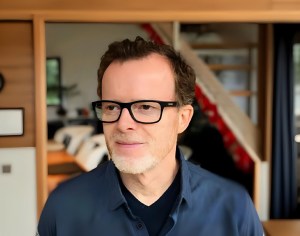
Harry Ibbs, Director at Gensler discusses this matter in further detail. His excellent research statistics strongly support his purpose behind investing in technological innovation which helps us better understand what Gensler stands for and the clear business intention behind their actions. Harry leads the Design Technology Studio within Gensler and is committed to providing highly effective, economically and environmentally sensitive solutions, by putting his clients' well-being at the centre of his design approach.

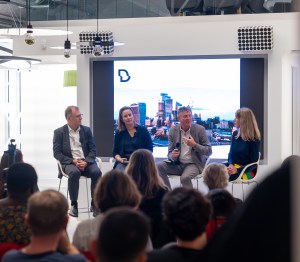
Harry was one of the speakers at the Disrupt Symposium, a 5-day virtual event organised with architecture business owners and entrepreneurs in mind. The event welcomed to stage top-level executives, directors, partners and leaders of the world’s most influential architecture firms that cover topics such as business strategy, business development, client acquisition, financial management, sales, marketing, communications, branding, social media, public relations, the business of expertise, expert positioning, publishing online and in print, leadership, team building, recruitment, retention, and leaving a legacy behind. Disrupt is a one-stop shop for top industry advice and business education.
New trends in office and work structures can significantly affect your business. We’ve seen great technological advancements in this area with many new tools being introduced online or old ones getting a facelift which has enabled most employees to seamlessly transition into working from home with great ease. Whilst employers have been able to adapt to this new world, we know that they are still craving the human interaction that can’t be replaced virtually.


In Gensler’s recent UK Workplace Survey, they reported that 67% of employees want to return to the office for between 1- 4 days a week and would prefer a hybrid of home work and office work.
This survey was conducted between July 9th and August 5th 2020 and focused on subjects working in the office full-time. A substantial 65% of employees' time is spent collaborating, learning and socialising with those around them, in comparison to a mere 37% when working from home. Conversely, time spent focusing is far greater at home at 63%, while only 35% of the time in the office is spent on focused work.
“Post-pandemic office life and home life will not be the same and Technology will continue to play a major role in our lives every day”
Harry ibbs
To aid the ‘return to work’ strategy for themselves and their clients, Gensler has leveraged generative algorithms to plan office occupancy and also helps companies use data to bring people back to the office safely.
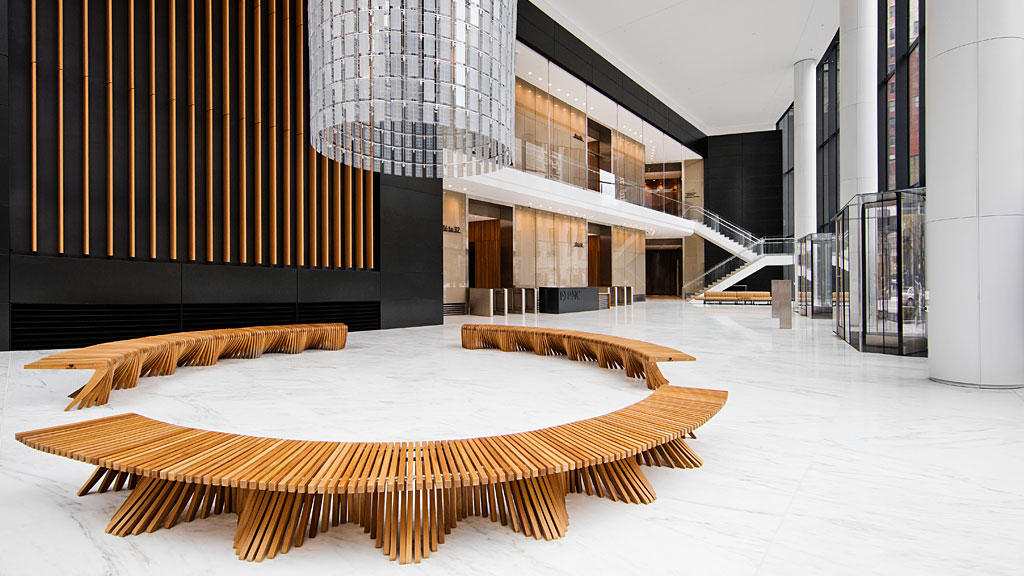
One of those tools is called ReRun. It’s a system that works by importing a company’s existing floor plans, over which social distancing bubbles that space out employees in a format that aligns with government health and safety requirements are overlaid. The algorithm can be adjusted and updated as requirements change.
Extensive feedback received during the process fuelled later sprints to refine the algorithm’s approach to include elements like foot traffic, circulation and specialised spaces (huddle rooms and breakout areas). Perhaps most importantly, the team layered an extra step into the tech solution: human intervention.
Big Data is now becoming a currency for the Architecture Engineering and Construction Industry, therefore Gensler’s approaches are now incorporating and processing data sets to inform design decisions more and more frequently.
“This isn’t just a trend or a fad, data is becoming increasingly integral in the ability to design our projects seamlessly,” says Harry.
AI is playing an important role in tools that are being launched in the market to help assist designers, architects and urbanists, although, Harry warns to approach with caution, as the tools need time to evolve and improve.

Nevertheless, he explains, The Rise of Big Data is upon us and the world’s data creation and consumption is growing exponentially as consumers rely on digital devices. Businesses also use data to become more agile and competitive. Real-time data demand is driving this growth and by 2025, nearly 30% of the global data sphere will be real-time information, according to IDC.
Harry's studio, has approached to provide Gensler’s team with data-driven design tools and proprietary computational products gBlox and gFloorz that allow their world-class designers to bring deep design heritage and domain expertise powered by market-specific metrics to balance form, function and business insights across the design journey with their valued clients.
In his words: “Our compute-powered design solutions provide an unparalleled client experience for agile and predictable decision making. gBlox leverages client [and designer] defined metrics that are adjustable in real-time throughout the design journey, allowing our clients to study trade-offs that balance form finding with business insights on capital assets.”

Harry shares with us some of these very telling statistics on why technology is important in today's architecture design solutions, how it impacts our clients and projects, and what potential it bears for the future of our practices, as we grow into a more technologically advanced world.
According to Babak Beheshti from the New York Institute of Technology, in their publication for TechRepublic:
18 seconds “In 2025, each connected person will have at least one data interaction every 18 seconds.”
49% They also say that in 2021 nearly half of the world’s stored data will reside in public cloud environments.
10X IDC predicts that the world’s data will grow tenfold, from 33 zettabytes (ZB) in 2018 to 175 ZB by 2025.
30% By 2025, nearly one-third of the global data sphere will be real-time, up from 15% in 2017.
—IDC, Data Age 2025
Technology for Business Owners and Entrepreneurs within the AEC industry
AEC is proactively looking to find optimisations and efficiencies to improve our KPIs and financial margins and technology is a major factor in that discussion. We can learn from other sectors that have embraced technology in the past decade, most notably the financial sector. There are many trends utilising AI, artificial intelligence and algorithms to generate and evaluate thousands of design alternatives in order to find more profitable and sustainable solutions, arguably saving conceptual design time and resources. However, it is early stages and there is a lot to develop.
As Harry said it himself: “I am cautious yet intrigued as to what the market has to offer to help the industry leaders shape best practices.”
The principal goals for generative methodologies are for quick generation of design variants, options, efficiency, program, usage and exploration of the design space. For informed and extended means of interaction for user influence on the generation process, Harry believes that the developed parametric workflow for an automatic generation of design options can allow for a more efficient investigation of the design. This mitigates procedural forms of modelling that can then be benchmarked by a direct connection of the design outputs, resilience analysis and simulations thus showing the performances of the solutions immediately.
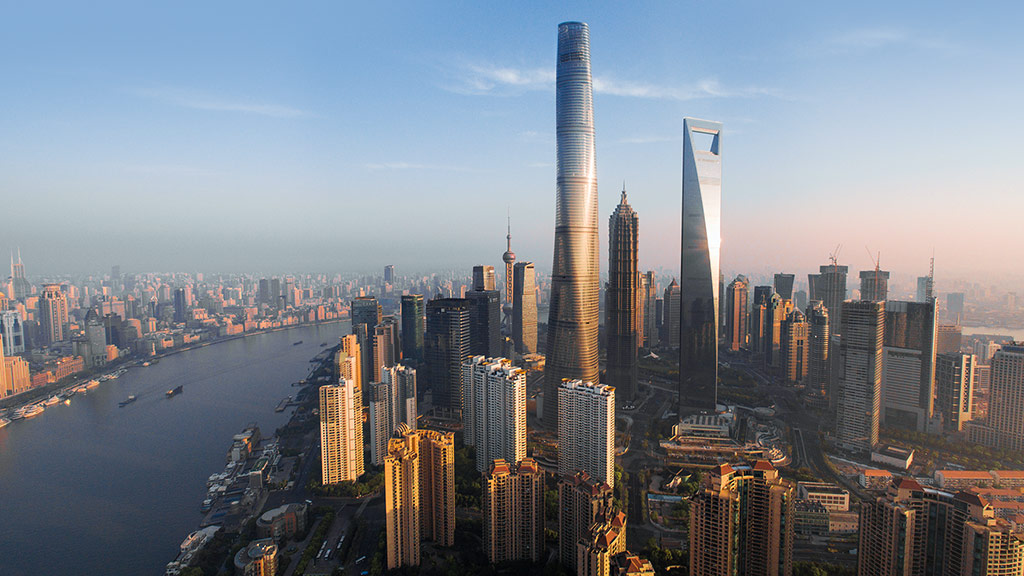
Technology will continue to drive the future of our global communities—our cities, our buildings, our workplaces, our daily lives, and tech companies’ global footprints. By rapidly expanding, TECH IS SHAPING OUR EXPERIENCE OF CITIES. It is changing the world’s skyline and the composition of every workforce. While tech companies flourish, there’s a sprint to lay claim to cities that can support their scale, and offer a lifestyle and a talent pipeline that will fuel their targeted growth.
The technology industry is leading the way in determining how we will work in the future, and other industries are following suit. Recognising changing work styles, tech companies are providing workers with choice and balance, as well as the tools to support their work in any location—in and beyond the workplace. Data-driven insights that inform how space should be utilised, and spaces that enable fluidity and adaptability within the workplace, will be crucial to supporting tomorrow’s workforce.
“Shifting from our European HQ to our homes with minimal to no disruption is testimony to our one-firm firm vision for Design and Technology, adapting and being at the forefront of technology advancements,” says Harry.
In 2020 alone Gensler created 1.2 billion square feet of space. That’s why they are committed to designing with an unwavering focus on Human Experience as they work to shape the future of cities.


We are living through the greatest period of urbanisation in history. For the first time, more people live in urban centres than don’t. By 2050, more than 70% of the earth’s population will live in cities. Cities are also responsible for 80% of global GDP—they are engines of creativity and economic innovation for everything from technology to healthcare.
The world is changing. Global population shifts mean that over half of the world’s people now live in cities—a total of 4.2 billion people. By 2030, there will be 43 megacities on the planet with populations of at least 10 million people in each. These concentrations of people are already introducing tough new challenges.
Economic volatility is perhaps the topmost concern for our clients. Markets can turn on a dime and are influenced by an increasingly unpredictable political and environmental landscape. The pandemic has affected all of our lives and science has connected virus vulnerabilities with climate change. Environmental imbalance data plays an important role in our design decisions as it is on everyone’s mind, and affects markets, governments, and people all over the world. More than 90% of all urban areas are coastal, putting most cities like London at risk of flooding from rising sea levels.
He passionately shared the grand mission behind the responsibility he and his colleagues bear, as any subtle change to their design approaches reaps huge and measurable results for the global ecology, he adds:
“We HAVE AN OPPORTUNITY TO MAKE A POSITIVE AND LASTING IMPACT AROUND THE GLOBE BY ADOPTING TO TECHNOLOGY AND REFRAMING OUR BUSINESS VALUES.”
This is not only true for Gensler. Even though they are a big practice, in some respects that mindset is one to be adopted by all future looking architects. A mindset of collective responsibility, but also a mindset that embraces and adopts entrepreneurially to new global economic landscapes.
Gensler impacts millions of lives in cities around the world, they have an opportunity to address climate change and create a resilient future like few others can. But that is not to say you can not do the same with the resources available at your fingertips.
Buildings generate nearly 40% of annual global greenhouse gas emissions and 50% of the world’s energy usage with an additional 2.48 trillion square feet of new building stock anticipated by 2060.
Gensler feels the urgency and responsibility to lead our industry in meeting and exceeding net zero carbon targets, and Harry suggests better adaptation of all our business models to accommodate for that.
40% of global greenhouse emissions are generated each year by buildings.
—Architecture 2030
Being an excellent role model, as the company takes on global challenges with these competencies, Gensler is uniquely positioned to tackle the toughest challenges facing cities. They are impacting climate change by reducing the carbon footprint of our buildings, using data to inform our design decisions and enabling us to take critical design directions in the early stages to reduce the impact on the environment.
“A prominent trend I can see is that our clients are increasingly engaged in resilience, carbon footprint and exploring repurposing of their assets, we call this REPOSITIONING Architecture.”
500M SQ. FT of office space is needed for significant repositioning in the U.S alone
— according to the Urban Land Institute
20% Sustainable buildings have 20% faster lease-up rates
- Ernst & Young
“To stand out in a fiercely competitive workplace or office building market, building owners are looking to increase asset value by curating amenities that optimise the human experience and enhance the communities they are in. It’s not necessarily about adding space or levelling ageing buildings—it’s about revitalising and re-visioning buildings that are viable. Given the ample volume of the existing building stock, reducing any project’s carbon footprint by repurposing existing buildings, we can recycle a large inventory of older, under-utilised buildings in growing urban centres. This offers a huge opportunity to transform these properties into greener sustainable Architecture. The Urban Land Institute estimates there are more than 500 million square feet of office space in need of significant repositioning in the U.S. alone.” says Harry.
Gensler is leveraging technological advancements to address the challenges of office repositioning. Gensler's approach is not limited to their own practice; they are actively shaping the future of cities and advocating for sustainability. The firm recognizes the role of technology in the architecture industry and the need for continuous adaptation and innovation.
Gensler's use of technology, data-driven insights, and commitment to sustainability position them as a leading firm in addressing the challenges of office repositioning and creating human-centric and environmentally conscious spaces. Their approach serves as an example for architects and design professionals to embrace technological advancements and contribute to a more technologically advanced and sustainable world.