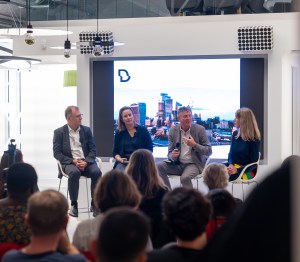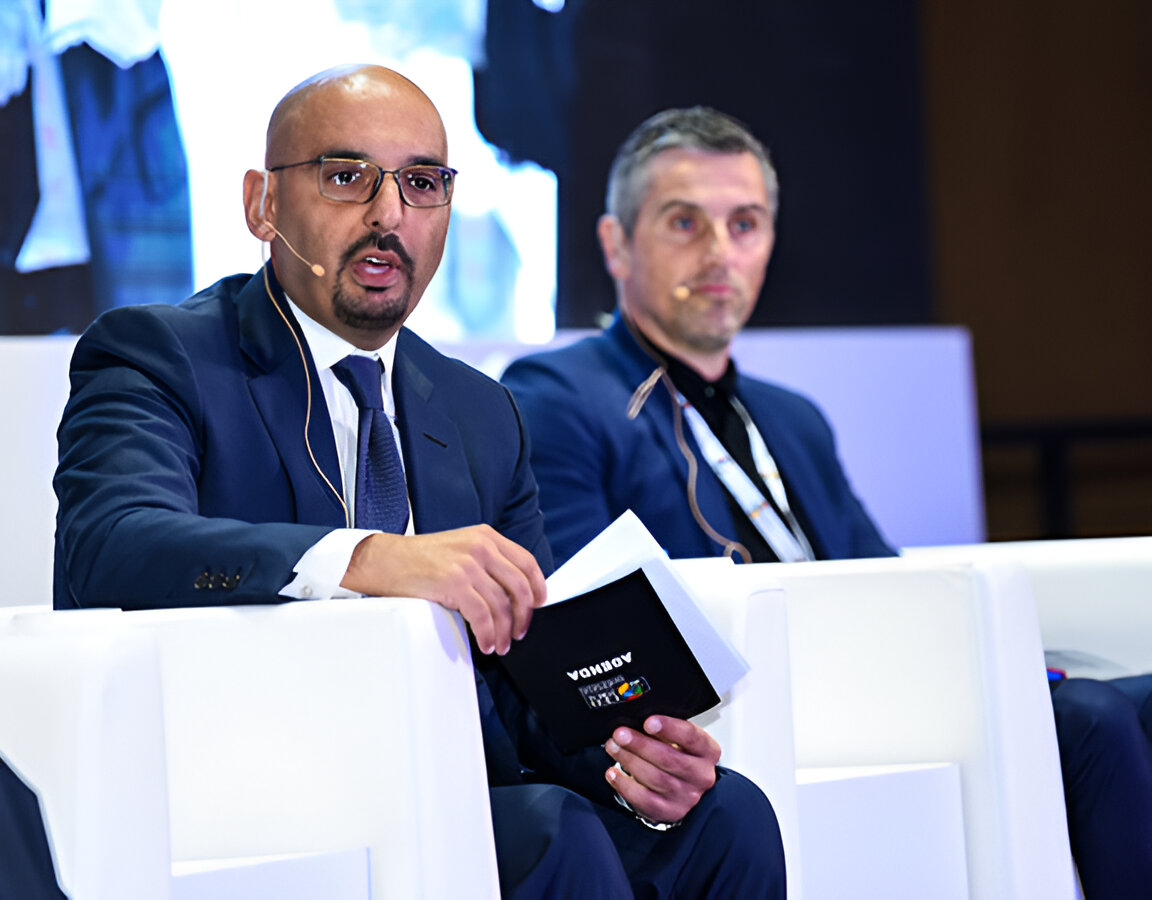
Throughout history, architecture has evolved to meet the changing needs of humanity, driven by technological innovation. One such innovation that has emerged in recent times is Metaverse and Blockchain. And just like any other technology, architecture has joined hands with Metaverse to create new and innovative spaces in its ever-increasing glory, torching the way to a new future and giving architecture a new meaning. Shedding light on the topic, architect Amar Al Assam joined us at the Disrupt Symposium, providing valuable insights into this amazing collaboration.
Ammar Al Assam is the CEO and a member of the board of directors of Dewan Architects and Engineers, a leading multidisciplinary architectural design firm based in Dubai. He works across the region, Africa, and Southeast Asia. In 2003, Ammar joined the firm as the director of business development and has held various roles within the firm. He was appointed as CEO of the company in 2016. He transformed the company and improved the profitability and position of the firm to seize new opportunities in an increasingly competitive global marketplace. Under his leadership, the firm rapidly advanced into new markets, winning new businesses and forging strategic partnerships to enhance the firm’s services.

Defining Blockchain and Metaverse
Blockchain is a digital, decentralised and secure accounting ledger that records transaction data. It is mainly used for recording transactions in Metaverse in the form of Crypto Currency Trading. The technological innovation with blockchain is the guarantee and fidelity, which enables the security of data records and generates trust without the need for a third party. In simple words, Blockchain is the security of Metaverse.
The Metaverse is an emerging collection of three-dimensional virtual worlds in which a large number of users can interact in real-time and share immersive experiences that often would not be possible in the physical world. Metaverse is regarded as the next generation of the internet, terming it Internet 3.0. It is difficult to imagine how the internet did not exist 30–40 years ago but has become such an important part of our daily lives today.


What precisely does the term "Metaverse" refer to?
When the internet came into existence in the mid-1980s and 1990s, no one could have imagined its overwhelming impact on every industry and how it would become an integral part of human lives. We are in the same position right now with Metaverse. We are at the beginning of the exploration stage. The change it brings to the world is so rapid and profound that it is impossible to predict what the world will look like in 10–15 years.
Metaverse is a combination of two Greek words “Meta” meaning “after” or “beyond” and “Verse” which refers to the Universe. So we are talking about a world that is beyond what we currently know and that can translate into anything in the future. When talking about Metaverse, we are talking about a 3-dimensional virtual ecosystem where users can interact with each other, work, play, study, and conduct financial transactions. The opportunities here are endless as technology evolves. In a simple format, the Metaverse is a decentralised virtual world, a parallel window of possibilities and opportunities.
Similar to any technological advancement, the Metaverse has its share of drawbacks, including concerns about security, addiction, and excessive usage. These negative aspects coexist alongside the positives. The quality of pixelation and its translation to our screens, phones, computers, and tablets is still not photorealistic, as it is still in its infancy stage. However, the growth and adaptation of technology cannot be challenged, and progress will be seen in no time. According to Ammar al Assam, we could see the full potential of the Metaverse in 5-6 years.


Current use cases of Metaverse
The general public in different sectors of their businesses is using Metaverse. Large-scale companies such as Nike or Apple have joined the trend early on, creating their own virtual offices on virtual lands. This created an opportunity for them to unlock new markets, where they could present their products and sell their brands in a virtual 3D environment.
With the advent of COVID over the last few years, there has been a shift to virtual office spaces such as Zoom, Microsoft Teams, and so on. But having virtual meetings in the Metaverse is altogether a different concept. Here, we can represent ourselves in the form of avatars, interact with colleagues, partners, and clients and present our products in a richer 3D environment. Though the activities are not photorealistic, they are the start of something very extraordinary.
Metaverse tourism offers the opportunity for individuals to explore the entire world from the comfort of a single location. First-person immersive experiences are a new paradigm that takes us to cities, nature, and various parts of the world with wearables like Oculus. In architectural businesses, we can make virtual walkthroughs of buildings to show our clients how spaces may look from the inside before we develop designs further. In this way, we can tweak and check designs to meet the client’s expectations.


Large-scale events such as conferences and exhibitions have been fruitful over the last three to four years, addressing problems like travel and connecting with suppliers and vendors for product launches. The activities took place in the virtual environment during COVID-19, which kept the industry going.
E-learning and virtual campuses are being set up in the Metaverse for youth who are the biggest adaptors of technology. Such setups allow distance learners to visit a campus virtually and take part in the learning process. It has become the new normal for socialisation as Sports, E-games and events can be organised in the Metaverse for people to interact and participate.
Real estate and business ownership in the Metaverse are the same as in the real world. Buying plots is a new adventure as virtual tools such as Decentraland and Sandbox enable users to purchase properties in Metaverse.
Numerous Metaverse projects are currently underway worldwide. Dubai, for instance, is working on creating its own Metaverse, which serves as a virtual replica of the city. Government agencies are also taking various initiatives to promote the development of this sector. The Dubai Future Foundation, backed by the government, is investing resources to bring together talented individuals from across the globe and devise strategies for the government's participation in the virtual realm. Within the next 5–10 years, around 5% of Dubai's GDP will be generated from the Metaverse, presenting tremendous opportunities in this field.


Architecture in the Metaverse
As architects, when we create building designs, we consider various factors such as physical constraints, building codes, engineering restrictions, and similar elements. The Metaverse, a virtual environment, offers architects an exciting frontier to explore and a unique opportunity to design without the limitations of the physical world. We could disregard the physical needs of humans, such as safety, security, and environmental controls, as well as the constraints of physics and engineering. The Metaverse offers architects the flexibility to design and build anything that they imagine. They can create structures that are impossible to build in the real world, such as floating islands, towering skyscrapers, and even entire cities. For instance, we could envision anti-gravity technology as an incredible opportunity to greatly expand the boundaries of design, pushing the design paradigm and expression much further than ever before. It will create a massive opportunity for the design community to translate the real world into the virtual world and vice versa.
Pushing the boundaries of design in art, Metaverse or any technology impacts how we design our real-world structures. The Metaverse’s new parameters make the future of architecture and design unclear, but architects will eventually venture into this domain. We must acknowledge that our real-world businesses face challenges that require us to tackle real-world problems. This aspect is sometimes overlooked, but it will eventually become a reality. The Metaverse is a revolution that directly impacts the future of architecture and design, as spaces require the creation of massive content. Architects already create daily content in the form of design calculations, drawings, parametric designs, coding for designs, and so on.
"Architects need to get involved in the transition from the real world to the virtual world because of their unique understanding of spaces, materiality and textures. It will impact how we are going to live in the future."
Ammar Al Assam
The virtual world is so new and unique, that architects might take some time to get adjusted to it. With lots of uncertainty regarding the benefits that it will bring to us, the experimentation and trial-and-error stage will take time to materialise and come into play.
For the younger population, the beginning of Metaverse will encourage them to study architecture for parallel career opportunities that it offers. Another factor that needs to be considered is the ability to bring conceptual architectural designs to life. In the real world, we encounter situations where exceptional designs remain on paper and never come to life due to budget constraints, permission issues, or even legislative hurdles. Metaverse offers the opportunity to store these designs in the virtual world.
Architects are best suited for the creation of spaces for companies in the virtual environment. Architects today are more creative and innovative than ever before, thanks to their alliance with technologies like BIM and Revit.
The social responsibility that architects have, extends to the virtual world as well. We need to leave a positive impact and improve developed environments for people to thrive in the future. By actively participating and leaving our mark, we fulfil our societal obligations and address the needs of individuals within virtual spaces.


Digital Twins and the Metaverse
Architects have been the torchbearers of construction in the physical world for centuries now. Collaboration with various disciplines and delivering projects to the end users make architects acquainted with the complete process of creating a building from scratch to the final product. With the onset of Metaverse, the emergence of digital twins has become a significant trend. It includes the creation of parallel environments to bridge the gap between the physical and virtual realms. This extraordinary development provides the chance to explore and experiment with designs that hold the potential to materialise in the real world.
Think of it as taking an "unbuilt building" for a test drive, utilising authentic real-world data extracted from simulation software. It allows us to assess how the building could potentially function in reality by creating a digital twin on the Metaverse. In this way, we can measure and evaluate its performance before it is even constructed, enabling us to make accurate design decisions. Recognizing the significant opportunities in the digital twin concept, the Dubai Government and several in Southeast Asia are investing substantial funds to recreate environments virtually. Another interesting scenario involves the augmentation of physical experiences such as football concerts or games where events are restricted to 20,000-30,000 people. However, by allowing virtual participants to engage in and experience these events, we can open up a wider market of audiences and opportunities.
MAD-Metaverse Architecture Department
At Dewan Architects, about a year and a half ago, they came across a company specialising in virtual sneakers, acquired by Nike where sneakers are being sold for thousands of dollars. This sparked a brilliant idea within the company to take action and explore the potential of the Metaverse. Consequently, they set up a department at Dewan Architects comprising young, enthusiastic, and energetic individuals who possess extensive knowledge and expertise in the Metaverse domain. The team primarily focuses on enhancing their experiences and using technology to uncover how both worlds can mutually influence and inspire each other, revolutionising the design approach in both the Metaverse and the real world.


The unique Metaverse by Dewan Architects: Babel 4.0
Dewan Architects has developed a community-building initiative known as Babel 4.0 which aims to create a dedicated Metaverse space for architects, placemakers, universities, engineers, students, and government sectors. The platform intends to encourage individuals from the industry to actively participate, collaborate, and contribute their expertise within a real Metaverse environment tailored specifically to our field. The intention is to foster meaningful engagement and involvement among like-minded individuals and institutions to drive innovation and advancement in the industry. The initiative has garnered significant attention from the media, as it is a unique and groundbreaking endeavour. Notably, Amar and his company have achieved a regional milestone by pioneering the first-ever architecture NFT in the area. The Babel 4.0 is inspired by the mythical city of Babel, written in the Genesis of the Bible.
“Babel 4.0 is a united human race in the generations following the Atrahasis, speaking a single language, migrating eastward, and coming to a land where they agreed to build a utopian vertical city, tall enough to reach the heavens and live in perpetual harmony.”
When delving into deep research on this topic, it is fascinating to note that the concept of creating a shared space and language does not only refer to the Genesis of the Bible but is rooted in the historical culture of South America and Asia. Throughout history, there have been enclaves where people have naturally gravitated towards each other, seeking to gather, communicate and share experiences. Iraq, which is known to be the origin of humanity, also holds significance in this regard, with the historical reference to the Tower of Babel.
In a nutshell, Babel refers to the unique Metaverse created by MAD at Dewan. It is envisioned as a virtual tower, an infinite structure within the Metaverse to provide a platform to connect digital communities, to promote the greater good and collective advancement of its members. This intentional approach allows for a blank canvas, devoid of constraints related to architectural style, location, culture, or budget. It serves as an open platform, inviting diverse cultures and hybrid communities to actively participate, contribute, and mutually influence one another within the Metaverse. Interestingly, Babel 4.0 has more owners. The plots are occupied by people who have received a donated NFT that gives them the right to be members, eager to express their culture and share their knowledge. Babel has its own parliament and is democratic in function, where the members discuss and share their thoughts. The information discussed and lessons learned can be shared in the Metaverse and the real world as well.
Babel 4.0’s goal: Giving back to the community
We live in a materialistic world and MAD is leveraging the Metaverse as an opportunity to give back to the community through Babel 4.0. Babel serves an educational purpose in which the design community made of universities, students, project and product managers, designers and architects will be sharing knowledge for the betterment of both the physical and virtual world. Amar Al Assam terms it a “Non-Profit Library” for everyone. Through Babel, Dewan Architects will act as the first design hub in the virtual world and a reference for everyone in the field. They envision transforming Babel into something big and influential in the future that could impact our lifestyle.
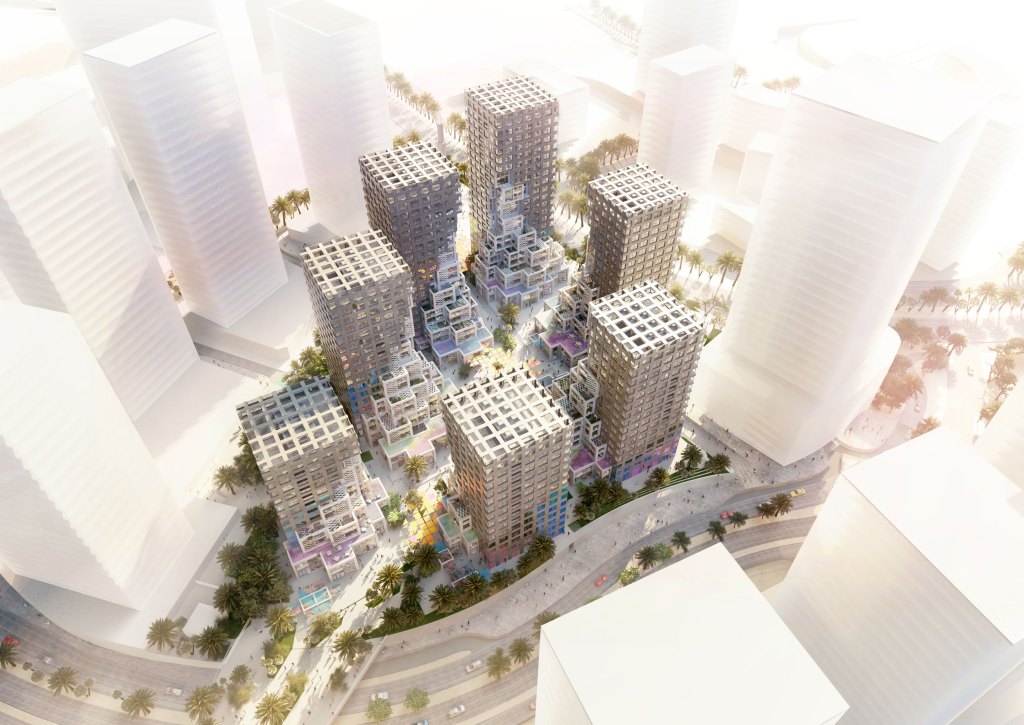
The Design of Babel 4.0
The idea was to construct an endless helix utopian world, a design devoid of distinct beginning or end. It aimed to create a looping circular structure that encompasses the entire plot, extending from negative infinity to positive infinity. Visual representations provide a glimpse of how this vision world might appear. It incorporates elements such as vertical farms, communities, businesses and more, forming a vibrant environment. The Babel development is underway with a team of coders and programmers working along with designers to bring it to fruition. The Utopian Metaverse presents a plethora of opportunities for the design community to connect, collaborate, and exchange experiences, socialise, network and educate.
The spaces include a forum and amphitheatre which serves as a gathering place for individuals to share ideas and engage in democratic discussions. These spaces enable the creation of social contracts, the establishment of constitutions, the launch of new products and the hosting of conferences and seminars. The zones are referred to as plots, emphasising that the focus is not on ownership but on fostering a collaborative environment where people can contribute and participate.
“Metaverse is not to make money but to make a community of like-minded people.”
Ammar Al Assam
For example, people have created their virtual worlds within these plots, showcasing their products and interacting with peers and fellow members of the design community. Also, there are dedicated spaces known as NFT galleries and FC galleries, where individuals can exhibit and promote their designs, artworks, buildings, codes, or any other creations. These spaces not only facilitate showcasing but also provide opportunities for potential commerce within the Metaverse.
Lastly, an incubator has also been created within the Metaverse, which aims to provide opportunities for young architects to thrive. This incubator promotes involvement from private equity firms, venture capitalists, and co-working spaces. It creates an immersive environment where aspiring architects can engage with experienced professionals, including designers, suppliers, contractors, and government entities. This setting encourages the exchange of information, facilitates collaboration, and opens up avenues for creating opportunities and connections within the industry.
Dewan Architects’ virtual office in Decentraland
One of the initiatives taken by Dewan Architects is the establishment of virtual offices in Egypt, Vietnam and the Philippines. They have acquired a plot of land in the Metaverse Sandbox and have created their own office space. This space serves as a platform to showcase their companies’ products, conduct meetings, and demonstrate designs. Although the graphics and technology are in an early stage, the company aims to make rapid advancements towards making the virtual environment seamless and interactive. This will open up the possibility of working with virtual clients and designing for the virtual world.
To expand oneself to the Metaverse, it is very important to protect the IPs(intellectual property) and designs by utilising NFTs. It allows the creation of a library of future content which can be utilised by generations to come.
The Technology of Tomorrow
The Metaverse is here to stay. But it is difficult to predict its exact future and how it will unfold remains unclear. However, it is crucial to participate in the merging landscape, closely engaging with technology, innovation and market trends. Architects are prolific content creators. We live in a world where architects don’t get the right level of respect for their work. With Metaverse, we have been blessed with a unique opportunity to mark our authority in a parallel world and find new avenues for monetising our skills and creating value for our work.