Oliver David Krieg is a seasoned expert in parametric design and robotic manufacturing and leads the development of a groundbreaking mass timber technology platform for high-rise construction at Intelligent City, a renowned firm based in Vancouver, Canada. Before joining Intelligent City, Oliver was a doctoral candidate at the Institute for Computational Design and Construction (ICD) at the University of Stuttgart, Germany, where he led several international research and built projects exploring architectural potentials in timber construction. His projects at the ICD have garnered numerous prestigious awards, both domestically and internationally, and have been featured in multiple publications across the globe. He has also conducted workshops and lectures at national and international architectural design and timber construction conferences.
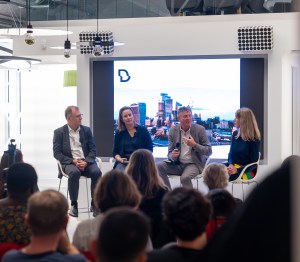
In 2018, Oliver found the design label and explorative platform odk.design to continue researching the dynamic relationship between manufacturing technology and contemporary wood design. He joins Sara Kolata, founder of Disrupt Symposium at the Arch Talk: Tank podcast to shed insights on a groundbreaking innovation at Intelligent City- High Rise Mass Timber Construction.


Oliver’s Journey as an Architect and Computational Designer
Oliver, despite having graduated as an architect, never applied for a license to run an architectural practice. Instead, he gravitated towards integrating software development and computational design for building designs and fabrication technologies. The transformative period of the early to mid-2000s witnessed the emergence of institutions with robots in their experimentation labs and professors who taught the subject. During this time Oliver completed his PhD in Robotic Fabrication in Timber construction, exploring its implications for architecture and its design processes. Until 2017-18, Oliver tried many different ways to create a universally accessible platform for computational designers within the architecture community when there was a significant turning point that came in the form of a collaboration with Oliver Lang and Cindy Wilson, co-founders of Intelligent City. This leveraged the founders' expertise in creating the basis for a company focused on housing production along with Oliver’s extensive academic background which provided him the freedom to experiment with diverse systems and processes. While working with them, Oliver realised the practical applications of the innovations and experiments that developed for decades. He then went on to join Intelligent City as Chief Technology Officer.
At Intelligent City, Oliver got to apply experimentation, parametricism and design technology in a real-life setting, particularly in the context of timber- a material that presents both challenges and opportunities. While fabrication in digital technology favours more moldable materials, timber, although a versatile material, has its own set of parameters. The crux lies in utilising timber for high-rise construction, in a process that leverages specific characteristics of wood for new and impactful architectural solutions.


Mass Timber as a Building Material
The founders saw Intelligent City as a vertically integrated company, working in the design-to-production of buildings. They worked on establishing an organisation that thinks of buildings as their products, assembling them quickly, with varied design forms, and also keeping the process as flexible as possible. The choice of material for this vision was Mass Timber due to its abundant availability in North America and Europe, ease of use in fabrication and contribution to sustainability. Unlike heavier materials like concrete or steel, Mass Timber is lighter to fabricate and transport. The utilization of automation equipment, including industrial robots, for cutting, processing, and applying parametricism to Mass Timber is also more achievable.
The firm’s decision to use Mass Timber also aligns with achieving a sustainable urban future, considering both embodied and life cycle carbon. Beyond its environmental benefits, Mass Timber allows for versatile and aesthetically pleasing designs, fostering a holistic approach to creating high-quality, well-performing buildings. Despite potential implications, understanding and mitigating them strengthens the belief in Mass Timber as a pivotal choice.


The Project: High-Rise Construction with Mass Timber
At Intelligent City, buildings aren't just structures, they're adaptable products tailored to specific needs. When developing a product, it is necessary to assess parameters such as market conditions, design choices, production and distribution. However, the biggest challenge lies in the complexity of the construction industry, where every building is unique due to factors such as owner preferences and regional regulations. The founders aimed to address urban densification by constructing mid-to-high-rise buildings with three to eighteen stories. They recognised that the sweet spot for Mass Timber construction falls under the 9-12 storey range and developed building systems tailored to this specification offering a vast service catalogue of design typologies.
The firm focused on cities with strong market demand such as Vancouver and Toronto and constructed residential and commercial buildings with Passive House performance. The structural system of such buildings included Mass Timber prefabricating components like slabs, columns and facade panels, to streamline on-site assembly resulting in a rapid construction process, and enhancing efficiency. The future vision of the company is to fabricate and manufacture full kits for bathrooms, kitchens, and interior walls, making the entire building assembly process quick and seamless.
To cater to the developers’ design vision, Intelligent City is trying to curate their products to meet the B2B needs while keeping the tenants, end users and future owners in mind. Their goal is to offer high-quality, customisable solutions that align with the developer's vision and the practical requirements of urban construction. The company's success lies in adapting and evolving its designs and products based on the dynamic needs of the market, creating a bridge between the B2B model and end-user satisfaction.
When constructed with a Mass Timber structure, the building offers a pleasant natural internal ambience, which is different from normal high-rise buildings. It particularly caters to the sustainability needs of the people, especially in cities like Vancouver, where residents prioritise eco-friendly spaces. From the developers' point of view, the prospects are positive due to efficient construction, straightforward design and the plug-and-play concept of the building. It significantly reduces the usual construction hassle, making it an attractive option for larger developments.


Response from Developers
At Intelligent City, the employees are not trying to reinvent something that already exists. Rather, they are employing fundamental changes to curate a more streamlined development approach by envisioning buildings as products. Innovation in the AEC industry is challenging due to the significant amount of investment and risks involved. Developers who are considering Mass Timber, even for on-site projects, should prepare for a thorough design process that deviates from the conventional approaches. At Intelligent City, the team is trying to communicate to the developers the benefits of a systematic and pre-engineered approach to their products. Their unique offerings are immediately buildable designs, with less risk and a better end product. The ultimate challenge lies in proving this by constructing buildings efficiently, showcasing that the process works. Overcoming the perception of risk involves educating traders and contractors right from the beginning, and committing to the process. Factors such as faster construction and reduced disruption, are significant, but the industry needs to embrace this innovative approach.
Business Development
The first step for business development for the product is the sales process. A potential customer, whether a developer or investor needs to be educated and convinced to onboard them into the process. Educational materials such as videos and brochures have to be clear and transparent for healthy communication because developers are accustomed to collaborating with a handful of architects, employing conventional construction methods. The crux lies in explaining the commitment required and emphasising the positive returns of the product.
Because developers work with multiple architects, a standout and unique approach of committing to a more systematic approach has to be clarified. The step-by-step process involves presenting the benefits of Mass Timber and the developed systems, starting with feasibility studies. The software, which facilitates presentation allows for easy iterations, showcasing different variations and possibilities within the system’s parameters. This step-by-step approach builds trust, allowing developers to understand the benefits and costs before committing to a contract. The goal is to guide developers through the process, demonstrating the systematic and pre-engineered approach in a way that aligns with their needs and expectations.
The Technology
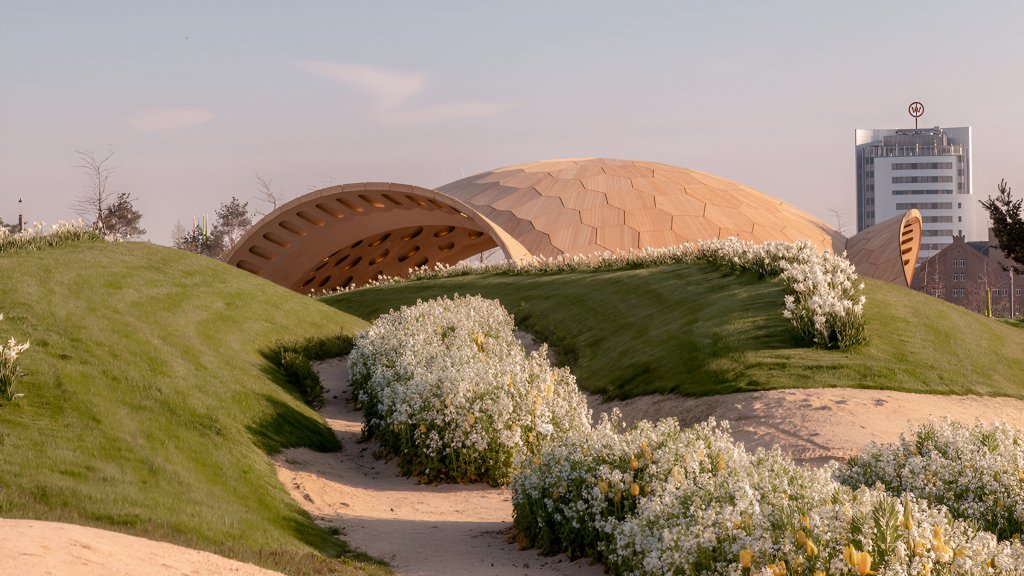
The evolution of prefabrication, particularly in the context of Mass Timber construction relies on two technologies: Parametric manufacturing and Computational Design.
Computational design involves defining building elements through parameters, allowing for flexibility and fixed solutions. This approach uses parametric systems, where rules and ranges replace fixed values, enabling adaptability to various design requirements. Parametric manufacturing ensures flexibility in the fabrication process. Unlike standard-based approaches, parametric manufacturing accommodates design variety, allowing machines to produce unique components with new instructions for each project. This necessitates a seamless connection between design and manufacturing data flows.
The technology boom in the past five to ten years marked a transition from academic experimentation to serious manufacturing and the key is to embrace parametric design thinking, creating systems and rules that guarantee execution. This shift towards systematisation, coupled with advanced software and manufacturing technology, enables the exploration of productisation, industrialisation, and hyper-customisation in construction, addressing the growing demand for housing. It creates a need for multiple companies to experiment and implement these technologies to meet the vast challenges in the construction industry.
Conclusion
Oliver’s journey from academic exploration to real-world application, coupled with Intelligent City's commitment to innovation and adaptability portrays a significant leap towards sustainable, efficient, and aesthetically pleasing high-rise mass timber housing. His pivotal role in leveraging technology, particularly in the realm of parametric design and robotic manufacturing, underscores the industry's shift towards sustainability and efficiency.
Oliver's insights highlight the importance of embracing parametric design thinking, creating adaptable systems that seamlessly connect design and manufacturing data flows. This technological shift is not only a testament to Intelligent City's innovation but also a broader industry trend towards addressing the challenges in construction through experimentation and implementation of cutting-edge technologies.
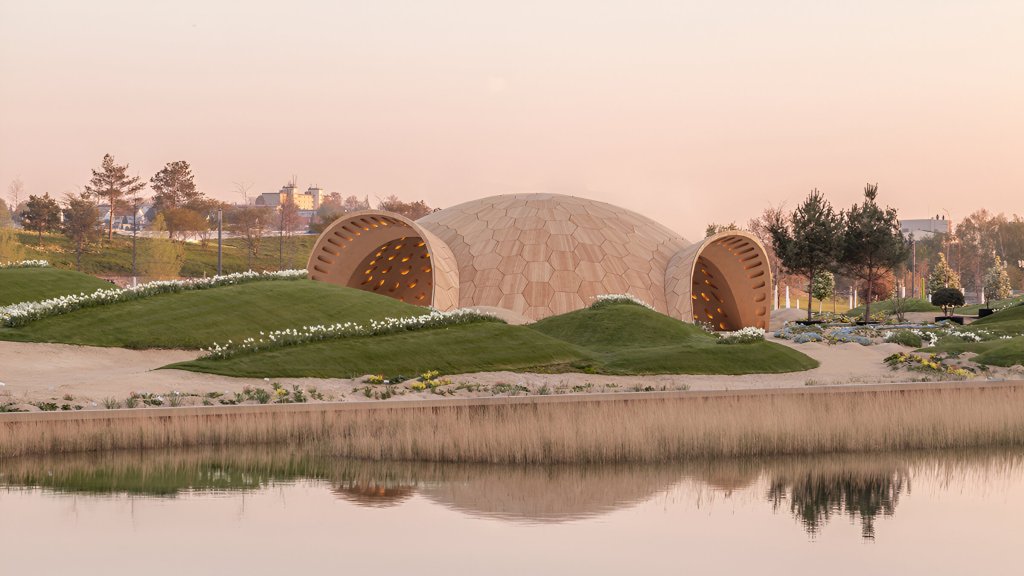
Working with wood as a natural but highly performative building material has enabled novel potential that allows for exceedingly individualised and complex building elements and construction systems. To unlock this potential, an interdisciplinary and multi-faceted approach was followed. The resulting material systems and prototypes evaluated the structural and spatial possibilities, ultimately pushing the boundaries of today’s architectural design research, manufacturing and construction. As mass timber continues to redefine the possibilities in architecture, Oliver's journey stands as a beacon of transformative change in the field.
About Intelligent City: Founded in 2008, Intelligent City company delivers market-ready, high-rise housing for developers and landowners, using an innovative approach that combines off-site prefabricated mass-timber construction with passive house principles, digital design, and robotic technology. Their mission is to empower people to live better urban lives. They aim to achieve their target by disrupting the industry with a sustainable, adaptable, and product-based model. Through municipal approvals and government support for their pioneering mass timber system, Intelligent City is poised to revolutionise the way we think about, build, and experience urban housing. This isn't just about concrete and steel reaching for the sky; it's about creating smart, sustainable communities that foster healthy, vibrant living for generations to come.